The haul is half the job: tar and chip in Weaverville's terrain
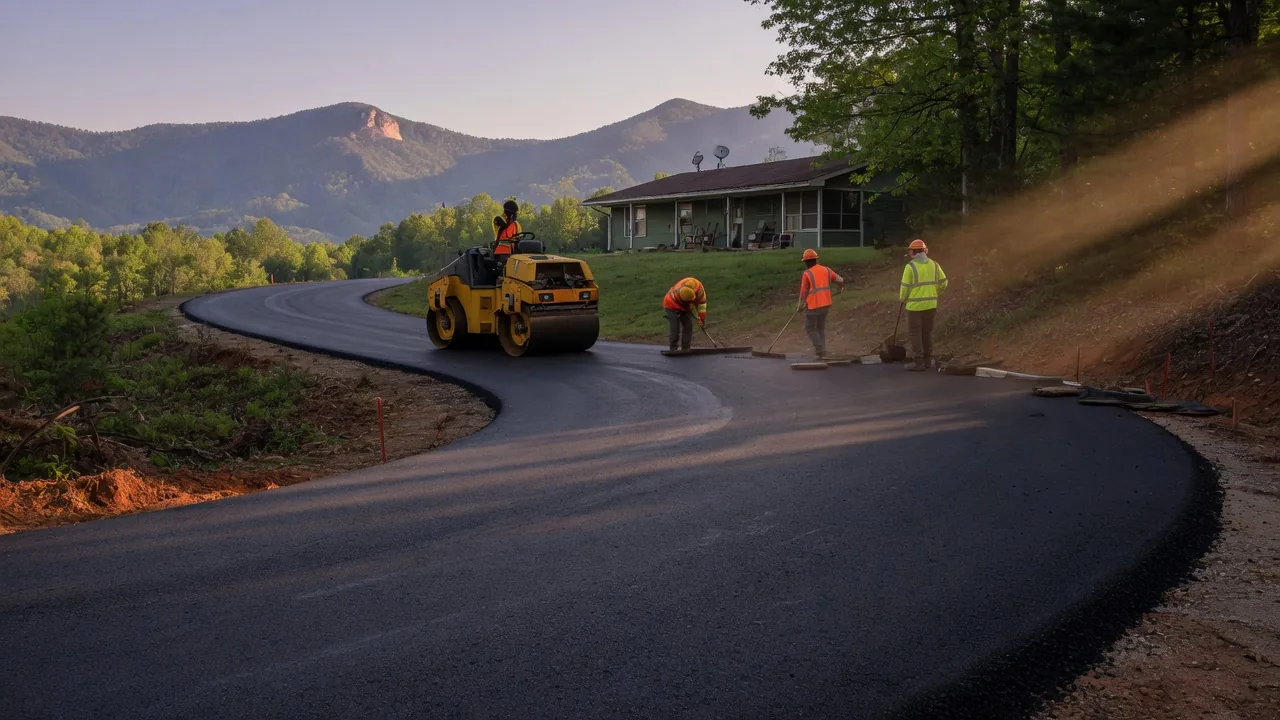
Weaverville sits north of Asheville at the foot of the Reems Creek and Flat Creek valleys, and that geography shapes every tar and chip quote you'll get here. The hot asphalt binder used in a tar and chip surface has to arrive hot, and the drive from the nearest plant out to a Reems Creek hollow, a ridge road above Weaverville Elementary, or a gravel lane off Old Mars Hill Highway is often a long, slow roll. Add a narrow switchback or a driveway that crosses a creek culvert, and the crew loses time on every trip. That time shows up line by line on the estimate.
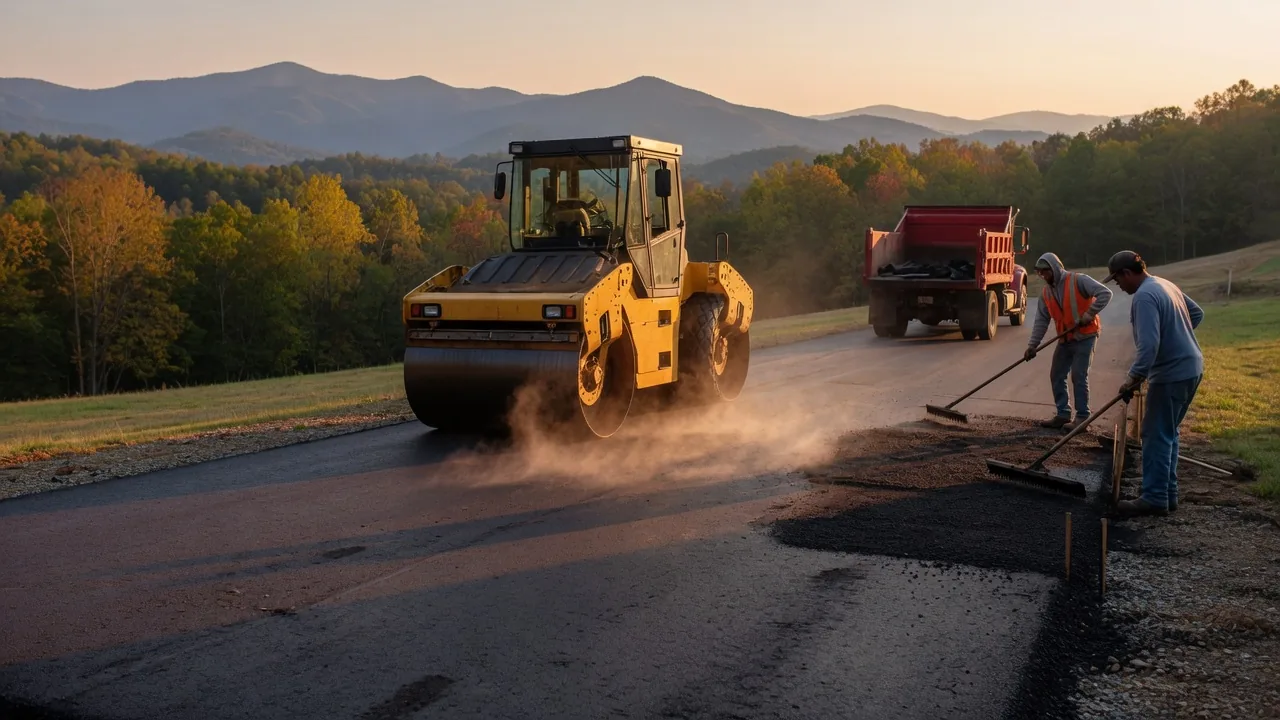
What surprises most Weaverville homeowners is that the chip isn't always the expensive part. A single-axle dump of hot binder travels in a tanker spray truck; on a tight driveway the driver may have to back in, which means a spotter, slower fills, and sometimes a partial load dumped cold. If you've gotten quotes that vary by $3,000 for what looks like the same driveway, ask each contractor how many loads they plan and how far the plant is. The honest answers will separate fast, and the number will start making sense.
What tar and chip actually is (and why it fits mountain driveways)
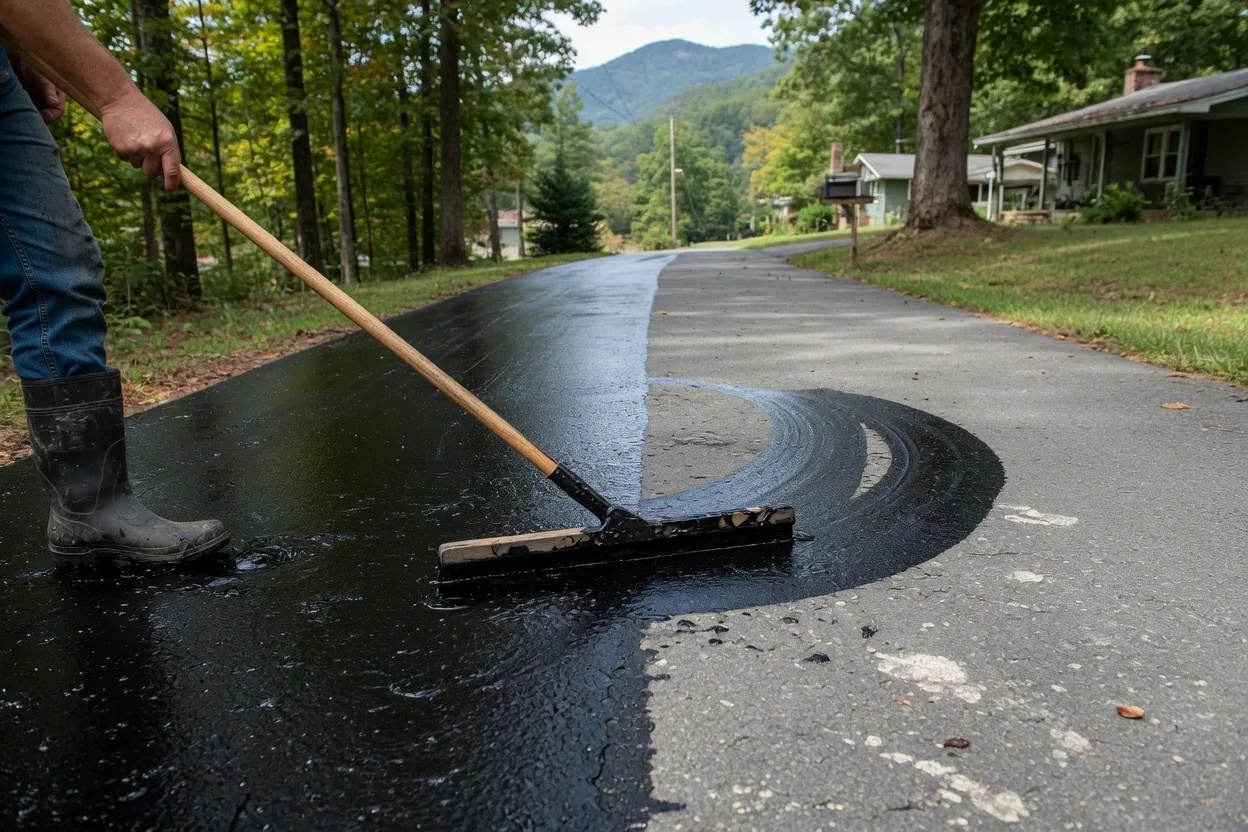
Tar and chip (also called chip seal, or in older regional usage, tar-and-gravel) is built in layers: a hot asphalt emulsion sprayed down, then crushed stone chips broadcast over it while the binder is still tacky, then rolled. A cover coat or fog seal goes on days later. The finished surface isn't smooth like a paved highway lane — it's a textured mat that grips in wet weather and, crucially, tolerates the seasonal swelling and shrinking that our clay-heavy mountain soils put under every driveway.
Compared to a full hot-mix asphalt pour, tar and chip is thinner, cheaper, and more forgiving when the subgrade moves a little. That's why it's common on Weaverville's older gravel lanes and rural parcels where a rigid asphalt slab would crack in year two. The trade-off is that it needs more surface maintenance — chip loss around turnarounds, weed edge creep, and occasional top-up — which is why we cover the material in depth at our tar and chip overview page. If weeds are already a problem, chip seal over a live gravel drive will not solve that; understand what tar and chip does to an existing surface before ordering it.
Weaverville driveway cost table: scope vs. price range
These ranges reflect realistic Buncombe County pricing for tar and chip work. Real quotes will move with chip size, slope, drainage prep, and whether the base needs work. The full countywide picture, including comparisons to hot-mix asphalt, lives on our Buncombe County driveway cost page.
| Scope | Typical Price Range |
|---|---|
| Chip seal over sound existing gravel, small drive (under 800 sq ft) | $2,200-$3,800 |
| Standard tar and chip, single layer, 800-1,200 sq ft, easy access | $4,000-$6,500 |
| Long or steep drive (over 1,200 sq ft), partial base work | $6,000-$11,000 |
| Full build: grading, base, single-layer tar and chip, cover coat | $9,000-$16,000+ |
| Restoration top-up after chip loss or edge failure | $900-$2,400 |
Two pricing notes specific to this area. First, if the driveway crosses a culvert or drainage swale, the base repair line can add real money before the surface even starts. Second, chip selection (a #67 or #78 stone is common here) changes appearance and longevity more than it changes cost — the price movers are access and base condition.
Base condition, drainage, and the code side
Every tar and chip driveway is really a base problem dressed up as a surface problem. Weaverville's freeze-thaw cycles and the region's clay-heavy soils punish an under-built base, and the storm record backs that up: 19 federally declared events touch this county (1973-2026), overwhelmingly storm and flood family. That pattern means driveway base failures often trace to water that has nowhere to go during a heavy event. If your drive ponds at the culvert or the shoulders are washing, fix the drainage before you spend a dollar on chip.
On the rule side: any work that touches the county road shoulder or the connection point to a public road may require an NCDOT driveway permit — the state's permit portal explains the thresholds and application process at NCDOT Connect. For the driveway itself, the state's residential code treats site drainage and slope stability as a real requirement, and the code reference points are published by the NC Office of State Fire Marshal. If your project also involves a new or relocated structure (a garage, a shop, a small barn), North Carolina's licensing thresholds for general contractors apply, and the NC Licensing Board for General Contractors sets where those kick in. A driveway-only surface job doesn't typically cross that threshold, but the moment structural work gets added, the rule book changes.
Choosing a crew, and how to sequence the work
The tar and chip season in this part of Buncombe County runs from spring into late fall, and crews book out — especially on the north-side valleys, where shade and afternoon storms shorten working windows. Ask three things before you sign. First, when will the binder actually be laid? If someone quotes you a price but won't name a month, you may be penciled into a slot that shifts with weather. Second, what's the plan for the cover coat? A tar and chip job without a follow-up seal coat can lose chip on the first hard turn. Third, how will they handle the apron where your drive meets the county road — that joint is where most failures begin, and it's often the reason a driveway looks bad in year three.
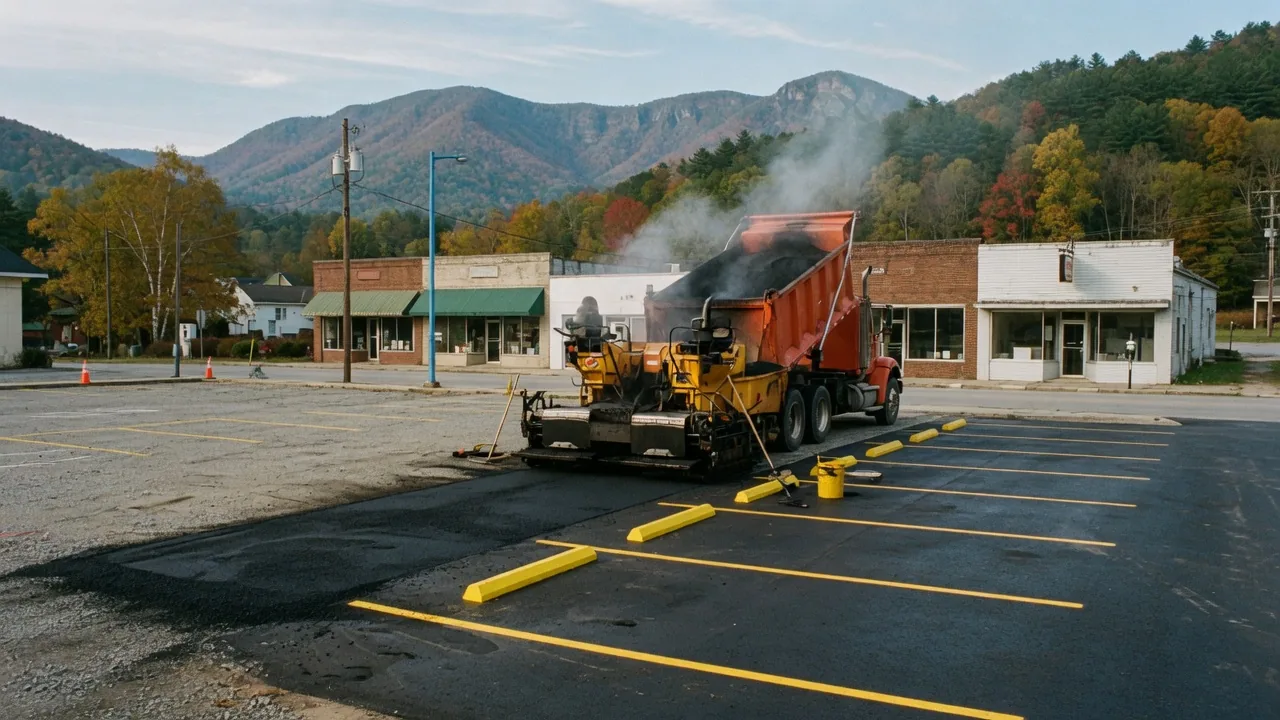
When the surface work is done, plan the surrounding land work so water keeps moving away: regrade the shoulders, clear the culverts before winter, and stay off the new surface for the recommended cure window. Sibling services on this site — paving contractors serving Weaverville — cover the cases where hot-mix asphalt is actually the better call than chip. For driveways on Reems Creek and Flat Creek roads, where grades are real and runoff is fast, tar and chip almost always wins on cost per year. For a flat, short, high-traffic commercial apron, we'll usually recommend asphalt instead. Match the surface to the site, not to the price tag.