Why Hendersonville driveways wear differently than Asheville's
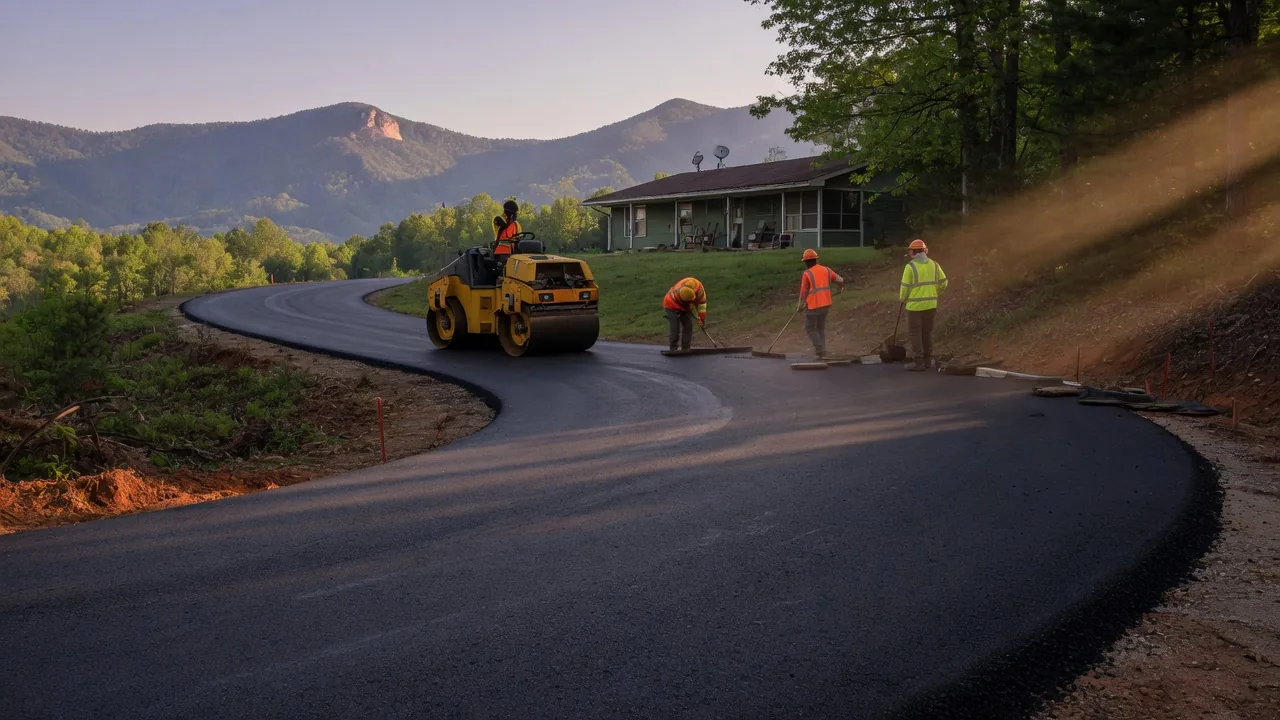
Hendersonville is a county seat where the lots are longer and the ground is steeper than most of Asheville proper. Subdivisions off Kanuga Road, Willow Road, and the ridges pressing toward Edneyville were laid out with 80- to 300-foot driveways that fall toward the house, and that fall is exactly what sealcoat crews plan around. A flat three-car apron in a town grid takes a crew half a morning; a long, draining, tree-lined run in a Henderson County subdivision can consume most of a day and burn two or three times the material.
The other local factor is tree canopy. Hendersonville's older neighborhoods — the blocks around Main Street and the historic districts — are shaded enough that pavement stays damp longer after rain and grows more moss and algae along the edges. That organic growth feeds the crack-and-seam failure pattern crews here see over and over: fine edge cracking in spring, widened cracks and raveled spots by fall. Sealcoating that's put down before the cracks open addresses that cycle; sealcoating that's slathered over open cracks just hides the problem for one season.
Driveway length cuts two ways here. The tourists and second-home owners who fill the Edneyville and Flat Rock ridges often have the longest runs and the least time to watch them, which means deferred maintenance and pavement that has already gone grey before the first sealcoat call. In-town homeowners on smaller lots around the courthouse district tend to notice edge moss and shallow cracks earlier and get ahead of them. The sealcoat scope that makes sense is different for those two situations, and a bid that does not distinguish them is not worth much.
A third local wrinkle is the mix of pavement ages and base conditions within a single subdivision. In several ridges off Kanuga and up toward Jump Off Rock, roads were cut and driveways paved across different decades, so two neighboring drives can fail completely differently — one still tight and black, the next already raveled at the crown. A sealcoat bid should be built for the specific surface in front of the crew, not copied from a neighbor's last estimate. Ask what the crew observed about your base, your slope, and your drainage before you agree on a number, and a good contractor will explain why two similar-looking drives get two different quotes.
Reading a quote: scope line by line
Sealcoat pricing in this county moves on three things: square footage, surface preparation, and slope. A bid that quotes one flat rate per foot with no mention of edging, crack filling, or oil-spot priming is comparing apples to nothing — those items are where the real work and the real cost live on a mountain-edge driveway.
| Scope item | What it covers | Typical Henderson County range |
|---|---|---|
| Basic sealcoat only | Clean surface, one coat, no crack or edge work | $0.18–$0.22 / sq ft |
| Two-coat seal + crack fill | Hot or cold crack fill, two coats, hand edging | $0.24–$0.32 / sq ft |
| Long sloped drive prep | Slope-aware material placement, extra edging, drainage check | Adds $150–$450 per job |
| Oil and rust spot priming | Binder primer on petroleum stains so sealcoat adheres | $40–$120 per spot area |
| Crack filling only (no seal) | Routed and filled cracks, spot-leveled | $1.50–$3.50 / linear ft |
For the fuller picture including paving and patching, see the Henderson County asphalt cost breakdown.
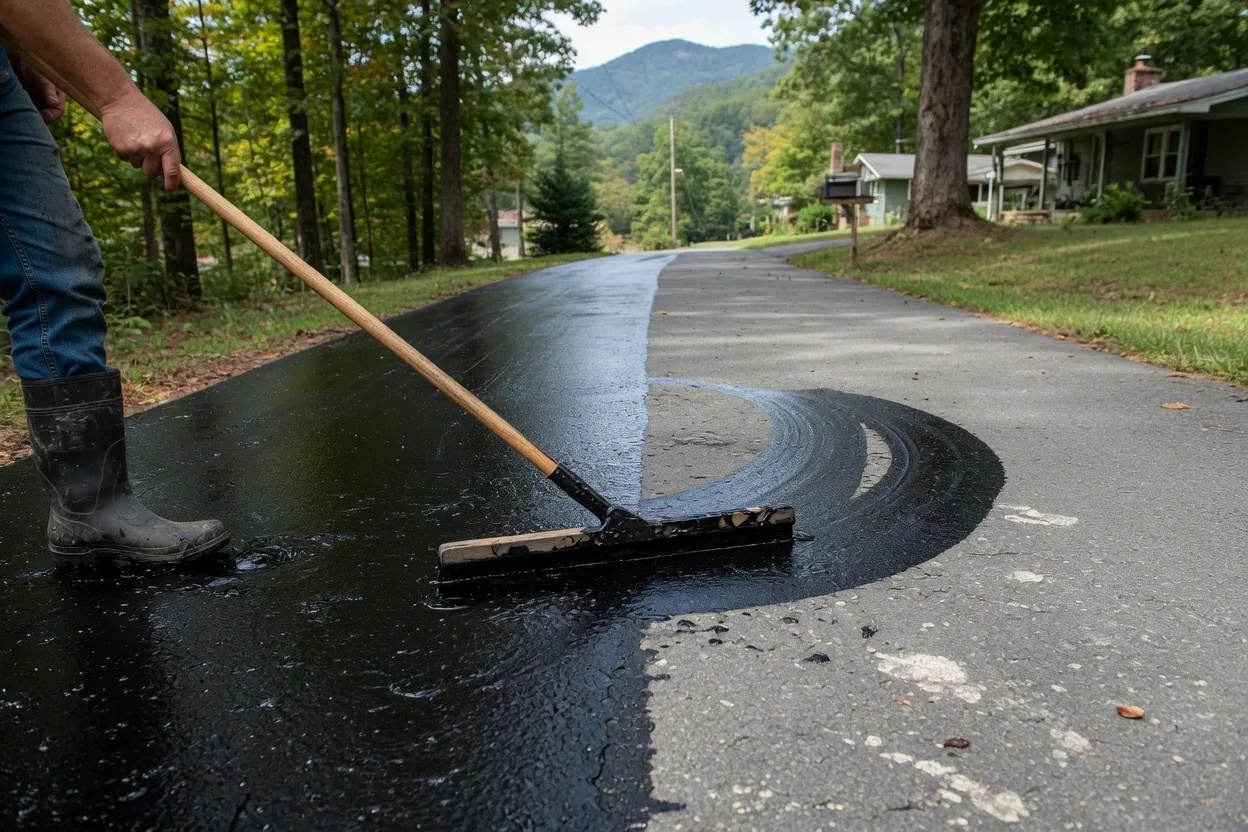
One more line item worth demanding in writing is a slope-aware application plan. On a steep Kanuga-area drive, sealcoat applied too thin near the top and too heavy at the bottom can puddle, cure unevenly, and track onto the apron for weeks. A contractor who adjusts squeegee or spray technique for your grade is doing the work that separates a one-season coat from a three-year one, and that adjustment should show up as a defined scope item, not a vague promise.
Water, freeze, and the case for sealing on schedule
Henderson County's federal disaster record is part of why local pavement ages fast: 16 declared events touch this area (1978-2026), and they are overwhelmingly storm and flood family. Every one of those events drove water across driveways that were built for a gentler assumption. Sealcoat is not a structural repair — it will not fix a failing base — but it is the sacrificial layer that keeps surface water from working into the asphalt binder and, eventually, the subgrade.
Freeze-thaw does the rest. Hendersonville sits high enough that winter cycles crack pavement that stayed intact in the low country, and the National Weather Service freeze advisories for this elevation are a fair calendar for when cracks open. Sealing in late spring or early fall, when pavement is dry and temperatures are stable, gets the best bond. Any crew that will seal a wet or cold driveway is selling you a season, not a surface.
Storm-water behavior is where the local drainage picture gets specific. Many Henderson County subdivisions drain onto a sloping driveway rather than a curb-and-gutter street, so the pavement itself becomes the runoff channel during a heavy event. Sealing that channel correctly, with attention to where water sheets off and where it pools, is as much about protecting your base as about cosmetics. Where runoff is continuously scouring an edge, no sealcoat will survive it — that is a grading or drainage conversation, and an honest crew will say so rather than sell a coat over a problem that will eat it.
Washout on bare, exposed spots that appear after a hard rain can also signal a failing subgrade, and no amount of surface maintenance fixes that. Recognizing the difference between cosmetic wear and structural movement early keeps homeowners from paying for a coat that will simply crack again at the same seam next spring.
Contractor and permit basics for this county
Sealcoating itself is generally maintenance work and does not trigger state general contractor licensing — but the moment a job crosses into resurfacing, structural patching, or new driveway construction, the NC Licensing Board for General Contractors thresholds apply, and any driveway connecting to a state-maintained road needs an NCDOT driveway permit through NCDOT Connect. For a pure sealcoat job, the practical check is simpler: ask what surface prep is included, whether cracks are being filled before sealing, and how they handle drainage on sloped drives.
Two other authority points matter when a job edges past routine maintenance. Stormwater and runoff handling falls under state and local oversight informed by EPA guidance, so any work that changes how water leaves the property deserves a conversation before the sealcoat truck pulls in. And when a repair creeps into anything that alters a structure or its accessibility, standards set by the International Code Council and administered through the state codes office are the reference point, not a contractor's shortcut. Naming the scope clearly on the estimate is the cleanest way to stay on the right side of all of it.
When you're ready to compare bids, the Hendersonville paving contractor guide walks through what a proper site visit should cover, and the sealcoating service overview explains the difference between a maintenance coat and a repair.
Timing, weather, and what to expect on the day
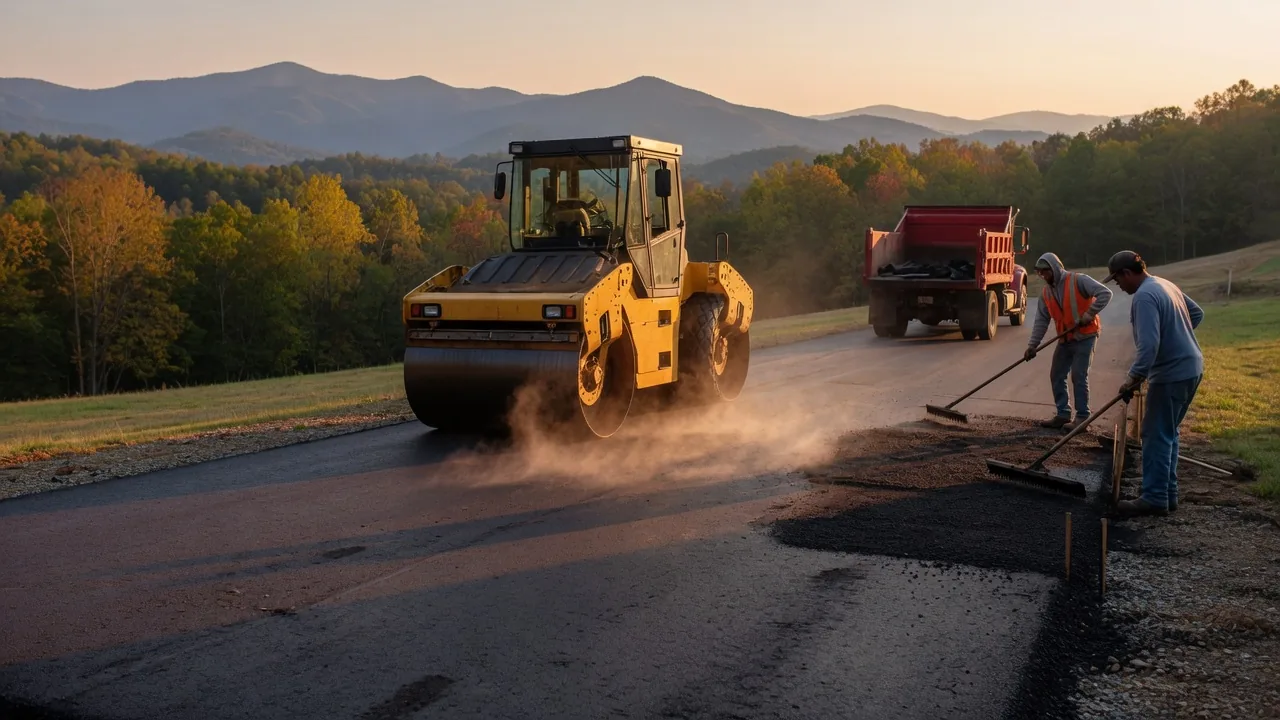
Hendersonville's shoulder seasons are the sweet spot. Pavement needs to be dry, air temperatures generally above the mid-50s, and no rain in the forecast for roughly 24 hours after application. Crews working the Kanuga and Willow corridors often schedule around morning dew and afternoon thunderstorms that build over the Blue Ridge in summer. Before the crew arrives, clear vehicles, close windows, and keep pets and kids off the surface for the full cure window the contractor specifies — usually a day or two for foot traffic and longer for vehicles.
Cure time is also why a two-coat job done right is not twice the price of one coat: the second coat goes on after the first has set, and that sequencing is baked into the per-foot rate. Expect the darker, uniform finish to lighten over the first few weeks as the surface oxidizes back to a matte black-grey.
On-site logistics in this county add their own complications. Many driveways are single-lane and flanked by retaining walls, low plantings, or a mailbox post, so the crew may need to stage equipment at the street and work uphill. If your drive is the only way in or out, plan the day around having vehicles moved to the road for the full cure. On the steeper ridge lots, morning shade that lingers into late morning can slow curing on one side of the drive while the sunny side sets first — a staging reality crews here plan for and one worth asking about when you book.