Why Laurel Park driveways are their own job
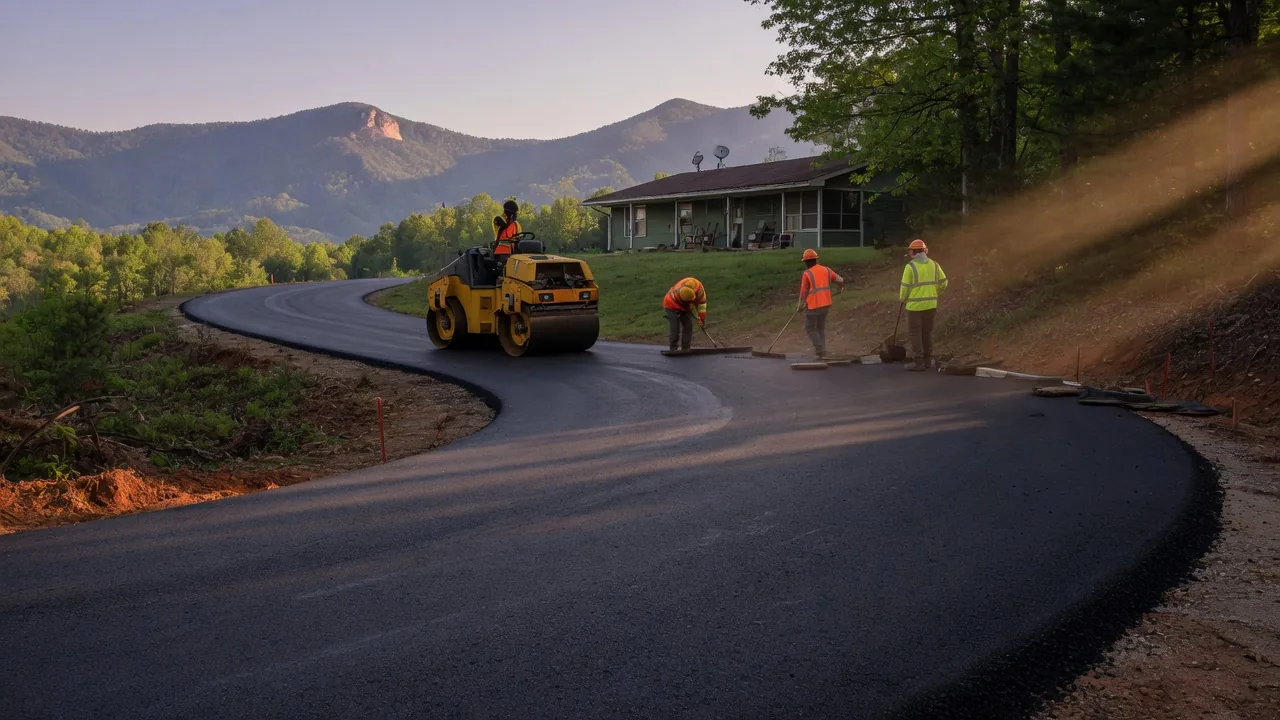
Laurel Park is a small Henderson County town tucked between Hendersonville and the Greenville Highway, and its terrain is the whole story. Most streets climb: Laurel Park Highway, Crystal Springs, and the side lanes off Fifth Avenue West all pitch up into wooded hillsides. Driveways here are often 30 to 60 feet — much shorter than the half-acre estate runs you see in Mills River or Etowah — but they climb 8, 12, sometimes 15 degrees, then curve under a canopy of oaks and pines that never lets the surface dry out.
That combination changes the work. A short steep drive sheds water fast, which sounds good until you notice the water is running down the asphalt, not off it. Tree cover keeps the pavement damp for days after rain, feeding the moss and algae that break down the binder. And the older subdivisions on the town's upper streets still have original asphalt from decades ago, now alligator-cracked across the wheelpaths. A crew that normally paves flat commercial lots in Hendersonville has to re-learn the job up here.
Laurel Park also sits at an awkward in-between scale: too small for a full-time paving company to base here, but too specific in its terrain for a crew from Asheville to treat it like a normal subdivision. The driveways reflect that. Many were cut into the slope decades ago when the homes were built, and they were never engineered for the runoff the current tree canopy and rainfall produce. The result is a town full of driveways that look simple from the street and turn out to need real attention once a contractor walks them.
What Laurel Park asphalt work actually costs
Prices in Laurel Park track Henderson County generally, with a slope and access premium on the upper streets. The Henderson County cost breakdown has the full table; here is the working version for this town:
| Scope | Typical range | Notes for Laurel Park |
|---|---|---|
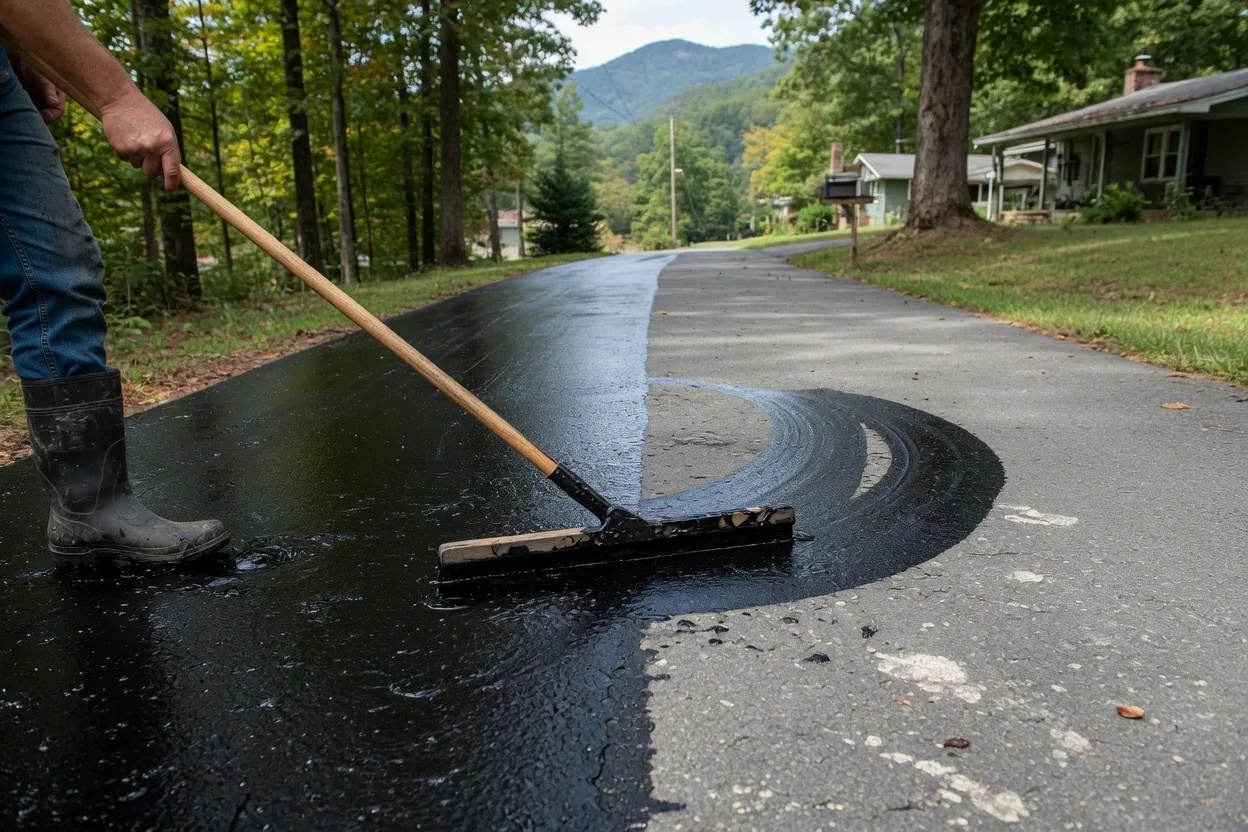
| Sealcoat, single application | $0.18–$0.35 / sq ft | Best done before cracks open; shaded drives need it more often |
| Crack fill & patching | $300–$900 | Older upper-street drives usually need this first |
| Overlay (1.5–2 in) | $2.50–$4.50 / sq ft | Requires sound base; steep drives need tack and careful rolling |
| Full removal & repave | $4.50–$8.50 / sq ft | Common on drives over 25 years old |
| Gravel driveway to asphalt conversion | $6,000–$14,000 | Short steep runs; base prep is the variable |
| Drainage / culvert correction | $800–$3,500 | Often the difference between a repave that lasts and one that doesn't |
Treat any bid that skips base evaluation or drainage on a Laurel Park slope as incomplete, not cheap. The full asphalt paving overview explains why.
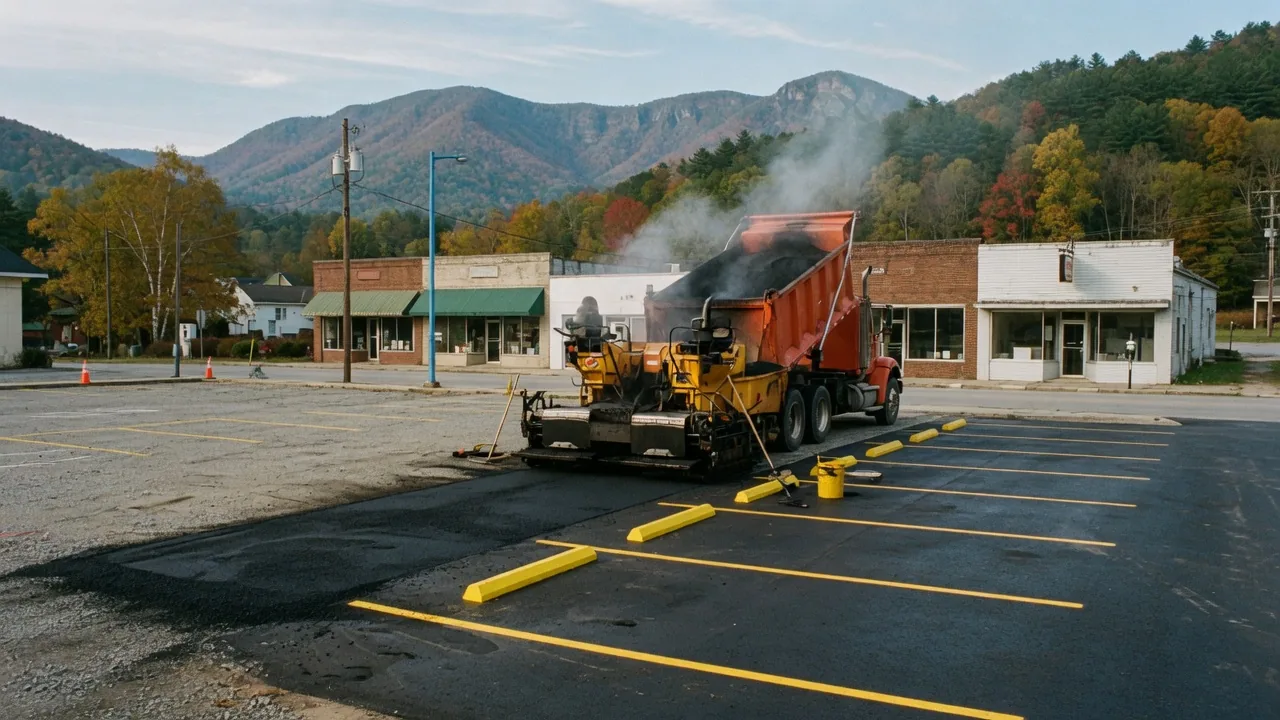
Two things push Laurel Park quotes toward the higher end of those bands more often than in neighboring towns. First, access: many of these drives are narrow, curve between mature trunks, and leave little room for a full-size dump truck or paver to work, so crews hand-lay more of the surface than they would on an open lot. Second, haul-off. When a drive has to be torn out, the broken asphalt and unsuitable base material have to come down the same steep, tight path they came up, and that labor shows up in the bid. Neither of those is a scam premium — it is the honest cost of the site.
Water, slopes, and the permits that matter here
Every paving quote in this town eventually comes back to drainage. A Laurel Park driveway that dumps runoff onto a neighbor's property or into the town's right-of-way is a problem the town can require you to fix, and the fix almost always costs more after the asphalt is down. If your drive meets the street at a new curb cut or you're widening the apron, the driveway connection to a state-maintained road runs through NCDOT's driveway permit process — start at NCDOT Connect and confirm before you schedule a crew.
If the paving scope crosses into general contracting territory — retaining walls to hold a steep drive, major grading, or structural work — North Carolina licensing thresholds apply, and the NC Licensing Board for General Contractors is the authority to check. For residential asphalt work alone, licensing generally is not triggered, but any contractor who can explain when it is, is the one worth hiring.
Drainage corrections on these hillsides usually mean one of a few things: a shallow swale cut along the uphill edge to intercept sheet flow before it reaches the pavement, a catch basin or trench drain at the bottom of the grade, or a properly sized culvert under the apron where the drive meets the street. Which one applies depends on where the water originates — off the hillside above, off the roof, or off the road itself — and a good estimator will walk the property in wet weather if possible to see it move. That single visit often separates a repave that lasts a decade from one that puddles at the apron by the second spring.
Choosing a crew that has worked this hill
The tell is the base question. A paving contractor who has done Laurel Park work will ask about the driveway's age, how water behaves in a heavy rain, whether the subgrade is clay or rock, and where the water goes when it leaves the apron. A contractor who hasn't will quote you a per-square-foot number over the phone and schedule you for next week.
Ask for at least one reference in Laurel Park, Hendersonville, or Flat Rock specifically — the Greenville Highway corridor and the upper streets share the same clay soils and canopy. And walk the bid line by line: demolition, haul-off, base repair, binder course, surface course, compaction, and cleanup should each be visible. A one-line bid is a bid you can't compare. Residents often start with the local driveway paving page to get the scope before they call anyone.
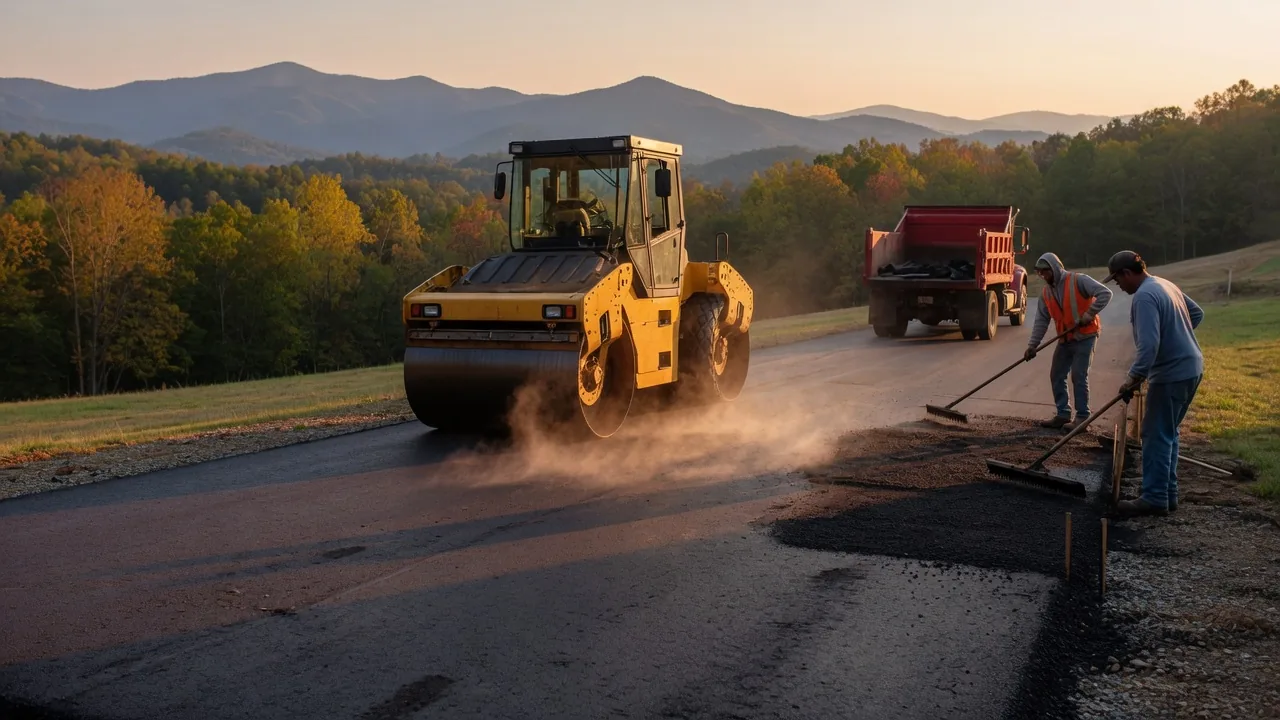
Also ask how the crew plans to compact on a slope. Rollers on a steep grade need to work uphill and backed down, and a paver that cannot get traction will leave a surface that looks fine dry and ruts the first hot week. This is a detail that separates crews who regularly pave grade from crews who mostly pave parking lots. Finally, confirm in writing what happens if the base turns out worse than the bid assumed — the honest answer names a per-square-foot or per-load figure for extra base repair rather than promising a fixed number sight-unseen.
Timing and storm history
Henderson County has been touched by 16 federally declared disaster events across 1978-2026 on record — overwhelmingly storm and flood family. Every one of those events pushed water and debris at driveways, culverts, and aprons that were built for a milder assumption. Laurel Park, with its grade and tree cover, sees the effect sooner than the flatter parts of the county. If a prior storm left your driveway with a washed edge or a new crack that has widened since, that is a maintenance issue now and a repave issue in two years. The EPA publishes stormwater guidance worth a look if your runoff exits to a creek or the town's drainage system.
Practically, that history argues for scheduling paving in the late spring through early fall window. Asphalt needs warm, dry conditions to compact and cure, and a shaded Laurel Park slope stays cool and damp longer than an open lot in town — which means a late-October job that would be fine in Fletcher can leave you with a soft surface through the winter. If a storm is forecast inside your paving window, most local crews will push the job rather than lay on wet base, and that is the right call, not a delay to argue with.