Reading a Brevard driveway before you spend a dollar
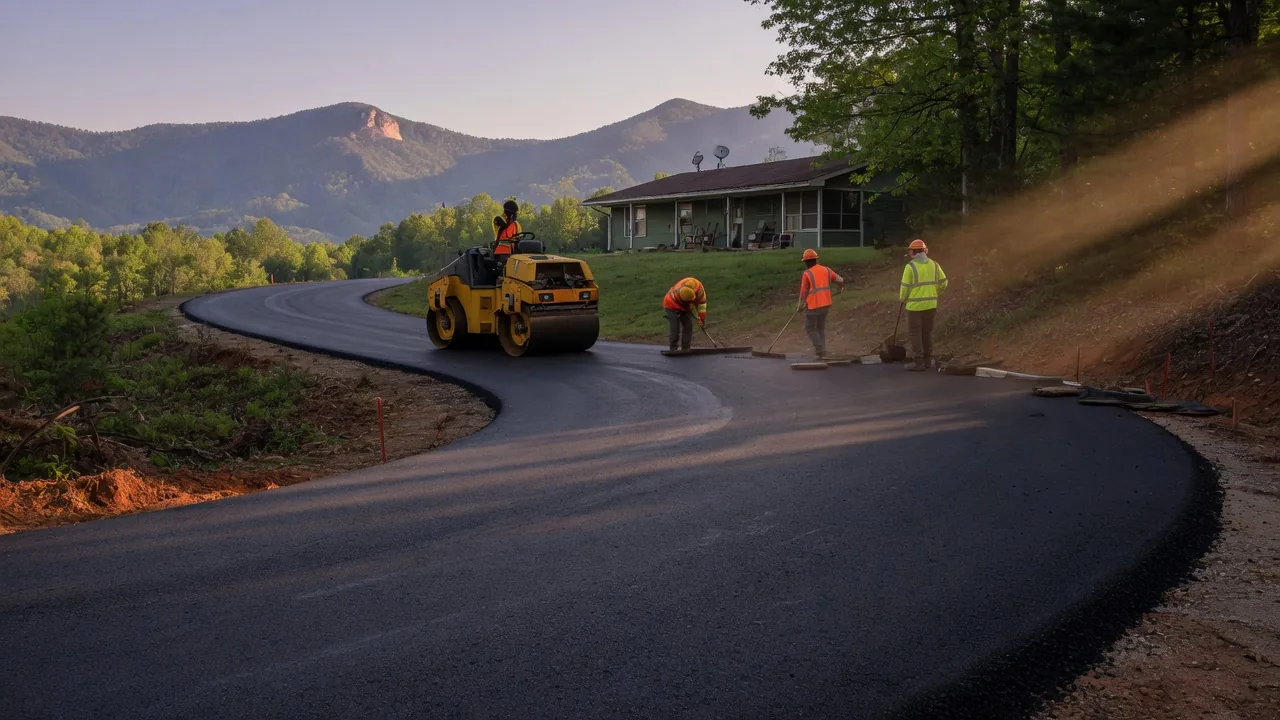
Driveways in Transylvania County age in a particular way. A lot of them climb. Brevard's housing runs from flat in-town lots off Broad Street and Probart to long gravel-and-chip runs up the ridges toward Pisgah Forest and Cherryfield, and the ones on grade take water at the top, shed it down the middle, and eat their own edges first. So when a homeowner calls about a pothole, the pothole is usually the third symptom, not the first.
How to read it. Fine alligator cracking across a parking pad (small interconnected cracks, like a map) means the surface layer is done but the base may still be sound — that's a recoat candidate. A pothole that keeps coming back after patching means the base under it is failing, and another patch is money thrown at a symptom. Crumbling or rounded edges along the drive, especially where it meets grass on a slope, means water is running the edge instead of the center. A soft spot that flexes when you walk it in wet weather is a subgrade problem. And a single long crack running straight down the drive is nearly always a seam or a drainage line, not random failure — it tells you where the water goes.
None of that costs anything to check. It's the difference between a $900 refresh and a $9,000 tear-out you didn't need yet.
Repair, recoat, or tear out: matching the fix to the failure
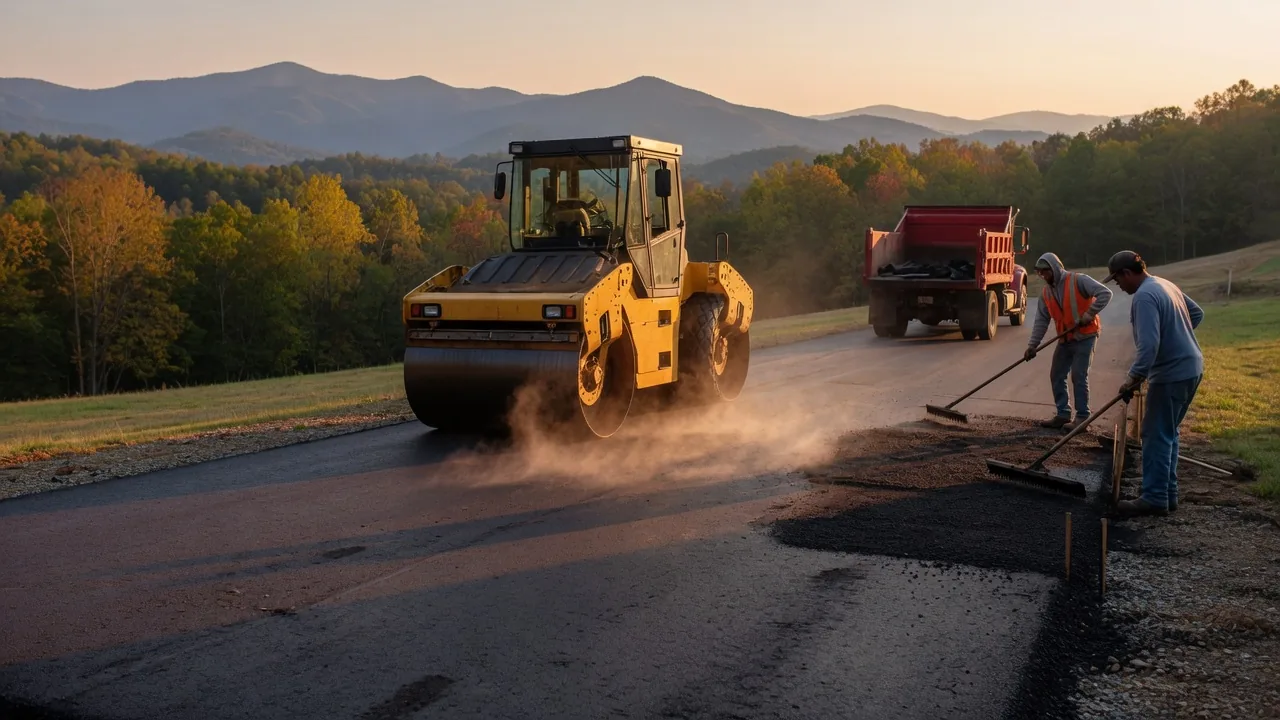
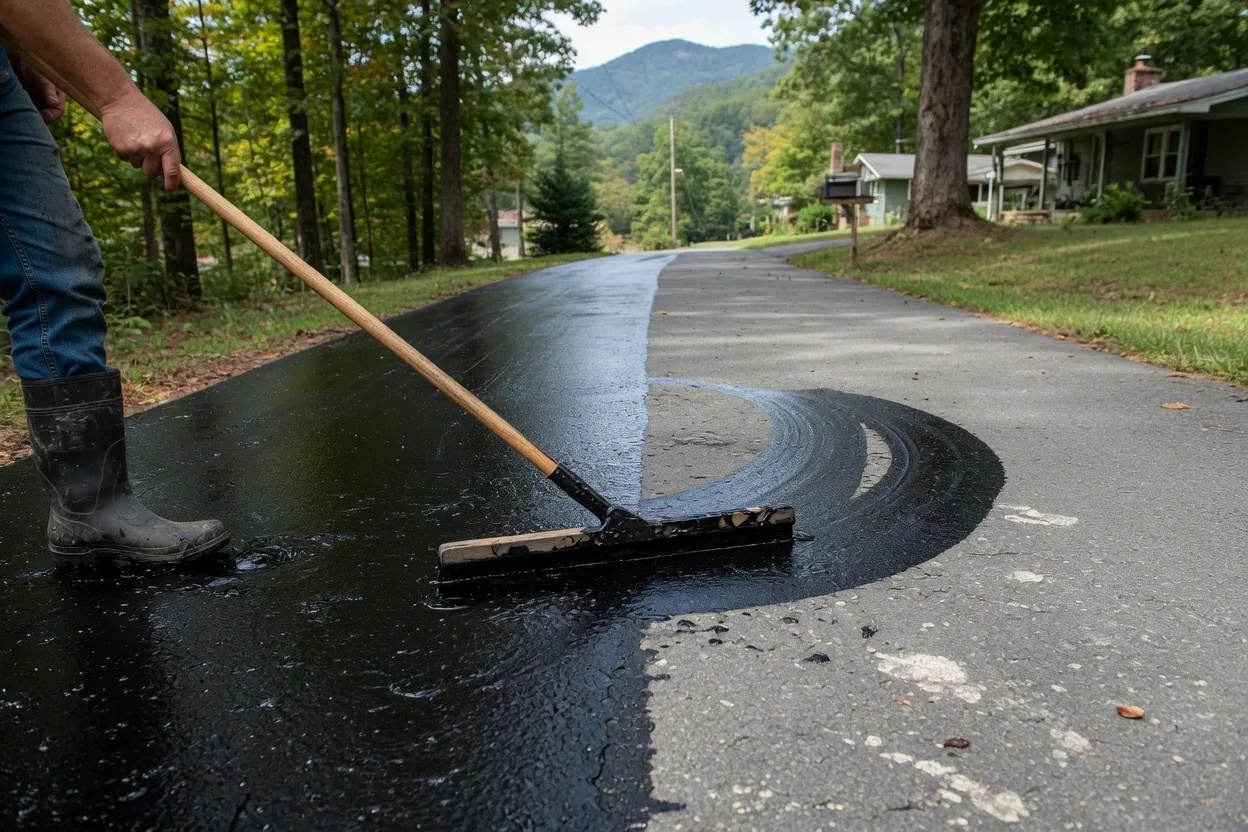
The trade-off is straightforward once you know what's actually wrong. Tar and chip — also called chip seal, and locally just "tar and gravel" — is a sprayed asphalt binder topped with crushed stone. It's a wear surface. It is not structural. It sits on a base, and if the base is moving, the new surface will crack on the same lines within a season or two.
So: cracks and surface raveling on a drive with a dry, stable base — crack fill and a recoat will buy real years. Isolated potholes with good base around them — cut them square, rebuild the base in that pocket, and re-chip it. Potholes in clusters, a drive that pumps water when you drive on it, or edges that have lost their shoulder entirely — that's base and drainage work, and a surface treatment on top of it is a bandage. Full tear-out and rebuild is the last option, and it's the right one when the base has genuinely failed or the drive no longer drains anywhere useful.
Two things govern how the work has to be built here. First, Transylvania County gets serious rainfall, and the federal record backs that up: 16 declared events touch this area (1993-2026), weighted heavily toward storm and flood. Water management isn't optional. Second, where a driveway meets a state-maintained road, the connection is regulated — see the NCDOT driveway and encroachment rules at ncdot.gov and permit applications through NCDOT Connect. Any paving bid that ignores culvert sizing or the apron detail at the road is incomplete.
What tar and chip costs on a Transylvania County drive
Ranges below are working regional bands, not quotes. Length, slope, base condition, and how far the crew has to haul material move them fast. The full line-item breakdown lives on the Transylvania County cost page.
| Scope of work | Typical price range | When it's the right call |
|---|---|---|
| Crack fill and single-coat chip seal recoat | $700–$2,500 | Sound base, surface raveling or fine alligator cracking only |
| Isolated pothole repair (square cut, base rebuild, re-chip) | $250–$900 per spot | One or two failures with stable base around them |
| Edge rebuild and shoulder restoration | $8–$18 per linear foot | Rounded or crumbling edges on a sloped drive |
| New tar and chip over prepared base | $2.50–$5.00 per square foot | New drive, or existing base verified sound |
| Grading, drainage and ditch work | $1,500–$6,000 | Water sitting on or beside the drive, uphill runoff problems |
| Full tear-out, new base and new chip surface | $3,500–$12,000+ | Base failure, pumping, multiple recurring potholes |
A 12-foot-wide, 150-foot drive is roughly 1,800 square feet — so a fresh chip seal there lands near the middle of that per-foot band, while the same drive with a failed base is a completely different project. Get the base question answered before you compare any numbers. The general tar and chip overview covers how the surface itself is built.
Brevard specifics: grade, shade, and freeze-thaw
Three local factors do more damage here than traffic does. Grade: a drive climbing off a Transylvania County road sheds water fast, which is good, until it reaches the bottom and has nowhere to go — that's where edges blow out. Shade: heavily wooded lots toward the national forest stay damp longer after rain, and a damp chip surface holds moisture against the base. Freeze-thaw: this is a mountain-adjacent climate, and water that sits in a crack, freezes, and expands will widen that crack every winter. Sealing cracks before the cold season is genuinely cheaper than the repair that follows. The National Weather Service outlook for the region is a reasonable prompt to schedule that work in the right window rather than mid-winter.
The practical consequence: on a shaded, sloped Brevard drive, drainage correction at the top and shoulder work at the edges often matter more to the drive's lifespan than which surface product goes on it.
Choosing a crew, and knowing when licensing applies
Most residential driveway work falls under the state's general contractor threshold rules — check the current threshold and requirements at the NC Licensing Board for General Contractors before you hire, particularly on larger rebuild jobs that start to look like site work. Worth asking a Brevard paving crew directly: do they prep and compact base, or do they chip over whatever they find? How do they handle the apron where the drive meets the road, and do they pull the required NCDOT permit if it's a state road? Do they seal cracks before laying new surface?
Finish quality on chip seal is weather-dependent — binder needs the right temperature and a dry window, so a crew that won't schedule around rain is a crew that will hand you a drive that sheds stone for months. Our Brevard paving contractors page goes deeper on vetting, and if your drive also handles a lot of parked vehicles, the surface options and load considerations get more involved.