Reading the driveway before you call anyone
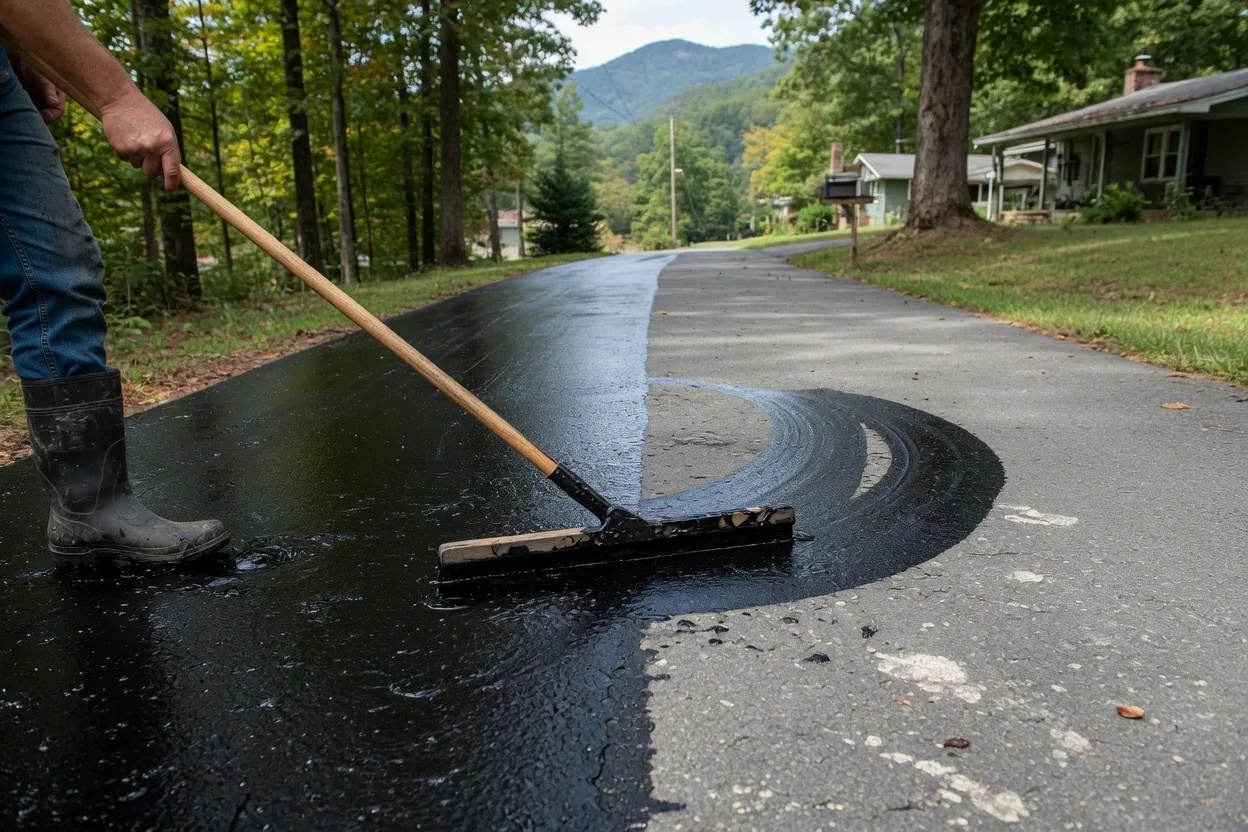
Flat Rock driveways rarely fail the same way twice. A long gravel-to-asphalt lane off Greenville Highway that takes mountain runoff behaves nothing like a shaded circular drive under old oaks near the Carl Sandburg home, and the two need opposite answers. Before you spend a dollar, walk the surface and read it. Hairline cracks that radiate like a spiderweb and stay put are oxidation; the asphalt is dry and the base is fine, and a sealcoat or thin overlay buys you years. Cracks that fork and reconnect into alligator skin are a base failure underneath — the subgrade has moved or water has been sitting in it, and topping that with fresh asphalt just dresses a problem that will crack through in one or two winters. Potholes mean water got in and froze; a pothole in the middle of a sound driveway is a patch, a pothole next to three others is a tear-out. And the edges tell the truth nobody wants to hear: if the driveway is crumbling at the sides where it meets the grass, the base was never deep enough for Henderson County's freeze-thaw, and no overlay fixes a thin edge.
Terrain matters here more than it would in the flat country east of the mountains. Flat Rock sits on slopes that pitch water toward the road, and a driveway cut into a hillside above a creek or a low neighbor lot is always fighting gravity. The same oak canopy that makes this town beautiful keeps the sun off the pavement, and a drive that never dries out will oxidize slowly on top while its base stays wet underneath. That combination — shaded surface, saturated base — is the one that produces the confusing driveway where the asphalt looks fine in the center and the edges are quietly falling apart.
Repair, overlay, or tear out: what Flat Rock pricing actually looks like
Henderson County sits in the middle of the regional band, not the cheapest and not the steepest. What moves the number is access and base, not the asphalt itself — a sloped drive above flat ground needs drainage work before anything is paved over it, and that line item is where cheap bids go quiet. See the full Henderson County cost breakdown for working numbers, and treat any quote that skips base prep as incomplete rather than inexpensive.
| Scope | Typical price range | When it's the right call |
|---|---|---|
| Crack fill and sealcoat | $300–$900 | Oxidation cracks, sound base, no edge crumbling |
| Spot patching (potholes, isolated failures) | $400–$1,500 | One or two bad spots in an otherwise solid drive |
| Asphalt overlay (1.5–2 in) | $1,800–$4,500 | Worn surface, intact base, height allows |
| Partial tear-out and rebuild | $2,500–$6,000 | Failed section, soft spots under part of the drive |
| Full removal and new asphalt | $3,500–$9,500 | Alligator cracking, failed base, thin or crumbled edges |
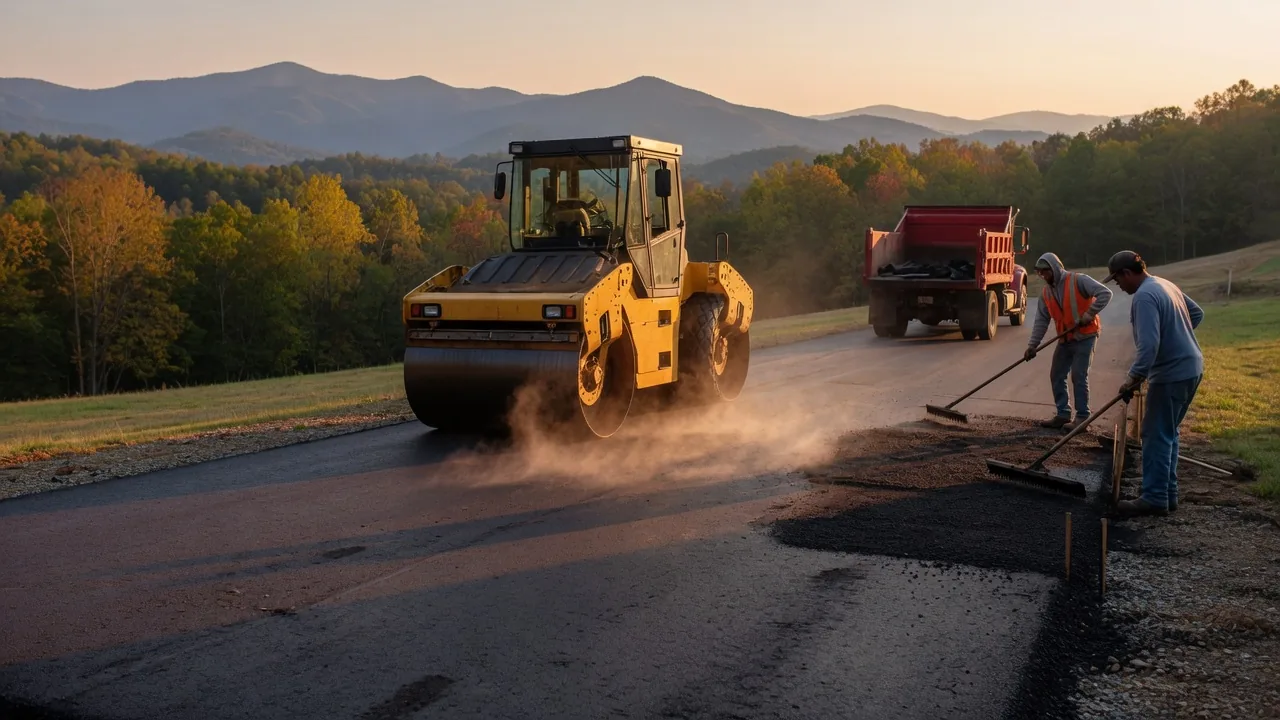
Slope and drainage push every row up. A drive that sheds water onto a neighbor's yard or a county road has to be graded and drained before paving, and that engineering does not show up in a per-square-foot price. Long, narrow mountain lanes also cost more per square foot than a broad suburban apron, because the paver and the roller have to work in tighter quarters and the crew can't lay as much in a day.
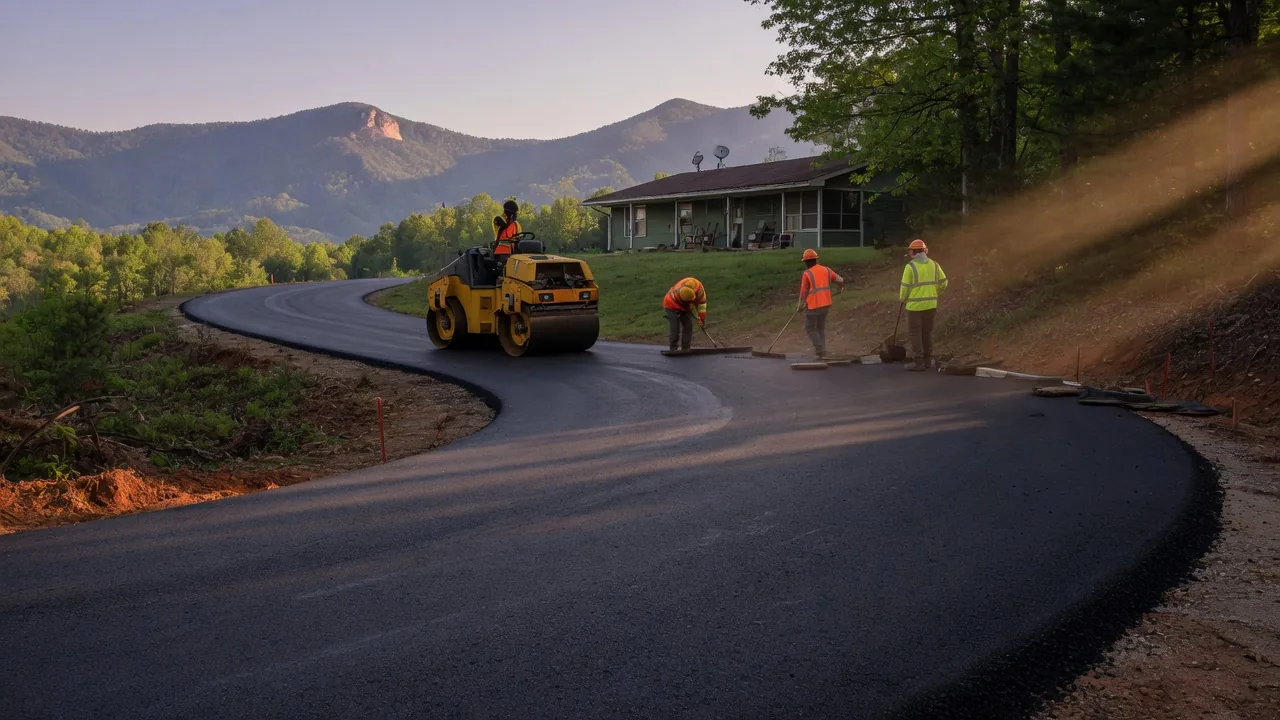
Access is the other hidden multiplier. A drive that a dump truck and a loaded paver can reach without backing up a steep grade is a straightforward job. A drive with a tight switchback, a low tree limb, or a bridge culvert that won't carry a loaded truck adds time and sometimes adds a smaller, slower equipment spread. Ask any contractor you interview how they plan to get equipment in and spoils out, and listen for whether they've actually thought about your particular driveway or are quoting you off a square-foot chart.
Water is the reason most Flat Rock driveways fail
This is a wet corner of the mountains, and the federal record shows it: 16 declared events touch this county across 1978-2026, almost all of them storm and flood family. Every one of those events pushed water at driveways graded for a drier assumption. Asphalt is a flexible pavement — it survives by shedding water off the surface and keeping the base dry underneath. When the water stops shedding, the base softens, and the asphalt above it cracks. So before any contractor sells you a new layer of asphalt, the drainage question has to be answered: where does the uphill runoff go, are the gutters and culverts clear, and is the drive crowned enough to shed. The EPA treats stormwater runoff as a first-order environmental issue for exactly this reason, and the same water that carves a channel in a hillside will find your driveway base.
If your driveway connects to a state-maintained road rather than a private lane, the access point is regulated too. NCDOT issues driveway permits for connections to state roads, and NCDOT Connect is where the application lives. A contractor who has done this before will know whether your work touches the right-of-way; one who hasn't will let you find out the hard way.
Around Flat Rock the connection point is often a state road that already carries a lot of downhill water, and that's where a bad driveway apron becomes a road-safety issue as well as a driveway issue. If your apron has crumbled or your culvert has silted shut, water backs up at the road and starts cutting the edge of your drive from the bottom up. That kind of failure looks like a surface problem and is really a drainage problem, and it's exactly the case where patching the apron without fixing the culvert buys you a season at most.
What to ask before you sign
Three questions separate the crews worth hiring from the ones selling asphalt by the ton. First: what is the base plan? Any real quote addresses subgrade, aggregate depth, and compaction — an overlay or a rebuild without that is decoration. Second: who is licensed and insured for the scope? North Carolina requires general contractor licensure above certain project thresholds, and the NC Licensing Board for General Contractors is where you verify. Third: how does the work get sequenced around water? Drainage, grading, then paving is the order; a crew that paves first and promises to fix drainage later is running the project backward.
One more local check: asphalt plants and crews are busiest from late spring through fall, so a quote in the middle of the season carries different scheduling than a quote in February. Ask when the crew can actually be on your drive, not just when they can start. When you're ready to compare scopes, the asphalt paving overview covers what a complete job includes from prep to finish, and the Flat Rock driveway paving guide goes deeper on options specific to this town.
It also helps to know what you're looking at when the bids come back different. A low bid that omits base repair, drainage correction, or a proper compaction pass isn't a cheaper version of the same job — it's a different, shorter-lived job. The honest comparison is the same scope quoted by three different crews, and the fastest way to get there is to hand every bidder the same written description of what you want, including the drainage work you already know your driveway needs. If a contractor won't put the base plan in writing, that alone is your answer about how the rest of the job will go.