Crack or cave-in: knowing which repair your driveway is asking for
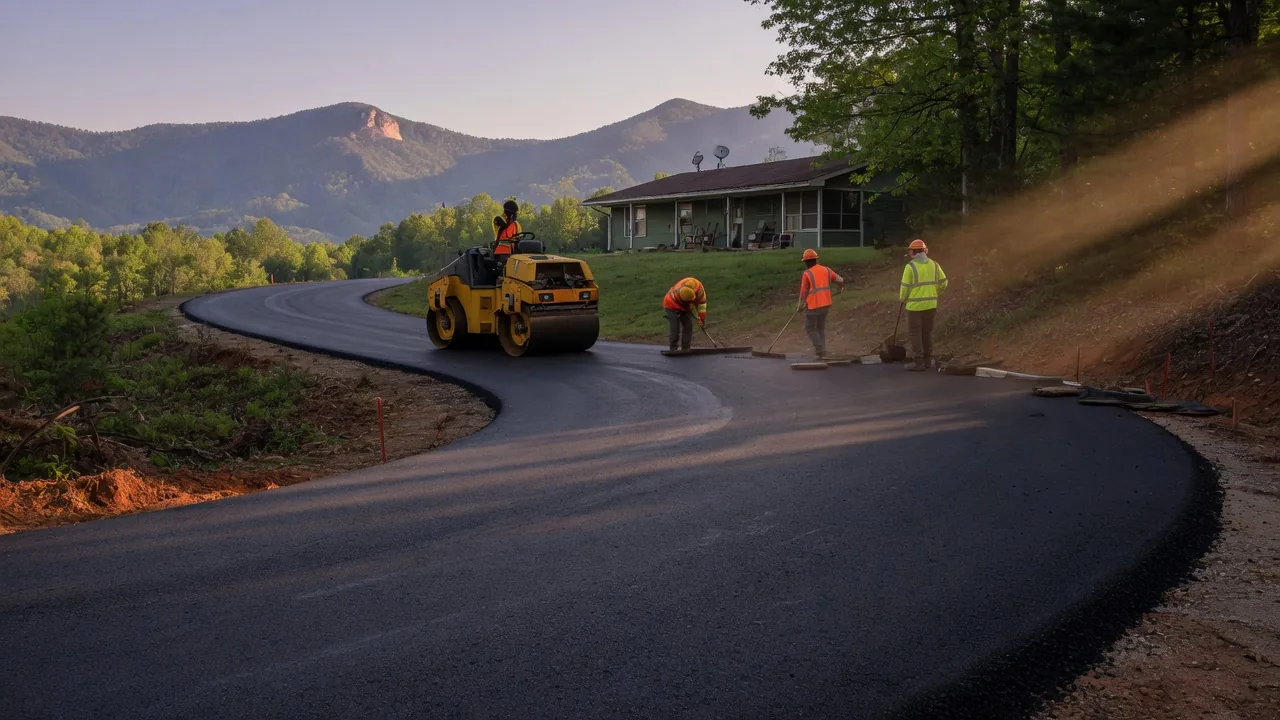
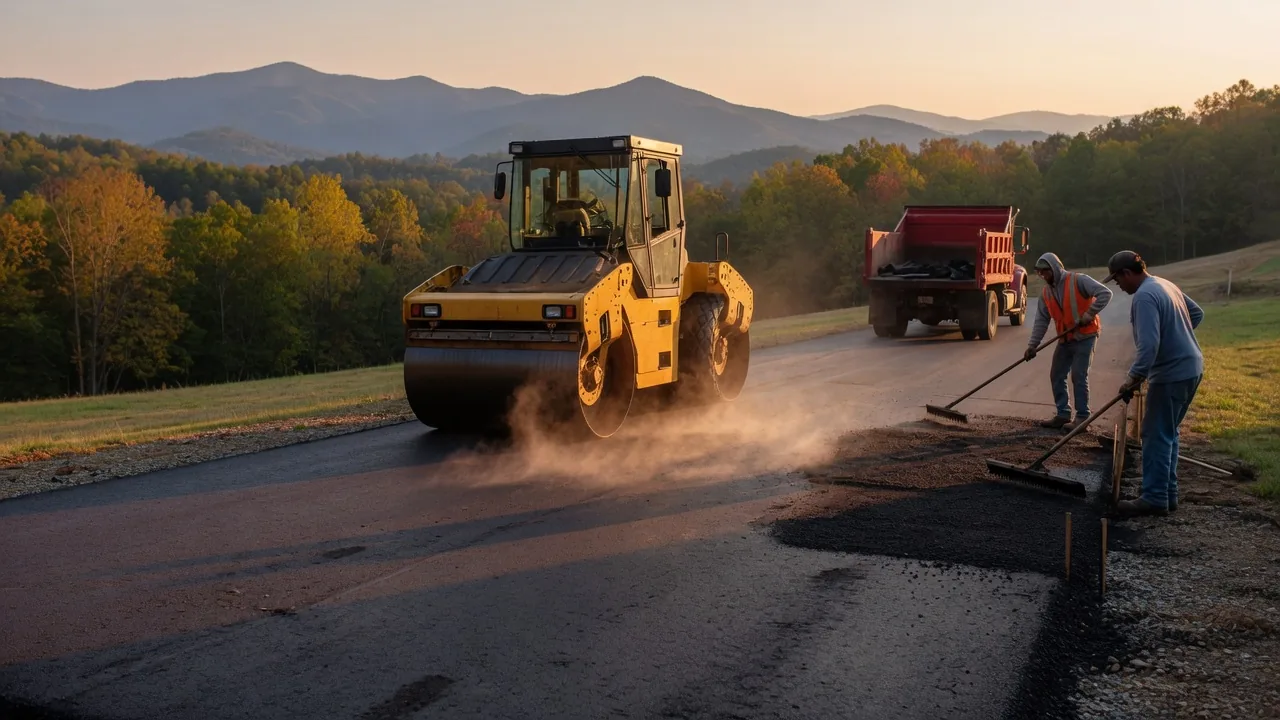
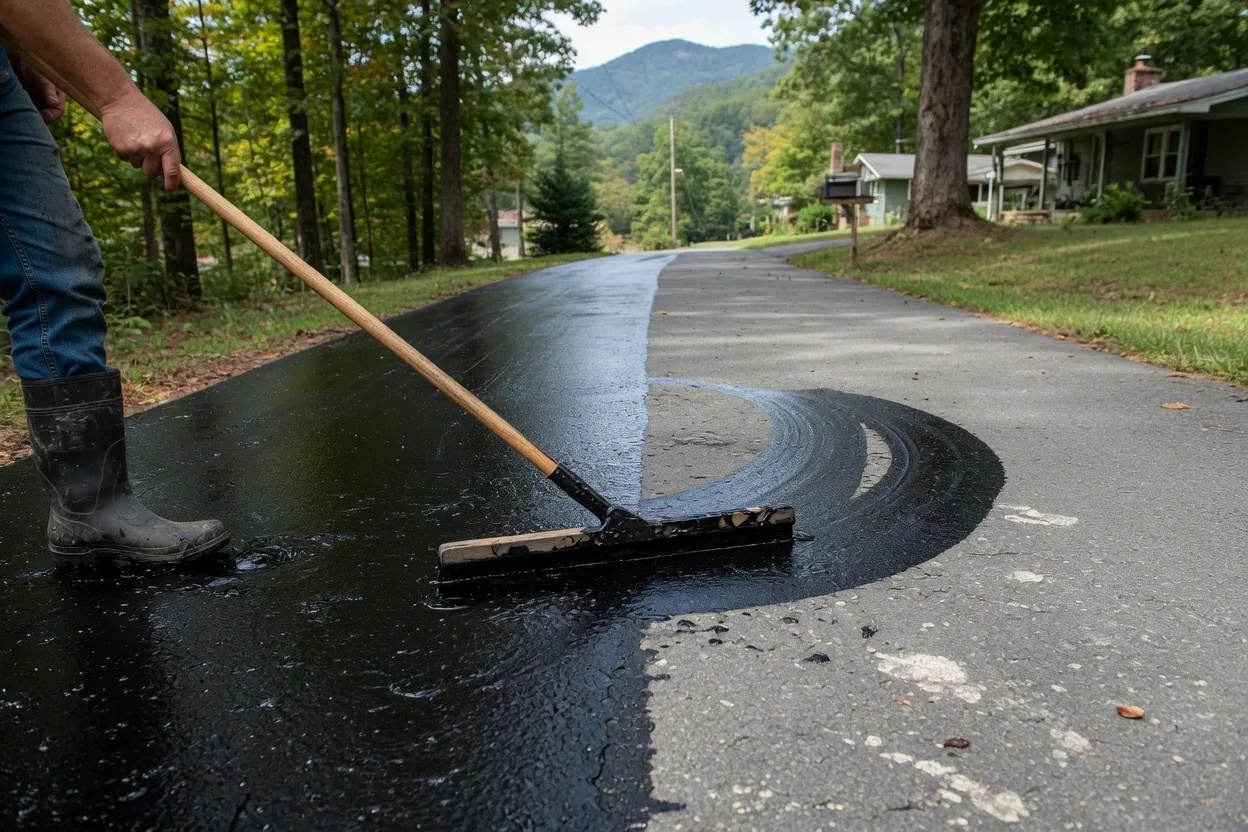
Driveways across Haywood County fail in a pattern that flatland asphalt never shows. A run cut into a slope off Ratcliffe Cove or climbing a ridge outside Canton sheds stormwater fast, then bakes in July sun. That wet-dry cycle opens hairline cracks. The cracks widen. Then freeze-thaw in February turns a crack into a pothole, and by the time the pothole shows the problem has moved from the surface to the base under it. The decision that matters more than any quote is this: is it a surface problem or a base problem? Sealer sits on top and protects; it fixes nothing below. Run your hand along a crack. If it's tight, under a quarter inch, and the surface on both sides sits level, sealing is probably the right spend. If the crack is wide, the edges crumble, a pothole has opened, or the surface feels spongy when you walk it, the base has likely failed. Sealing that driveway traps water against a broken base and you pay twice. The right call is a patch, an overlay, or in bad cases a tear-out and rebuild. Our sealcoating service page walks through what a proper seal job involves; the asphalt paving side covers the rebuild path.
What makes this harder in Haywood is that both problems often show up on the same driveway. A steep run in the Bethel or Cruso area can have a sound upper pad and a failing bottom apron where water pools and the base stays wet. A bidder who treats the whole run as one price is guessing. A bidder who walks the grade and separates the sections is doing the work. Ask for that separation in writing before you sign anything.
What property owners in Waynesville, Canton and Maggie Valley actually pay
Sealcoating prices in this county track square footage, access, and how much prep the surface needs. A short flat driveway in Waynesville with no cracks prices differently than a long steep run out toward Maggie Valley where the crew works a slope and fights runoff. Here are honest working ranges, not quotes.
| Scope of work | Typical Haywood range | What drives it |
|---|---|---|
| Sealcoat only, clean surface | $0.18 – $0.30 / sq ft | square footage, access, number of coats |
| Sealcoat with crack fill | $0.28 – $0.45 / sq ft | linear feet of cracks, crack width, prep time |
| Patch plus seal | $450 – $1,800 | pothole count, size, base repair depth |
| Overlay over sound base | $2.00 – $4.00 / sq ft | asphalt thickness, grade, edge work |
| Tear-out and repave | $4.50 – $8.00+ / sq ft | base rebuild, haul-off, drainage fixes |
Those are ranges. A firm number before someone has looked at your cracks and walked your slope is a guess. Also watch how a bid is structured. A per-square-foot price lets you compare bids and check the math against the table. A per-job price hides the mark-up, and it lets a contractor lump a patch into a seal job without telling you which part of the bill is which. On mountain properties, expect the bottom of the driveway to need more prep than the top, because that's where water sits.
Why a graded run from Waynesville to Maggie Valley costs more to seal
Haywood County sits in the Plott Balsams and the Pisgah National Forest, and that terrain shapes driveway work. Two things drive the price up here.
First, slope. A steep driveway means the sealer has to be applied carefully so it doesn't run and pool at the bottom. Crews working a grade often use two thin coats instead of one heavy one, and that takes longer. Second, water. Runoff off a hillside hits the driveway from uphill, not just from rain landing on it. That uphill water erodes edges and undermines the base over time. Our regional history backs this up: 19 federally declared disaster events have touched Haywood County (1973-2026), most of them storm and flood family. That record is why a driveway near a drainage swale or a creek bottom needs the edges watched, not just the surface sealed.
When a driveway drains poorly, sealing the surface without fixing the grade or the edge is a temporary fix. And once edges start to crumble, the failure spreads inward under traffic. The full sealcoating cost guide covers the drainage tie-in options for this region. For current storm and flood outlooks used in local planning, the National Weather Service publishes the watches and warnings that matter most in these valleys.
Licensing and rules that apply to this work
Sealcoating itself is generally treated as a maintenance service in North Carolina and doesn't require the same license as structural work. But once a job crosses into repaving, base reconstruction, or a project over $40,000, general contracting rules kick in under the NC Licensing Board for General Contractors. If you're having an overlay or tear-out done, ask for the license. For driveway work that affects access to a state-maintained road, NCDOT issues the driveway permit (NCDOT). Stormwater management on a commercial lot falls under rules tracked by the NC Department of Environmental Quality. If your driveway project disturbs enough ground to trigger erosion control, that matters before the first scoop of asphalt.
For residential driveways in the unincorporated parts of the county and inside Waynesville, sealing alone typically doesn't pull a permit. The line is usually about what the work changes: if it alters how water leaves your property or how the driveway meets a public road, expect paperwork. When sediment can reach a creek or a storm inlet during a repave, erosion control requirements can apply even on a single driveway. Sorting that out before mobilization is cheaper than fixing it after a complaint.
How to keep a sealcoating bid honest
Three moves protect you on a sealcoating job in this county:
- Get the crack diagnosis first. Ask every bidder whether the cracks are surface cracks or base failure. A contractor who jumps straight to a price without looking at the base is selling you a coat of paint.
- Price by the square foot, not by the driveway. Square footage is measurable and verifiable. A per-job price hides the mark-up.
- Compare against the county range. If a bid lands far outside the table above, make them explain why. Slope and access are real reasons for a higher number; an unexplained high bid usually isn't.
Two more checks help on mountain properties. Walk the driveway with the bidder and point at the worst crack or the soft spot yourself; how they explain it tells you as much as the number. Then ask what happens to the edges, because that is where hillside runoff hits first and where a cheap seal job fails fastest. Wondering how your area compares? The regional cost guide has the county-wide picture, and the paving service page covers what happens when sealing isn't the answer.