Why a driveway here is a grading job before it is a paving job
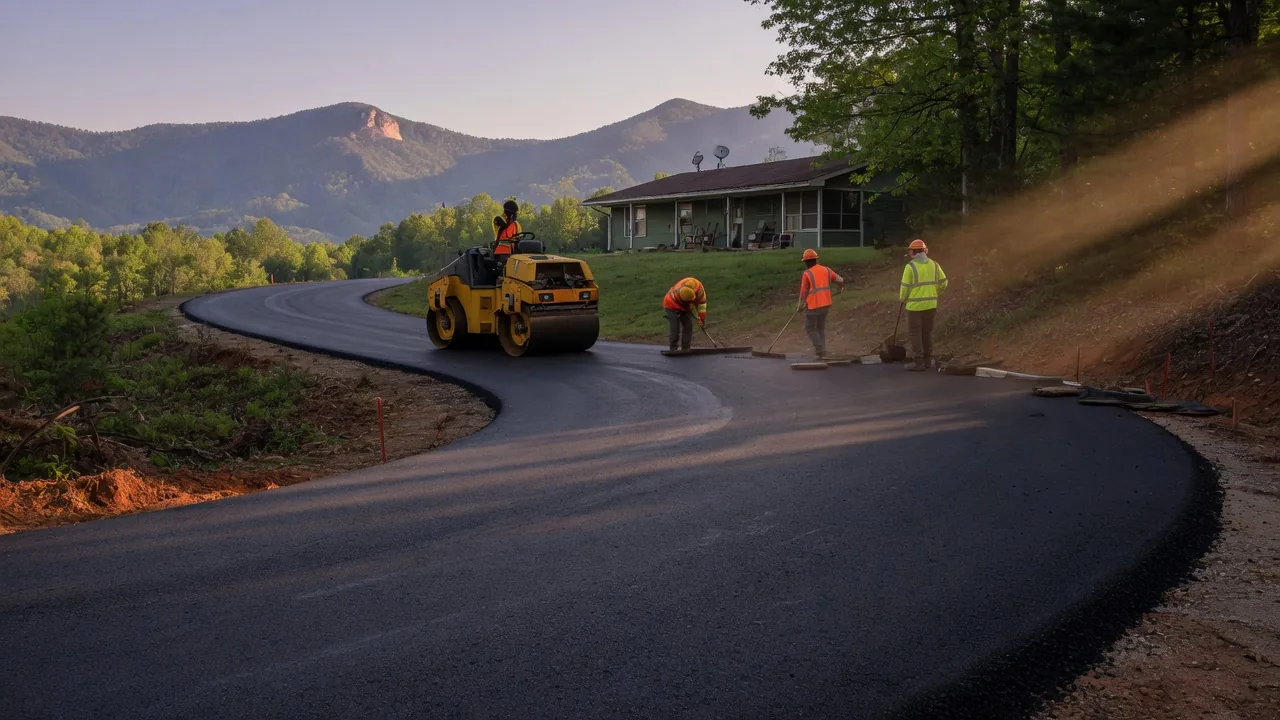
Driveways around Buncombe County rarely look like the flat suburban aprons in flatland markets. A builder working in a subdivision off a valley floor might pour 40 feet of straight approach; a crew quoting a house on a ridge above the French Broad or on a shoulder of however steep the lot is often measures the run in the hundreds of feet, with fall, switchbacks, and a cut bank on one side. That vertical reality, not the asphalt itself, is what makes asphalt driveways in this market a different scope of work than the same square footage in Charlotte.
The second local reality is subsoil. Much of the county sits on weathered clay and saprolite with rock close enough to the surface that a machine operator finds it in the first afternoon. Clay holds water, and water under a driveway is the first cause of every failure a homeowner will call about three winters later. So the honest starting point for new driveway installation in Asheville, NC is not "how much asphalt," it is "what does the ground do when it rains, and what grade will carry water off the surface instead of through it."
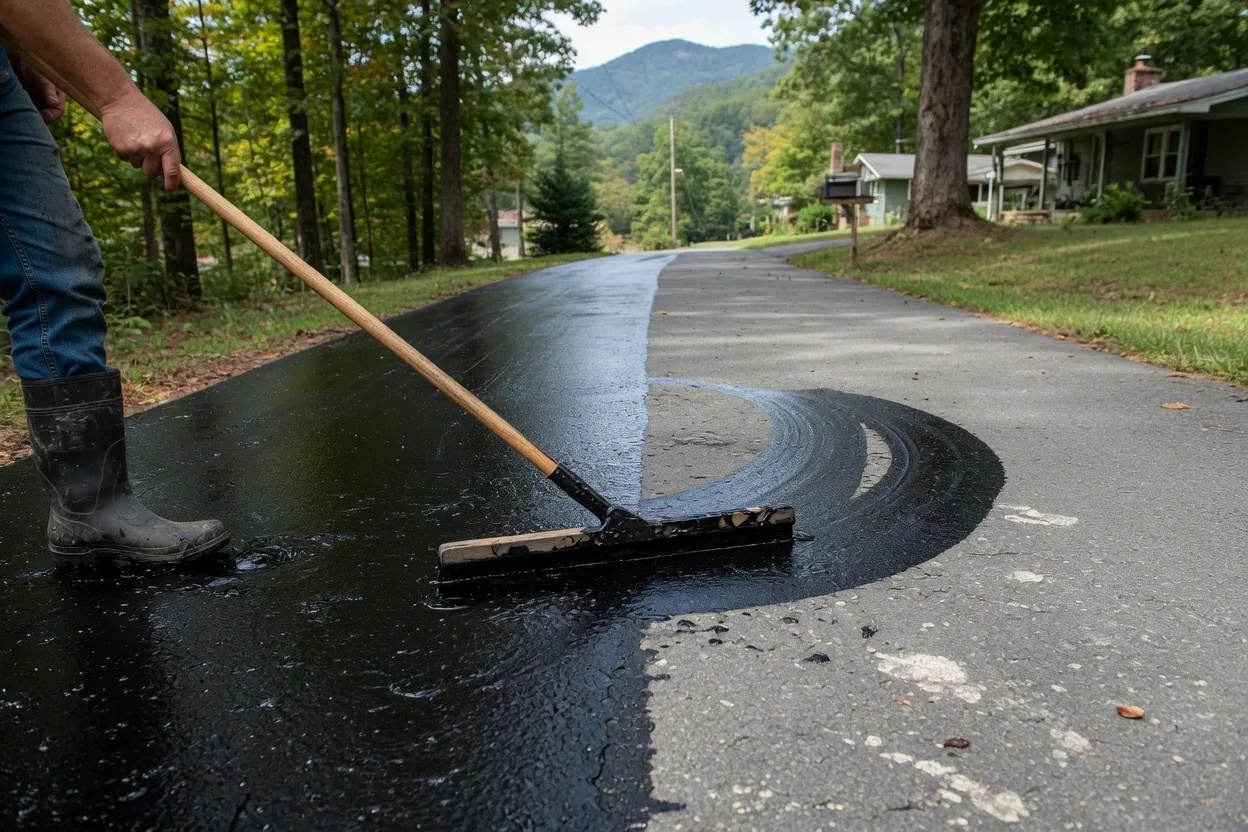
Third: this is a market with a lot of existing pavement. Older roadside neighborhoods near West Asheville and in the county's mill villages have driveways that were laid over whatever was there decades ago — often thin, cracked, and pitched toward the house. Replacement and full reconstruction are as common a request here as new construction, and the bid process is the same. Before anything gets priced, the job needs a look at the ground, which is why the driveway page and any reputable bid start with assessment rather than a per-square-foot number.
What changes the number: run length, grade, base, and drainage
Four variables decide almost every driveway bid in this county.
- Length and width. A 12-foot-wide, 50-foot drive and a 16-foot-wide, 200-foot drive are entirely different projects. Turnarounds, parking pads, and a second approach to a shop building all add area and cost.
- Grade and earthwork. A gentle fall away from the house is normal. A 15-percent climb with a cut on one side and a fill on the other needs excavation, compaction in lifts, and often a retaining structure. On ridge lots, earthwork can be half the invoice.
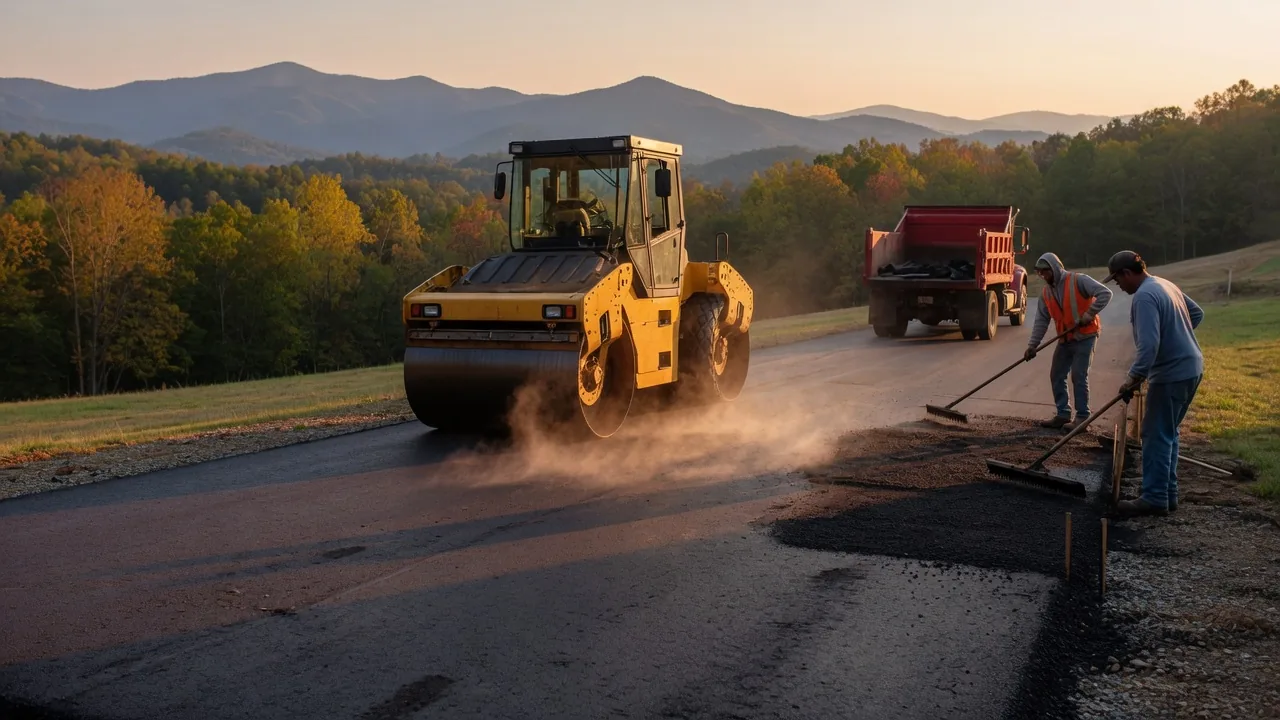
- Base and subgrade. Clay and rock mean the base is not optional and not thin. Crushed stone over compacted subgrade, with geotextile where the soil is soft, is what keeps an asphalt surface from cracking in the first two winters.
- Drainage. Culverts under the drive, swales along the uphill edge, and a positive fall toward a daylight outlet. Water that cannot leave the driveway will find the house. That is why any structural scope here is inseparable from the site's water, and why the state's code officials treat drainage as part of the build, not an add-on.
To price these honestly, the bid should break scope into line items rather than one lump number. The table below shows the bands we see in this market for a typical two-car residential drive, asphalt surface. It is not a quote, and no legitimate bidder will give a firm number without seeing the grade.
| Scope | Typical price range |
|---|---|
| Short, gentle drive — about 40-60 ft., straightforward grading | $6,500–$9,500 |
| Standard two-car drive — 60-120 ft., moderate grade, new base | $9,000–$14,000 |
| Long or steep run — 120-250 ft., significant cut/fill, culvert | $14,000–$22,000 |
| Retaining wall, switchback, or major rock excavation | Add $3,000–$15,000+ depending on length and height |
| Turnaround or parking pad added to the above | Add $2,500–$6,000 |
These are regional bands, not promises. The single biggest reason two neighbors on the same road get bids thousands apart is what the machine finds in the first hour, and no honest estimator can know that before digging.
Asphalt or concrete, and why the answer is usually local
The asphalt-versus-concrete question comes up on nearly every new driveway, and the honest answer depends on grade, sun exposure, and how the owner intends to maintain it. Asphalt is generally less expensive up front, tolerant of slight ground movement, and quick to repair, which matters on a slope that will settle a little in the first year. Concrete holds up better to heavy point loads and looks brighter longer but cracks more readily on poorly compacted clay subgrade and is harder and costlier to fix when it does.
On steep mountain drives, asphalt's flexibility is often the deciding vote, provided the base is right and drainage is handled. The full comparison, including cure times and long-term maintenance cost, is on the asphalt vs concrete page. What matters at the quoting stage is that the contractor is willing to recommend the material that fits the site rather than the one with the best margin that month.
If the driveway connects to a state-maintained road, the approach and any culvert work fall under access permitting, and the requirements differ from a city street or a private subdivision road. Those rules are collected on the NC driveway permit rules page. Pulling the permit is part of the job, not a homeowner errand.
Permits, licensing, and the paper trail that protects you
In North Carolina, general contracting is regulated by the North Carolina Licensing Board for General Contractors, and the threshold at which a project requires a licensed general contractor matters on larger driveway and site-work packages. Work that touches the public street approach or a drainage easement brings in the local permitting authority, and code and safety requirements for the built environment are set through the NC Department of Insurance and its Building Code Council. Where a driveway changes stormwater flow, the state's environmental rules can apply as well; the NC Department of Environmental Quality is the authority to check with on those questions.
On the federal side, EPA guidance on stormwater and erosion control is the background for how site work is supposed to be managed during construction, and it is the reason a responsible crew protects downhill neighbors with silt fencing and stabilized entrances rather than letting a rainstorm wash the job onto their property.
Storm history is not abstract here. This county has seen 19 federally declared disaster events over a record spanning 1973-2026, and saturated ground is the mechanism that destroys most underbuilt mountain driveways. That is why base preparation and drainage outrank surface thickness in any bid you should trust.
How to read a new driveway bid
A credible proposal for new driveway installation should state, in writing: the dimensions and area, the depth and type of base stone, whether geotextile is included, the asphalt thickness and mix, how the grade will shed water, where the water will go, and who pulls the permit. A bid that lists only a price and a square footage is not a bid; it is a hope.
Ask two more things. First, what happens if rock is hit — is there a defined hourly rate for unexpected excavation, or will the contractor simply come back for more money? Second, what is the compaction method? Loose fill pushed into place without compaction will settle, and the cracks that follow will not be the asphalt's fault. Good base work is invisible when the job is done and it is the only reason the surface is still flat five years later.
A final local note: schedule matters. Asphalt placement in western North Carolina needs dry, warm-enough conditions, and the window between a wet spring and an early mountain fall is narrower than most homeowners expect. Bids taken in the wet months usually mean work scheduling into the good ones. Get on the list early and let the ground dry before the base is built.