Where the rain goes decides everything on a Weaverville driveway
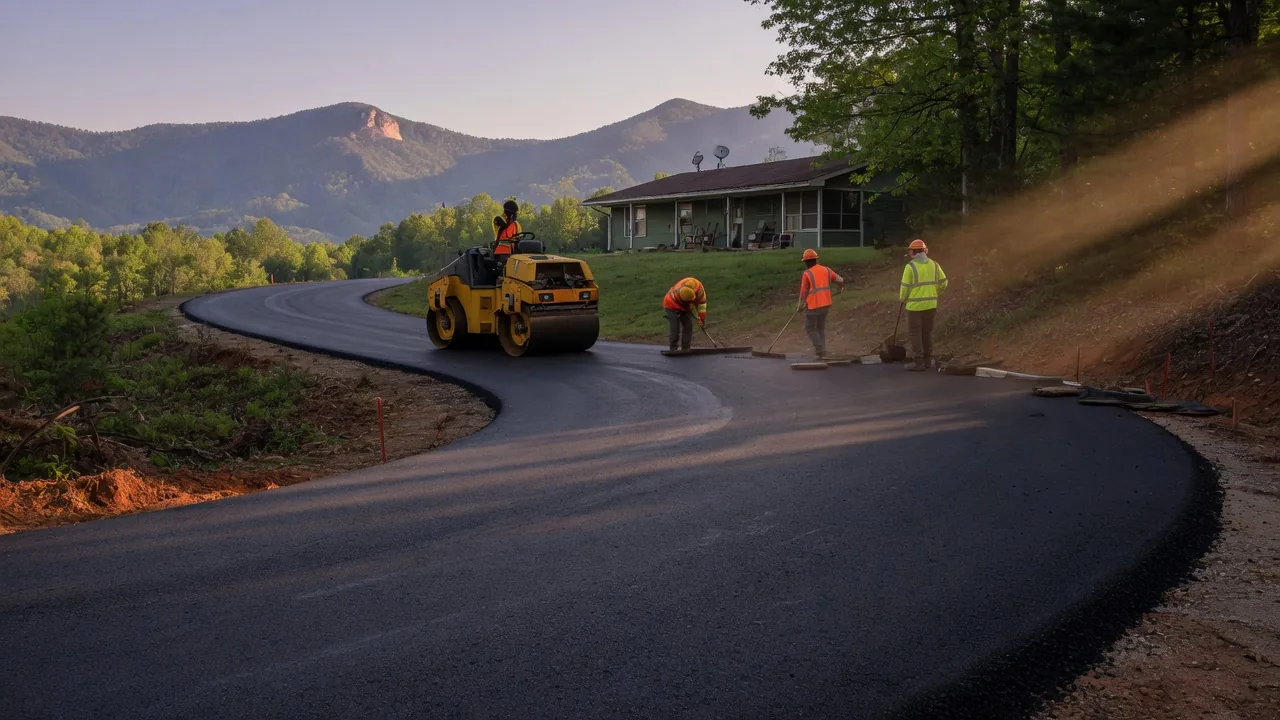
Stand at the mouth of almost any driveway off Reems Creek Road or Monticello Road and you can read the whole job before you walk it: the mountain above the house sends water down, the driveway is the only channel it has, and asphalt is what pays for a channel that was never cut. Weaverville lots sit on grades that Asheville's flatter neighborhoods don't, so the crown, the shoulder, and the ditch aren't details here — they are the driveway.
What that means in practice: a proper cross-slope of roughly 2% shedding water to one side, a defined ditch or swale catching it before the garage, and a culvert sized for the actual watershed under the drive, not the one the last owner guessed at. Get that wrong and you'll be back in three winters with ruts in the wheel paths, edge drop-off where the asphalt meets grass, and a soft spot over the culvert that no overlay will fix. On a grade, water that isn't directed is water that's excavating.
Walk a Weaverville drive after a hard summer storm and you can trace the whole failure path in the gravel: the sheet coming off the upper slope, the point where it jumps the shoulder, the fan of stone it deposits at the garage apron. That fan is the receipt for a drainage problem that asphalt will only hide for a season or two. The crown does the first work, shedding water toward the shoulder before it can gather speed. The shoulder does the second, carrying it parallel instead of letting it dive under the mat. The ditch or swale does the third, moving it to a culvert or daylight before it reaches the foundation. Miss any one of those three and the other two are working alone.
Weaverville's mix of driveways, and why they fail differently
Three common situations come up again and again here. Long gravel-to-asphalt conversions up steep hollows, where the existing stone never had the right gradation and needs to be rebuilt or the new mat will mirror every rut underneath it. Older driveways on the flatter in-town streets, where the failure is usually alligator cracking from an aged base rather than slope erosion. And new builds on recently graded pads, where the question is whether the builder compacted the subgrade at all before the first winter.
The tells worth acting on: a crack you can lay a pencil in that's wider than last spring, edge crumbling into the grass after a hard rain, wheel-path ruts you can feel through the steering wheel, and any standing puddle that hasn't drained 24 hours after rain. Puddles are a grading problem, not a paving problem, and paving over them is the most expensive way to learn that. The asphalt driveway guide walks through the assemblies that hold up on grades like these.
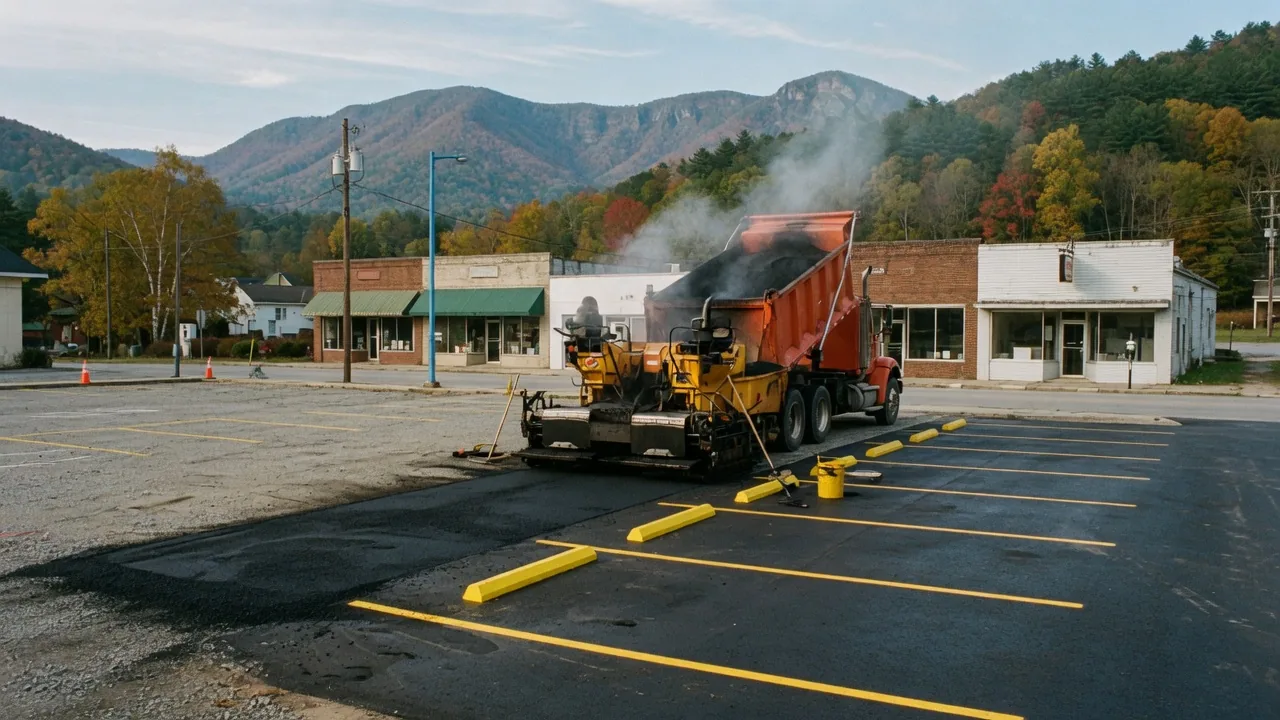
In-town Weaverville has its own pattern. Streets closer to Main Street and the flatter blocks near the high school tend to have shorter drives on older bases, and those are where alligator cracking shows up as a map of interlocking cracks rather than as slope erosion. The fix there is often an overlay after the cracked mat is removed or leveled, not a full rebuild. Out toward Weaverville Highway and the county edges, the drives are longer, the grades steeper, and the culvert becomes the whole job. A contractor who bids both without distinguishing them is bidding from memory, not from the site.
Scope and price bands for Buncombe County mountain lots
Ranges below reflect typical Weaverville and Buncombe County residential work; your number depends on grade, length, culvert, and how much base has to be rebuilt. See the full Buncombe County cost breakdown for line-item detail.
| Scope | What it includes | Typical range |
|---|---|---|
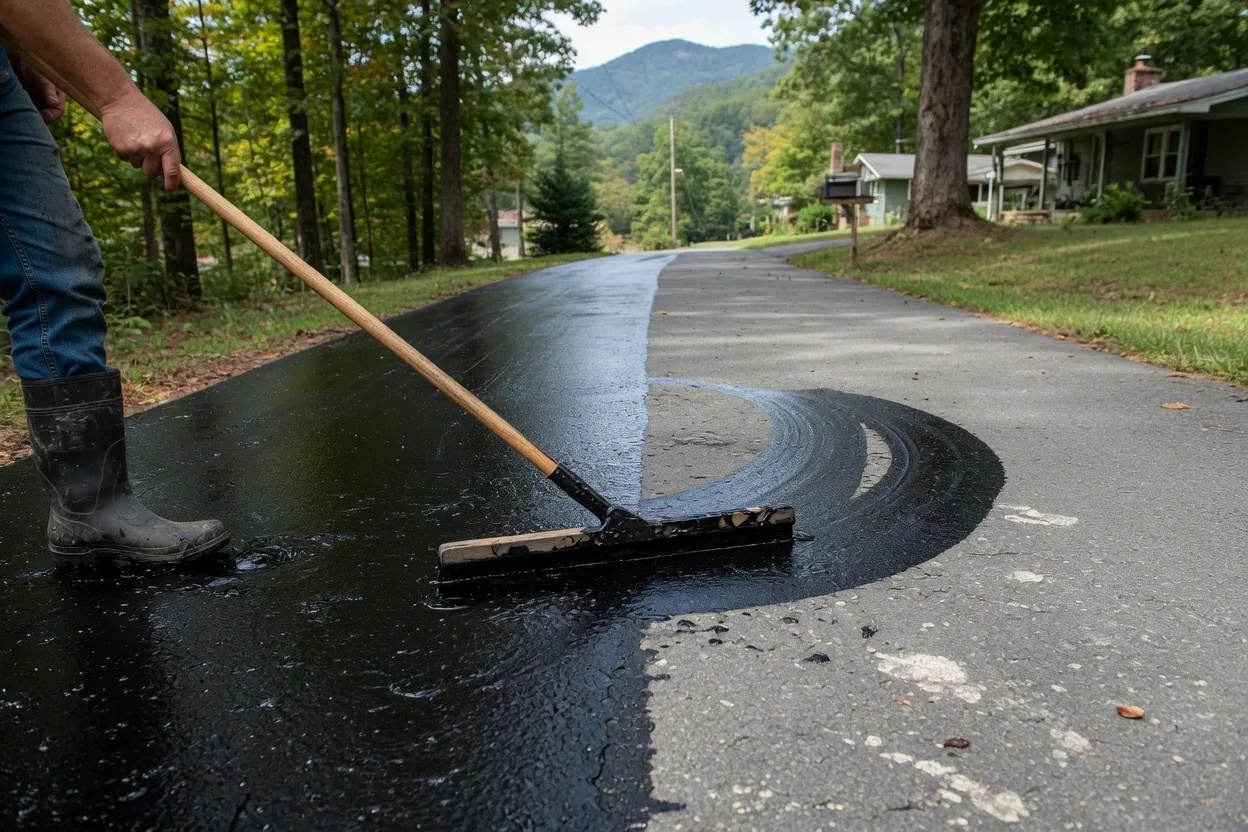
| Crack fill & sealcoat | Cleaning, hot-pour crack filler, one seal coat | $450–$1,400 |
| Overlay (1.5–2 in) | Where base is sound, edge milling optional | $2,200–$5,500 |
| Full replacement, standard lot | Tear-out, regrade, 2–3 in binder + 1.5 in top | $4,500–$14,000 |
| Steep or long drive | Adds haul-off, ditch work, extra compaction | $9,000–$22,000+ |
| Culvert replacement | Excavate, set pipe, headwalls, repave over | $1,800–$6,500 |
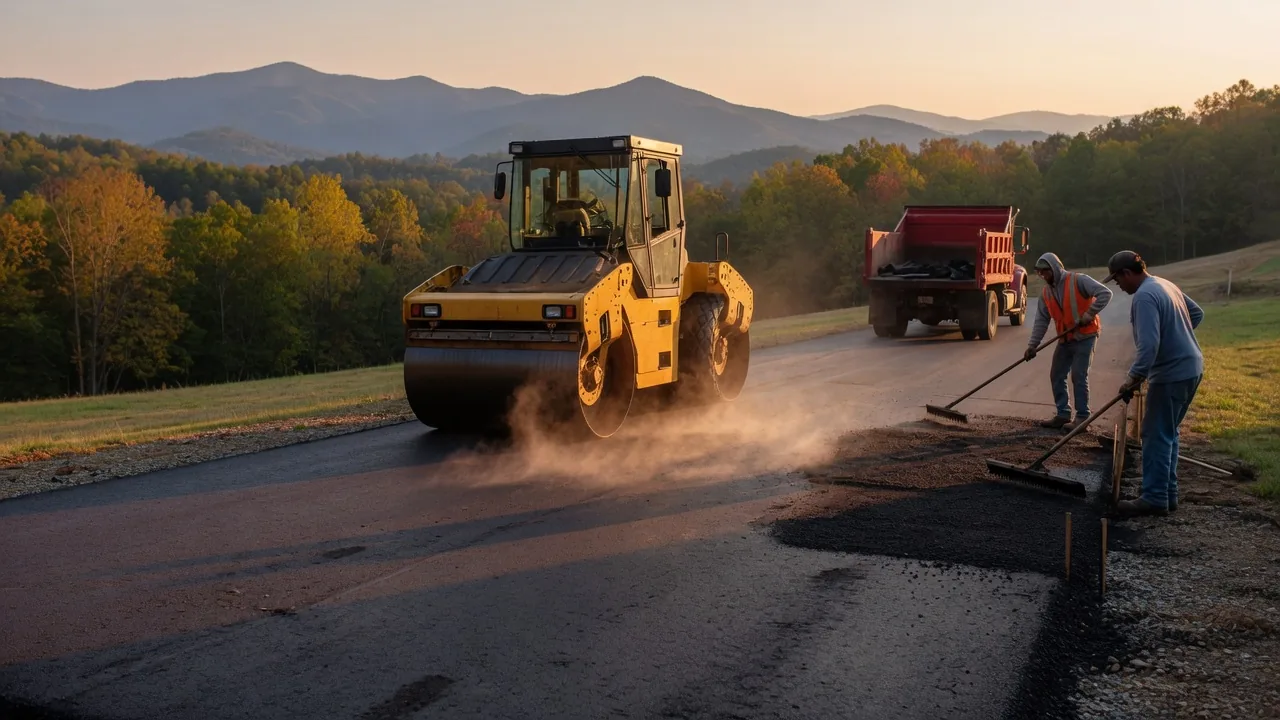
Those bands move for two reasons here more than anywhere: how far the paver has to push mix up a grade, and how much of the old base has to leave the site. Steep Weaverville lots routinely add drainage and hauling line items that flatland bids never show, so treat a quote without them as incomplete rather than cheap.
Two line items deserve their own note because they show up on Weaverville quotes more than most. First, haul-off: mountain lots often leave no room to stockpile old asphalt on site, so every ton of tear-out is a truck rolling down a narrow drive and back up. Second, ditch and culvert work is sometimes priced separately because it is genuinely a different trade from paving, and a bidder who lumps it in without measuring the watershed is guessing. Ask to see how the culvert size was arrived at, not just the number.
Water first, asphalt second
The federal disaster record explains a lot of driveway calls in this county: 19 declared events touch the area (1973-2026), dominated by storm and flood families. Every one of those pushed water against grades that were already shedding hard. Before anyone sells you a new mat, the drainage question has to be answered — where the uphill neighbor's runoff goes, whether the ditch is deep enough to carry it, and whether the culvert is sized to the actual watershed. The EPA has plain-language guidance on managing stormwater at the lot scale, and it's worth ten minutes before you sign a paving contract. Asphalt laid over a drainage problem is a two-winter fix.
Freeze-thaw is the other half of the water story. Buncombe County swings above and below freezing repeatedly through January and February, and every one of those cycles pushes a little more water into any crack or open seam, then expands it. That is why edge cracks on a Weaverville drive widen faster than the same crack would in a milder climate, and why sealing a crack before winter is cheaper than repaving after it. The best time to look at your driveway is not summer, when everything looks fine. It is two days after a cold rain, when the soft spots, the puddles, and the undermined edges announce themselves.
Permits, contractors, and hiring well in this market
If your driveway meets a public road, improving or reworking the connection generally requires a driveway access permit through NCDOT Connect — more than a few Weaverville homeowners learn this after a paver has already started. And structurally, hiring is governed by state thresholds: the NC Licensing Board for General Contractors spells out when a job needs a licensed GC, and driveway work over those thresholds is no exception. Ask for proof of general liability and workers' comp, ask how many inches of compacted base go under the mat (two is a floor, three is better on mountain grades), and ask where the water is going to go. The crews that answer that third question well are the ones to hire — the rest are selling asphalt. Our Weaverville paving contractor page covers what a proper first site visit looks like.
Timing matters too. Mix plants serving this part of Buncombe County run hardest from late spring through early fall, and that is when compaction temperatures are easiest to hold on a mountain grade. A crew trying to place mix on a cold, shaded north-facing drive in December is fighting physics, not laziness. If your job can wait for warm weather, it usually should. If it cannot, ask exactly how the contractor plans to keep the mat workable, and be skeptical of any answer that does not mention temperature.