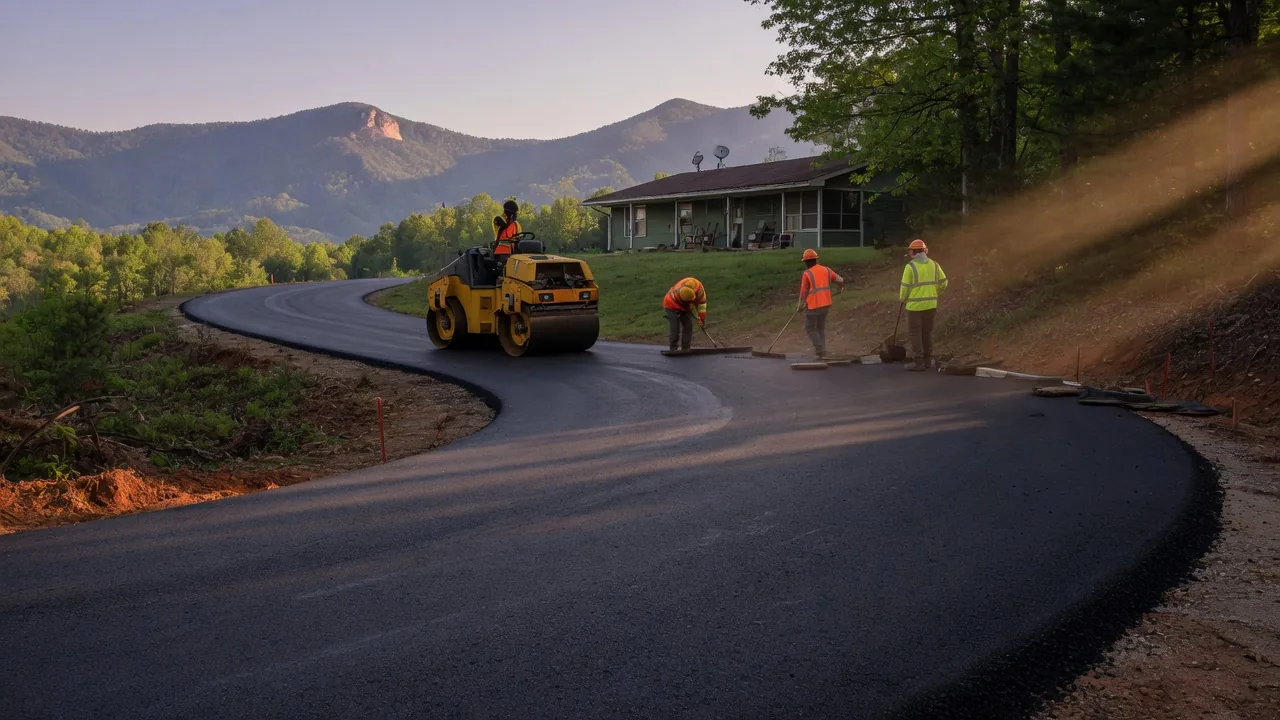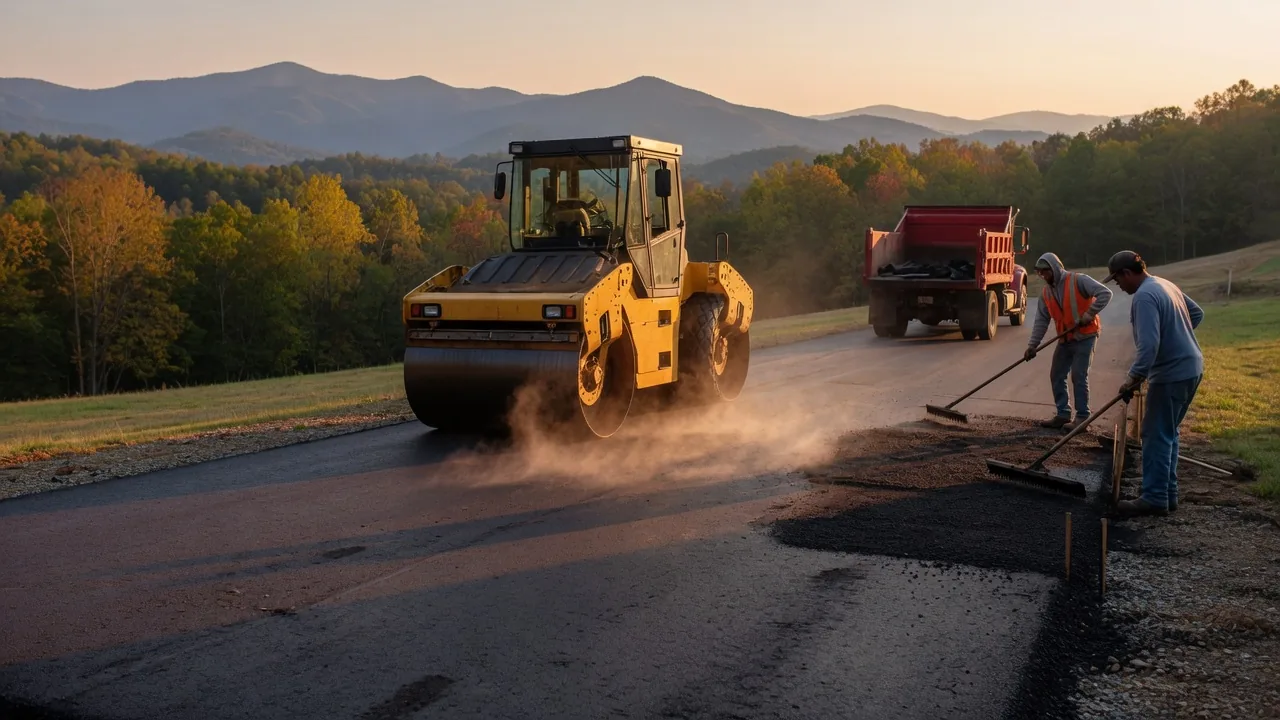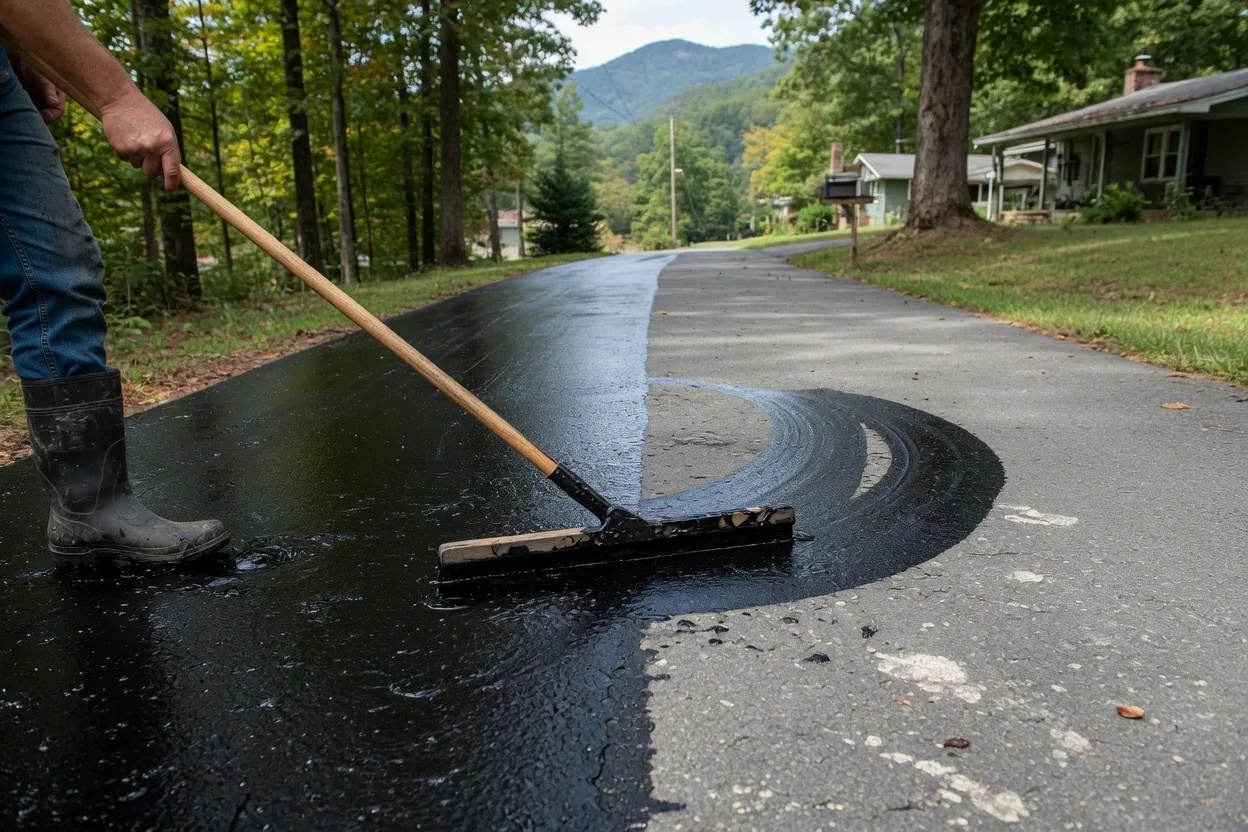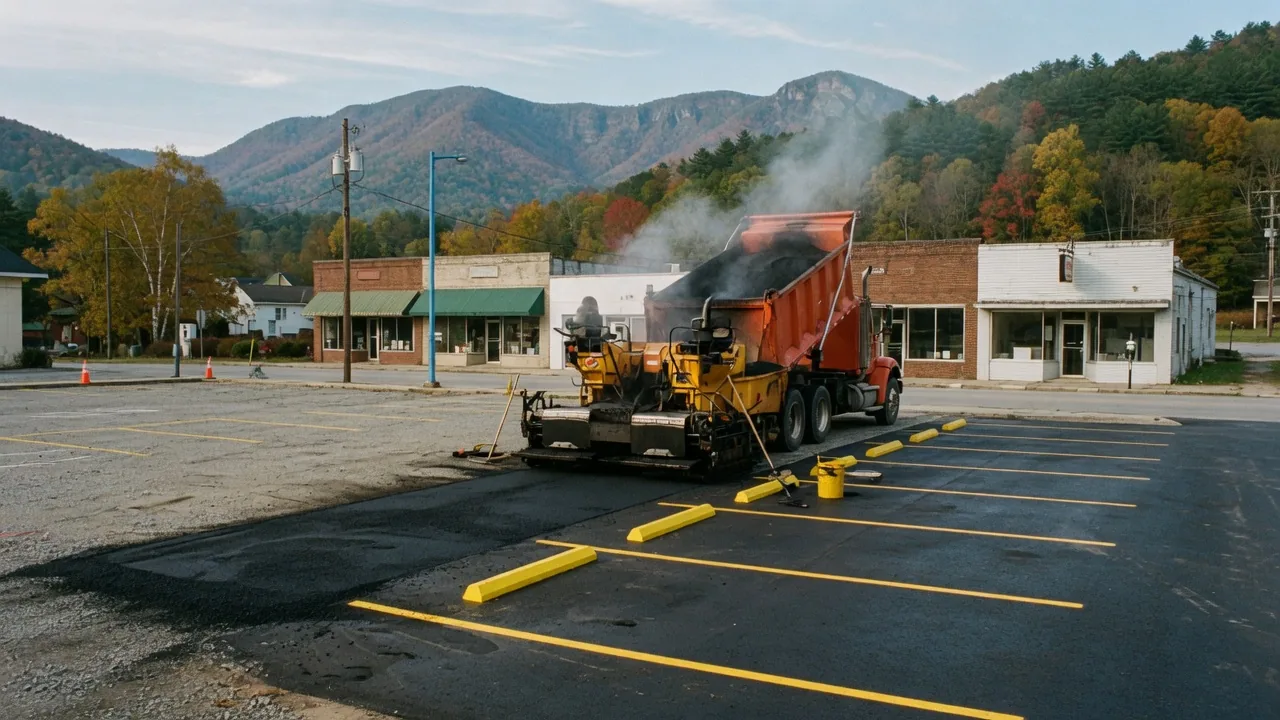
Two inches or three, one lift or two — the only question that matters here
A gravel drive off a Mills River road out toward the river bottoms or up one of the grade changes on the north side is not the same job as a subdivision driveway in town. The typical conversion here starts as a long gravel run that already understands its own drainage. Water sheds toward the barn or the ditch, and the crown has settled into whatever shape the last few seasons gave it. If that base is sound — compacted, drained, and pitched the right way — most of the asphalt cost is just surfacing it. If it is not, the asphalt becomes a lid on a problem that will show up as alligator cracking inside two winters.
Then there is what actually drives on it. Mills River drives carry trailers, hay equipment, stock trucks, and the full-size pickups that pull them. A turning truck twists the surface, and a loaded trailer concentrates weight in two narrow strips. That is the load picture that separates a two-inch lift from a three-inch, and one lift from two. Everything else on this page follows from that.
What makes the Mills River variant distinct is the mix of drive types sitting on the same soil. North-side grade changes push water down toward the apron, so a drive cut into a slope sheds differently than one running flat to a barn lot out in the bottoms. On flat runs, the base stays wet longer after a rain because there is nowhere for the water to go until it reaches a ditch or culvert. On grade, water moves fast and wants to run along the edge, which is exactly where an uncontained asphalt edge fails first. A crew that paves a lot of drives in this county reads that off the ground before they quote thickness. A crew that does not will bid both the slope and the flat the same way, and only one of them will be right.
Compacted depth and lift count are the strength, not the surface coat
Compacted asphalt is the strength. Two inches laid in a single pass is a reasonable light-duty surface for cars and half-tons on a short residential drive with a proven base. Three inches laid in two lifts — usually 1.5 inches binder plus 1.5 inches surface — is what a drive with real turning and truck traffic wants, because two lifts compact denser and the binder course carries the load while the surface course takes the wear. Bid the drive you actually have. Overselling thickness on a light-use drive is money wasted; underselling it on a truck drive is a repair bill in three years.
The other half of the price is base work. Most conversions need some combination of regrading, adding and compacting crushed stone, and drainage correction before a single ton of asphalt arrives. That work is invisible in the finished drive and it is the difference between a surface that lasts and one that does not.
Think about a drive that widens into a turnaround near the house. The straight run might be fine at two inches, but the turnaround is where every vehicle pivots its weight, and pivot points are where a thin mat shears. A sensible bid on a drive like that sometimes mixes thickness: two inches on the run, three on the turn, with the transition feathered in. That is not a trick to upsell. It is reading where the load actually lands and putting material there instead of everywhere. Ask any bidder whether they would vary thickness by zone, and you learn fast whether they think about turning loads or just calculate square footage.
Mills River conversion cost picture
Ranges below reflect Henderson County conditions and typical drive lengths. Your number will move with square footage, base condition, access for the paver, and how much drainage work the site needs. The county-level breakdown of scope and price is in the Henderson County cost guide; the summary of the conversion process itself is at gravel to asphalt.
| Scope | Typical Range | Notes |
|---|---|---|
| Base prep and regrade only (existing gravel, light correction) | $1.50-$3.00 / sq ft | Compaction, spot stone, pitch correction |
| 2-inch asphalt, one lift, sound base | $3.50-$5.50 / sq ft | Light-duty: cars, half-tons, short drives |
| 3-inch asphalt, two lifts, moderate truck use | $5.50-$8.50 / sq ft | Standard for trailers and equipment |
| Heavy-duty build (thicker base, 3+ in asphalt, widened turning) | $8.00-$12.00 / sq ft | Trucks, tight turns, steep grades |
| Full conversion, typical 1,200-2,000 sq ft lane | $6,000-$14,000 | Inclusive of prep and finish |
Ask any bidder to itemize base work separately from asphalt. A single line item hides the part of the job most likely to fail.
A long farm drive changes the math in a specific way. Once a run stretches past a few hundred feet, the per-square-foot asphalt cost matters less than how much of the run actually needs the heavy build. The first fifty feet at the road apron takes the worst of the turning and the load, the middle run mostly sees straight-line traffic, and the parking area near the house is back to light duty. Itemizing by zone rather than bidding one flat number for the whole drive is how you avoid paying heavy-duty prices for a stretch that will never feel a loaded trailer. It also makes the change orders honest, because you can see which zone blew past its estimate.
Water, weather, and the county record
Henderson County's storm history is the reason conversion jobs here start with drainage rather than thickness. 16 federal disaster declarations have touched this county across 1978-2026, and the pattern is consistent: heavy rain on ground that was already saturated. The National Weather Service tracks those events, but the practical takeaway for a driveway is simpler. Water that used to soak into gravel becomes runoff once you cap the drive with asphalt. If the grade, the ditch, or the culvert cannot move that runoff, the new surface floods, the edges undermine, and the base softens. Grade and drainage corrections belong in the conversion budget, not in a second phase.
For any drive that ties into a state-maintained road, the driveway connection itself is a permitted access point. NCDOT issues those through its driveway permit system, and the department's main permitting information is at ncdot.gov. Confirm the status of your existing connection before you disturb the apron.
Saturation is the part people underestimate. A gravel drive in the river bottoms can look perfectly firm in August and still be sitting on soil that never fully dried out from the spring. Paving over that base traps the moisture underneath, and the first hard freeze after a wet fall lifts the mat from below. That is why a conversion done in a dry stretch holds up better than the same scope done after a wet season, and why a crew that walks the base after a rain learns more about the site than any amount of measuring in dry weather.
Choosing the crew and staying compliant
Asphalt work in North Carolina falls under the state's general contracting licensing rules once a project crosses the statutory threshold, and the North Carolina Licensing Board for General Contractors publishes those thresholds and the license lookup at nclbgc.org. Beyond the paperwork, ask three things. How much base correction is in your bid and what triggers a change order. How the crew handles the edges, since an uncontained edge is where asphalt drives fail first. And whether the quote separates the two lifts, so you can see what three inches actually costs against two.
For Mills River addresses, the local contractor landscape is described at paving contractors in Mills River NC. Compare at least two itemized bids and read the base-prep line carefully before you choose.
One more thing worth asking on a drive with any grade to it: how the crew plans to compact the slope. Roller passes on a steep section are not the same as on flat ground, and a mat that is not compacted evenly across a grade will show the difference as a wavy surface within a season. It is a small question that separates a crew that has paved this kind of ground from one that has not. On a conversion this size, the answers you get before the work starts tell you more than the finished photos will.