Why Mills River driveways are their own category of job
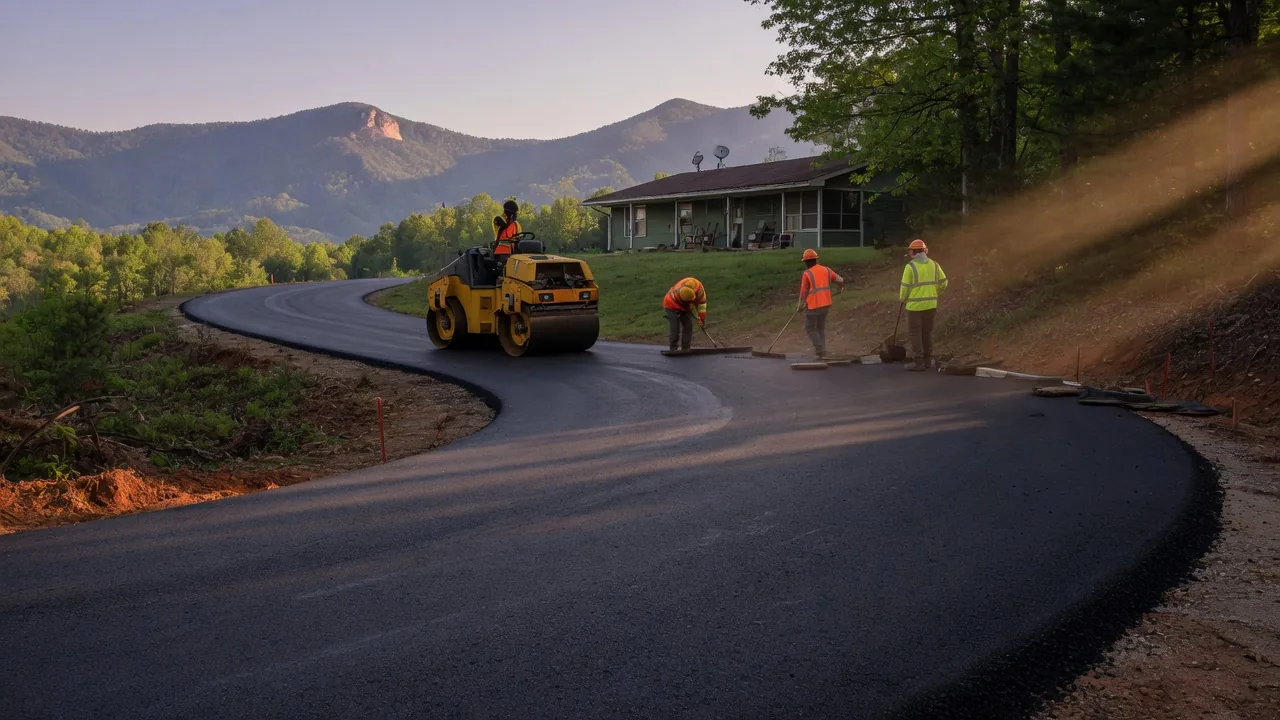
Driveways here are measured in hundreds of feet, not car lengths. Where an in-town Asheville lot gives you 40 feet from curb to carport, a Mills River property off Banner Farm Road or Hooper Lane often runs 300 to 800 feet from the county road to the house pad, and that changes everything about what tar and chip costs and how it should be built. Long lanes mean more square footage, more grade change, and more places for water to find a weak spot.
The terrain compounds it. Henderson County's rolling ground means most Mills River driveways climb or drop, and a chip seal surface on a sustained grade behaves differently than the same surface on flat ground. The stone has to seat into the binder before traffic touches it, and on a slope that curing window matters more. Subdivisions like those clustered near the French Broad along the river bottoms sit on flatter, wetter ground where drainage away from the drive is the whole game. Two Mills River driveways a mile apart can need completely different scopes.
What drives the number on a Mills River chip seal job
Square footage is the headline, but base condition is the real cost lever. A tar and chip surface is a wearing course, not a structural fix. If the existing gravel base has soft spots, ruts, or failed culvert crossings, the binder and stone go down over a problem that will telegraph through within a season or two. Mills River's mix of newer construction on graded pads and older farm lanes that have been gravel since anyone can remember means base repair estimates swing widely from property to property.
Below are honest regional bands for the work, not quotes. Every job gets its own number after someone walks the drive.
| Scope | Typical price range |
|---|---|
| Single-pass chip seal over sound existing base | $3.00-$4.50 per sq ft |
| Double-pass chip seal, longer rural lane | $4.50-$6.00 per sq ft |
| Base repair plus chip seal (spot gravel, grading, compaction) | $6.00-$8.00 per sq ft |
| Full rebuild: new base, culvert work, then surface | $8.00-$12.00+ per sq ft |
| Culvert replacement or addition (per crossing) | $1,200-$4,500 |
For a sense of how these totals compare with a full asphalt overlay on the same drive, the Henderson County asphalt cost breakdown is the honest comparison point. Tar and chip usually wins on long rural lanes; asphalt can win on short, steep, heavily turning drives.
Water, slope, and the Henderson County reality
Mills River gets the same storm pattern as the rest of the county and the federal record backs it up: 16 declared events have touched this area across 1978-2026, most of them storm and flood family. Long driveways on grade act like small watersheds. Every one of those events pushed water at culverts, ditch lines, and driveway crowns that were sized for a drier assumption. A chip seal surface that sheds water well lasts a decade or more; the same surface with water ponding at the edge starts unraveling in a few winters.
That is why any honest scope for a Mills River driveway starts with drainage, not stone color. Where does the uphill runoff cross the drive? Is the culvert sized for a real storm or just the last one? The National Weather Service rainfall records for this part of the mountains make the design storm question concrete. If a contractor quotes a surface without addressing how water leaves the property, the quote is incomplete rather than competitive.
Permits, code, and when the state gets involved
Most resurfacing work on an existing driveway doesn't trigger a permit. New driveway connections to a state-maintained road, changes to a driveway apron, or work that alters drainage onto the right-of-way do, and Henderson County processes those through NCDOT. The NCDOT Connect portal handles driveway permit applications, and the general NCDOT site spells out when a commercial or multi-family entrance crosses the threshold. For residential driveways this is usually a simple application, but it is not optional.
On the construction side, large paving and grading jobs can cross the general contractor licensing threshold. The NC Licensing Board for General Contractors sets the dollar figure that triggers licensure, and it is worth knowing where your project sits. Separately, the NC Office of State Fire Marshal maintains the residential code that governs how driveways, drainage, and site work are inspected in this state. None of this is a reason to avoid a project. It is a reason to ask a contractor which permits apply before work starts. If you would rather start with a shortlist of established local crews, the Mills River paving contractor guide covers how to vet them.
What a good Mills River tar and chip install looks like
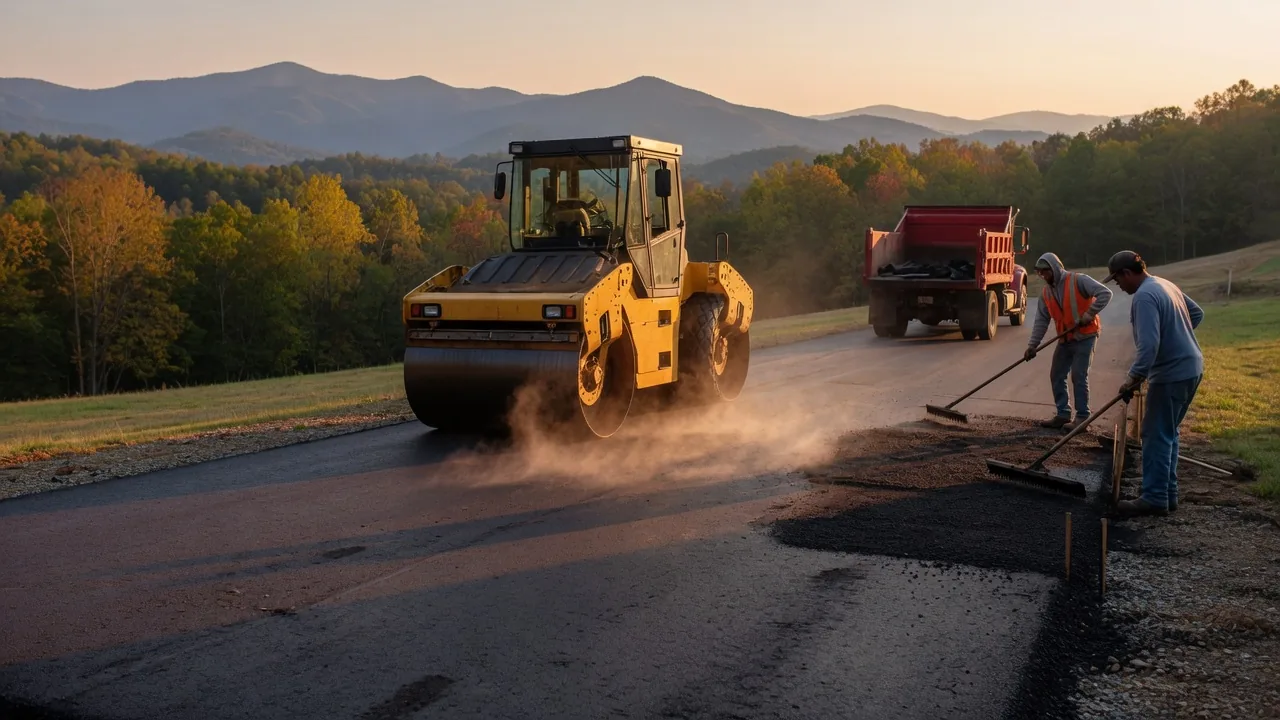
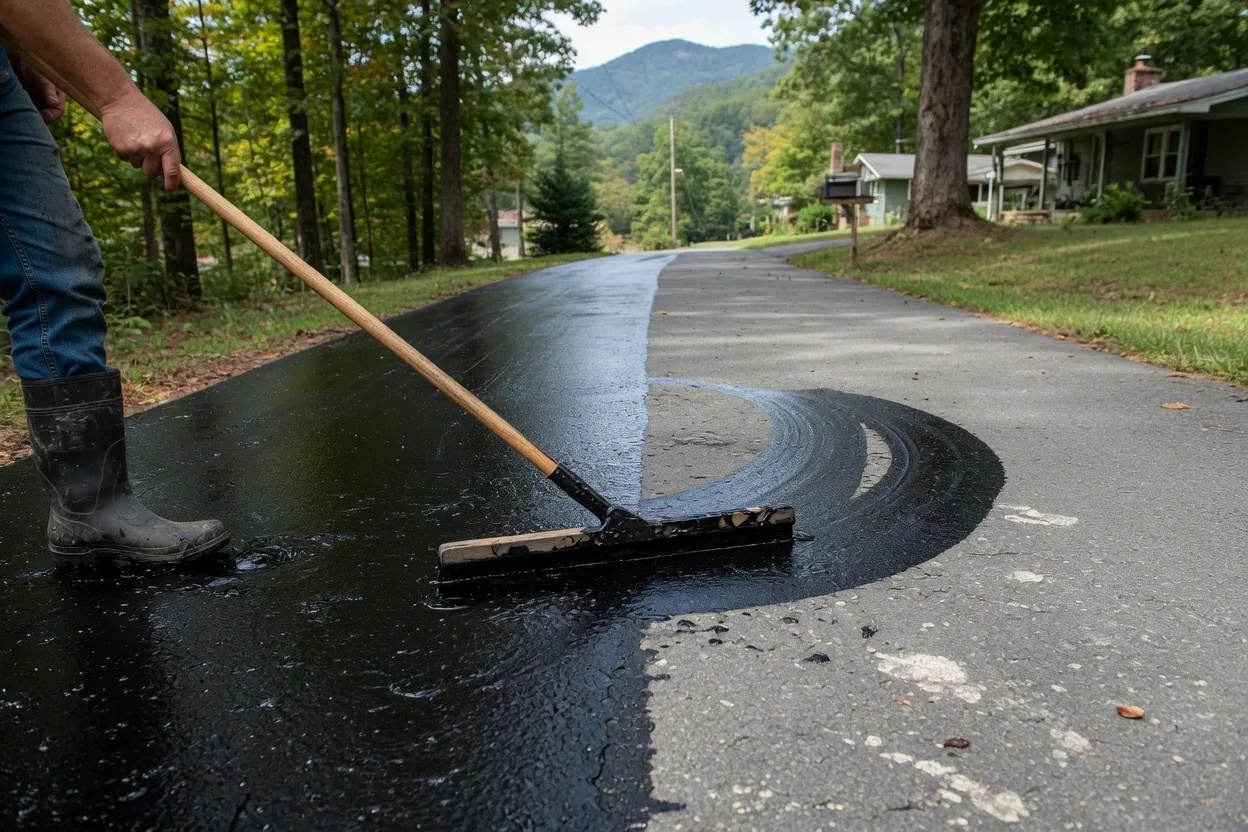
The sequence is unglamorous: grade and shape the base, fix the soft spots, compact, confirm drainage, then apply binder and stone in a pass the crew controls for temperature and traffic. On a long lane that usually means staging equipment at one end and closing the drive to traffic for a curing window, sometimes half a day, sometimes longer on a shaded or steep section.
What separates a Mills River job that lasts from one that doesn't is almost always preparation. Long lanes hide base failures well until the first freeze-thaw cycle. Slopes punish skipped compaction. Culverts that were undersized get exposed the first big rain. Ask any contractor you talk to how they intend to handle each of those on your specific drive. The answers will tell you more than the price per square foot. When you're ready to compare options across surface types, the tar and chip overview lays out where chip seal wins and where it doesn't.