Hot mix doesn't wait, and Lake Junaluska is at the end of the line
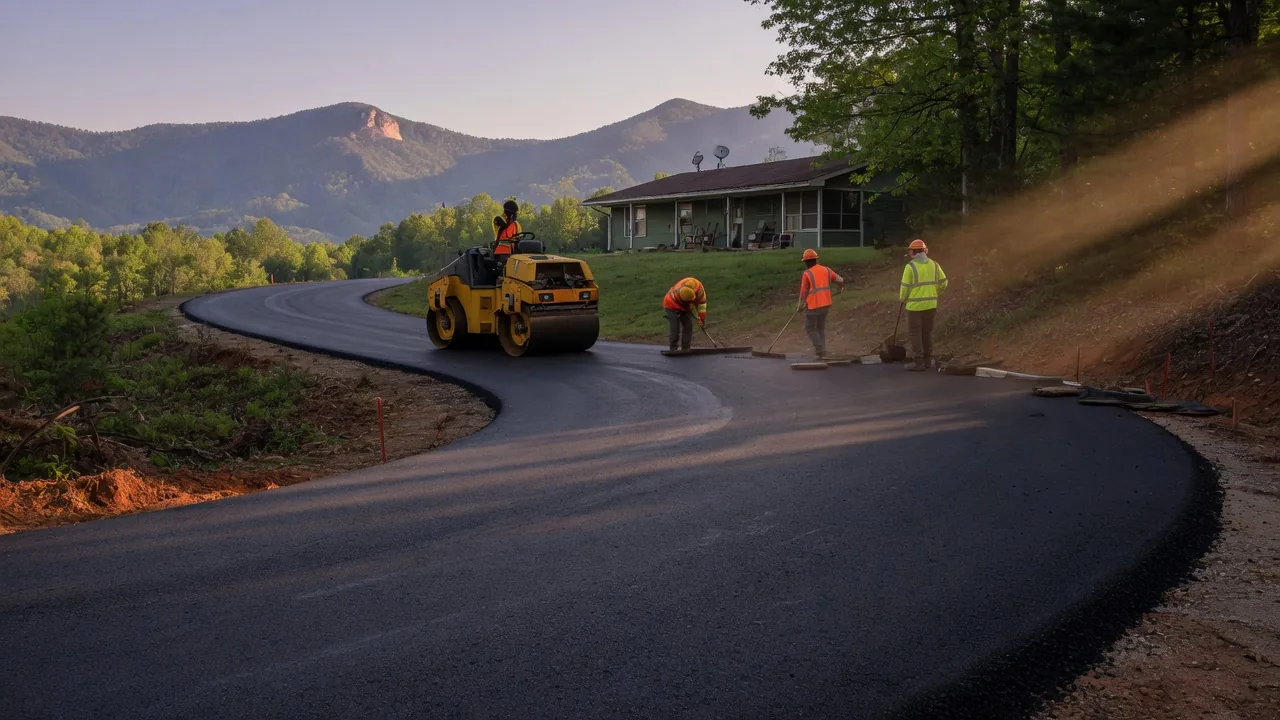
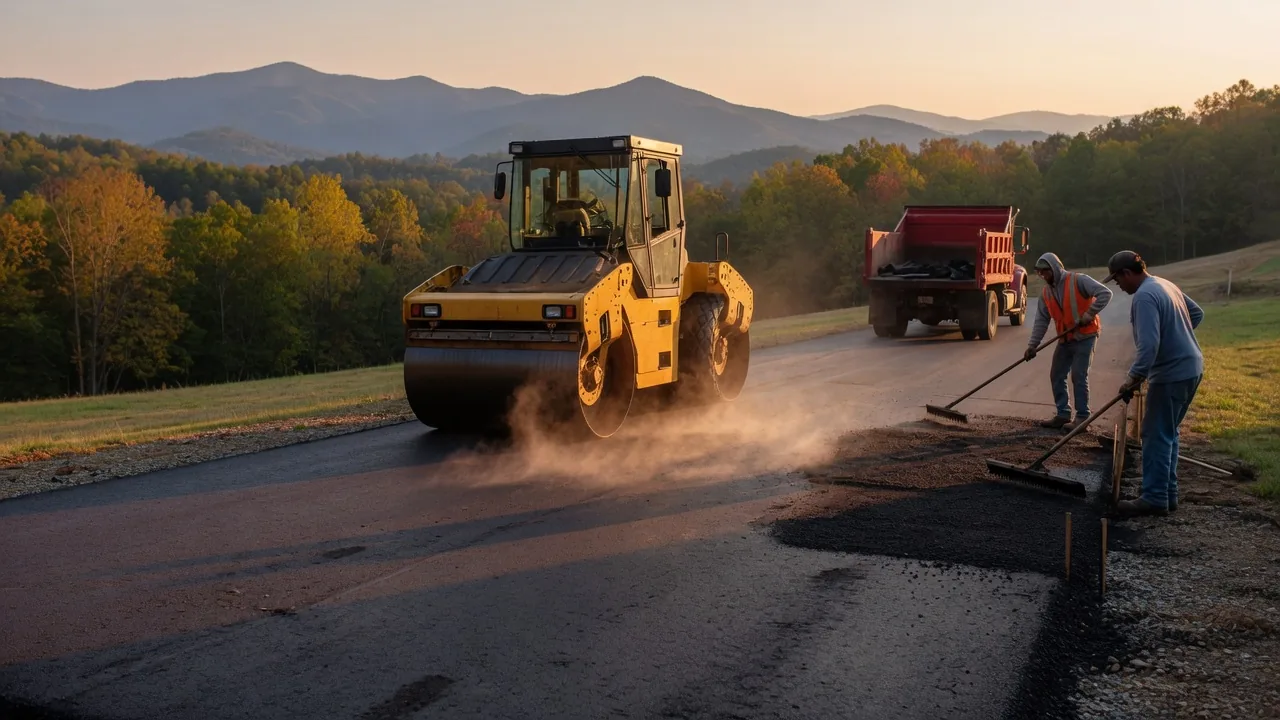
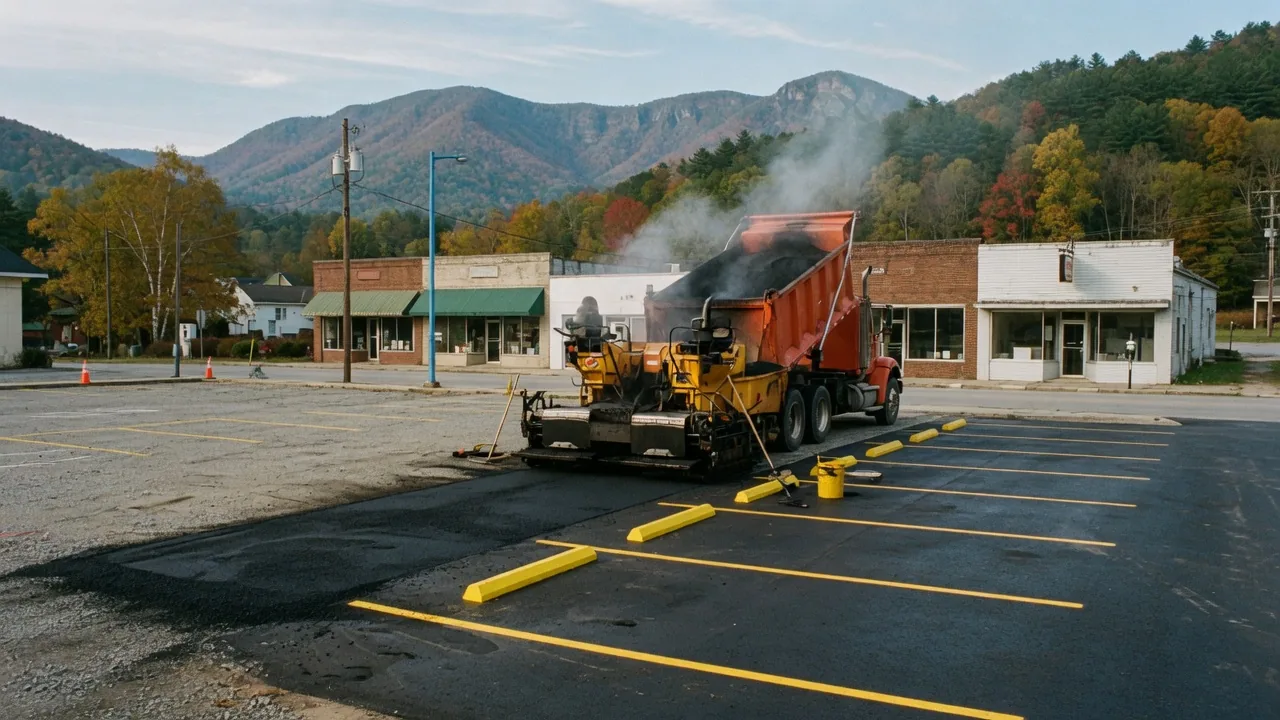
Asphalt leaves the plant at roughly 275-300 degrees Fahrenheit and has to be placed and rolled before it drops below about 185. That window is finite and the clock starts the moment the truck pulls out. Lake Junaluska sits east of Waynesville in Haywood County, which means most hot mix arrives from plants in or around the Waynesville/Clyde corridor or across the county line — a haul that eats into your working window before a single shovel touches dirt. On a straight, flat pull that's a nuisance. On a Lake Junaluska drive that climbs off the lake road, drops into a shaded cove, or snakes through a stand of hemlocks with a 10-foot-wide throat, it becomes the whole job.
What that means for you in practice: expect crews to stage materials carefully, expect a slightly higher per-ton price than a job sitting next to the plant, and expect any bid that doesn't mention truck count and dump time to be a bid that hasn't actually thought about your driveway. Ask what the plan is if the first load cools wrong. The answer tells you who you're dealing with.
Gravel base first — the part that decides whether the asphalt survives
Nobody in Haywood County wants to hear this, but asphalt is a wearing surface, not a structure. It sits on compacted crushed stone and, under that, on subgrade soil that has to drain. Lake Junaluska lots mix a few unhappy soil realities: hillside lots where water runs downslope at the drive, low lots near the water table, and older drives where the original base was thin to begin with. One hard winter freeze-thaw cycle on a bad base and the cracks show up in year two.
A properly built or rebuilt drive here is typically 4-6 inches of compacted crusher-run base, crowned or graded to shed water, with a 2-3 inch asphalt mat on top. New construction goes thicker. A pure overlay on a driveway that's still sound can go as thin as 1.5 inches, but only if the existing surface is stable and the drainage question is already answered. This is also where the state's rules matter: any work that changes where stormwater leaves your property can trip county or municipal review, and driveway connections to state-maintained roads require a permit through NCDOT Connect before a single truck rolls. The International Code Council model codes adopted in North Carolina cover site grading and drainage, and local inspectors actually look at it.
The table most paving quotes won't show you
Here's how scope maps to price for Lake Junaluska drives. Ranges reflect the region, not a quote — every driveway gets its own number:
| Scope | Typical range | What drives it |
|---|---|---|
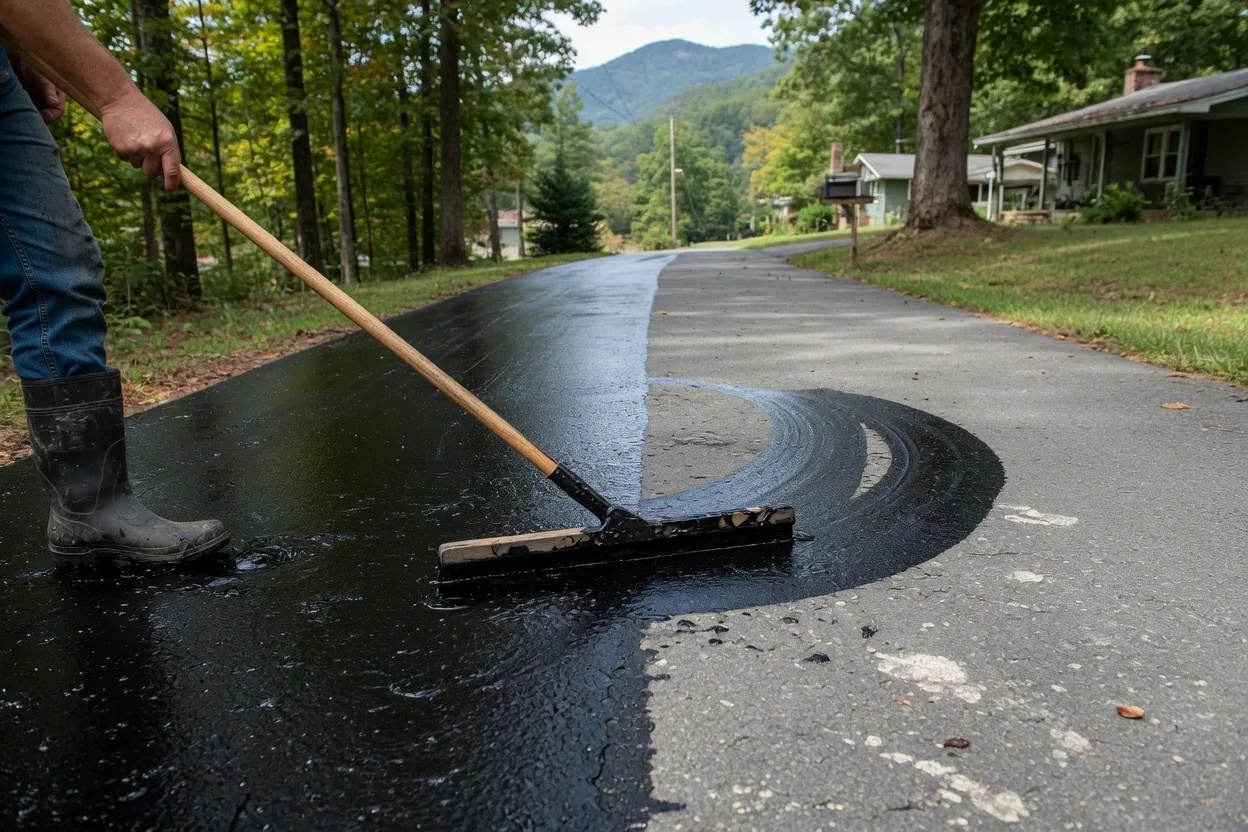
| Crack fill and sealcoat only | $350-$900 | Square footage, crack count, prep time |
| Thin overlay on sound asphalt (1.5") | $2,200-$4,500 | Length, width, existing surface condition |
| Full tear-out, new base, 2" asphalt | $5,500-$9,500 | Base depth, haul-off of old material, slope |
| New driveway from bare ground (with grading) | $7,000-$14,000+ | Cut/fill volume, drainage work, retaining needs |
| Steep or tight-access drive surcharge | +15%-35% | Equipment size limits, hand work, slower placement |
Two items most homeowners don't budget for: hauling away the old asphalt (it's heavy, it's not free to dump, and some yards crush and reuse it while others don't), and any base repair discovered after tear-out. A driveway that looked fine can reveal six inches of soft clay once you lift the mat. The Haywood County cost breakdown spells out how these line items stack. If you want the short version of what a real driveway build looks like, the asphalt driveways overview covers construction sequence end to end.
Season, access, and the crew that actually shows up
Asphalt in western North Carolina runs roughly April through November, weather permitting. Hot mix plants typically idle in the cold months, and a winter pour on a cold substrate is a shortcut to early failure. Lake Junaluska's tree cover and elevation mean some inclines stay shaded and hold moisture into the morning, so a good crew schedules the east-facing and hemlock-shaded drives for the warm part of the day. If a paving company offers you a January install on a shaded slope, ask why the plant is still running.
Access is the other half. A drive that's 9 feet wide with a low tree limb, a 90-degree turn at the top, or a grade over roughly 12% often rules out a full-size paver and forces a smaller machine or hand-work. That's real labor time and it shows up in the bid. Get clear answers on equipment, truck access, and where the crew will stage before you sign.
On the business side, North Carolina requires a general contractor's license for projects above a dollar threshold set by the NC Licensing Board for General Contractors — most residential driveway jobs fall under it, but it matters if your project includes retaining walls, drainage structures, or a larger site package. Ask for proof of insurance regardless, and get the scope in writing with base depth, asphalt thickness, and compaction specified. When you're comparing bids, the Lake Junaluska paving contractors page shows what a complete proposal includes.
Water always wins, and Haywood County has the record to prove it
Ask any paving contractor in this valley what actually kills driveways and you'll get one answer: water. A Haywood County driveway that drains poorly will fail from the bottom up no matter how thick the asphalt is. And this county has a long record of wet events — 19 federal disaster declarations touch Haywood County across a span dating to 1973-2026, mostly flood and storm family. Every one of those events reshaped how water moves across local ground and pushed runoff where it wasn't planned to go. That history is why any honest scope here starts with grading and drainage, and why the EPA's guidance on stormwater and impervious surfaces is worth a skim before you seal off another thousand square feet of soil.
If your drive has a washed-out edge, a puddle that sits for days, or a culvert that's been crushed, fix that before the asphalt. Otherwise you're buying a surface that will disappear.