River bottoms, mill streets, and mountain lanes
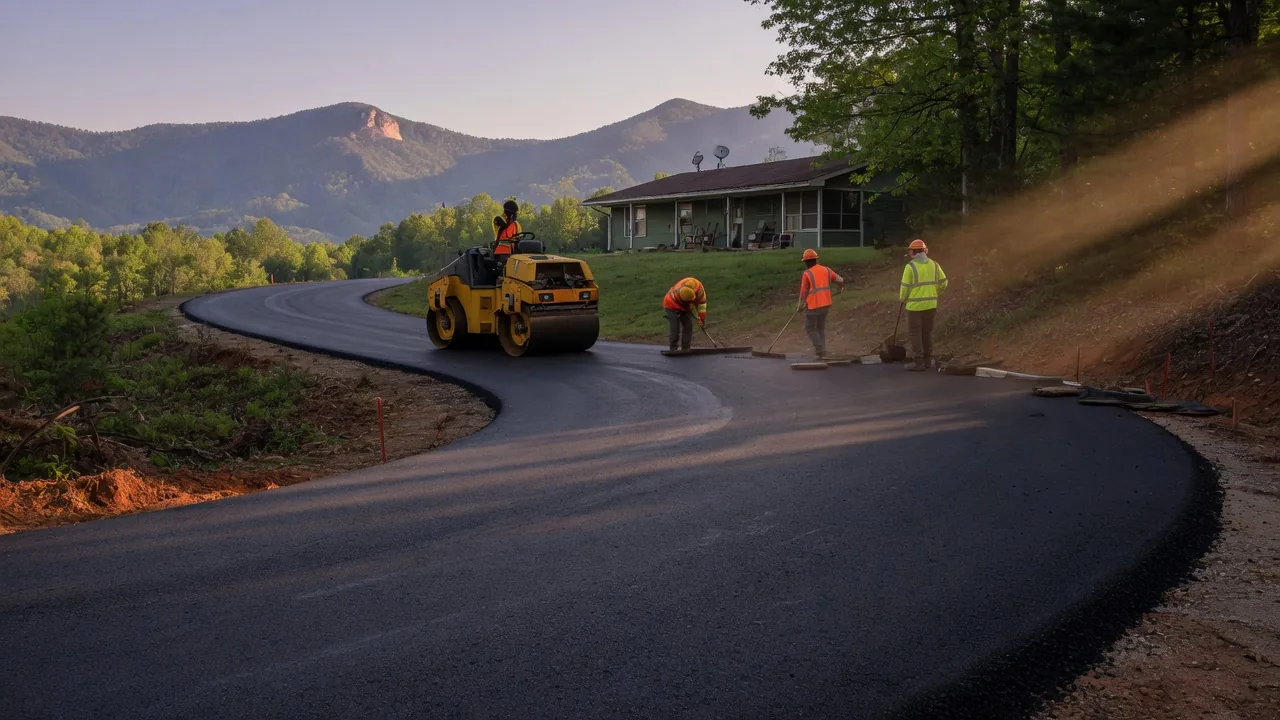
Woodfin packs three different driveway worlds into a town you can drive across in a few minutes. Down along the French Broad, lots sit on river terraces that flood, drain slowly, and run long and flat back from the road. In the older mill-era blocks near the Woodfin Greenway, asphalt was poured decades ago and is now cracked in the pattern that follows a failing base rather than the surface. Up toward Elk Mountain and the ridges above the river, driveways climb grades that push past fifteen percent and often include a switchback because there is no straight line up the slope. A crew that only paves flat Asheville subdivisions will misread all three.
Driveway length here is the first surprise for out-of-town bidders. River-bottom lots can run one hundred feet or more from the road to the house, so an overlay that sounds cheap per square foot adds up fast. Ridge lots are shorter but the grade changes everything: the paving is a fraction of the job, and base stabilization, drainage, and traction surfacing are the rest. When a Woodfin homeowner asks why one quote is half another, the honest answer is almost always in the base prep and water plan, not the asphalt thickness.
How Woodfin quotes break down by scope
Pricing in Woodfin tracks Buncombe County closely, with a slope premium layered on top. The full working table lives in our Buncombe County driveway cost breakdown, and the short version is below. A straightforward asphalt overlay on a flat river-bottom lot typically lands between $3,200 and $6,500. A full tear-out and rebuild on a steep Elk Mountain lane with a new drainage swale typically runs $8,000 to $14,000, and driveways past 150 feet add on top of either number.
| Scope | Typical range | Woodfin notes |
|---|---|---|
| Asphalt overlay (flat, sound base) | $3,200–$6,500 | River-bottom lots, straightforward access |
| Partial-depth patch and overlay | $4,500–$8,500 | Common on 1980s–90s Woodfin subdivisions |
| Full tear-out and rebuild | $8,000–$14,000 | Steep lanes, deteriorated base, added drainage |
| Gravel driveway conversion | $5,500–$11,000 | Ridge lots, requires base stabilization |
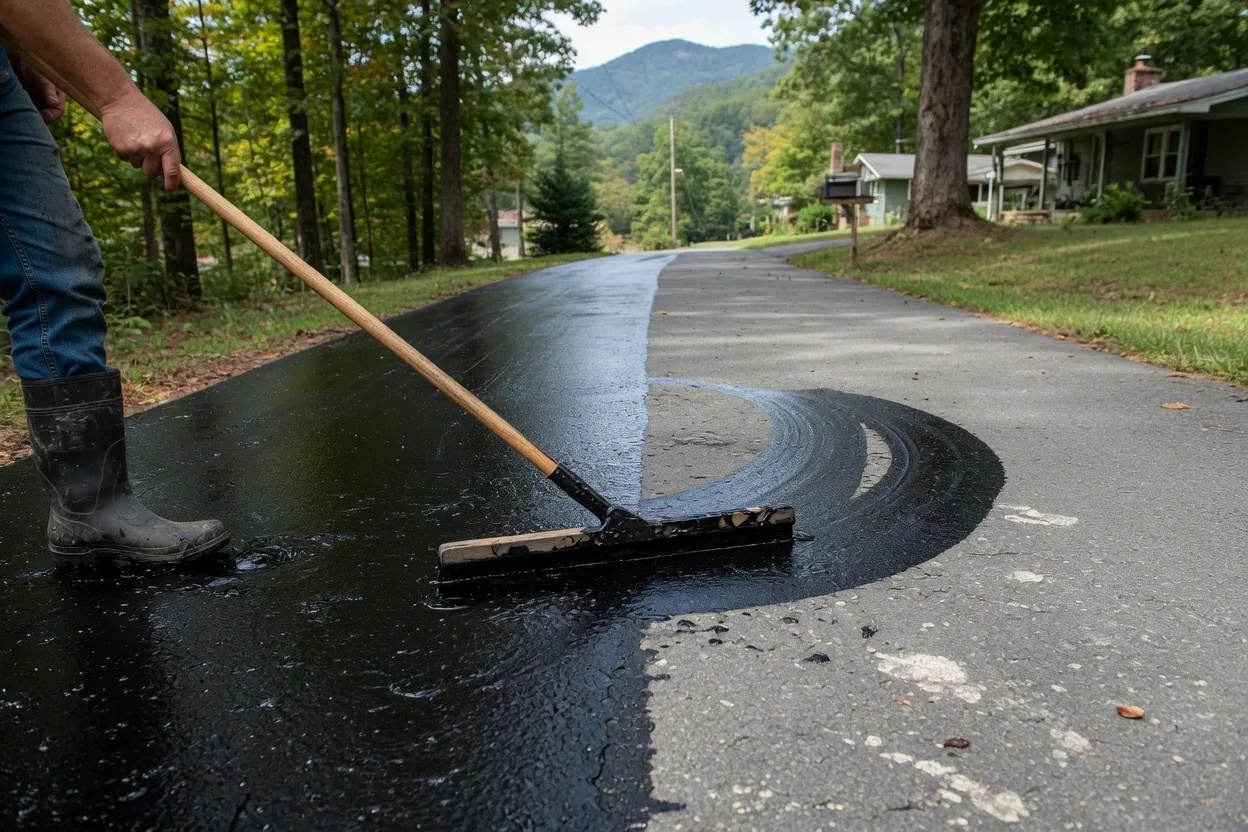
| Sealcoat and crack fill (maintenance) | $400–$1,800 | Best done every 2–3 years on Woodfin asphalt |
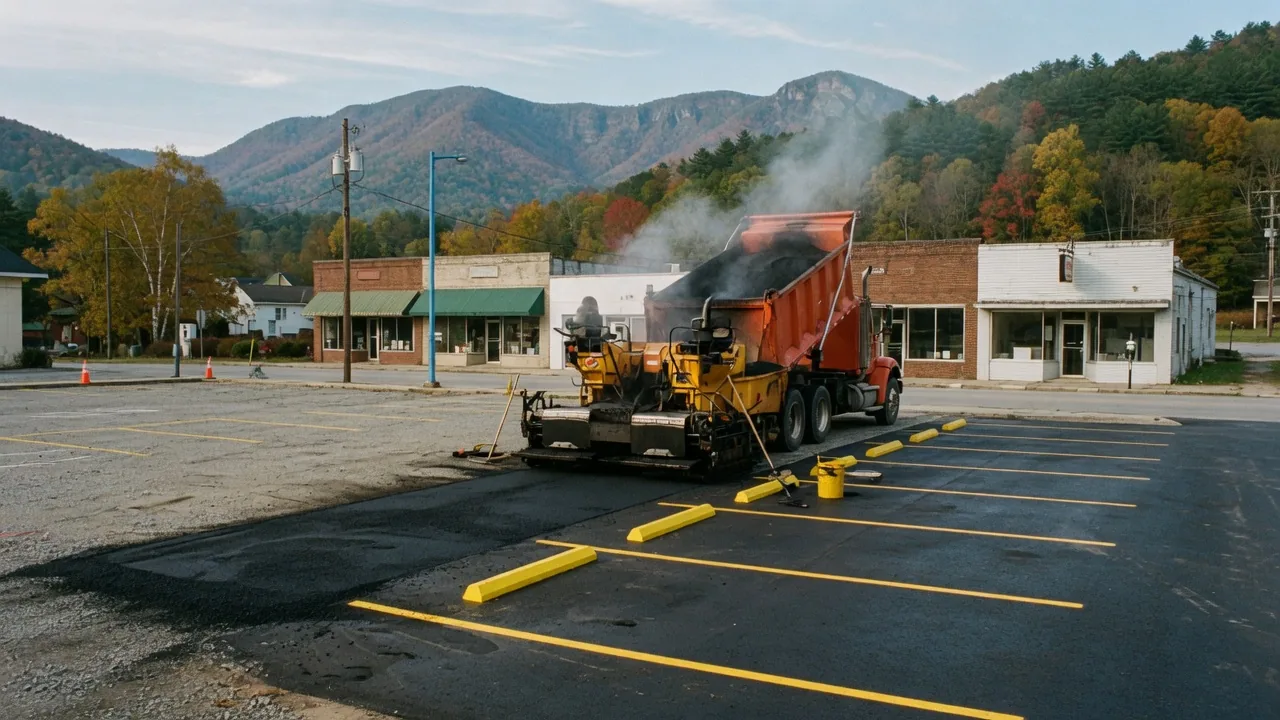
Driveway work is a different scope from parking lots and access roads, and the pricing structures do not transfer cleanly. Our asphalt paving overview walks through where residential and commercial jobs diverge, which matters when a bidder tries to quote your sloped driveway like a flat commercial pad.
The table above is a planning tool, not a bid. A driveway that looks like a simple overlay on paper can turn into a partial rebuild once the base is opened up, especially on Woodfin's older asphalt where the cracking pattern already tells you the sub-base has moved. Ask any bidder to price the overlay and the tear-out separately so you can see the gap before you commit.
Permits, licensing, and who owns the road
Any driveway that meets a public road in Woodfin needs a permit from whoever owns that road. Most residential streets in town are town-maintained, but US 25 along the Merrimon Avenue corridor and NC 251 along Riverside Drive are NCDOT routes, and driveway work touching those corridors requires an NCDOT driveway permit through NCDOT Connect before anyone breaks ground. If your project needs a curb moved, a shoulder altered, or stormwater redirected across a public right-of-way, that permit is the long pole in the schedule. Apply before you sign a paving contract, not after.
On the contractor side, projects that meet North Carolina's cost threshold for a general contractor license fall under the NC Licensing Board for General Contractors. Ask for the license number before work starts and confirm it through the board. Crews handling only residential driveways may not need the license, but the ones quoting full tear-outs with drainage structures usually do, and a bidder who hedges on that question is telling you something.
Stormwater rules matter here too. Paving a sloped lot changes how water leaves your property, and pushing runoff onto a neighbor's lot is both a nuisance and, depending on the drainage pattern, a code problem. EPA's stormwater guidance at epa.gov explains why managing runoff at the source beats trying to fix it downhill.
Water is what takes these driveways out
The French Broad has flooded Woodfin repeatedly, and 19 federal disaster declarations touch Buncombe County across 1973-2026, with flood and storm events dominating that record. When water sits on a driveway it finds the edge, then the sub-base, then the asphalt fails from underneath. Woodfin's terrain makes that worse: shallow soil over rock on the ridge lots and a high water table near the river bottoms, so a driveway that drains poorly has nowhere good to send the water.
The best pre-paving investment in Woodfin is almost always drainage. That means re-crowning the surface so water sheds to the edges, adding a swale or French drain at the uphill edge, and directing runoff to a legal discharge point rather than the neighbor's lot. On a steep Elk Mountain lane, it also means thinking about velocity: fast water carries gravel, cuts ruts, and undermines the edges faster than slow sheet flow ever will. A crew that quotes asphalt without a drainage line on a Woodfin slope job is quoting half a job, and you'll see the other half of the invoice in a few winters.
What to ask before you sign anything
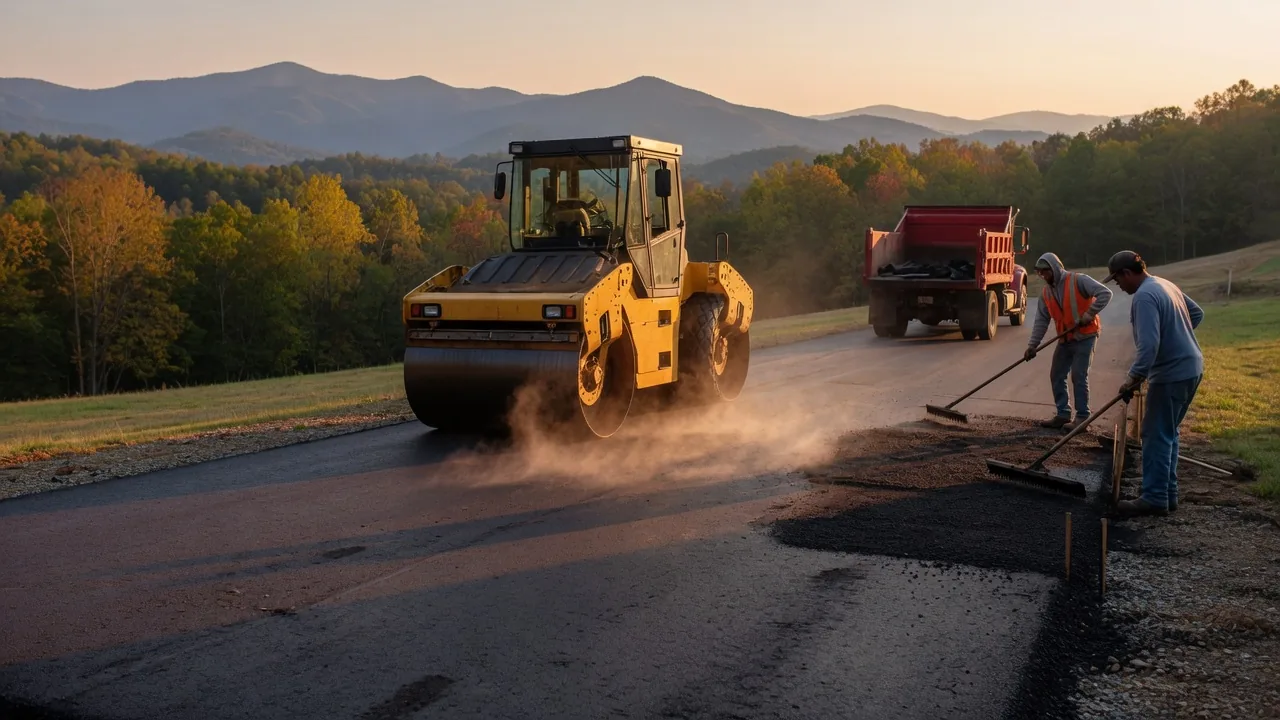
Woodfin-specific questions for every bidder: have they paved on grades above twelve percent, and can they name a job where they did; do they own or rent the roller and paver that will compact your mix; will they warranty against settling and cracking, and for how long; and will they put the drainage plan in writing before the first shovel. The crew that answers all four without hedging is the crew that has worked this terrain before.
Two more things worth checking. Ask whether the bid includes hauling away torn-out asphalt or grinding it in place as base, because disposal costs swing the total on longer river-bottom driveways. And on steep lanes, ask how they plan to handle traction, since a smooth surface on a fifteen percent grade in a wet Buncombe County winter is a real problem. When you're ready to move, our Woodfin driveway paving service page shows what a full scope includes and how to schedule a site visit.