Reading the damage before you spend a dollar on Mars Hill asphalt
A driveway in Mars Hill fails from the bottom up more often than from the top down. The freeze-thaw line runs hard through Madison County, and a driveway cut into a slope off Route 213 or up toward Mars Hill University spends every winter cycling between frozen and thawed. Water gets into a hairline crack, freezes, lifts the asphalt a fraction of an inch, and thaws. Do that forty times and the crack becomes a pothole. Do that for five winters and the pothole becomes a base failure.
That matters because the surface tells you which repair you're actually buying. A crack with clean edges and no vertical displacement is a surface problem: clean, dry, fill, seal. A crack with a lip, or a crack that's opened into an alligator-skin patch, means the sub-base underneath has moved. A pothole you can push a screwdriver into past the asphalt is a base problem wearing a surface costume. An edge that's crumbling back from the pavement into the grass is almost always a drainage or shoulder problem, not an asphalt problem. Getting this wrong is how homeowners pay for an overlay that fails inside two seasons.
Before you call anyone, walk the driveway after a hard rain. Note where water stands, where it sheets off, and where it cuts a channel. Those wet spots are the repairs you'll be sold whether you ask for them or not, and they're the ones that decide whether a patch holds.
Patch, overlay or tear out: the Madison County price picture
Local pricing tracks the county the driveway sits in, so see the full Madison County cost breakdown for line-item detail. The short version is in the table below. Steep-grade driveways above the valley floor, gravel-shouldered lanes with no proper crown, and anything within a hundred feet of a culvert routinely carry drainage line items that flatland quotes never mention. Treat a bid without that line as incomplete rather than cheap.
| Scope | Typical price range | When it's the right call |
|---|---|---|
| Crack cleaning and hot-pour fill | $350-$700 | Hairline to quarter-inch cracks, no displacement, sound base |
| Pothole and alligator patch (mill and fill) | $500-$1,600 | Isolated failures, base still firm under the patch edge |
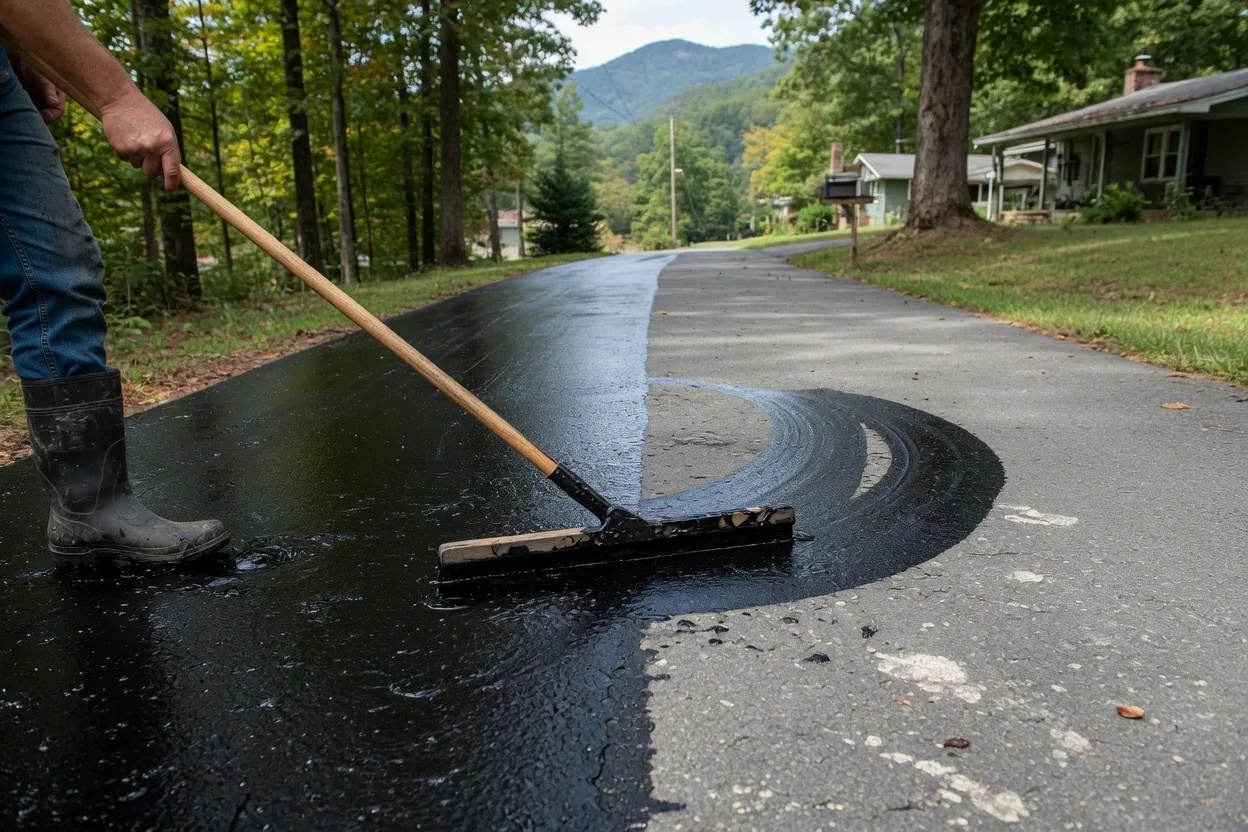
| Sealcoat over a repaired surface | $0.20-$0.40/sq ft, typically $600-$1,500 per driveway | After patching, to slow the next crack cycle |
| Full overlay (1.5-2 inches) | $2,500-$6,000 | Widespread surface cracking, base and edges still holding |
| Tear-out and replacement | $6,000-$12,000+ | Base failure, multiple alligator zones, drainage rework required |
Those bands flex with driveway length, grade and access. A short, flat driveway in town prices near the bottom of every row. A long, steep, switchbacked lane off a gravel road prices at the top and then some, because it's slower to work and the equipment has to be hauled up.
Water is the repair, asphalt is the invoice
Almost every driveway failure in this part of Madison County traces back to water that had nowhere to go. The federal disaster record explains the pattern: 21 declared events have touched this county across 1978-2026, overwhelmingly storm and flood family. Each one pushed water at driveways built for a drier assumption, and each one left behind the cracked, undermined pavement that homeowners call about years later. Before anyone sells you an overlay, the drainage question has to be answered: ditch flow, culvert sizing, shoulder grading, and where the uphill neighbor's runoff actually lands. The NCDOT treats driveway drainage and street access as a permitting matter for good reason, and any work that touches a state-maintained road or its shoulder needs a permit through NCDOT Connect before a crew breaks ground. Skipping that step is how a repair turns into a removal order.
The practical order is water first, base second, surface third. A driver who re-grades a shoulder and re-crowns a driveway before laying asphalt will outlast one who just lays asphalt over a wet base every single time.
What separates a repair that lasts from one that doesn't
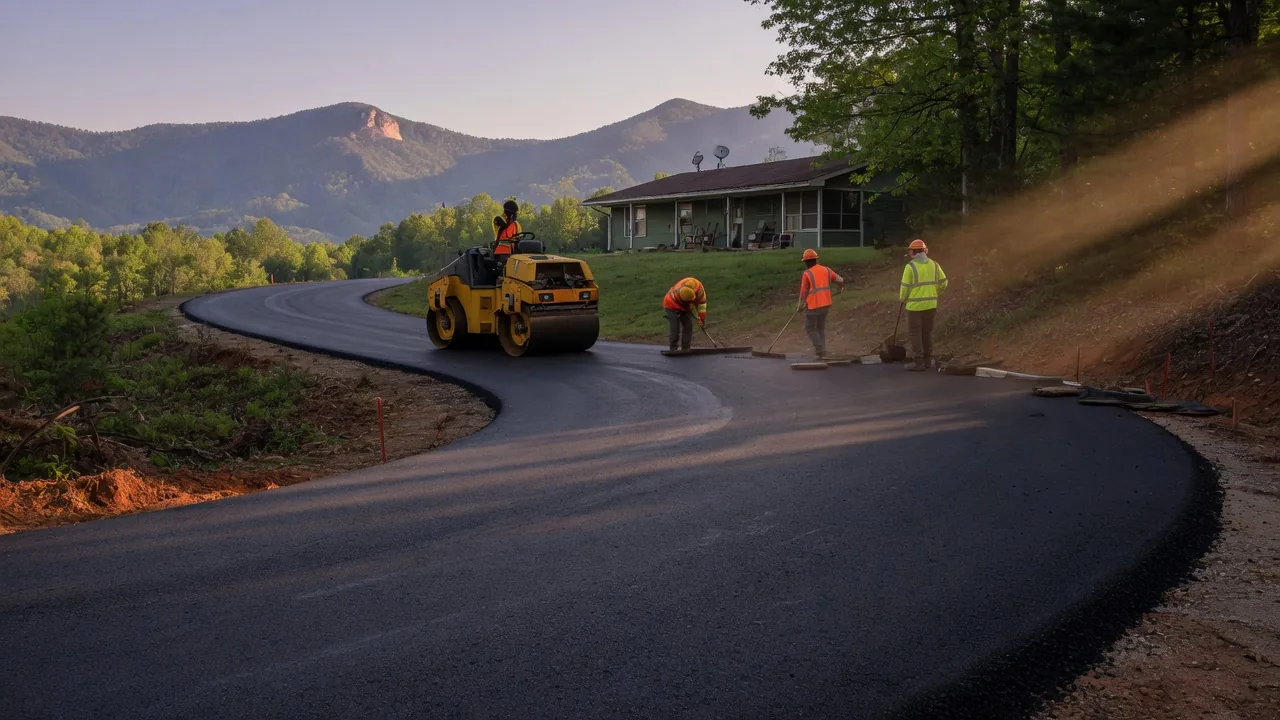
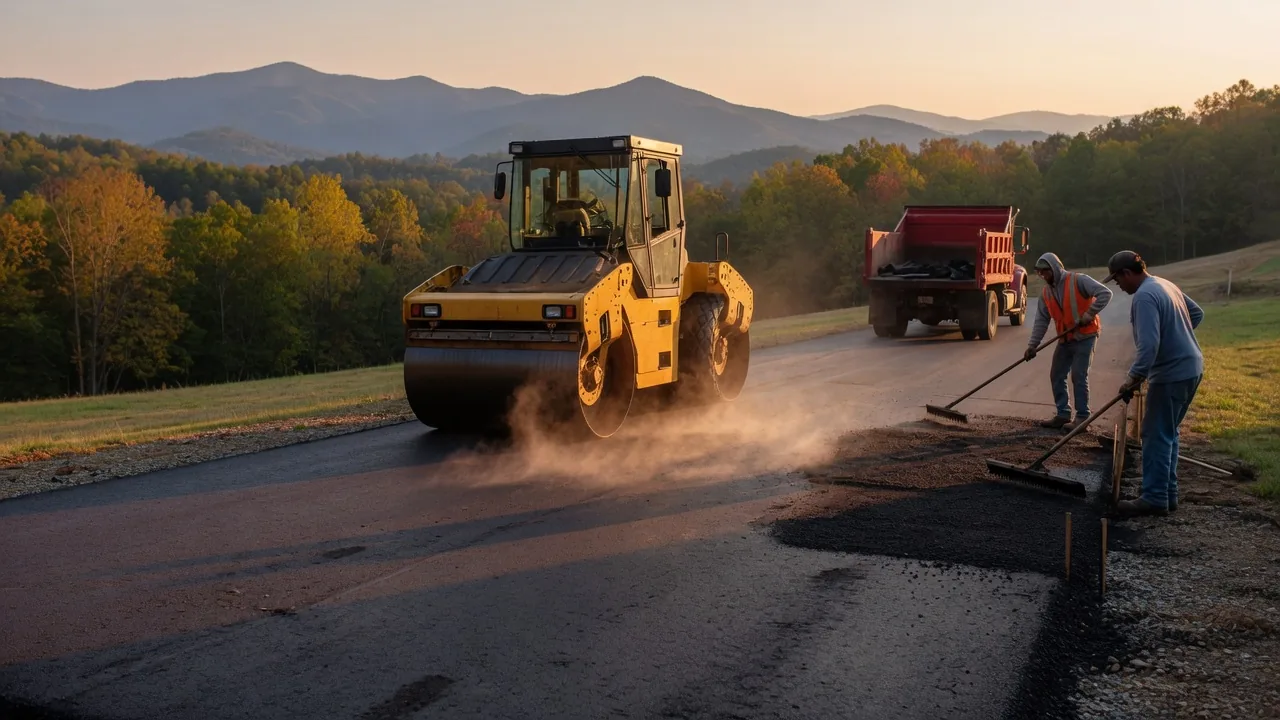
Three things matter more than brand of asphalt. First, preparation: a patch that lasts needs the failed material milled or cut out to sound edges, not filled over a crumbling lip. An overlay that lasts needs the existing surface cleaned, tack-coated and, where needed, leveled with a binder course first. Second, compaction: asphalt placed cold and rolled once is a temporary fix; asphalt placed hot and compacted in lifts is a repair. Third, edge support: a driveway with no shoulder confinement will always ravel back from the sides, no matter how good the mat in the middle looks.
For anything beyond spot patching, ask whether the crew intends to address the base beneath the surface. If the answer is only about the surface, that's a maintenance contract, not a repair. For more on what a proper repair scope should include, our asphalt driveway repair guide walks through the sequence step by step. And when you're comparing bids, the crew list at Mars Hill paving contractors is a starting point for local options.