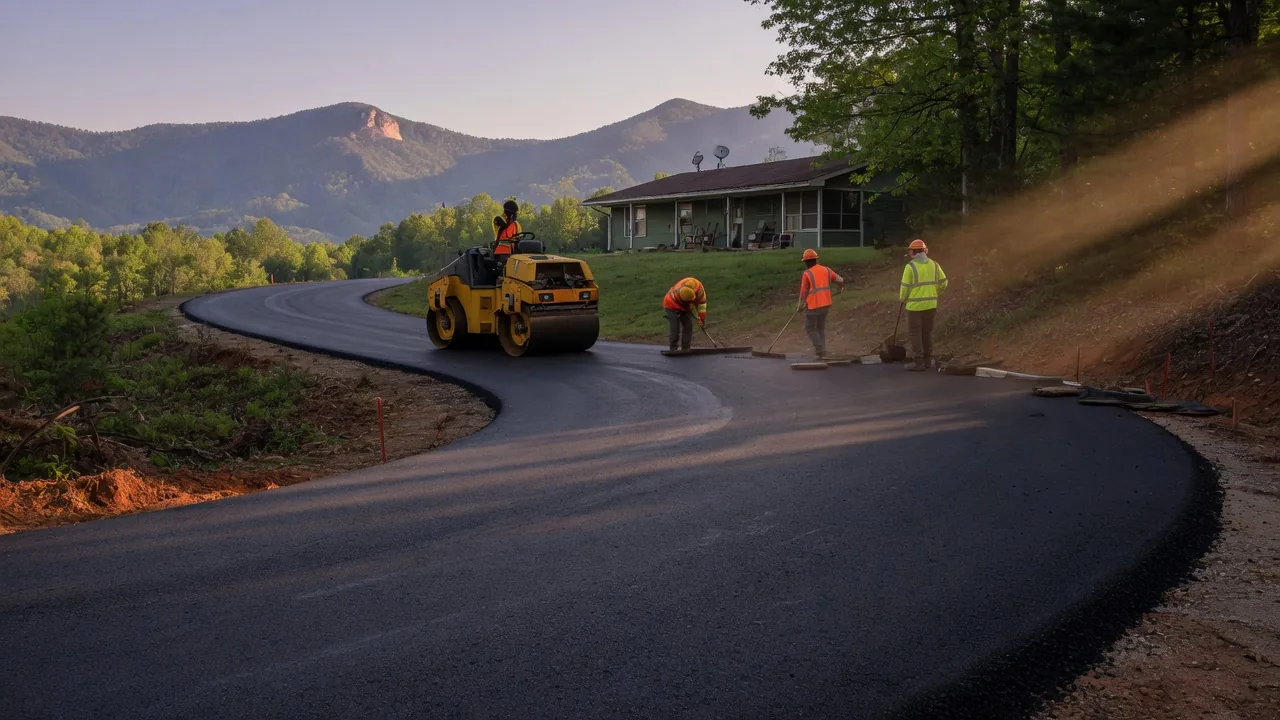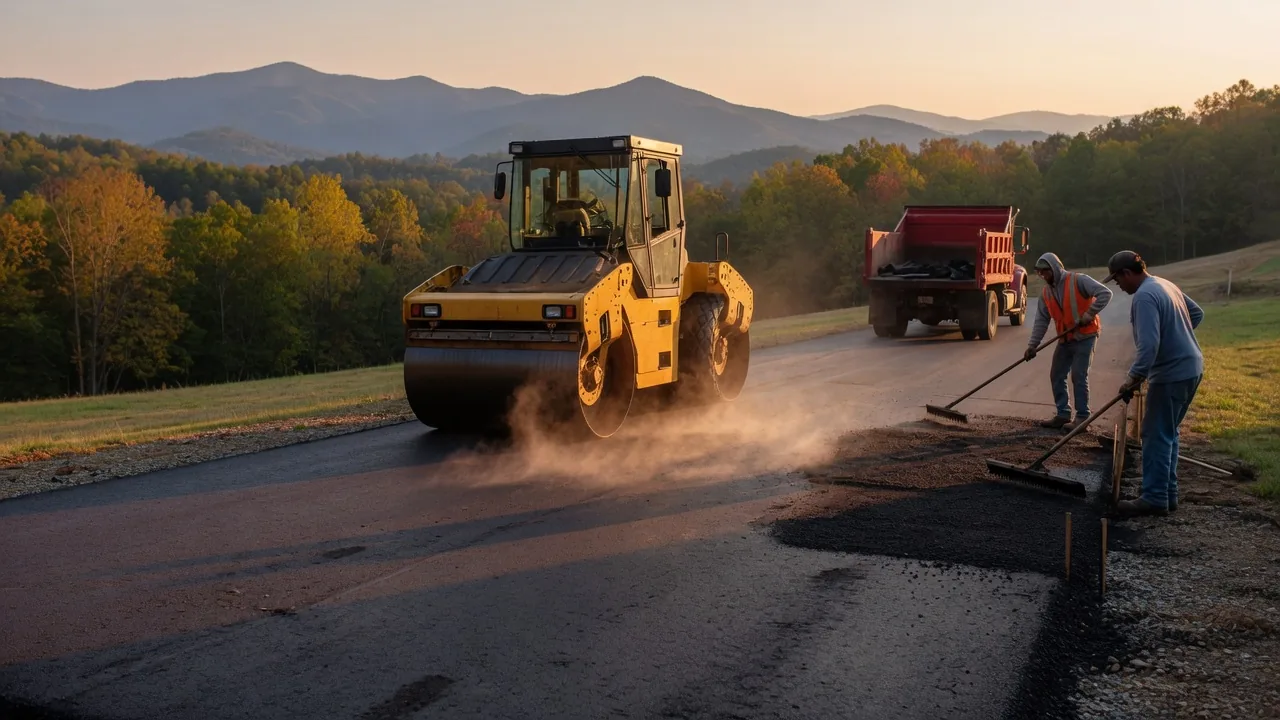
Woodfin driveways are short, steep, and unforgiving
Woodfin is not Asheville. The town hugs the French Broad River north of the city, and most of its housing climbs the ridge above Riverside Drive on lots that were never graded for long, flat driveways. A typical Woodfin driveway is 30 to 60 feet of pavement with a knee-buckling pitch, draining toward the house or the road with nowhere natural for the water to go. That geometry changes everything about paving: base depth, compaction, edge restraint, and where the runoff exits. A crew that prices Woodfin like a flat Weaverville cul-de-sac will be back in two winters patching ruts.
The older ranch and mill-era homes above the river often have driveways poured or paved decades ago, cracked and settled, with trees pushing roots underneath. Those jobs are as much about removal and base correction as about the asphalt itself.
Drive around the Woodfin Avenue and Elk Mountain ridge area and you'll see what the local trade calls "cable driveways" — short, black runs so pitched that some owners keep a cable winch at the top for winter. Those are the extreme cases, but they set the tone. Even the moderate Woodfin driveway has more in common with a mountain Forest Service road than with a cul-de-sac in Arden. The pavement is thinner in length but thicker in consequences: if the base isn't compacted in lifts and the edge isn't restrained, gravity pulls the whole mat downhill and the first hard freeze opens it up.
The river flats tell a different story. Homes close to the French Broad on the lower end of Riverside have flatter, longer driveways that flood, not slide. Those jobs are about elevation above the flood line, culvert sizing, and keeping water from wicking up through the subgrade. Two driveways a mile apart in Woodfin can need completely opposite engineering, and a paving bid that doesn't ask which side of the road you're on hasn't done its homework.
What drives the price on a Woodfin driveway
Cost on this side of Buncombe County is set by three things: slope, length, and how much of the existing base survives. Steep driveways need thicker compacted stone, deeper edge restraint, and often a proper drainage swale or culvert, none of which shows up in a per-square-foot quote from a flatland contractor. The Buncombe County asphalt driveway cost breakdown has the working table; here's what it looks like for a Woodfin job.
| Scope | Typical range |
|---|---|
| Resurface over sound existing asphalt (1.5" overlay) | $2,200–$4,800 |
| Full removal and new 2" asphalt on existing base | $4,500–$8,500 |
| New driveway, steep grade, with grading and drainage | $8,000–$16,000+ |
| Base correction / stone and compaction only | $2,500–$6,000 |
| Edge restraint, culvert, or drainage line items | Priced per job, often $800–$3,500 |
Any Woodfin bid that doesn't address drainage on a descending driveway is incomplete, not cheap.
Two 50-foot driveways on the same Woodfin street can land $3,000 apart. The one that's mostly intact and just needs a 1.5-inch overlay sits at the low end. The one where roots have bellied the asphalt, the edges have crumbled into the yard, and water sheets across the pavement every storm needs the whole top pulled off, the subgrade re-graded, and fresh stone compacted before a single ton of hot mix shows up. That's the difference between a resurface and a rebuild, and it's the first thing a good estimator will tell you on site.
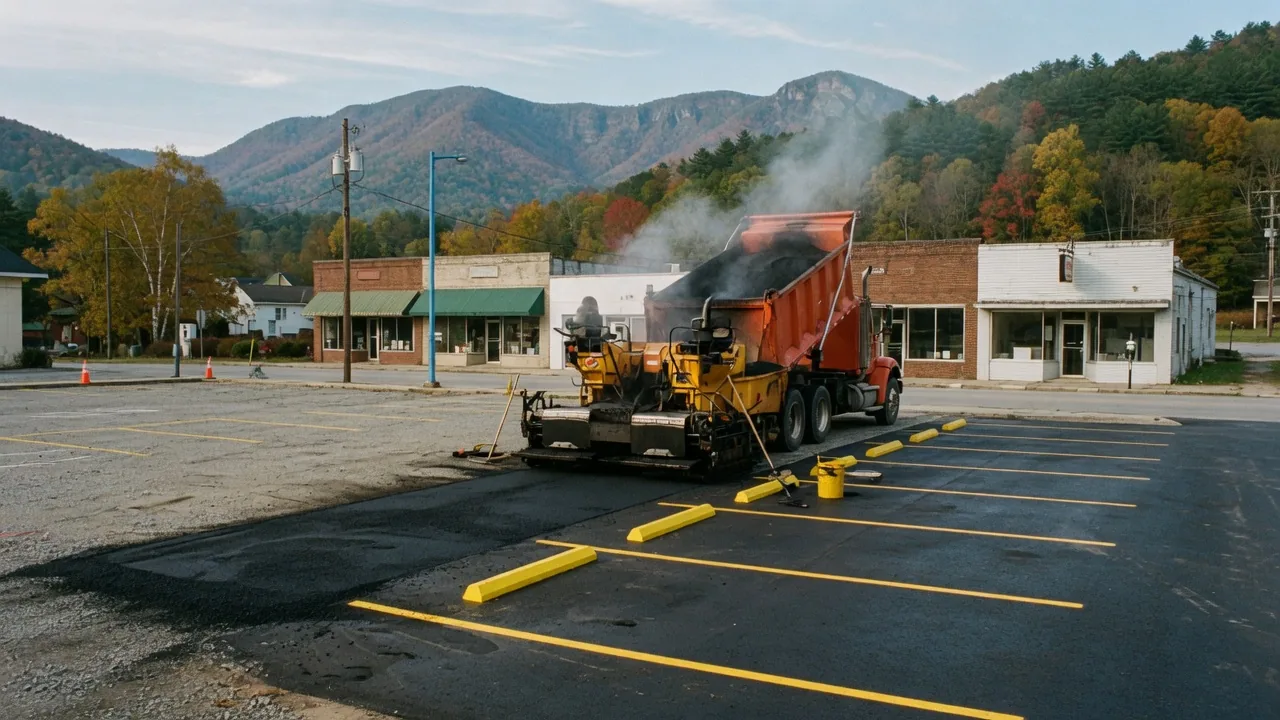
There's also the haul factor. Some Woodfin lots sit at the end of a narrow ridge road where a tri-axle dump truck can't turn around and the paving machine has to be fed by conveyor from the street. When access is tight, labor hours climb and so does the bid. Ask upfront whether the estimate assumes the truck can reach the driveway or whether material gets shuttle-hauled in. It's a line item flatland quotes never mention.
Permits, access, and the rules above the river
Driveway work that touches a state-maintained road or a new connection needs an NCDOT driveway permit, and the application process runs through NCDOT Connect. If a job crosses into grading or stormwater work, the town's rules can apply too; check with the City of Asheville offices for jurisdiction questions since Woodfin sits inside the Asheville metro but has its own local government. For larger structural or site-work scopes, contractor licensing thresholds are set by the NC Licensing Board for General Contractors. Ask any paving crew whether they pull the permit or expect you to.
Woodfin's boundary is a patchwork. Parts of town sit inside Asheville's extra-territorial jurisdiction for zoning, and parts don't. Riverside Drive itself is a state-maintained road for most of its run, which means the approach apron and any change to the curb cut fall under NCDOT, not the town. If your driveway spills onto a private road in one of the ridge subdivisions, none of that applies and the homeowners association may have its own say on materials and width. Getting the jurisdiction right before you order asphalt is worth one phone call.
Stormwater is the other local wrinkle. Buncombe County and the town both have rules about how much new impervious surface you can add and where the runoff goes, and a steep driveway concentrates that flow fast. A 40-foot-wide asphalt apron on a Woodfin slope sends a lot of water somewhere. If that somewhere is a neighbor's yard, you'll hear about it. The honest approach is to plan the drainage before the paving, not after the first complaint.
Timing asphalt in a mountain climate
Asphalt needs warm, dry conditions to compact and cure properly. In Woodfin, that means the paving window is roughly late spring through early fall, and shoulder-season jobs risk a cold joint that never sets right. The federal disaster record tells the local story: 19 declared events touch Buncombe County across 1973-2026, overwhelmingly storm and flood family. Driveways on the river flats and the lower slopes get hit first, and every one of those events reopens cracks and undermines base. If you're paving in a flood-prone pocket, ask about base elevation and how water leaves the driveway during a heavy rain, not just during a normal one.
Freeze-thaw is the quieter enemy here. Woodfin sits at an elevation where the ground can cycle above and below freezing several times in a single late-winter week. Every one of those cycles moves water in and out of the pavement's cracks, and on a steep grade the movement is downhill. That's why edge restraint matters so much on this side of the river: without a real curb of stone or concrete holding the mat, freeze-thaw slowly walks the asphalt down the slope and opens the seam at the top.
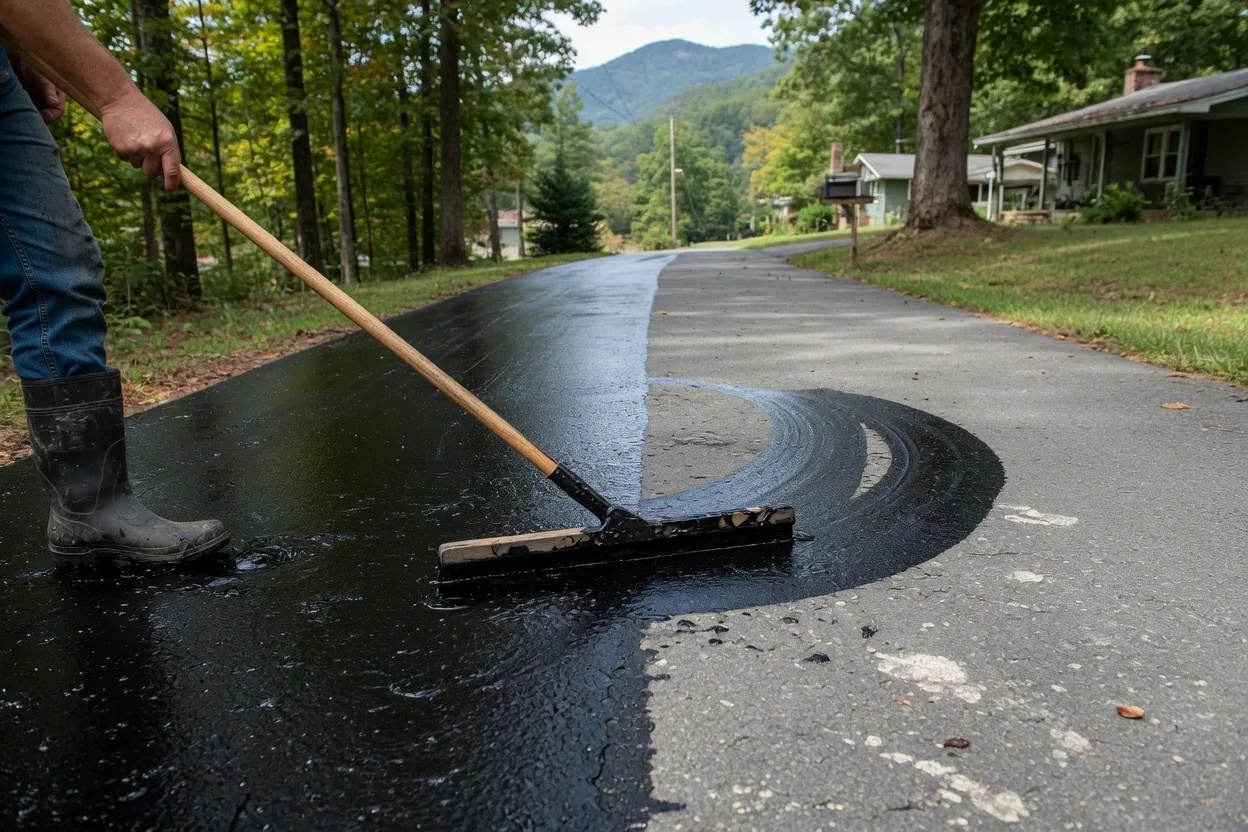
The practical calendar for a Woodfin homeowner goes like this. Late spring and early summer are the sweet spot, warm days and reliable dry weather. Midsummer works but crews are booked and hot mix plants run flat out, so scheduling is tighter. Early fall is still viable in most years, though the first cold snap can arrive without much warning. By November, reputable crews are done paving and back to patching and sealcoating, because cold mix laid in cold weather simply doesn't bind the way it should. If a crew offers to pave your steep driveway in January, ask what happens when it fails in March.
Choosing a paving crew that knows the hillside
Three questions worth asking a Woodfin paving contractor before you sign: how much compacted stone goes under the asphalt on a grade like yours, how the driveway drains when the river rises, and whether the quoted price includes edge restraint and cleanup. Compare at least two written scopes side by side; the lowest number almost always leaves out base or drainage. If you want the broader context on what a full asphalt driveway install involves, the asphalt driveway guide walks through the layers, and the Woodfin paving contractors page covers how to vet local crews.
Local knowledge shows up in small tells. A crew that has worked the ridge above Riverside will know to look for the old terraced grading some of these lots got in the 1960s, where a driveway crosses a filled section that looks solid but isn't. They'll know that some Woodfin soils hold water like a bathtub and need a stone blanket before asphalt goes down. They'll ask where your downspouts discharge, because on a steep lot the answer matters. And they'll tell you honestly when a driveway is too far gone for an overlay, even though the overlay is the bigger-ticket sale.
Get it in writing that the price covers removal and disposal of the old pavement, not just the new surface. On steep Woodfin lots, hauling broken asphalt off a ridge road is real labor and a real cost. A quote that omits disposal is a quote you'll be renegotiating the day the crew shows up. The same goes for traffic control if the work blocks Riverside Drive or a shared subdivision lane during the day.
Finally, ask for references from jobs on similar grades. A crew that has only paved flat parking lots in Asheville may do fine work, but a Woodfin hillside is a different animal. Ask to see a driveway they built three winters ago that faces the same way yours does. If the edges are still tight and the surface is still black, you're looking at a crew that understands this side of the county.