Reading a Candler lot before you spend
A parking lot off old Highway 19/23 through Candler rarely fails in one piece. The pattern matters more than the count of cracks. Alligator cracking in a wheel path means the base under that strip is gone; a crack that runs straight and stays narrow is usually a joint or a paving-lift seam that can be sealed and watched. Potholes that return in the same spot after every patch are telling you the water is coming from below, not sitting on top. Soft spots that pump when a loaded truck crosses them are subgrade failures, and no amount of surface mix will hold there.
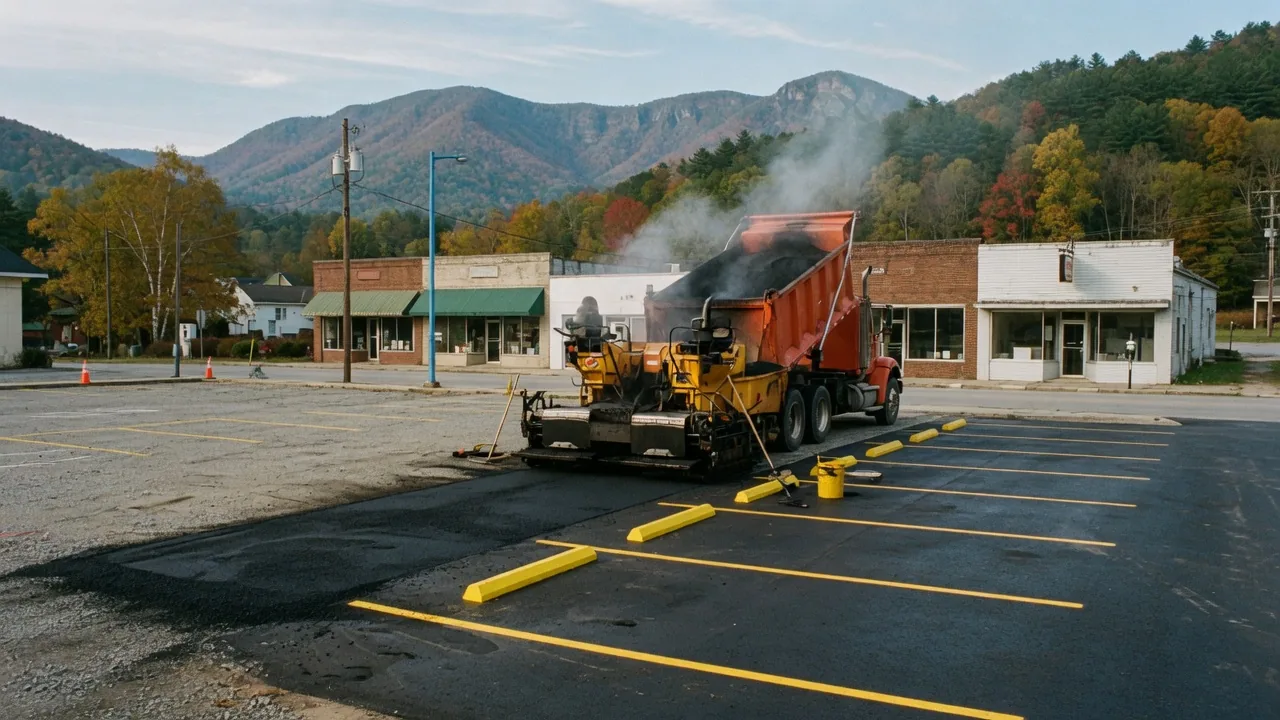
That is the whole repair-or-replace decision in this part of Buncombe County: a lot with sound base and tired surface is an overlay candidate, and a lot with failed base, crumbled edges and drainage dumping onto the pavement is a tear-out. A paving crew that quotes you the same fix for both is selling square footage, not a solution. If you are grading a first bid, our parking lot paving scope guide breaks down what each option actually includes before anyone shows up with a roller.
What drives the price on West Asheville-side commercial lots
Parking lots cost what their base costs. Restriping and seal coat are cheap because they touch nothing underneath; tear-out and rebuild are expensive because the clay and old fill under these lots has to be reworked and compacted in lifts before new asphalt goes down. On the Candler side of the county, lots carved into graded ground near the Enka and sand-hill corridors often carry fill that has settled unevenly for decades, which is why one section of a lot can be fine and the next twenty feet can be a bowl.
The other price mover is stormwater. State and local rules treat commercial runoff as a real obligation, and the EPA clean-water framework is the reason a repave without fixing where water goes is money spent twice. A lot that ponds at the low corner will fail its new surface from underneath. We price drainage correction as a line item because skipping it is how a cheap overlay becomes an expensive redo.
Scope versus price range for Candler parking lots
These are regional bands for this trade in the Asheville metro, not quotes. Square footage, access for equipment, and how much base has to be reworked swing the number inside each row.
| Scope | What it covers | Typical range |
|---|---|---|
| Crack fill and seal coat | Clean and fill cracks, seal surface, restripe | $1,900-$4,500 |
| Patch and level | Cut out failed areas, rebuild base, match grade | $3,500-$9,000 |
| Mill and overlay | Grind surface, overlay 1.5-2 in, tack and compact | $6,500-$14,500 |
| Full tear-out and rebuild | Remove asphalt, rework and compact base, new pavement | $12,000-$38,000+ |
Restriping usually adds a small amount on top of any row. If a bid lands well under these bands, ask what was left out — base correction and drainage are the first line items to disappear.
Why this side of the county fails differently
Candler sits where the French Broad bottoms meet the lower slopes, and that means flat-ish commercial ground built over clay and old river-deposited soils. Clay holds water, water softens base, and a lot that saw standing water through a wet winter will show its failures the following spring. The federal record backs the pattern: 19 declared events touch this county (1973-2026), overwhelmingly storm and flood family, and each one pushed water at pavement that was built for a drier assumption. The National Weather Service outlook for the southern mountains keeps that pattern in the forecast conversation.
Practical takeaway for a property owner here: walk the lot after a hard rain and mark where it ponds. Those marks are the future potholes, and they usually sit nowhere near where the visible damage is today.
Permits, contractors and the paperwork nobody mentions
Paving a private lot is not a building permit in the way a structure is, but commercial work, drainage changes and any new curb cut can pull in local review, and a new or widened driveway connection to a state-maintained road needs an NCDOT driveway permit through NCDOT Connect. If your lot ties into a state route, settle that before scheduling, not after the crew is on site.
On the contractor side, larger paving and grading jobs can cross the threshold where North Carolina general contracting licensing applies — check status at the NC Licensing Board for General Contractors. Then ask two questions: how will you handle the water, and what happens to the failed base under the section you are not paving? For local crews, see our Candler paving contractor guide, and if the work is residential, the Buncombe County driveway cost breakdown covers that side.
Sequencing the work so you only pay once
The cheapest correct order on most Candler lots is: fix drainage and base first, patch and level the failed areas, then overlay the sections that are still sound. That staging lets you spread cost over a couple of budget cycles instead of one large hit, and it keeps a failing corner from dragging down new pavement next to it. What you do not want is a full overlay on top of a pumping subgrade — the reflective cracks arrive within a season and you have paid twice for one problem.
If the lot is more than about a third failed across base and edges, the math usually flips to tear-out, and a phased plan that rebuilds half now and half later is often the honest recommendation.