What's under the driveway decides everything
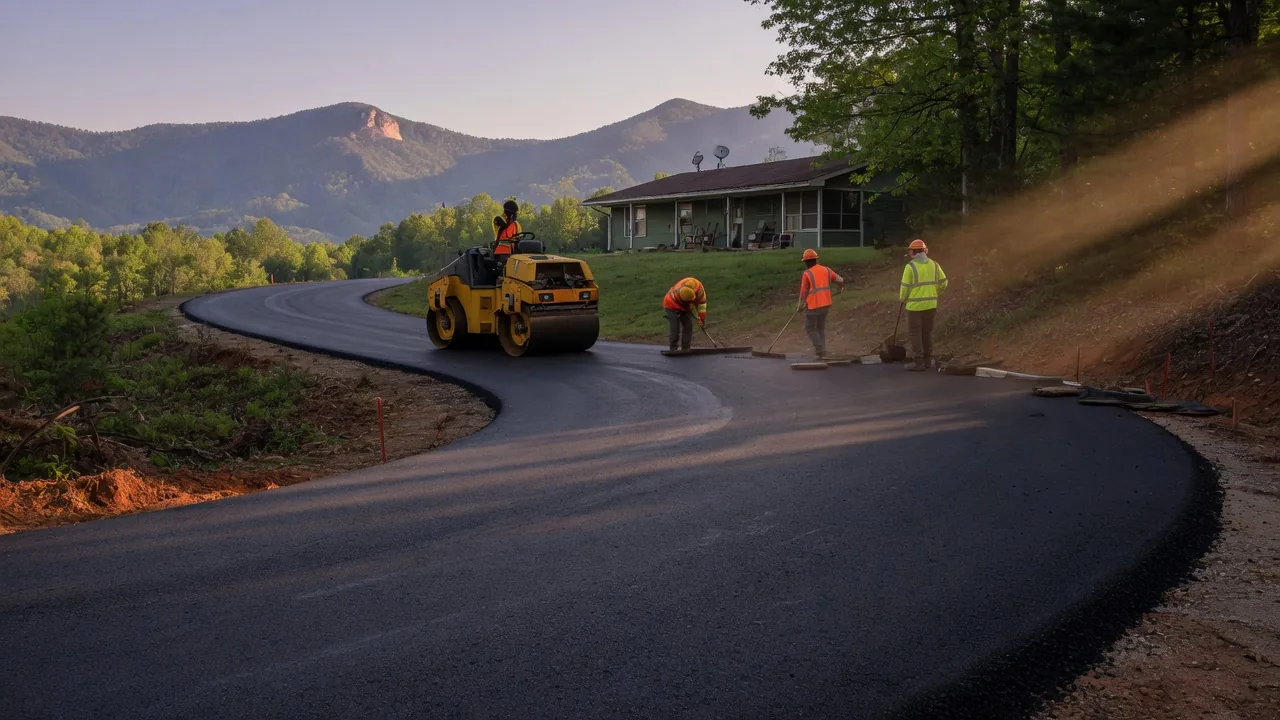
Drive out past the Madison County courthouse and you can watch the ground change within a mile. Down along the French Broad the soil is riverbottom silt and old fill; climb any of the hollows off Highway 25 or 70 and you're on red clay that holds water like a cup. Some of these driveways were gravel for thirty years before anyone thought about asphalt, which means the subgrade has been compacted by trucks but never cut, crowned, or drained on purpose.
That history sets the price more than the asphalt does. Asphalt is roughly the most predictable line item in the trade: thickness and tonnage, priced the same way in Marshall as anywhere in western North Carolina. What varies here is how much crushed stone has to go down first to make a roadbed that won't pump, rut, or shift after the first spring thaw. A driveway over 6 inches of clean stone behaves; the same mix over wet clay will crack its own edge within two winters and there's no additive that fixes an underbuilt base. So the first real question a paving contractor should ask you isn't color or width — it's what we're building on and how deep we go.
Consider two driveways a few miles apart. One, off a flat stretch near the river, sits on old river gravel that drains freely; the other, up a hollow off Highway 70, is cut into red clay that turns greasy after a hard rain. The first might need only a light regrade and 2 inches of asphalt. The second needs excavation, geotextile fabric in the soft spots, and 6 to 8 inches of crushed stone before the paver ever arrives. Same square footage, wildly different job. That's why a quote given over the phone without a site visit is almost always wrong here.
Reading the ground before the quote
A useful site visit here is mostly a drainage walk. Where does the water off the uphill neighbor's land go? Does the driveway crown, or does it dish and hold a puddle at the culvert? Is there an existing gravel layer that can be graded and capped, or has it been contaminated with clay tracked in from the road? A contractor who probes the base with a spade or a steel rod rather than pacing off square footage is doing the job that matters.
Slope changes the answer too. Steep hollow driveways shed water fast but also shed aggregate; flat benches above the river drain slowly and need positive pitch to a ditch or daylight. In both cases the finish is the same hot-mix asphalt, laid in one or two lifts depending on traffic and budget.
Pay attention to the transition where the driveway meets the road. In Madison County, many driveways meet a state-maintained route, and that apron is where water and traffic load concentrate. A proper apron — wider than the drive, with a gentle flare and its own drainage — keeps the road from shoving the first ten feet of your asphalt out of shape. This is also where NCDOT's right-of-way interest begins, so any change to the apron is not just a paving decision. For a broader look at how the trade handles these transitions, see asphalt paving, and for town-specific work see asphalt driveway paving in Marshall.
Scope vs. price ranges in Madison County
Treat these as working regional bands, not bids. The spread comes almost entirely from base depth, access, and how much of the existing surface can be reused. For a full walkthrough of the trade itself, see asphalt paving, and the county-level numbers live in the Madison County cost breakdown.
| Scope | Typical range | What drives it |
|---|---|---|
| Overlay on sound existing asphalt | $2.50-$4.50 / sq ft | Existing condition, crack repair, edge milling |
| Gravel-to-asphalt conversion, adequate base | $3,600-$6,500 for a standard drive | Tonnage, compaction, drainage fixes |
| Conversion with new base stone (4-8 in) | $6,000-$9,800+ | Stone depth, haul access, grading |
| New cut-in driveway on slope | $9,000-$18,000+ | Excavation, retaining, culvert, permits |
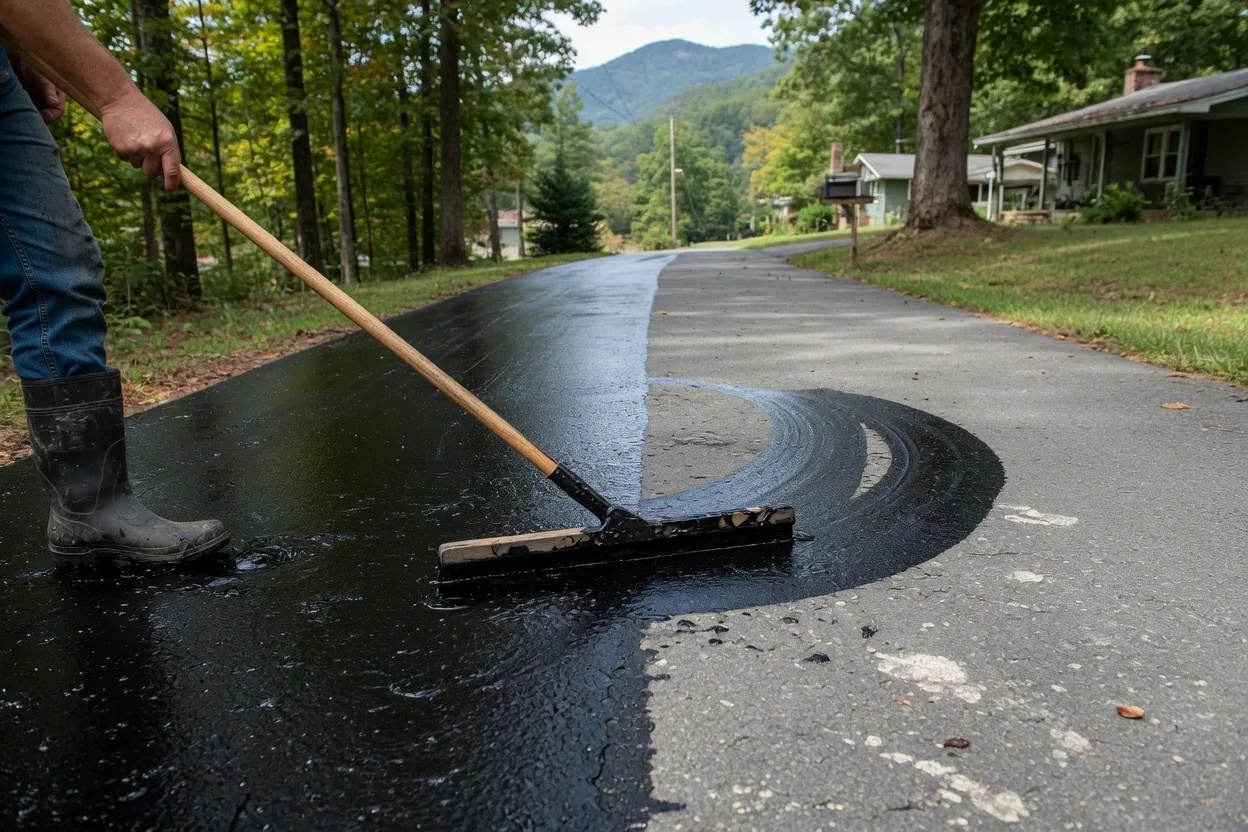
| Sealcoat after curing | $0.20-$0.45 / sq ft | Area, prep, product |
A driveway opening onto a state-maintained road needs a driveway permit before equipment shows up; applications and thresholds run through NCDOT Connect, and the main agency guidance sits at NCDOT. Skip that step and you can be ordered to undo finished work.
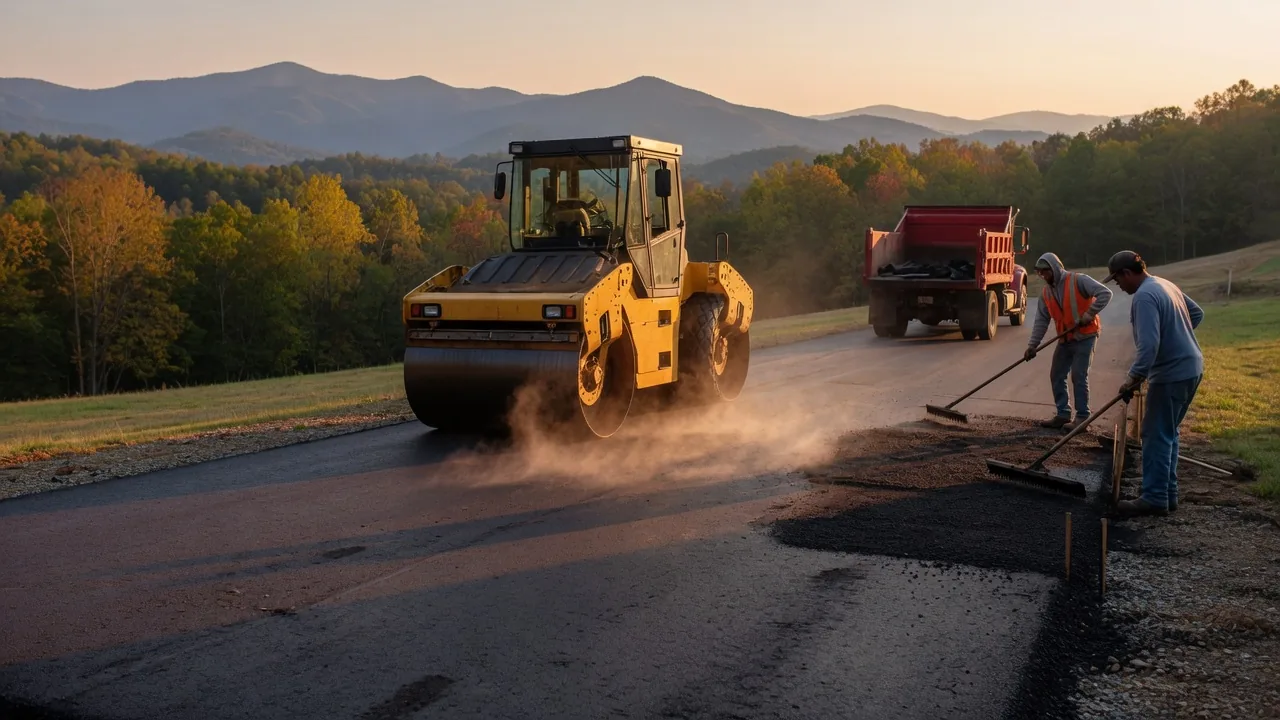
Access is the quiet cost driver. A wide, straight drive lets a tandem dump truck back in and dump stone where it's needed. A narrow lane with a switchback, a low tree limb, or a soft shoulder forces smaller loads and more handling, and that labor shows up in the bid even when the square footage is identical. If a contractor can't get a loaded truck to the work zone, every yard of stone costs more to place.
Timing matters as well. Late spring through early fall is when western North Carolina hot-mix plants are running and the weather cooperates. A job quoted in January is really a spring job, and a contractor who tells you otherwise is either planning to stockpile cold patch or hoping you forget.
Who you're allowed to hire, and what that letter means
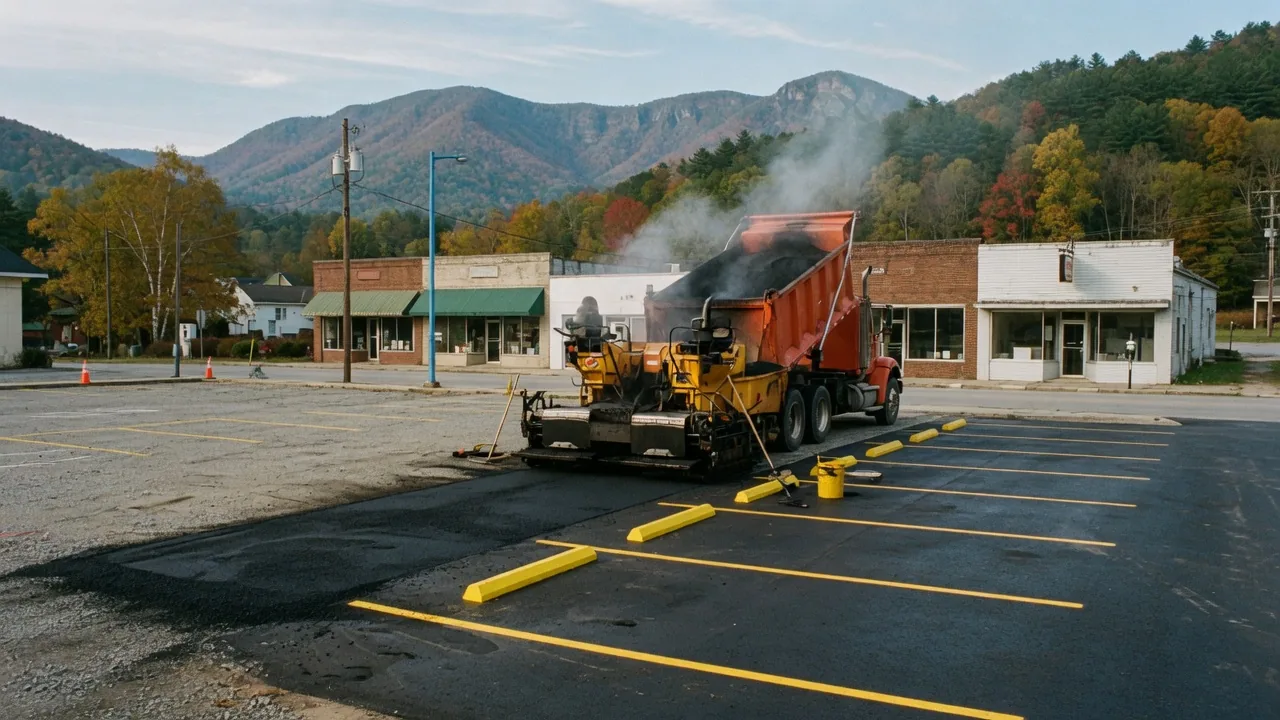
North Carolina draws a line between driveway work and larger paving contracts, and it isn't always obvious which side a job lands on — paving a parking area or a commercial entrance can cross the threshold into general contracting. The definitive resource is the NC Licensing Board for General Contractors, which publishes both the dollar thresholds and a license lookup. Ask for the license number and verify it before signing anything; a contractor who hesitates on that question is telling you something.
The second useful check is a certificate of insurance naming you or listing your property, not a photocopy of a policy that may have lapsed. Stormwater and erosion rules on larger exposed sites come from the state environmental program, and the federal framing for those requirements lives at the EPA if you want to understand why a job suddenly needs silt fence.
For most residential driveways in Marshall, the practical takeaway is simpler: get the license question answered in writing, confirm insurance is current, and don't let anyone start until a permit is in hand if your drive meets a state road. The paperwork protects you when the work is done and the truck is gone.
When the weather writes the schedule
This county has seen 21 federal disaster declarations over 1978-2026, and the pattern is familiar: heavy rain on steep ground, culverts overwhelmed, driveways washed out at the pipe. That record explains why drainage detail matters more here than in the flatlands. Hot mix also has a temperature floor — plants in western North Carolina generally won't run in deep winter, so a driveway promised in January is really a spring job and should be scheduled as one.
If your driveway is one of the ones that floods every big storm, the paved section is the last problem to solve. Fix the water path first, then pave.
That means looking upstream. A culvert that's undersized for the watershed above it will keep washing out the drive no matter how thick the asphalt. In the hollows, water often arrives fast and dirty, carrying gravel and limbs. A proper fix usually includes a larger pipe, a headwall or riprap at the inlet, and a stone-lined outlet so the water doesn't dig a new channel below the drive. Only after the water has somewhere to go does paving make sense.