Two inches or three, and why this town makes the decision for you
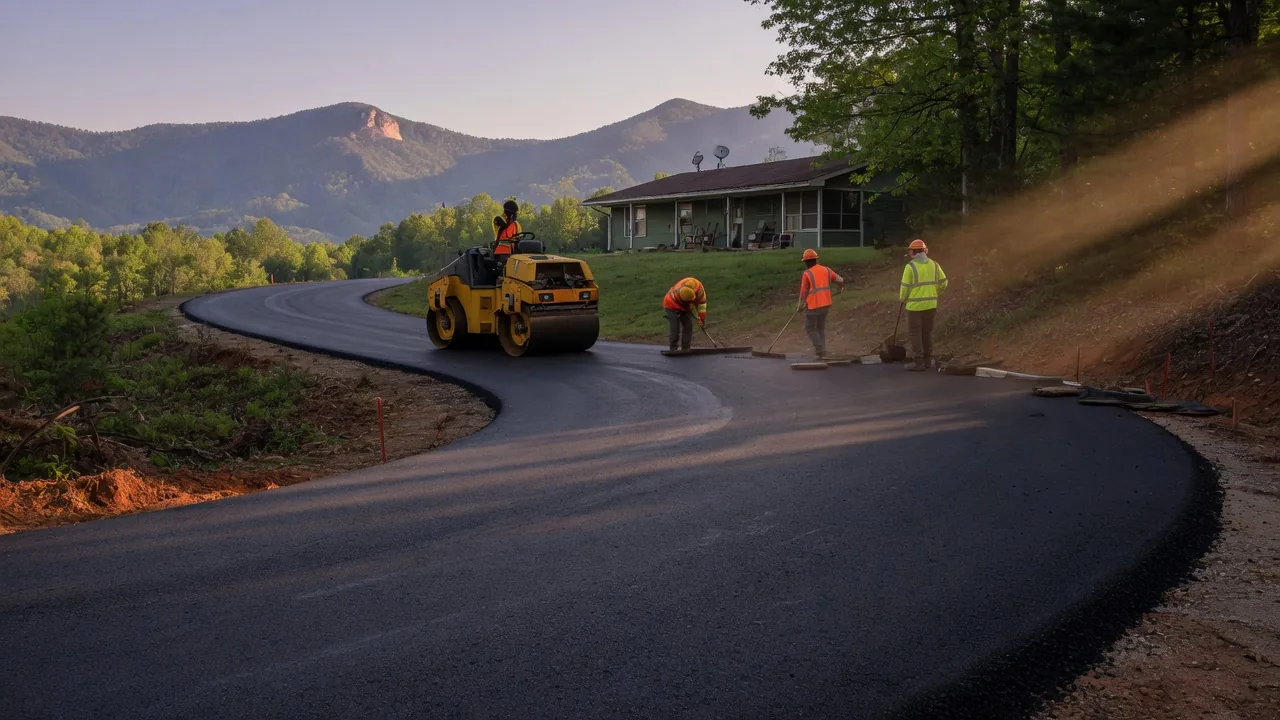
Drive up any hollow road off the French Broad and you'll feel it before you see it: the grade pitches hard, the drive is narrow, and the only vehicles that use it are a half-ton pickup and whatever the propane company sends. That combination — steep approach, tight turning, heavy single-axle load — is what dictates resurfacing thickness here, and it's why a quote that offers you two inches at one price and three at another isn't upselling. It's answering the actual question.
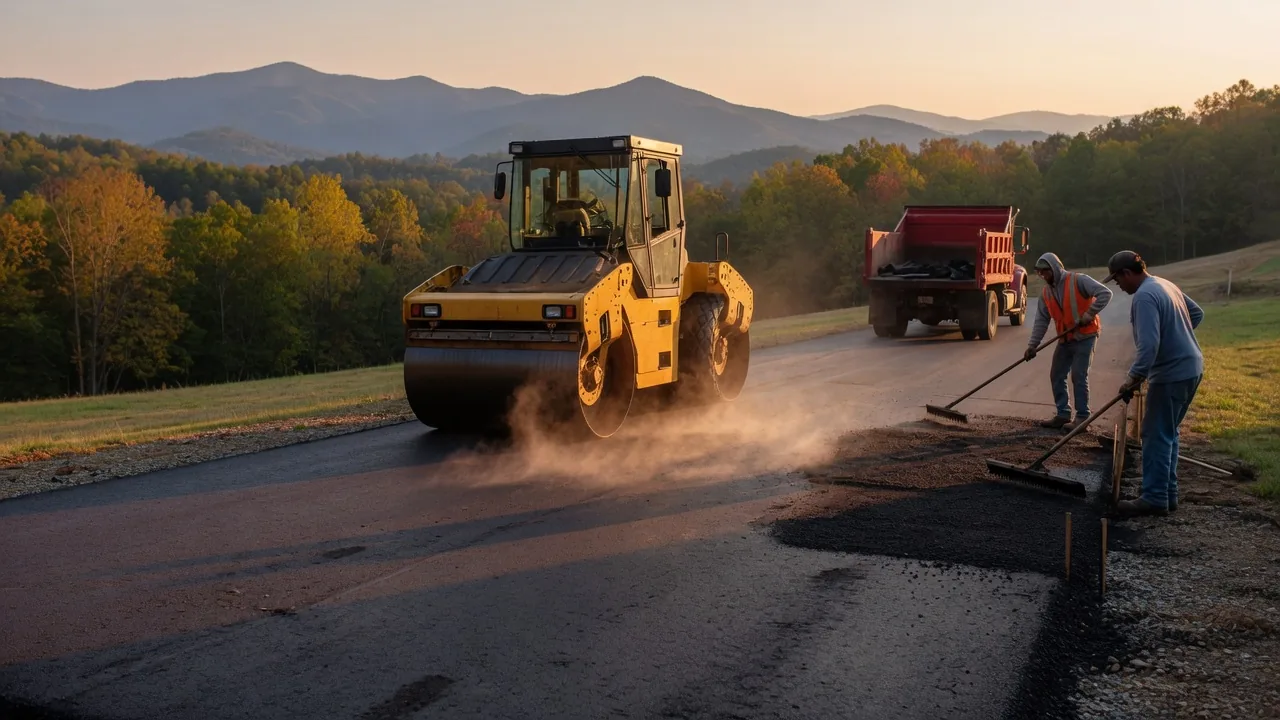
A 2-inch compacted overlay is the standard residential spec and it's fine on a flat, well-drained drive with nothing heavier than a passenger car. On a Marshall drive that climbs, the same 2 inches fails at the point where tires scuff under turning torque — usually the first 15 feet off the county road, where every loaded truck pivots. That zone needs 3 inches in two lifts, or 2 inches over a properly milled and tacked surface. Mix matters too: a surface course with polymer modification holds up to summer heat on south-facing grades far better than a straight AC mix, and that difference is usually a few hundred dollars across a whole driveway.
Woodfin sits lower and flatter than the hollows above it, and drives there often carry more car traffic and less grade. The further you climb toward Walnut, Marshall proper, or the ridges off Highway 25/70, the more the spec shifts toward the three-inch, two-lift answer. A bidder who quotes the same thickness for a Woodfin cul-de-sac lot and a switchback drive off a county road is not reading the ground.
What the ground under it has to say first
Madison County gets a lot of water. The federal record reflects it: 21 declared events touch this county across 1978-2026, and the pattern is overwhelmingly storm, flood, and slope-related. Resurfacing over a base that's moving just transfers the problem upward. Before anyone talks inches of asphalt, the honest conversation is about drainage: where the drive sheds water, whether the culvert at the road cut is sized for the flow coming off the hill, and whether the subgrade has been pumping. The NC Department of Environmental Quality publishes sediment and stormwater guidance that matters if your resurfacing disturbs more than a small area near a waterway, and any drive within the French Broad floodplain should get that question answered up front.
The practical tell: if you can see the old asphalt flexing underfoot after a wet week, or if cracks have returned in the same place two winters running, resurfacing alone won't hold. That's a base repair, and it belongs in the scope, not in a change order.
Two things make the drainage question sharper here than in most counties. First, the slopes: water off a hillside drive arrives fast and carries grit, so a culvert that was fine when the drive was gravel can be undersized once the surface is paved and sheds water instead of absorbing it. Second, the freeze-thaw cycle in these hollows. Water that sits in a crack, freezes, and opens it wider is the single most common resurfacing failure around Marshall, and it always starts at the low edge where drainage was never finished.
EPA stormwater guidance at epa.gov is the plain-language reference if you want to understand why sediment control matters during any ground-disturbing work near a stream. If the drive crosses a branch of the French Broad or any mapped tributary, that is not a technicality — it changes what the job is allowed to disturb.
Scope versus price, honestly ranged
Numbers below are regional bands for Madison County work, sized for the grades and access typical around Marshall. Tight driveways with no turnaround, or drives requiring a small paver instead of a full-size unit, price at the top of each range because of handwork and staging time.
| Scope | Typical range | When it applies |
|---|---|---|
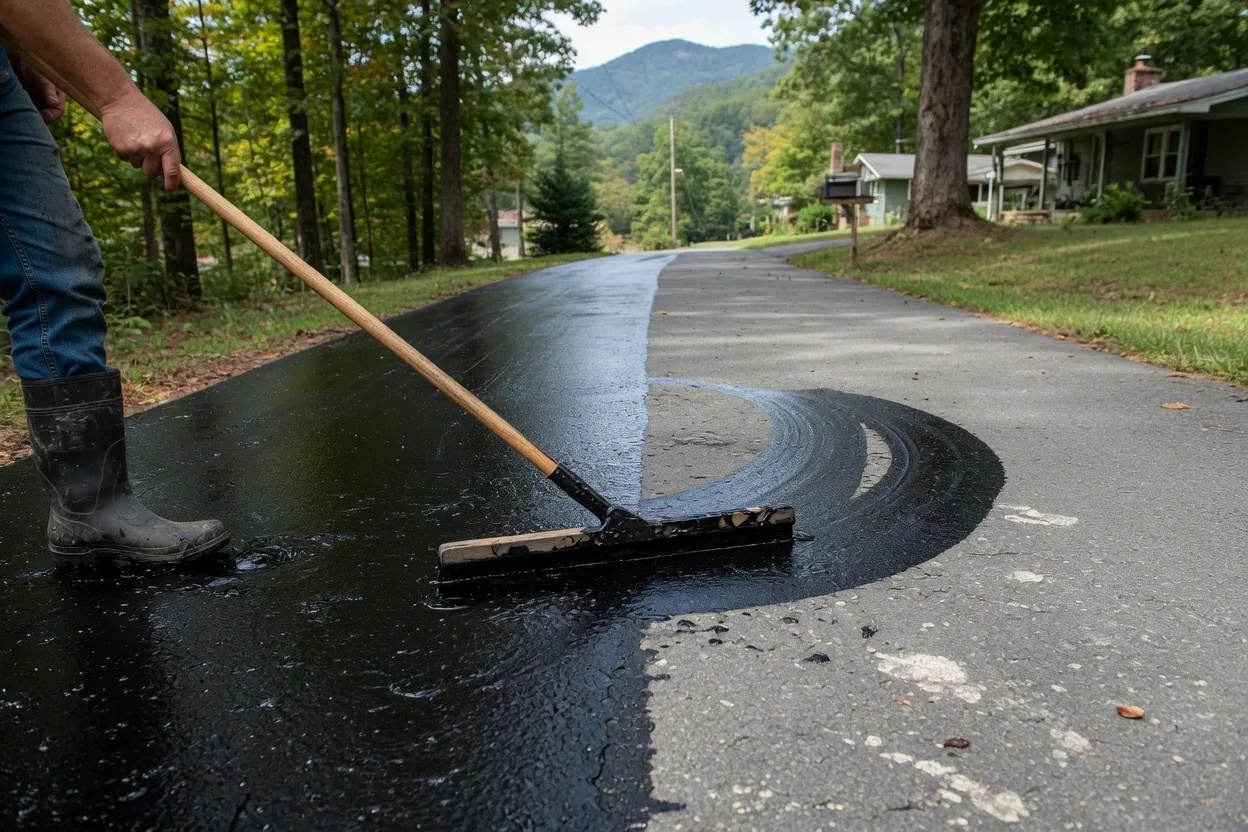
| Crack fill and sealcoat only | $350-$900 | Sound asphalt, no structural cracks, cosmetic refresh |
| 1.5-2 inch overlay, single lift | $2,300-$4,200 | Flat or gentle grade, car traffic only, good base |
| 2-3 inch overlay, two lifts | $4,000-$6,800 | Steep or turning-heavy access, truck traffic, polymer mix |
| Overlay plus base repair or culvert work | $6,500-$12,000+ | Pumping subgrade, failed culvert, floodplain drainage fixes |
For a closer read on residential scopes, the Madison County driveway cost breakdown walks the same line items against typical local drives.
One more variable that shows up constantly in Marshall: access. A paver needs room to place and compact, and many drives here are single-lane with a rock wall or a drop-off on one side. When the paver can't reach, crews fall back to hand-placed mix and a walk-behind roller, which is slower and shows up in the price. That is not a markup — it is the real cost of doing the work on a drive the equipment can't comfortably fit. Ask any bidder whether they priced your drive for machine or hand placement; the honest ones will tell you which, and why.
Trucks, turns, and the loads this town actually puts down
Marshall's economy runs on vehicles that aren't gentle. Log trucks, gravel trucks, and delivery vans working residential hollows put point loads on driveways that a suburban spec never anticipates. Every one of those loads turns, and every turn scrubs the surface course. That's why the resurfacing conversation here keeps circling back to thickness and mix rather than appearance: a beautiful 2-inch overlay on a turning-heavy grade can look perfect in October and be rutted by the following spring.
If your drive intersects a state-maintained road, the connection itself is regulated. Any change to the driveway apron or the drainage it affects typically requires an NCDOT driveway permit, and applications run through NCDOT Connect. Paving crews who work this county regularly will know the process; if a bidder doesn't, that's information. Practical guidance on driveway and street access sits with NCDOT, and the rule of thumb holds everywhere in the county: touching the apron without a permit is the fastest way to turn a paving job into a paperwork problem.
There's also the question of the surface temperature itself. A south-facing grade above the French Broad bakes in July and August, and a straight AC mix with no modification will soften enough to rut under a loaded axle that parks or turns on it. Polymer modification is the ordinary answer, and it costs somewhat more per ton. On a drive that a gravel truck backs into, that line item is the difference between a surface that lasts and one that needs patching within a couple of seasons.
How to read a bid before you sign one
Good bids here answer four things in writing: compacted thickness (not loose), number of lifts, mix designation, and what happens to the existing surface before the new one goes down. Tack coat between lifts is not optional on a grade, and edge treatment at the road connection is where cheap jobs show themselves within a year.
For projects above the state's general contracting threshold, licensing rules apply, and the NC Licensing Board for General Contractors is where to verify a contractor's standing. Below that threshold, check insurance and ask for local references on drives with similar grade and traffic. Our Marshall paving contractor guide covers what to ask, and the resurfacing overview explains the method itself if you're comparing bids that describe the work differently.
One habit that separate good bids from bad in this county: ask the bidder to describe what they expect to find under the existing surface. A crew that works these hollows will mention pumping subgrade, springs, and old culvert lines as probable findings before they ever open the drive. A bid that assumes perfect base conditions is not a bid, it is a guess, and the change order will arrive later. National code guidance through the International Code Council is useful background when a contract references standards you don't recognize, and it is worth a look before you sign anything that cites a spec by number.