When the plant runs, and why your north-facing slope waits longer
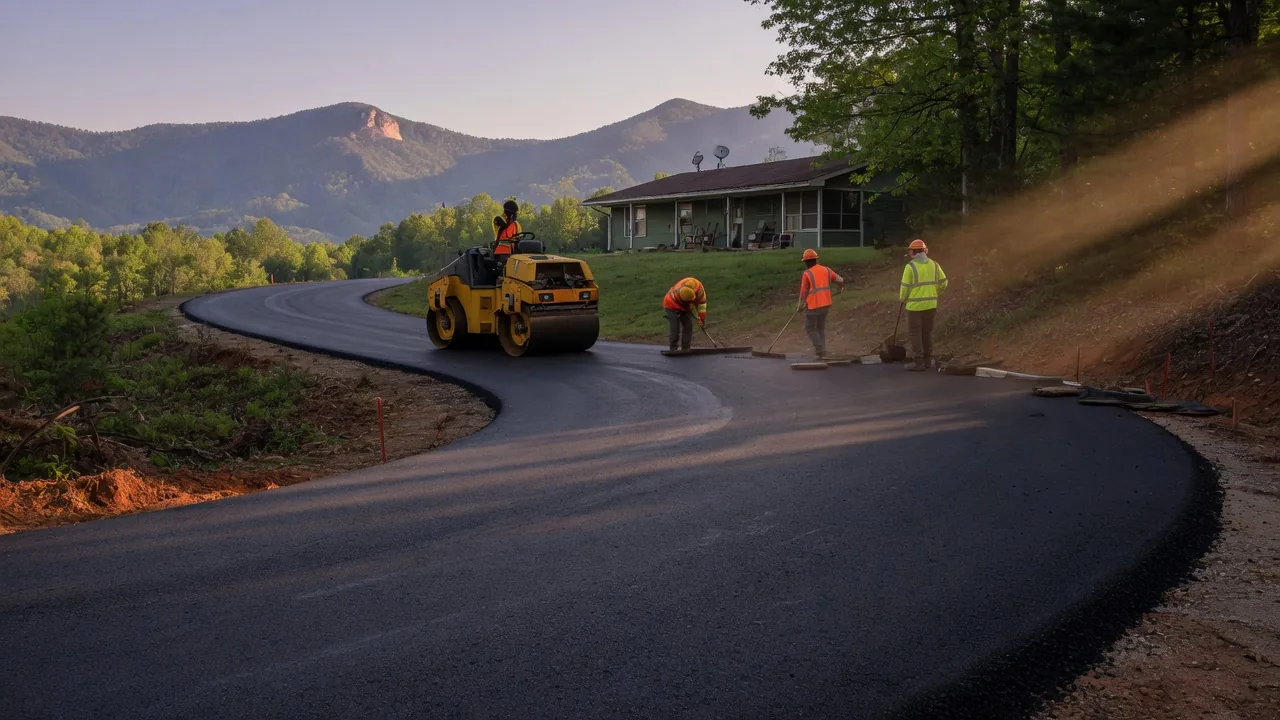
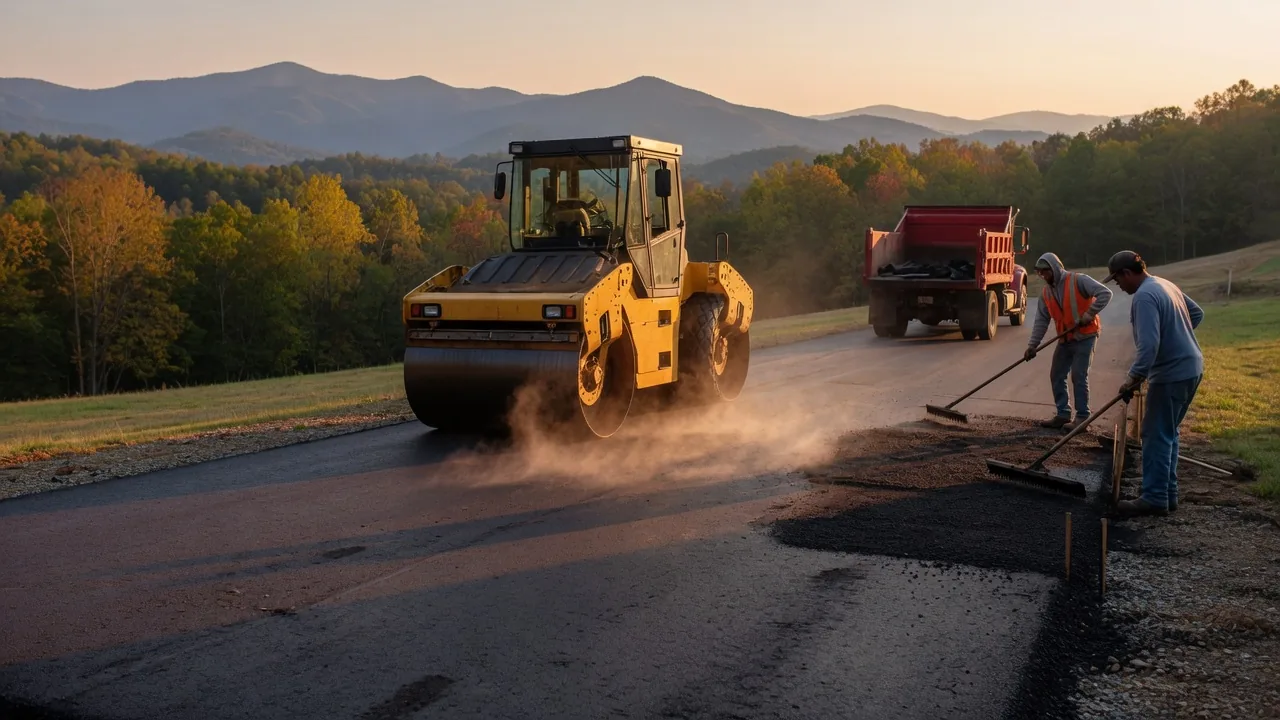
Waynesville sits in a valley that pools cool air overnight, and many driveways climb out of it onto graded banks under heavy hemlock and hardwood canopy. That combination sets the calendar more than anything a homeowner can control. Hot-mix asphalt plants in Haywood County run seasonally, from spring into fall, and the material has to arrive and be rolled while it is still workable. A driveway on a shaded, north-facing slope off a road like Ratcliffe Cove or up toward Dellwood simply will not compact the same way as a sun-baked apron off Russ Avenue. On the front end of the season you are waiting on plant opening. On the back end you are racing the first hard frost, and NWS freeze warnings for the valley floor tell you when that clock runs out — the National Weather Service forecast is the one crews actually watch.
Freeze-thaw cycling is the mechanism that matters here. Water gets into a hairline crack during a warm afternoon, freezes overnight when the valley drops into the twenties, expands, and lifts the surrounding asphalt. Repeat that for a few winters and a hairline becomes a pothole. That is why late spring through early fall is the working window: crews can place a patch, roll it, and let it cure before the ground turns hard. A driveway under dense shade on a graded bank may need an extra warm, dry stretch even in July, because the surface temperature never climbs as high as the air temperature on an open lot.
The practical consequence: the best time to call is before the damage gets expensive. A crack fill scheduled in June is cheap. The same crack left through another freeze-thaw winter often becomes a base repair the following spring.
The failure modes that show up again and again in this county
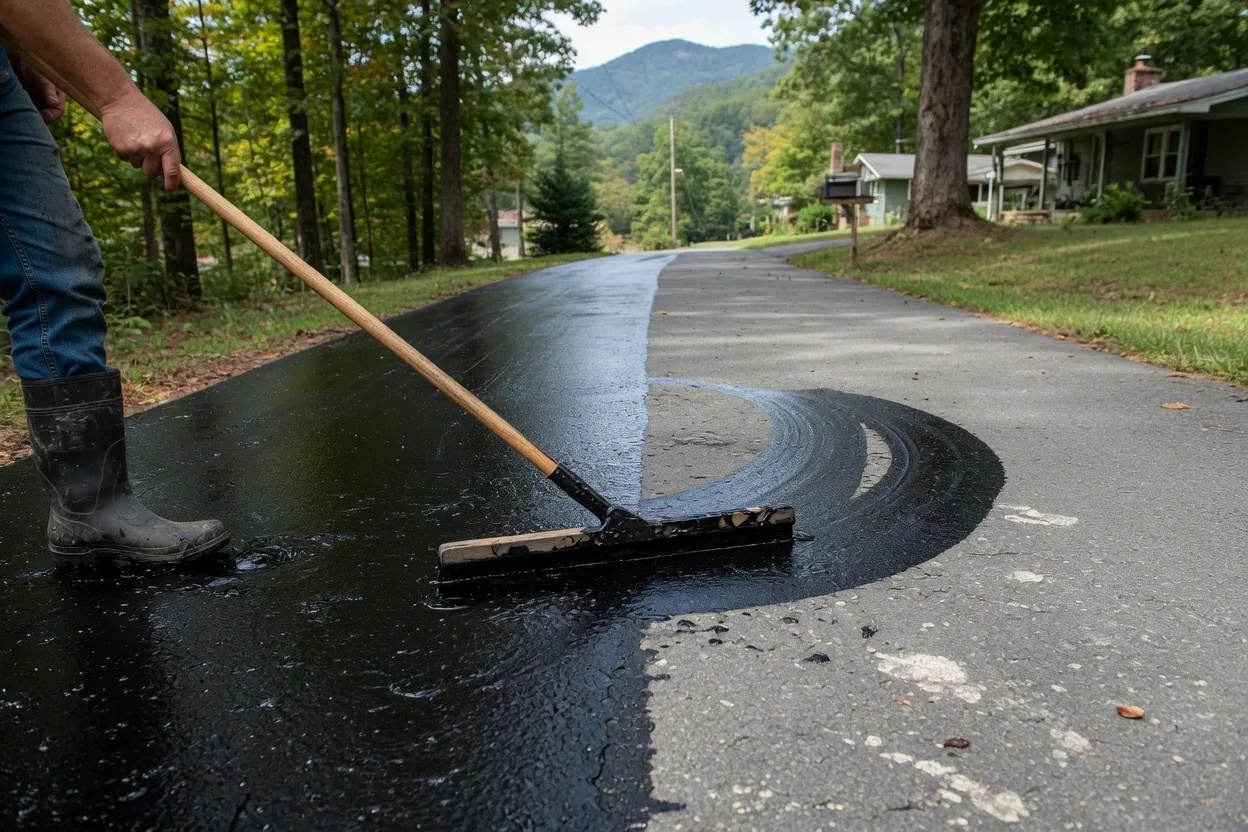
Driveways that climb out of the valley collect water from uphill. When the grade has shifted or a culvert has failed, that water runs under the asphalt and lifts it — you get a soft, spongy feel before you get a visible break. Tree-canopy driveways stay damp far longer after rain, so cracks reopen season after season and crack filler is a maintenance item, not a one-time fix. Older driveways on the valley floor often sit over originally thin gravel base, and heavy frost moves that base around. Where the driveway meets a county or town road, the apron can settle at a different rate than the rest of the driveway, which is why the first pothole often shows up right at the street edge.
The tells worth acting on: potholes that return in the same spot every spring, alligator cracking spreading outward from one area, edges crumbling where asphalt meets grass, and standing water that sits more than a day after rain. A repaired pothole that reappears within a season almost always means the base underneath, not the patch, is the real problem. Chasing it with more patch material each year costs more over three seasons than fixing the base once. The asphalt driveway repair overview walks through what each repair actually includes so you can compare bids on the same scope.
Repair cost bands for Haywood County driveways
Numbers depend on square footage, access, and how much base work is hiding under the surface. The Haywood County cost breakdown carries the working line-item table, but here is the honest shape of it:
| Scope | Typical range |
|---|---|
| Crack filling (linear) and small patching | $300-$900 |
| Pothole and localized base repair | $500-$1,800 |
| Partial resurfacing / overlay, single area | $1,800-$4,500 |
| Full driveway overlay | $3,500-$7,500 |
| Full reconstruction (remove, base, repave) | $4,500-$9,500+ |
Steep driveways, tight access where a truck cannot turn around, and long runs from the road all push toward the top of each band. A short, flat, easily reached driveway can sit comfortably at the bottom. Any quote that prices a repair without inspecting the base is pricing a guess, and in this county the base is usually where the money goes.
Water, drainage, and the permit side of the job
Water is the first conversation and structure is the second. On graded driveways in Haywood County, the fix often includes re-cutting a swale or replacing a failed culvert before any asphalt goes down — paving over a drainage problem just builds a more expensive failure. Federal disaster history bears this out: 19 declared events touch this county across 1973-2026, mostly storm and flood family. Those events pushed water at driveways and aprons that were built for a drier assumption, and the repairs that held were the ones that solved drainage first. Runoff leaving a driveway also has a downstream side, and the EPA publishes stormwater guidance for homeowners who want to keep sediment and oil out of the creek at the bottom of the hill.
If your driveway connects to a state-maintained road, the apron work may need a driveway permit through NCDOT — the NCDOT Connect portal is the application path, and NCDOT maintains the general permit guidance. Residential drainage and access requirements sit in the state code adopted by reference, with the technical standards published by the International Code Council and enforced through the state code office at the NC Department of Insurance. When in doubt, check before you pour. Purely interior repairs that never touch the street apron usually do not need a permit.
How to pick a crew that understands this valley
Three checks that matter in Waynesville. First, ask about plant access and haul time — a crew trucking hot-mix from outside the county loses working time and quality on a cool mountain morning, and a load that arrives too cold gets rolled into a patch that fails early. Second, ask how they handle the base: a real repair addresses what is under the asphalt, not just what is on top, and a crew that will not talk about base prep is a crew that will be back next spring. Third, confirm licensing where the job crosses the threshold — general contracting rules in North Carolina are enforced by the NC Licensing Board for General Contractors, and thresholds are worth confirming before a large reconstruction contract is signed.
Our Waynesville paving contractors guide covers what to ask on the phone, and a short walk of the driveway with any bidder should cover where water goes in a hard rain, what the base looks like at the worst spot, and whether the apron at the street needs separate attention. If a quote does not mention drainage at all, that is your answer about how the repair will age.