Why mountain season decides your Canton paving calendar
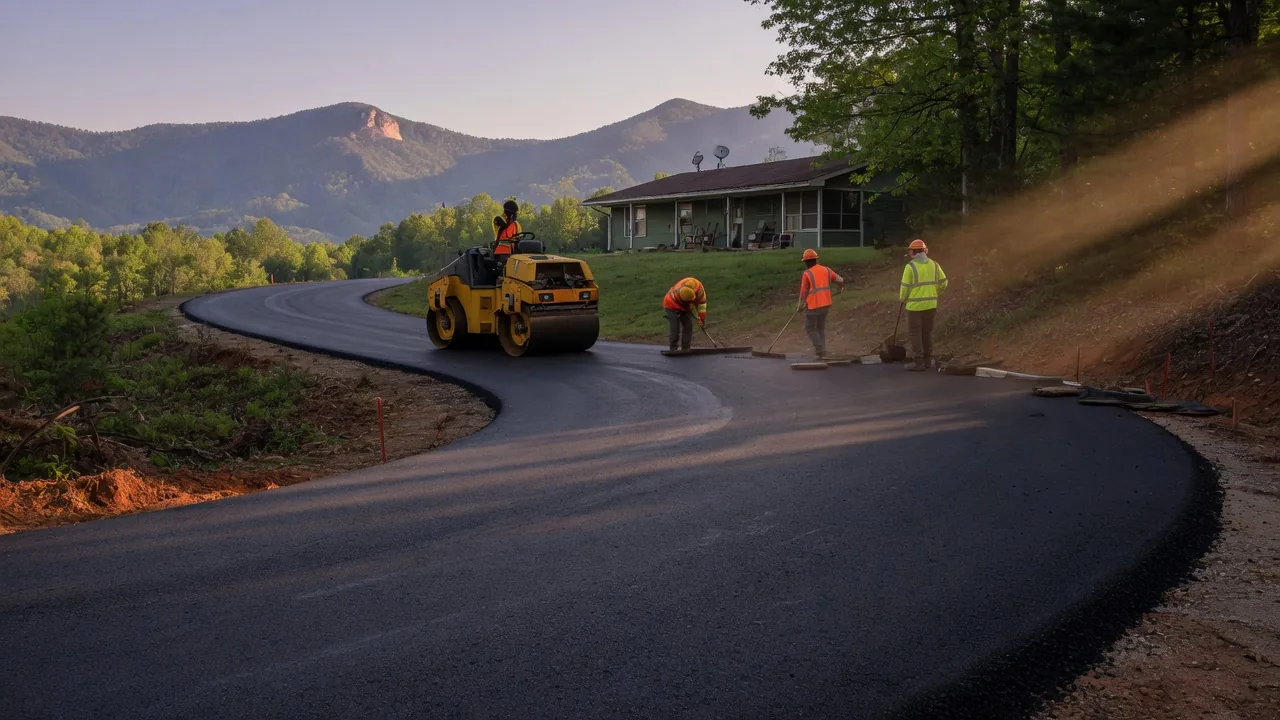
Driveways in Canton live on a different clock than flatland asphalt. The plant has to be running, the overnight low has to stay comfortably above freezing, and the mat has to cool at a predictable rate before you open it. Around Haywood County that generally means a late spring to early fall window, because the valley floor warms slower than the surrounding ridges and the shade from the Pigeon River valley slopes can hold surface temperatures down even on a mild afternoon. A crew rolling a driveway in March on a north-facing grade above town is fighting a losing thermal battle; a crew rolling the same drive in September is working with the day.
That narrow window decides a lot about scheduling and price. If your drive is under heavy tree cover or faces north, expect fewer good paving days per month than a sun-exposed lot off Old Canton Road. It also means the base prep you do now, before the plant is queued up, is what saves you a season. The gravel-to-asphalt conversion guide walks through what prep actually means on a mountain drive.
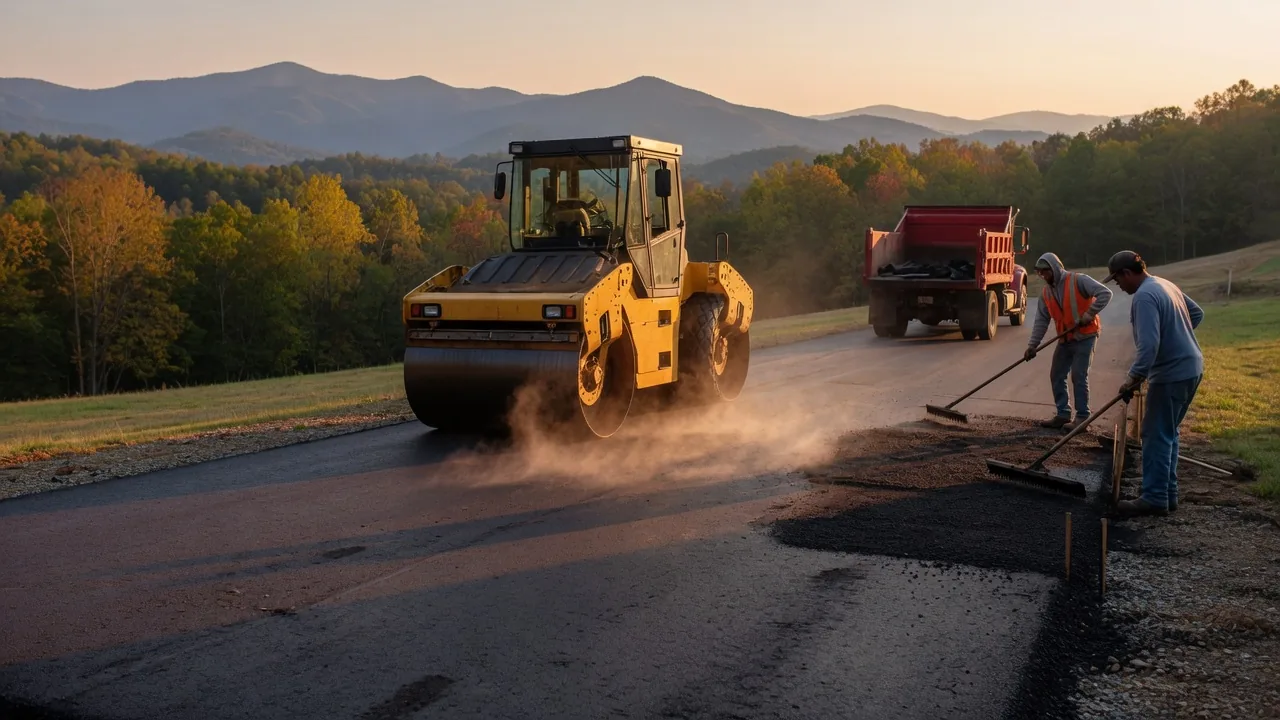
The thermal math is worth spelling out because it drives everything. Asphalt leaves the plant hot, and in a mountain valley it starts shedding that heat the moment it hits the truck bed. On a wide-open lot in the sun, a crew has more minutes to rake, lute, and roll before the mix stiffens past the point where it will compact properly. On a narrow drive hemmed in by hemlock and white pine above Canton, or on a grade that drops toward the river, the mat can skin over on the surface while staying soft underneath. Roll it too late and you get a porous, under-compacted layer that lets water in at the first thaw. This is why the same crew that turns out a solid lot in Waynesville can struggle on a shaded ridge road off Highway 110, and why an honest contractor pads the schedule with a few float days rather than promising a single hard date.
Season also shapes what you can reasonably ask for. An early-season pour has a full summer to cure and a better shot at being sealed before the first hard freeze. A late-season pour may cure fine but leaves you no cushion if the weather turns and the drive has to sit unfinished through winter. If your conversion is one of several jobs a crew is juggling, being first in the queue in May is often worth more than a slightly lower bid in October.
The base is the job; the asphalt is the finish
Most failed gravel-to-asphalt conversions in this county fail at the base, not the top. Gravel drives in Canton are often built up over clay-heavy red soil that drains poorly through winter, and a conversion that lays hot mix over existing gravel without correcting depth and water movement will crack at the first freeze-thaw cycle. A proper conversion typically means re-grading to shed water, adding compacted crushed stone to a defensible depth, and only then paving.
Two rules genuinely matter and are worth citing: driveway access onto a state-maintained road generally requires a permit, and the application process runs through NCDOT — see NCDOT Connect driveway permits for the current forms and requirements. Paving is a construction activity, and once a job crosses the threshold set by state law, the contractor on it must be licensed by the North Carolina Licensing Board for General Contractors. Ask any crew you're considering which side of that line they're on before you sign.
Base work on a Canton drive usually starts with reading the slope. Water has to leave the driveway, and on ground that falls toward the house or a creek, the fix is often a shallow swale along the uphill edge or a culvert under the approach, not just more stone. Where the existing gravel has pumped fines to the surface or rutted into the subgrade, that material has to come out and be replaced with clean, angular crushed stone that locks together under compaction. A crew that simply spreads a new lift over soft, contaminated gravel is building on a sponge.
Depth matters too, and it is graded to the load the drive carries. A short residential spur to a single parking pad is a different structure than a long drive that has to hold a loaded pickup, a trailer, or a delivery truck. Ask any bidder to state, in writing, the stone depth they intend to place and the compaction method they will use. If a proposal skips those two items, treat it as a proposal to pave over whatever is already there, which is the pattern that produces the cracked, settled drives you can find on any older gravel lane around town.
What a Canton conversion costs, line by line
Ranges below reflect realistic Haywood County bands for a residential drive in the 600 to 1,200 square foot range. Slope, uphill drainage, tree shade, and how much base has to be added move the number more than raw square footage does. The Haywood County asphalt cost breakdown carries the same table with county-level context.
| Scope item | Typical range |
|---|---|
| Full conversion, standard 600 sq ft drive | $4,800 – $7,800 |
| Full conversion, 1,200 sq ft drive with grading | $8,500 – $11,500 |
| Base correction only (no paving) | $2,200 – $4,500 |
| Surface course over existing stable base | $2,900 – $5,600 |
Anything below the low end of these bands should trigger a question. A bid that doesn't include base depth, compaction method, and drainage correction is a bid for a driveway that will need replacing, not one that will hold up through a mountain winter.
It helps to think of the quote in layers. The removal and regrade layer is where unknown costs hide, because nobody knows how deep the soft spots go until the old gravel is opened up. The stone layer is more predictable once depth is decided. The paving layer is the most visible but often the smallest line on a steep or shaded drive, since the prep that makes it last costs real money too. That is why two bids for the same square footage can differ by several thousand dollars while both being honest: they may be pricing very different amounts of base. The only way to compare them is to ask each bidder to break out stone depth, compaction, drainage work, and paving thickness as separate lines. The conversion overview linked above explains the layers in more depth, and the gravel-to-asphalt guide is a good primer before you start collecting quotes.
Water, frost, and the local record
Federal disaster declarations touching Haywood County (19 events spanning 1973-2026) are dominated by storm and flood events, and that history shows up in driveways near the Pigeon River corridor and on any lot graded toward the house. Asphalt that gets saturated from beneath will heave in freeze-thaw and fail from the bottom. The National Weather Service's weather.gov outlook is worth checking before committing to a paving date, because a wet week after fresh asphalt is worse than a wet week before.
Practical drainage items on a Canton conversion: crown the drive so water sheds to a defined edge, direct gutter downspouts and any uphill runoff away from the driveway approach, and keep a positive grade at the transition where asphalt meets gravel or concrete. The U.S. EPA's stormwater resources at epa.gov are a reasonable primer if your drive discharges toward a stream or drainage easement, which many lots in this county do.
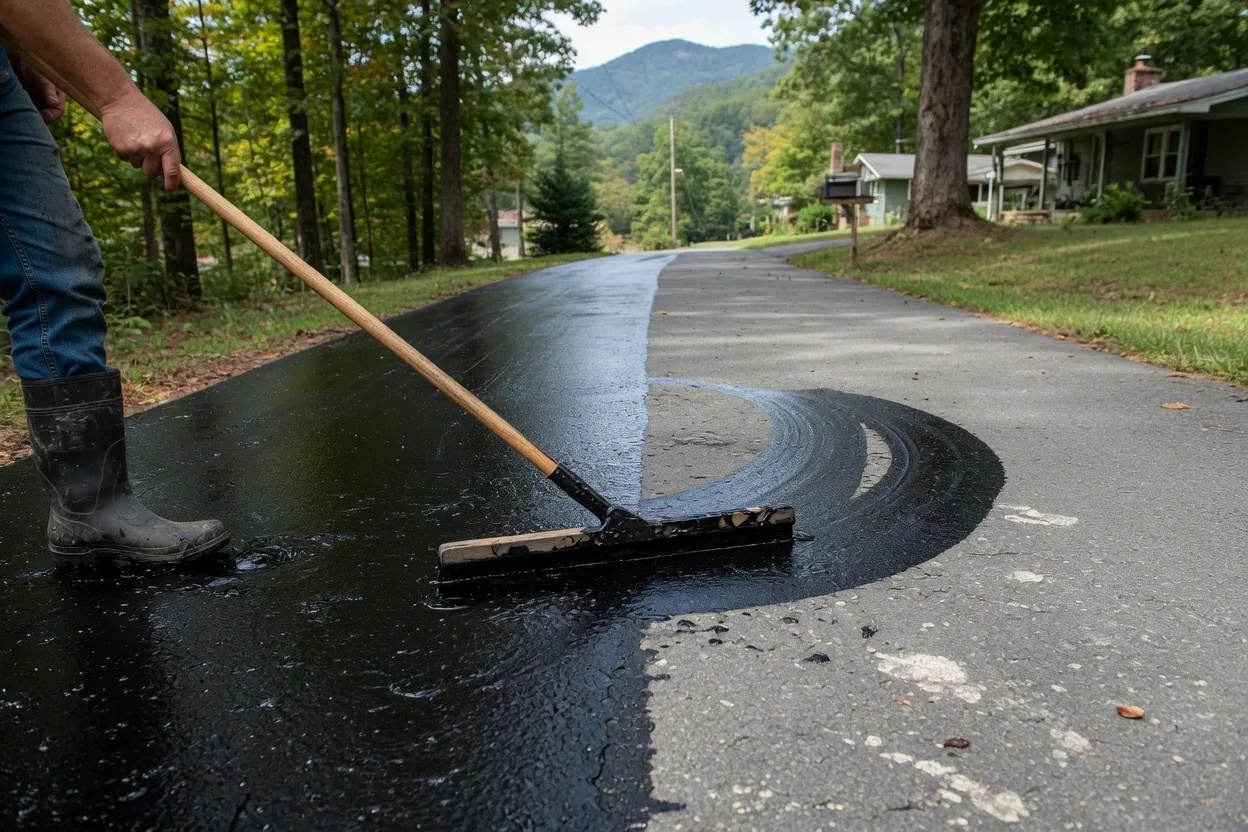
Frost is the quiet enemy on any drive that sits in shade through the winter. Ground that stays damp and cold does not dry out the way a sunny slope does, so the freeze-thaw cycle works deeper and longer. That is why the transition where new asphalt meets an existing gravel or concrete apron deserves deliberate attention: a mismatched grade there lets water pool at the seam, and the seam is the first place a mountain drive fails. Cracking at the apron is not a sign the asphalt was bad. It is usually a sign the water had somewhere to sit.
Leaf litter is a smaller but real factor here too. Driveways shaded by hardwoods collect debris that holds moisture against the asphalt edge through the wet season, and over years that edge softens and crumbles. Keeping the drainage edges clear matters more in this county than in flatland markets because of how much water runs off mountain slopes. If your drive has a culvert, keep the inlet clear before every heavy rain and before winter, and check it after the first big storm of the season.
Picking a crew that has paved this terrain before
Mountain driveways aren't flatland driveways, and the crew that does parking lots in Asheville may not be the right fit for a steep, shaded, curving lane off a Canton ridge road. Three things worth asking before you hire: have they converted gravel on a slope in this county, what compaction equipment they run, and how they sequence base work against the paving date. The Canton paving contractor guide covers what to look for in writing, and the conversion overview is a fair second read before you start collecting quotes.
Beyond those three, ask how they handle the schedule risk that mountain weather creates. A crew that builds in float days and stays in touch about the plant run is easier to work with than one that treats a rain delay as your problem. Ask too whether they will put the base scope in writing, including stone depth, before the equipment ever arrives. The best sign of a competent crew on this terrain is a bid so specific about prep that you can compare it line for line against the next one.