What a Buncombe County pothole is actually telling you
Driveways up the slope roads off Beaverdam and Elk Mountain roads take a beating that flatland driveways don't. Water from the hillside above runs downhill across the asphalt, finds any hairline crack, gets into the gravel base, freezes overnight, and pries the surface apart from below. By the time you see a pothole, the failure has already been traveling under the pavement for at least a season. A driveway on a ridge cut in Weaverville fails differently from a flat one in Arden — the slope ones fail along the uphill edge first, the flat ones fail at the center where ponding happens.
So before you get a patch estimate, walk the driveway and read four things: how many potholes there are, whether they're clustered (isolated = patch, clustered = base failure), whether the edges are crumbling (edge loss means the asphalt layer is too thin), and whether you can feel soft spots under your feet when the ground is wet. Those four answers point at patch, overlay, or tear-out before anyone quotes you a number.
Patch, overlay, or replace — the three price bands
The decision isn't really about how bad the potholes look. It's about how much of the driveway is still structurally sound. One pothole with solid pavement around it is a patch job. A driveway where more than roughly a quarter of the surface has cracked through or settled is an overlay candidate. A driveway where the subbase itself has failed (soft spots, sinking sections, crumbling edges) usually costs less to replace than to keep patching every year.
| Scope | What it fixes | Typical range (Buncombe County) |
|---|---|---|
| Single pothole patch | Isolated hole, sound surrounding pavement | $150-$600 |
| Multiple patches (up to ~5) | Scattered potholes, base still intact | $600-$1,800 |
| Full driveway overlay | Cracked surface, worn top layer, base OK | $2,500-$6,500 |
| Tear-out and replacement | Failed subbase, soft spots, drainage grading | $6-$14 per sq ft |
| Drainage correction | Adds swale, regrade, or catch basin | $800-$3,500 |
Those bands move based on slope, access, and how much of the job is grading versus paving — a steep driveway off Town Mountain Road with limited equipment access sits at the top of every range. Our asphalt repair cost guide breaks down line items if you want to compare bids apples to apples.
Why patching alone rarely holds here without fixing water
This county sits in one of the wettest corners of North Carolina, and the federal disaster record backs up how often storm and flood events hit it: 19 declared events touch Buncombe County across 1973-2026. Every one of those events pushed water at driveways built for a drier assumption. A patch that doesn't change where the water goes will fail within a couple of freeze cycles — the same mechanism that made the hole the first time is still there.
Before any pothole repair, the honest question is drainage. Where does the uphill runoff go? Does the driveway shed water toward the road or hold it against the garage? A patch with a small regrade or a swale costs a fraction of what re-repairing the same spot every two years does. NCDOT handles the driveway and street access permit side when work touches the right-of-way, so anything near the road edge should be confirmed before a crew digs.
When an overlay makes sense, and when it's money wasted
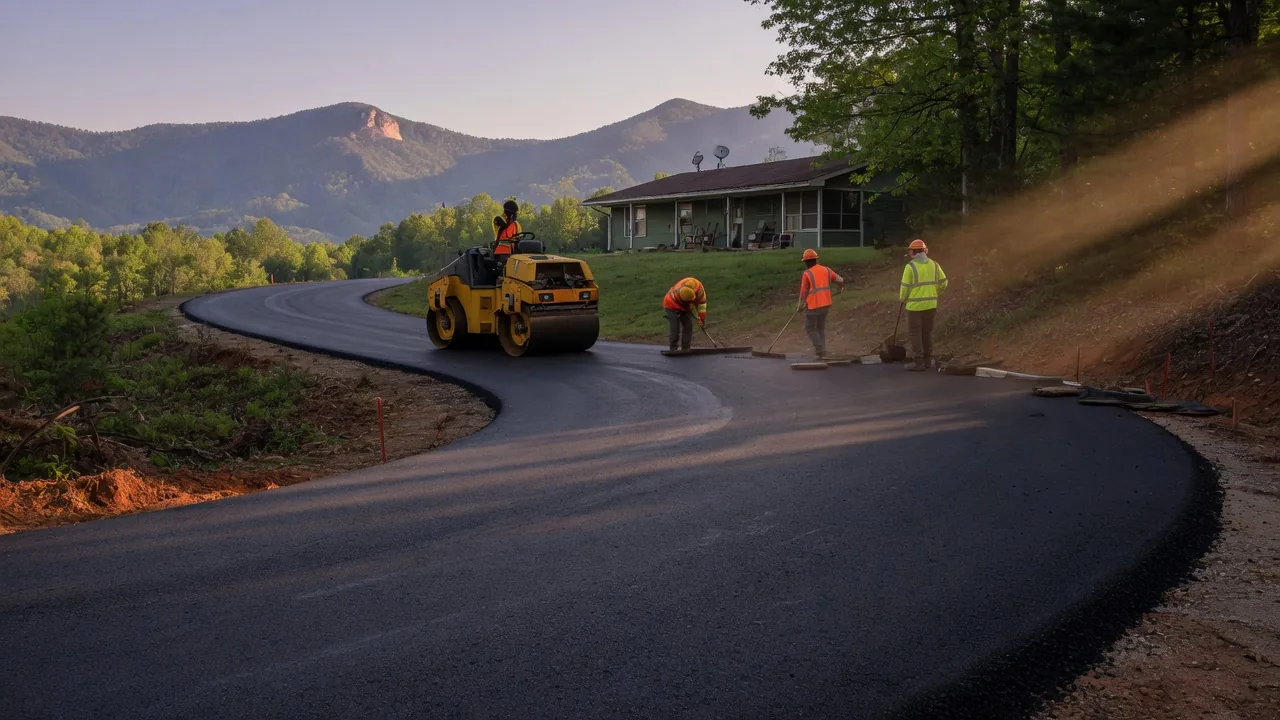
An overlay is a new layer of asphalt over the existing surface. It works when the pavement under it is still solid and the problem is surface-level: widespread cracking, a worn-out top layer, or a driveway you want to level before it fails further. That's the asphalt resurfacing conversation, and it's the right call for cracked-but-sound driveways.
It's wasted money when the base has failed. Laying new asphalt over soft spots just buys you one or two good years before the same potholes reappear, now harder to fix because they're buried under a fresh layer. Any contractor who quotes an overlay without probing the base is guessing. Ask them where the soft spots are and how they know.
What to check before you sign a driveway quote
North Carolina requires a general contractor license for jobs above the state's cost threshold, and you can verify a company's status through the NC Licensing Board for General Contractors. For anything that touches grading or drainage near a structure, the work should conform to the state building code adopted by the NC Department of Insurance — not because a driveway needs a permit in most cases, but because a crew that already knows the code handles water correctly.
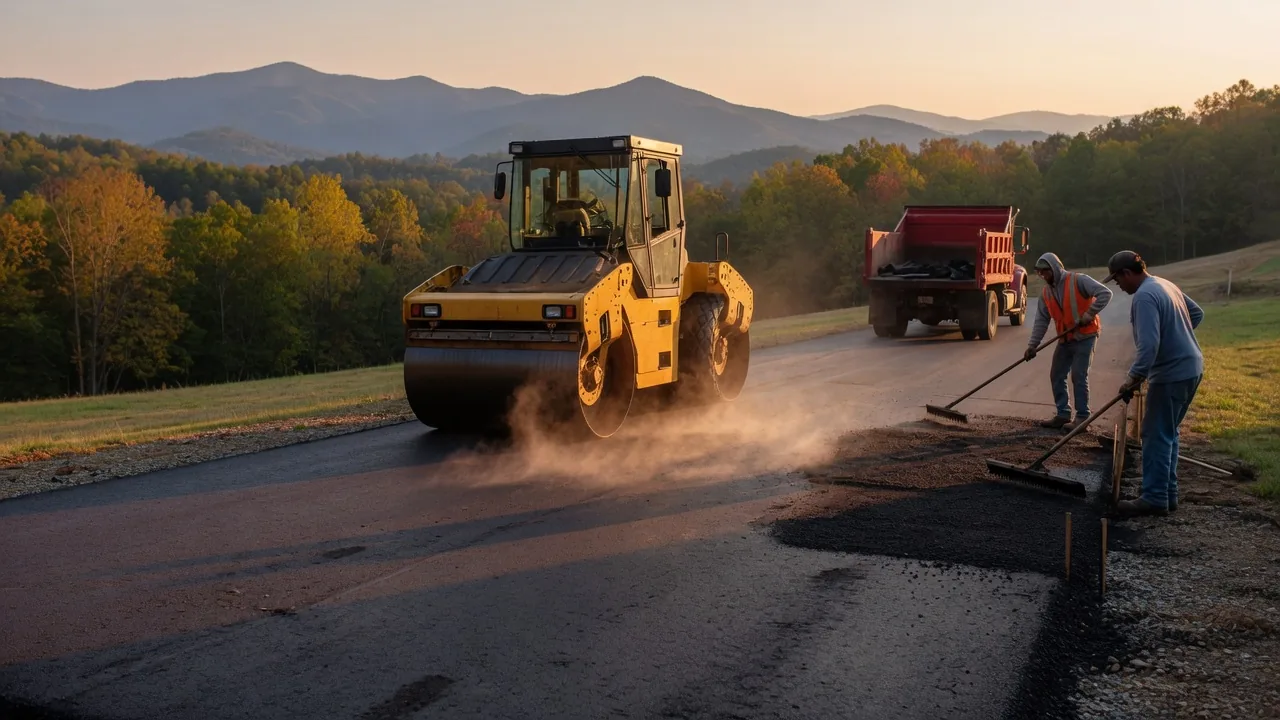
Three questions that separate the crews worth hiring: how do you decide between patch and overlay (a real answer names the base, not the surface); what do you do about the water feeding the potholes; and do you compact the patch in lifts or dump it in one pass. The answer to the third one tells you whether the patch will be there next winter.