How far the mix travels before it ever touches your road
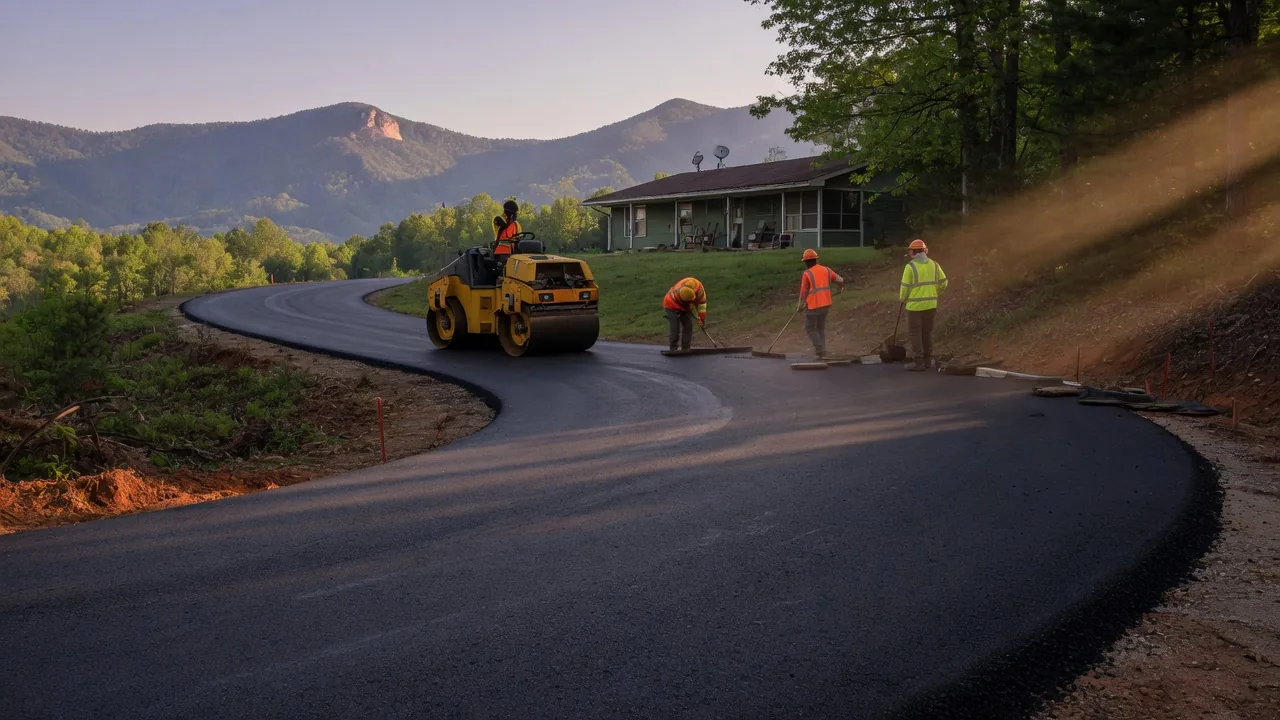
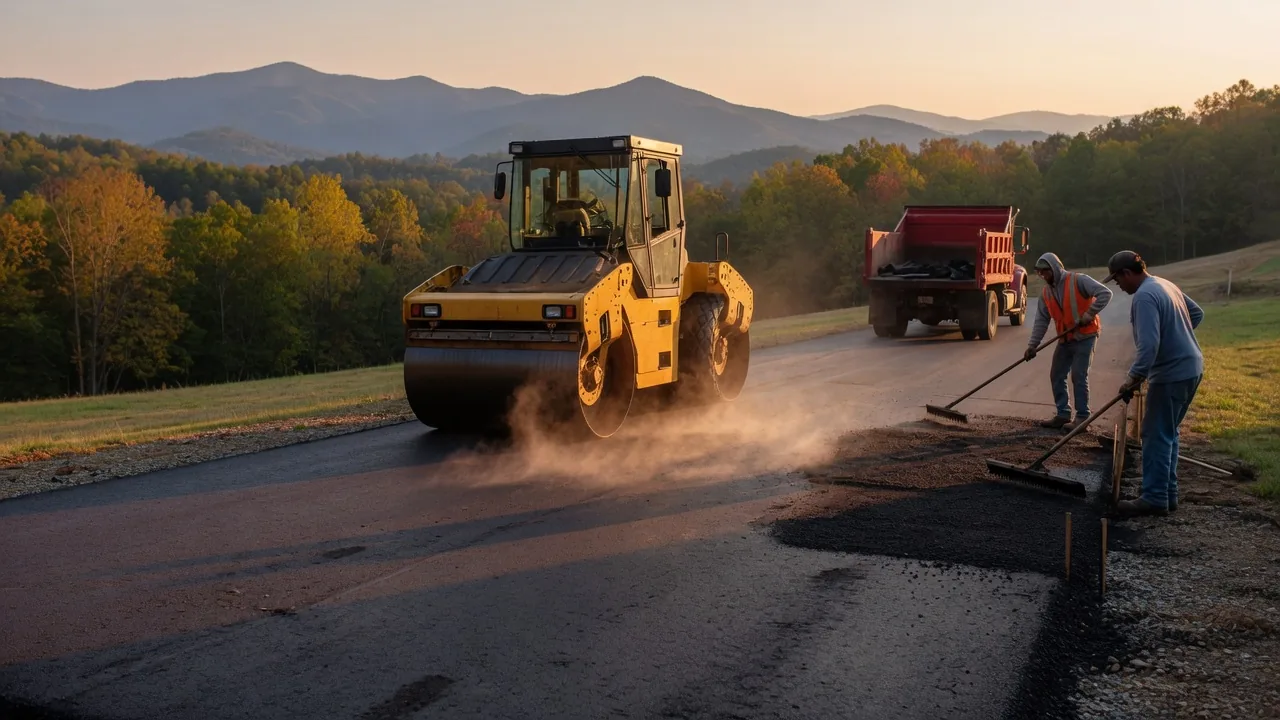
Hot mix asphalt leaves the plant at roughly 300 degrees and has a working window measured in hours, not days. In Buncombe County the viable plants sit down in the valley corridor, which means a private road up a north-side cove off Leicester Highway, or a subdivision stub up a Weaverville ridge, can add 30 to 50 minutes of mountain two-lane between the silo and your first paver pass. That haul eats the temperature margin, and temperature is what lets a roller actually knit the mat together. On a long driveway the trucks run out of heat before the crew runs out of road, which is why a job that looks straightforward on a map can price a full tier higher than the same square footage down in the flats.
If your section is likely to need more than a day of paving, the plant may only be able to serve you on fresher loads by scheduling you tighter, and a tight schedule on a one-lane road is its own problem. This is the first thing I'd ask any bidder about: how far, and how many loads can you land before the last one goes cold.
What the ground under your road has to be doing first
Asphalt is a wearing surface, not a structural fix. Over a road that has been shedding gravel into a ditch for years, or over a base that has already pumped and rutted, a new mat is a cosmetic treatment that will crack in a season. The honest sequence is usually: catch the water, correct the grade, compact the base, then pave. Water is the whole ballgame in these mountains. A cross-slope that sheds to daylight, a ditch that functions, and a culvert that actually passes the storm it was sized for separate a road that lasts fifteen years from one that fails in three.
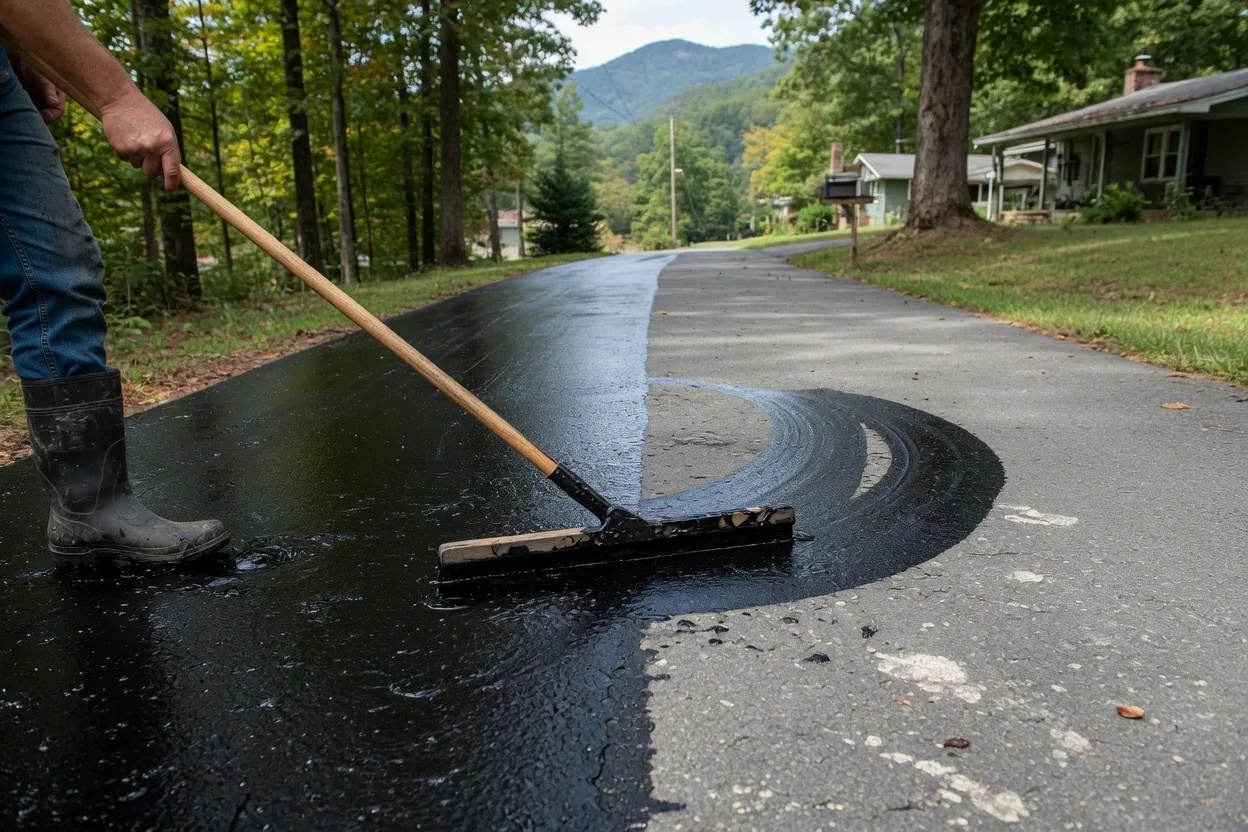
Where a road is long and lightly trafficked, a properly drained and compacted tar and chip surface is often the better value and the tougher surface on a steep grade, because it grabs a tire better when it's wet and it tolerates minor base movement that would crack a thin asphalt mat. Asphalt is the right answer where you want a smooth, quiet, plowed surface and the base can be made genuinely sound. The choice is a base question more than a surface question.
Then there's the paperwork most homeowners don't expect
A private road that ties into a state-maintained route usually needs an access permit before you widen, re-grade or change the drainage at the connection, and that permit has real engineering attached to it. The rules differ by road class and by how far the connection sits from a curve or a crest, and getting the drainage wrong at the tie-in is how a road project turns into a stormwater complaint. Our guide to NC driveway permit rules walks the common cases for this area, and the state's own drive and street access rules live at NCDOT. Beyond the entrance, anything that touches a stream, a wetland or an erodible slope of any size can pull in the state environmental review, so erosion control and sediment plans are not optional on a job that disturbs more than a small footprint; the thresholds and the delegated local programs run through NC DEQ. If your project also moves electrical or gas service to a new building, the scope can expand fast, and North Carolina draws a line past which you need a licensed general contractor rather than a handshake crew; the threshold and the license lookup are at the NC Licensing Board for General Contractors.
What private road and subdivision paving actually costs here
Cost breaks into three separable pieces and good bids quote them separately: the haul and plant logistics, the base work, and the surface. Square-foot pricing for the surface alone is misleading until you know what the subgrade needs, which is why the honest band is wide. The ranges below reflect typical residential and small-subdivision private road work in Buncombe County, as installed, in this labor and material market. They are ranges, not quotes, and any figure that doesn't come after somebody has walked the grade and checked the base is a guess.
| Scope | Typical range | What drives it |
|---|---|---|
| Asphalt over sound, prepared base | $3.50–$5.50/sq ft | Plant distance, mat thickness, square footage |
| Asphalt where base rebuild is needed | $5.50–$8.50/sq ft | Depth of undercut, imported stone, compaction lifts |
| Steep grade or tight switchback access | add $1.00–$3.00/sq ft | Smaller equipment, slower passes, hand work |
| Tar and chip, full section | $2.00–$3.75/sq ft | Base prep, chip and binder selection, one or two coats |
| Drainage and grading correction | $4–$15 per linear ft | Ditch work, culverts, cross-slope, outlet protection |
| Full subdivision road, per mile | $350,000–$850,000+ | Width, base depth, utilities, storm structures, engineering |
Those numbers move with the calendar and the plant. A full section is a multi-load job, and demand at the plant in paving season can push the cost of a small-detail job higher because you're asking for a partial day. The detailed cost breakdown on this site separates the base, the surface and the haul so you can see where a bid is padded and where it's honest. Sibling pages quote ranges for nearby towns and the same logic applies across the county: a road on the valley floor and a road up a hollow are not the same job.
Storm, slope and the reason a road out here fails differently
Buncombe County has seen 19 federally declared disaster events over the 1973-2026 span in the record, and a share of them were rain events that sent mountain roads into the creek. Saturated ground, a blocked culvert and a steep ditch all fail together, and a paved road does not survive an undersized drainage system. When you pave over a gravel road you change the runoff coefficient, which means the water that used to soak and slow down now arrives at the bottom of your section faster and in greater volume. If the outlet can't take it, the new asphalt becomes the tool that undermines itself. The National Weather Service puts the heavy-rain and flood watches in front of you before the event, and the right time to inspect your cross-drains and clear the road ditch is ahead of the storm, not after. On the steepest sections, real design work also has to account for rain-on-snow and freeze-thaw, both of which eat a cheaper base. An asphalt road on a bad drainage design is just an expensive way to have the same problem, paved.
What a good bid should say out loud
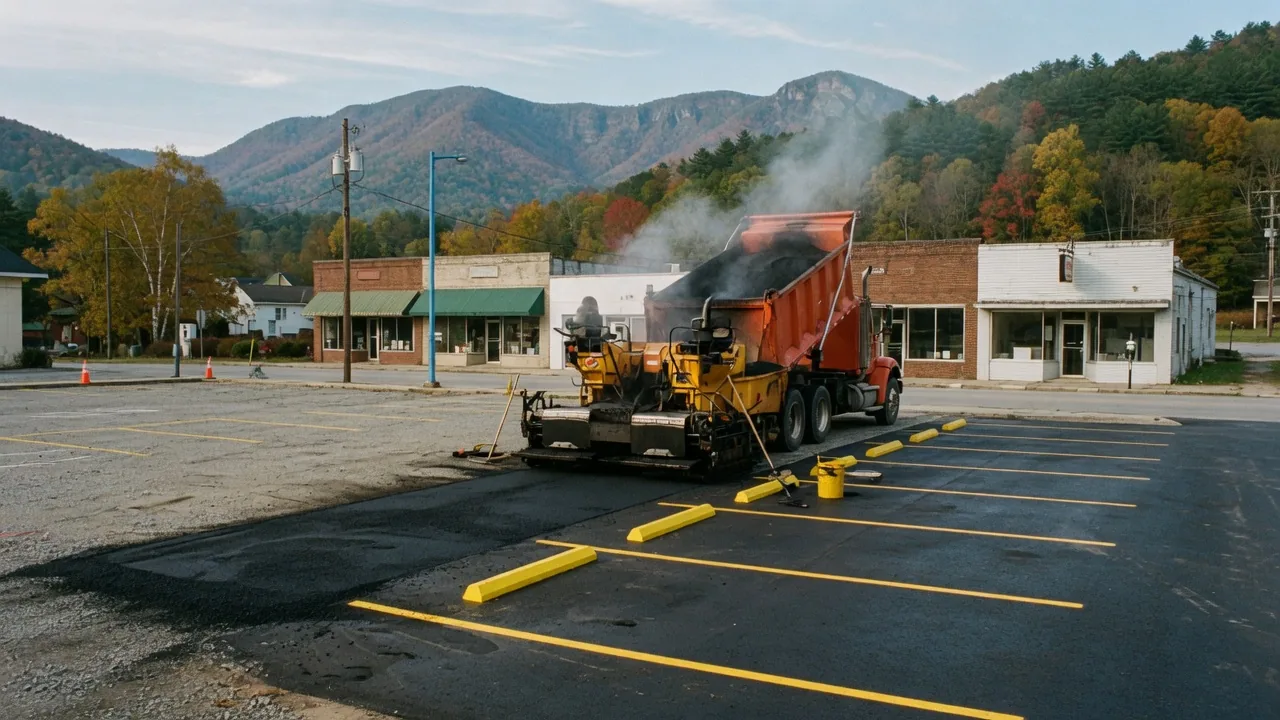
A serious paving bid names the mat thickness and the mix, quotes the base call, and states how it will protect the inlets and the down-slope during the work. It separates haul, base and surface so you can compare scope against scope, not just the bottom line. It notes the access limits and whether the equipment will fit, because a paver that can't back up a switchback means hand work and hand work prices differently. And it should confirm who holds the permit and who's carrying the risk on the tie-in. If a bid is a single number with no base call and no drainage line, it isn't a bid. The rest of this site covers the individual towns across the county, and our private road paving service page is the right starting point if you want the full scope walk first.