Where the rain goes decides what you pay
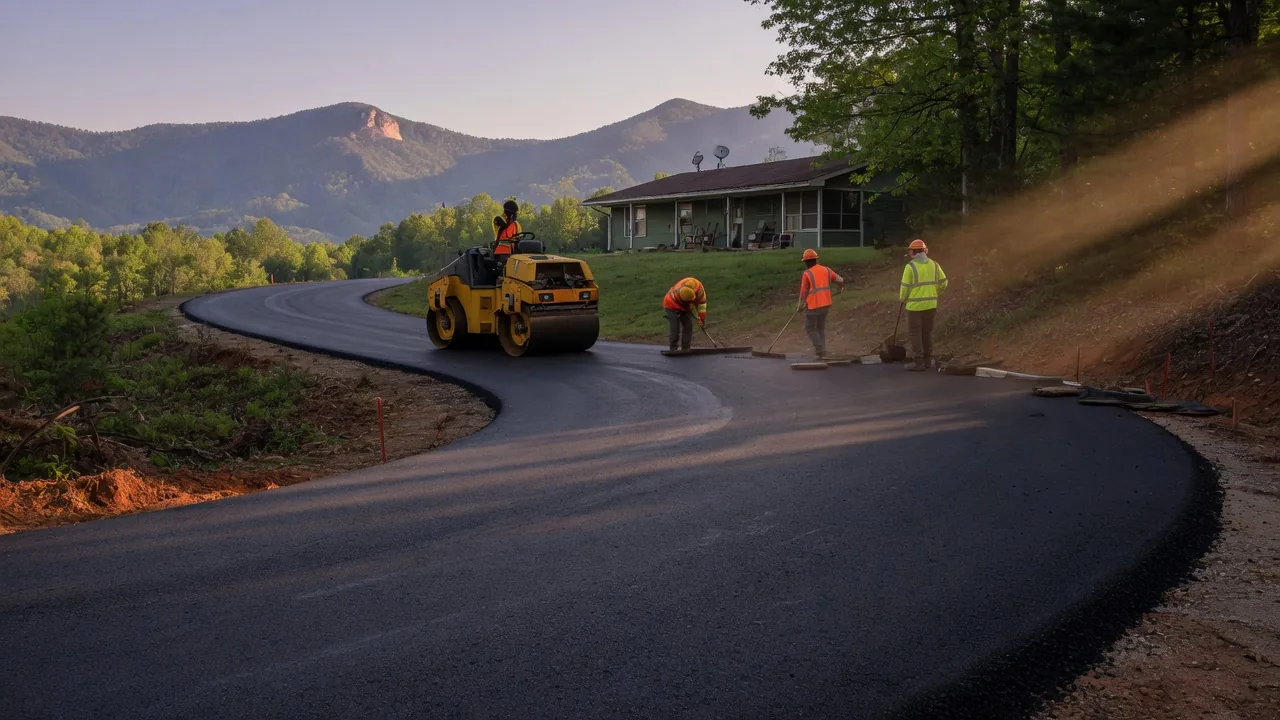
Stand at the bottom of a Madison County driveway after a hard rain and you can read the whole estimate before the contractor opens his mouth. Water comes off the crowned center, hits the edge, and either drops cleanly into a swale or sheets across the asphalt looking for a lower exit. On the hillside lots that dominate from Marshall up to the ridge roads outside Hot Springs, that exit is rarely where the builder intended it. The driveway has usually settled, the ditch has usually silted in, and the water is now running down the surface instead of off the edges. That is the job a sealcoat quote is really pricing, whether the person writing it knows it or not.
Madison County rainfall is heavy and the federal record reflects it: 21 federally declared disaster events have touched this county over 1978-2026, most of them storm and flood related. When that much water moves across a driveway, the crown is the first thing to go. A drive that has lost its crown ponds in the middle, and ponded water under freeze-thaw is what turns a hairline crack into a pothole by spring. A crew that walks the grade and traces where the water actually leaves the property will quote a different, usually higher, number than one that measures square footage from the truck. The first quote is the honest one.
| Scope of work | Typical Madison range | What drives it |
|---|---|---|
| Basic sealcoat, short level drive | $180 – $320 | square footage, one coat, minimal prep |
| Standard reseal with crack fill | $320 – $550 | linear feet of cracks, number of coats |
| Steep or long driveway reseal | $550 – $950 | application difficulty, edge work, water diversion |
| Sealcoat plus patching and grading | $900 – $2,500+ | pothole repair, sub-base issues, drainage correction |
Those are working ranges, not bids. A firm number quoted before anyone has seen the grade and the outfall is a guess with your money attached to it.
What a crowned, edged, ditched drive looks like when it works
A properly built driveway in this county has three features that a sealcoat job either preserves or ignores. The crown is a slight rise down the centerline so water splits and runs to both edges. The edges sit slightly proud of the surrounding soil, so runoff has somewhere to go instead of pooling against the asphalt. And the ditch, swale, or turnout at the bottom carries that water past the driveway and downhill without backing up. When all three work, a $250 sealcoat lasts. When any one of them has failed, you are paying to coat a surface that is already being undermined from underneath.
I have watched drives off Highway 25 near Marshall where the ditch had filled with leaf litter and gravel washed down from the bank above. The owner resealed every other year and could not figure out why the sealer kept flaking off the lower third of the drive. The water was standing on that lower third for hours after every storm. No coating survives that. The fix order on a lot like this is drainage first, then crack fill, then sealer, and any bid that skips to the last step is selling you a repeat customer relationship you did not ask for. Our asphalt paving guide walks through how a new crown and proper edge height change that whole equation.
How steep hillside access splits the residential price band
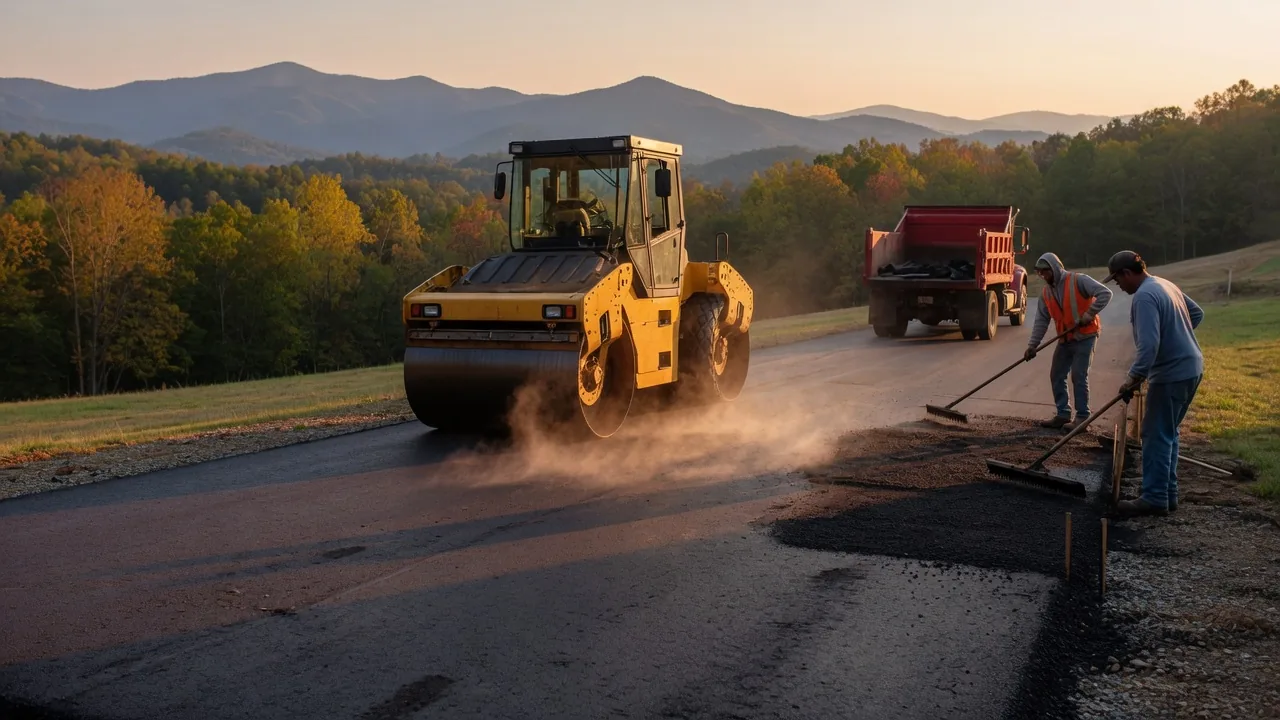
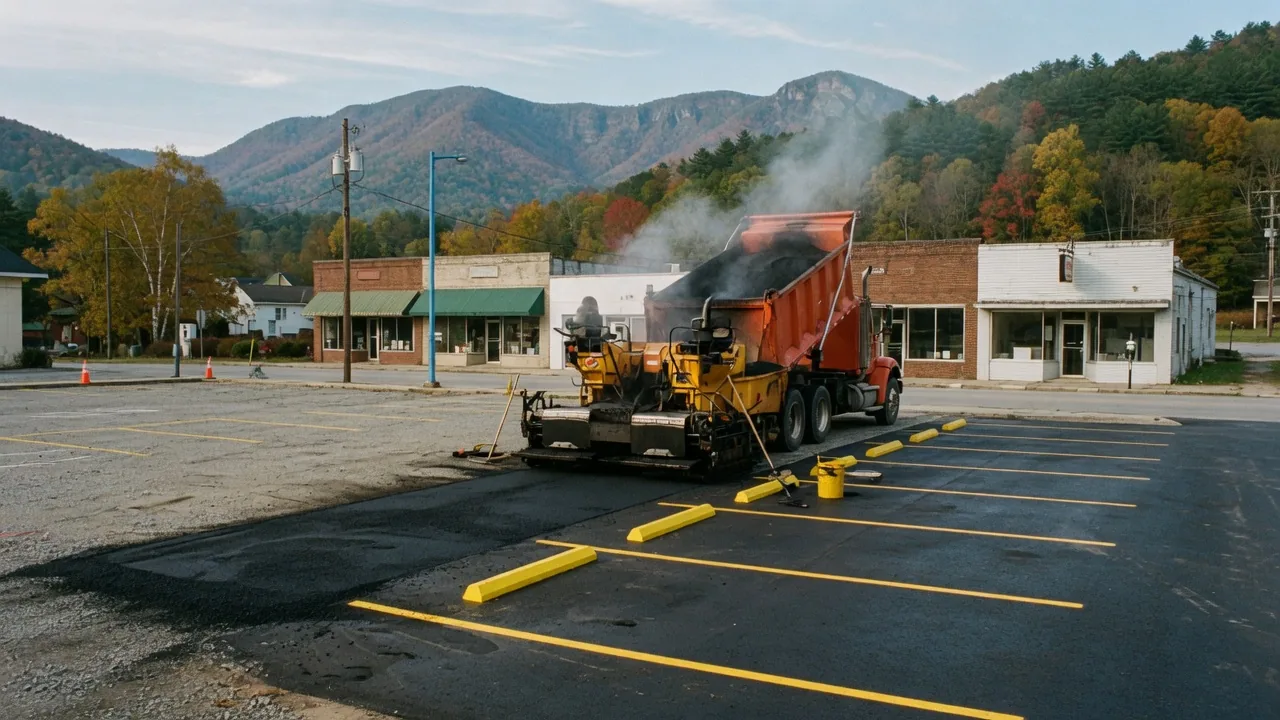
The gap between a flat church parking lot near Woodfin and a single-family drive up in the Shelton Laurel area is mostly about volume and access. Commercial lots are flat, open, easy to machine, and priced per square foot at a lower per-unit rate because the crew can move fast and reach everything. Residential drives here are often narrow, steep, hemmed by trees and rhododendron, and the last stretch may be too tight for a full-size spray rig. That is slower work, more hand-edging, more setup time per square foot, and it lands in the price.
Typical bands as a result:
- Residential driveway, standard: $0.18 – $0.30 per sq ft
- Residential driveway, steep or tight access: $0.28 – $0.45 per sq ft
- Commercial lot, 5,000+ sq ft: $0.12 – $0.22 per sq ft
If a bid for a steep residential drive lands at commercial per-foot pricing, ask why. Sometimes there is a real reason. A smaller spray rig may reach the top, or the drive may be flatter than it looks from the road. How the contractor explains it tells you whether they have priced hillside work before. For a wider view of what these numbers look like across the region, see our sealcoating cost guide.
Permits, licensing and the paper trail to check first
Sealcoating itself is a maintenance coating, not structural work, and typically does not require a building permit in North Carolina. But once a job grows into repaving, widening, or a new culvert where the drive meets a state-maintained road, NCDOT driveway permits come into play through the North Carolina Department of Transportation. Above the state's threshold for structural paving or grading work, contractors fall under the NC Licensing Board for General Contractors. If any part of the job touches a septic system's drain field or a wellhead, the NC Department of Environmental Quality has rules that apply. A contractor who insists permitting never applies to driveway work at all is telling you what their paperwork looks like on the jobs where it does.
There is also a plain-insurance question buried in here. A crew working a steep hillside drive with a machine is a liability if someone gets hurt, and the homeowner can end up holding part of that. Ask for a certificate of insurance before work starts. It takes two minutes and eliminates a category of nightmare that no sealcoat savings is worth.
Timing, coats and the questions that keep a bid honest
Three things protect your wallet in this market. Get the drainage story first, in the contractor's own words, before any price is discussed. Ask every bidder where water currently exits your drive, whether that path needs correcting, and how they know. On the steep Madison lots, that answer separates a real outfit from a spray-and-go operation faster than any review site will.
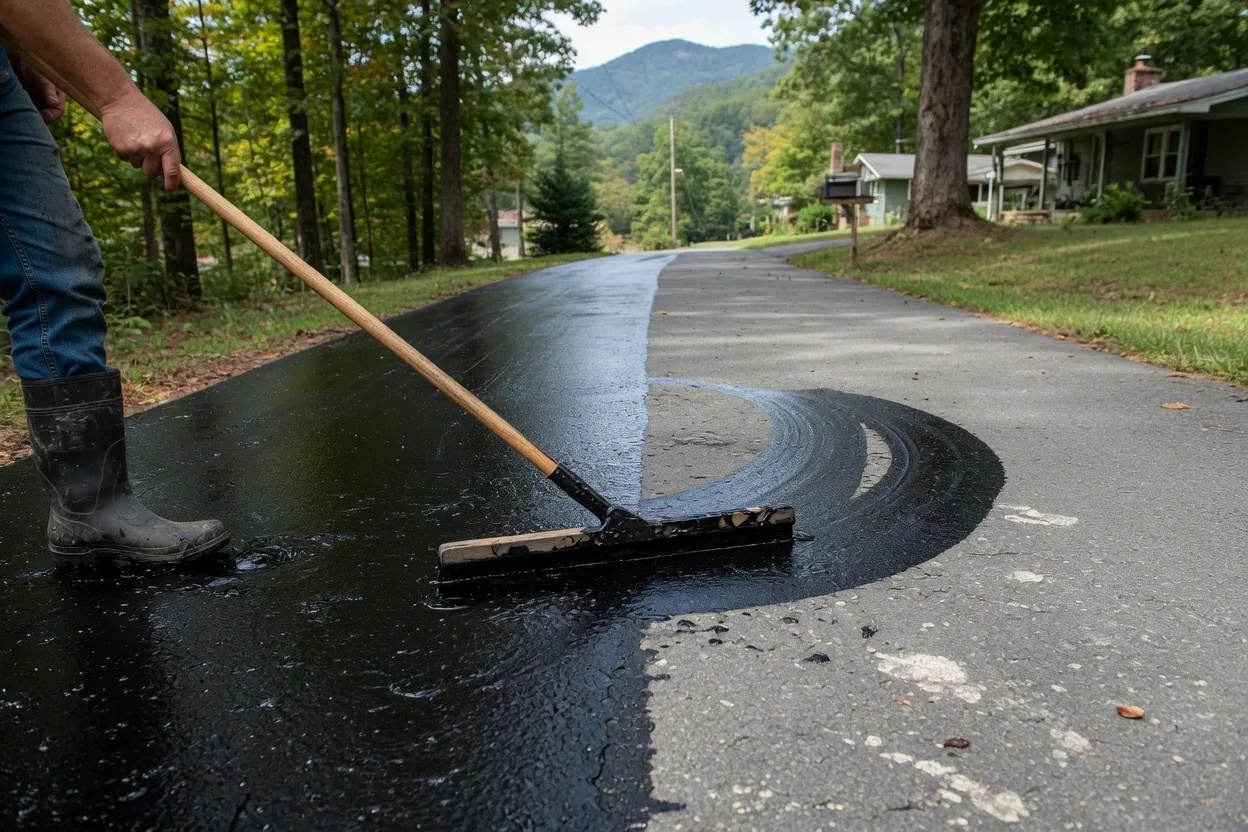
Insist on pricing by the square foot, not by the job. If the crew uncovers unexpected alligator cracking once the surface is clean, a per-foot basis keeps any change order grounded in something you can verify. A per-job price leaves both of you arguing about a number that was never tied to anything measurable. And ask about coats directly. A single diluted coat is cheap and typically needs redoing within a year. Two coats of proper sealer cost more at the front and last two to three times as long, which almost always works out cheaper per year of protection. Ask what percentage solids are in the drum, too. Straight sealer, or sealer cut with water, gives very different service life for very similar-looking invoices.
One more thing worth knowing about timing in this county. Spring and fall are the workable windows. Sealer needs warmth and dry time to cure properly, and a drive in the shade of a north-facing hollow may stay damp for days after rain. If a crew is willing to spray in the wrong conditions just to hit a schedule, that is not a value, it is a callback waiting to happen. Wondering how your situation compares to the rest of the county? Our sealcoating service overview walks through what a proper job includes from prep to cure.