What actually drives the number on a Mills River driveway
Mills River sits in Henderson County on ground that changes fast — bottomland along the French Broad and Mills River flats, then hard rises toward the Blue Ridge escarpment. Two driveways the same length on the same road can differ by thousands of dollars because one is cut into a 12 percent grade and the other runs level off a culvert. The price anatomy breaks into four line items: length and width (square footage), base preparation (the invisible half of the job), grade and drainage, and asphalt thickness (binder plus surface course). Length is what homeowners quote each other; base and grade are what actually move the bid.
On the river flats, base is often shallow but drainage matters more — the water table is close, and a driveway that ponds will crack its first winter. Up the slopes, the opposite: drainage is manageable but the base has to be built up and compacted in lifts, and the machine time to cut the grade adds real dollars. That terrain split is the honest first question a paving contractor should ask you, and it's the one that separates a realistic quote from a lowball that comes back as change orders.
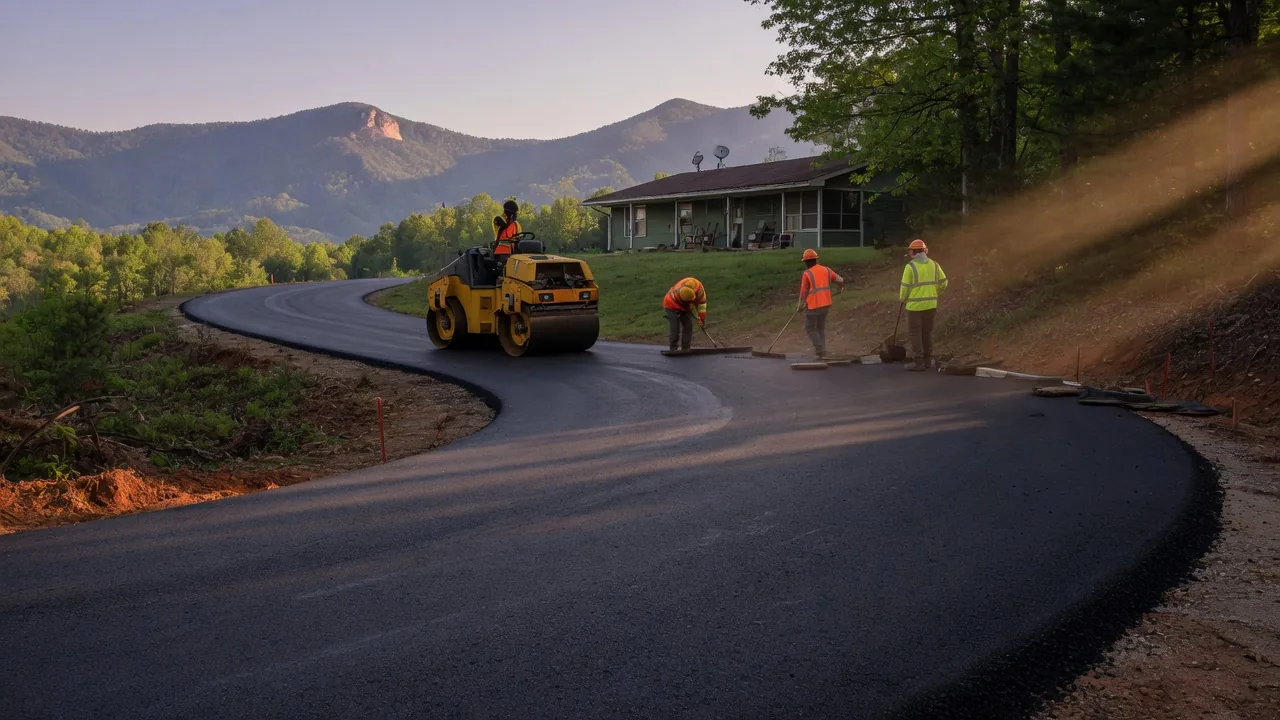
Consider two real-world scenarios on the same Mills River road. A homeowner near the North Mills River area on a flat lot with an existing gravel drive may need only grading, a shallow base refresh, and 3.5 inches of asphalt — a straightforward job that prices at the low end. A neighbor off a steep driveway climbing toward a ridge property needs cut-and-fill, a taller compacted base, and a drainage swale to keep runoff from sheeting across the pavement — and that job lands at the high end, often double. Same road, same square footage, wildly different bids, because the ground is different.
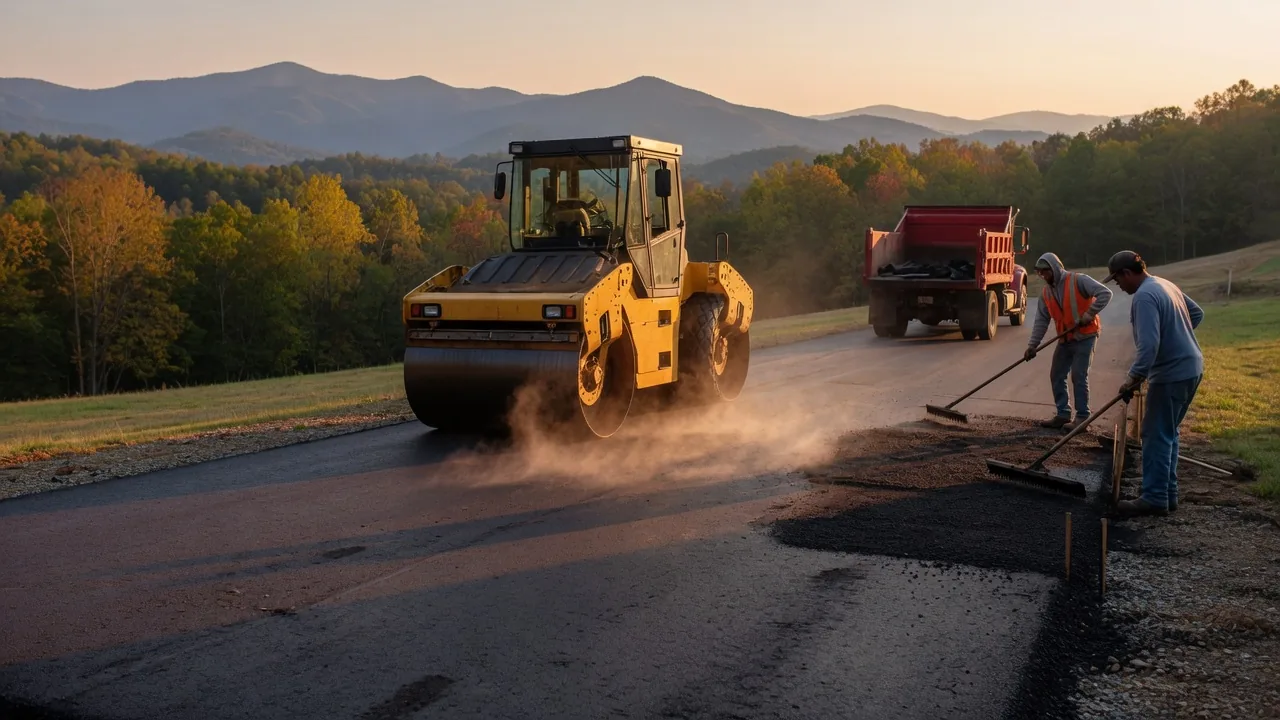
Another Mills River variable: access. Some lots here have long, narrow approaches where a full-size dump truck and paver can't easily turn around or stage. When equipment has to be smaller or the crew has to shuttle material in from the road, labor hours climb. That's not a scam — it's geography. A contractor who walks your lot and flags the access constraint up front is being honest about what the bid will include.
The scope-versus-price table
Ranges below reflect typical Henderson County residential work; commercial and long private-road jobs price differently. For the full county picture, see the Henderson County asphalt cost breakdown.
| Scope | Typical price range | What's included |
|---|---|---|
| Overlay on sound existing asphalt | $1.75–$3.00 / sq ft | Clean, tack coat, 1.5" surface course |
| Full residential driveway, new | $3.00–$6.00 / sq ft | Grading, 4"–6" compacted base, 2" binder, 1.5" surface |
| Slope or long-run driveway | $5.00–$8.00 / sq ft | Added base depth, cut/fill, drainage structures |
| Drainage and culvert work | $800–$4,500 | Culvert, catch basin, swale, or underdrain |
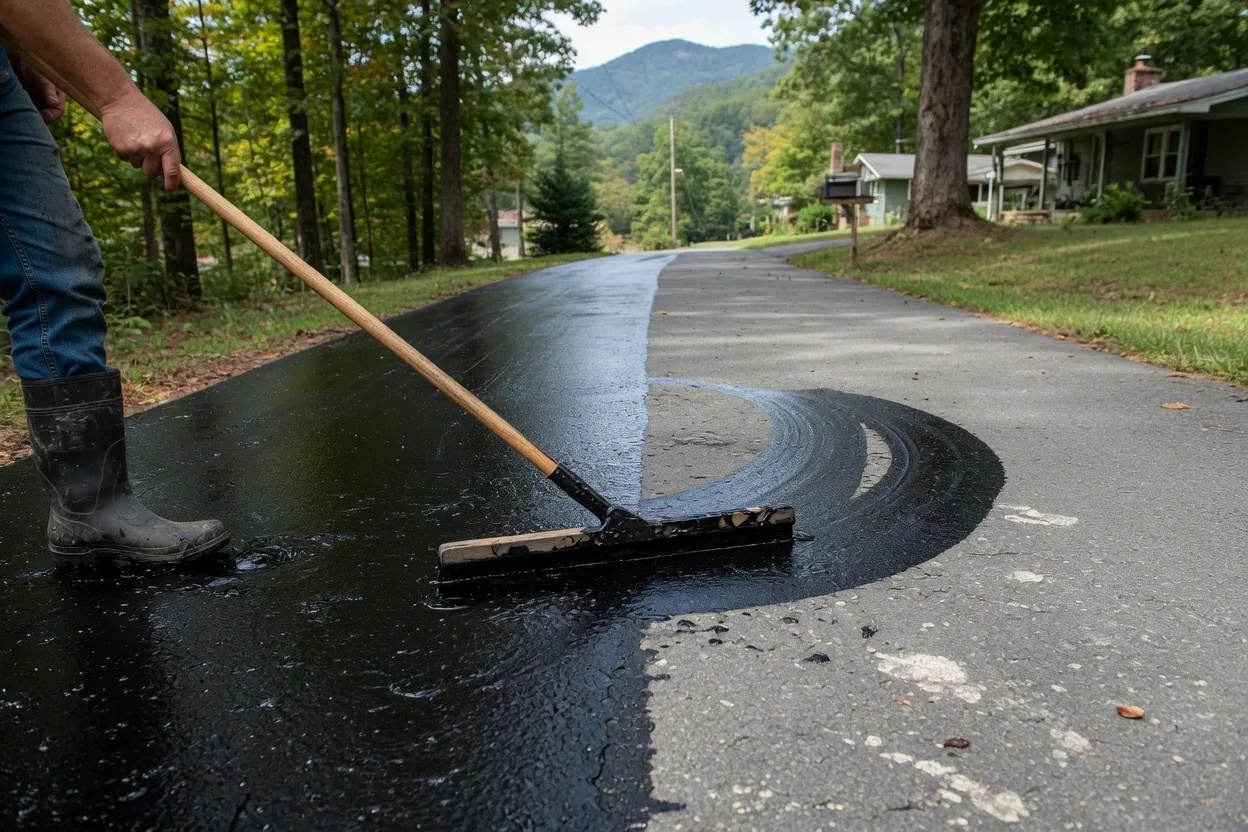
| Crack fill and sealcoat (maintenance) | $0.20–$0.50 / sq ft | Cleaning, hot-pour crack fill, sealer |
Treat any bid that's dramatically under the low end as incomplete rather than cheap — usually the base depth or the drainage is missing. And on the slope rows, the spread is wider than the flat rows because no two grades cut the same. Ask to see the base depth written in inches on the bid, not described as "proper" or "adequate."
One more line homeowners forget: removal and disposal. If there's an old failing driveway, broken concrete apron, or a stump to pull, that hauling-and-disposal cost shows up as its own line. It's honest to see it itemized, and a red flag when a bid lumps it invisibly into the square-foot price.
Why the base is the part you can't see and can't skip
Henderson County soils are a mix that punishes shortcuts: clay that holds water and swells, and river-deposited rock that has to be shaped rather than simply driven over. Asphalt is flexible pavement — it transfers load down into the base, not sideways. If the base is under-compacted or too thin, the asphalt reflects every soft spot as a crack within a few seasons, no matter how good the mix is. That's why the honest scopes here specify base depth in inches and compaction in lifts rather than a vague "proper base."
The national standard for how this is done is set in the model codes published by the International Code Council, and North Carolina's adopted residential code references those minimums for driveway and parking construction. A contractor who can explain base depth and compaction in plain language is signaling they build to that standard rather than by feel. When work crosses into commercial or subdivision scale, licensing thresholds under the NC Licensing Board for General Contractors apply — worth a quick check on larger Mills River jobs.
Compaction in lifts matters more than most homeowners realize. You can't dump a foot of stone and expect one pass to lock it down; a proper base is placed in layers, each one compacted before the next goes on. Skipping lifts is the single most common shortcut on this terrain, and it's invisible until the first freeze-thaw cycle opens a crack along a seam. When a driveway fails in year three, the asphalt gets blamed, but the base is the culprit.
Water, slopes, and the county's storm history
This county has a long record of federally declared disaster events tied to storms and flooding — 16 declarations across 1978-2026 — and a recurring share of them were water events that reworked driveways, culverts, and road shoulders. That history is practical, not just historical: it tells you how this ground behaves when heavy rain arrives fast. On any Mills River property with an uphill approach or a low culvert crossing, plan the water path before the pavement plan. Where a driveway meets a state-maintained road, the access point itself may trigger an NCDOT driveway permit and the setback and sight-distance rules that come with it — start at NCDOT and the NCDOT Connect permit portal if your driveway empties onto a numbered route.
Practically, that means thinking about where water goes when it isn't absorbed. On the Mills River flats, a driveway built slightly proud of the surrounding yard sheds water to the edges instead of ponding on the surface. On a slope, a shallow cross-drain or a crowned surface keeps runoff from turning the driveway into a streambed during a summer thunderstorm. These are cheap decisions made before paving and expensive repairs made after. A paving plan that ignores hydrology on this ground is a plan to redo the job.
Stormwater rules aren't only an NCDOT concern. On larger residential sites, site-grading practices that concentrate runoff can implicate federal environmental guidance on stormwater discharge — the EPA maintains public resources on managing runoff, and it's worth understanding the principles even for a single driveway. Water managed at the top of the slope costs far less than water repaired at the bottom.
Choosing who lays it — and what to ask before the first load
Three questions that separate the crews worth hiring here. One: how deep is the base, in inches, and in how many compacted lifts? Two: what happens to water that hits the top of the driveway — where does it go? Three: what's the mix and thickness for binder and surface, written on the bid? A real quote answers all three without prompting. The asphalt driveway guide walks through what a proper installation includes start to finish, and the Mills River paving contractor page is where to compare local crews once you know the scope. Get two or three bids on the same written scope, and compare the base line item first — it's the one that tells you whether the price is real.
Timing in Mills River is its own consideration. Asphalt plants serve this region seasonally, and mix has to arrive hot to lay down correctly — which means the paving window runs warmer months, and cold-weather work is limited. If a contractor promises to pave in the dead of winter on the cheap, ask how the mix will stay workable. Scheduling also matters around wet stretches: laying asphalt on a saturated base traps moisture and guarantees early failure, so a crew that reschedules after a soaking rain is protecting the job, not being difficult. Good local crews build in weather slack, and honest bids reflect that.
Finally, ask about cleanup and aftercare. A finished job should include a walk-through, guidance on when to keep heavy vehicles off, and a straight answer on how soon a new surface can be sealed. Maintenance advice is part of the product — a driveway that gets crack-filled early lasts years longer. If a bidder shrugs at maintenance questions, that's the same shrug you'll get when something goes wrong.