Why Arden driveways are longer, steeper, and pricier than city drives
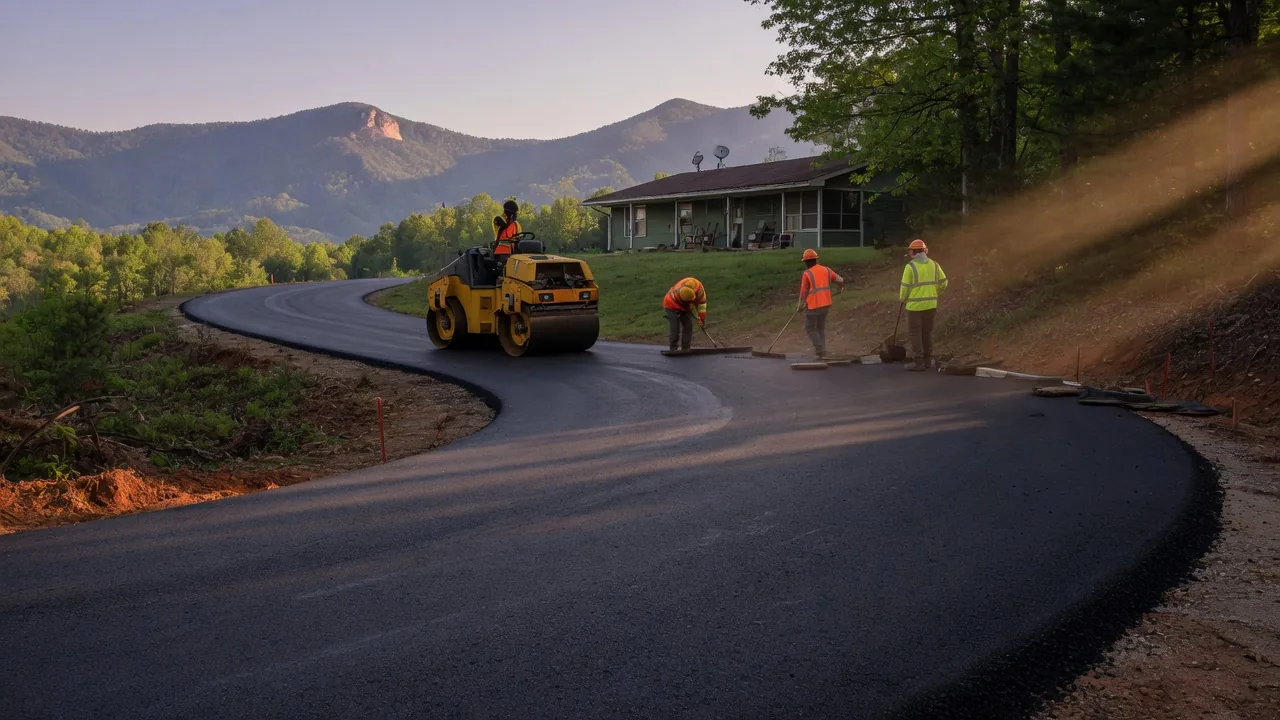
Arden is not Asheville proper. The lots here are bigger, the driveways run longer, and many of them climb. Subdivisions tucked off the Fletcher and Arden sides of the valley — Averys Creek, Glen Arden, the neighborhoods feeding off Long Shoals Road and Brevard Road — were built on ground that rises or dips across the county line. That means a conversion quote is less about asphalt tonnage and more about how the existing gravel sits on that grade.
The old gravel tells the story. A drive that has been in place for decades may be well-drained but churned to powder, or it may be a shallow dressing over clay with ruts and a soft spot at the culvert. The condition of that stone base, not the paving itself, decides whether a conversion is a straightforward overlay or a rebuild with new compacted stone underneath. Either way, Arden's mix of long rural-style drives and tighter subdivision pads makes it a different job than a quarter-acre city lot.
Drive past a few of the older homes along the Arden side of Brevard Road and you can read the pattern: gravel that has been topped up over the years with whatever stone was cheapest, edges that have crept into the lawn, and a culvert pipe that was undersized from day one. Any of those will surface in a bid as "base correction," and it's the single line item that separates a low quote from an honest one. Homes closer to the Fletcher town line tend to sit on slightly flatter pads, which is why two neighbors on the same road can get quotes hundreds of dollars apart — the grade and the drainage are never quite identical.
There's also the seasonal reality of a valley floor. Arden catches runoff from the ridges above it, and a long drive acts like a shallow channel. When the ground is saturated after a stretch of wet weather, that water has to go somewhere, and if the drive doesn't shed it, the new asphalt will find the weak spot first. That's why the conversation with a good crew here starts with where the water goes, not how many tons of mix they'll spread.
What the conversion actually involves
A true conversion is not just spreading asphalt over gravel. The existing stone gets graded, any soft areas get excavated and re-compacted, and a clean, well-draining base is built before any hot mix is laid. If the grade runs water toward the house or pools near the culvert, that gets corrected first — the NC Department of Insurance office that oversees code officials treats driveway drainage and surface water as part of the site's stormwater requirement, and grading that ignores it will just crack the new pavement.
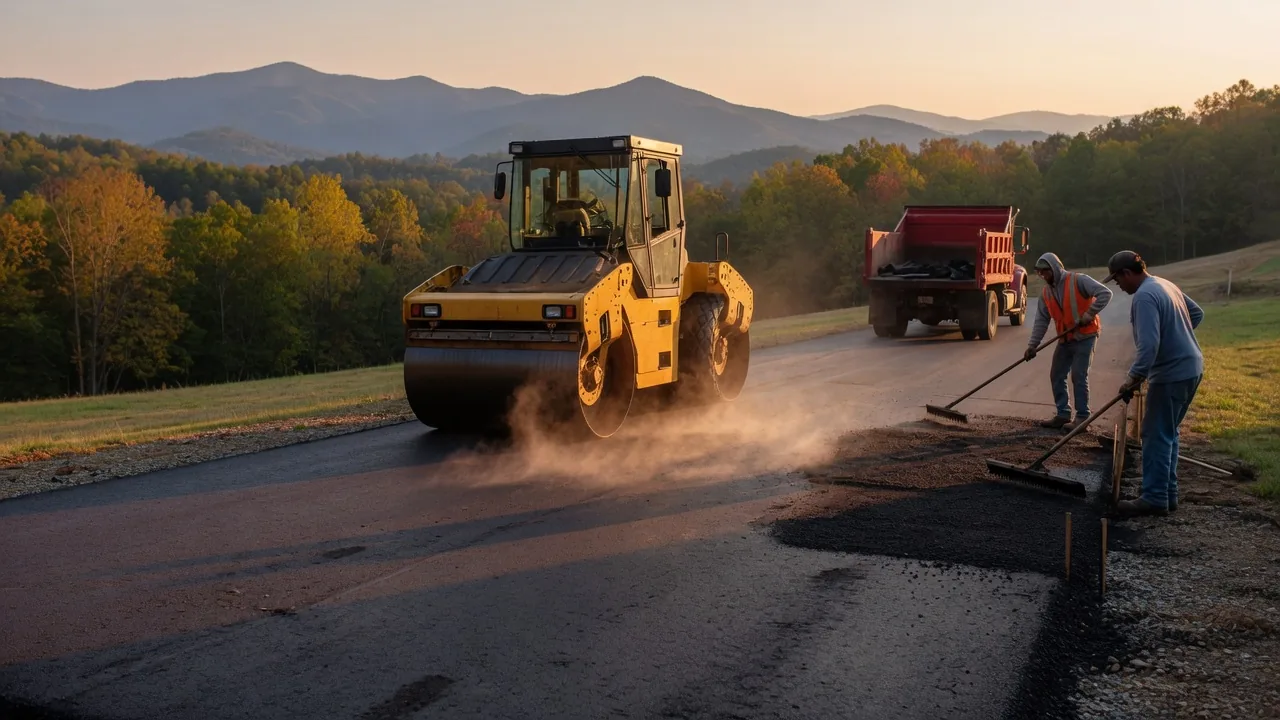
Once base is prepped, asphalt goes in two lifts: a binder course and a top course, compacted and left to cure. If the drive meets a public road, the point where it crosses the right-of-way may need a driveway permit — in North Carolina those run through NCDOT and its NCDOT Connect permit portal, and the requirement depends on the road classification, not the driveway's length.
Base prep is where the real labor hides. On a sloped Arden drive, the crew will typically cut a crown into the stone so water runs to the shoulders instead of down the middle, then compact in lifts rather than one deep pass. A soft spot that looks minor on the surface — say, the low side of a curve where runoff has been sitting — often turns into a few inches of unsuitable clay that has to come out and be replaced before anything is paved. Skipping that step is the most common reason a conversion fails within a few seasons.
Edge treatment matters too. On a long rural-style drive, the transition from asphalt to grass or gravel shoulder is where freeze-thaw does its first damage. A clean, supported edge backed by compacted stone holds up far better than asphalt feathered thin into loose soil, and it's worth asking a contractor how they plan to finish that edge before you sign anything.
Scope and price ranges for Arden conversions
Every number below is a working range, not a quote. The spread is driven by driveway length, slope, and how much base correction the existing gravel needs. For a fuller county-wide picture, see the Buncombe County asphalt driveway cost page.
| Scope | Typical price range | What drives the spread |
|---|---|---|
| Short, flat drive, good existing base | $3,800-$5,500 | Length under 80 feet, minimal grading |
| Mid-length drive with grading and edge work | $5,500-$7,500 | Base touch-up, drainage correction |
| Long or sloped drive, partial base rebuild | $7,500-$9,500 | Stone import, compaction, culvert work |
| Full base rebuild on failed gravel | $9,500 and up | Excavation, new stone, full two-lift asphalt |
Read any bid carefully for what is excluded: tree-root removal, culvert replacement, and topsoil or shoulder restoration often sit outside the asphalt line item. A quote that omits them is not cheaper, just incomplete. The general path from gravel to blacktop is covered on the main gravel-to-asphalt conversion guide.
Length is the easiest variable to understand. A driveway that runs a few hundred feet back to a house tucked against the treeline can double the material and labor of a short subdivision pad, even when both are flat and well-drained. Slope is the second big driver, because a graded drive needs more stone built up in lifts and more careful water management at the top and bottom. And the third is the unknown under the surface: a drive that looks fine in July can reveal soft clay once the top few inches are graded off. A contractor who walks the drive, probes the soft spots, and prices the base work honestly is giving you a more useful number than one who quotes a flat per-foot rate over the phone.
Choosing a crew in Arden
Three local checks. First, ask how the crew handles Arden's slopes — drainage design on a graded drive is its own skill, and a driveway that sheds water wrong will fail from below. Second, ask whether the job crosses the public right-of-way: if it does, the driveway permit falls on you or the contractor depending on the agreement, and the NC Licensing Board for General Contractors sets the threshold at which a contractor must be licensed for the work. Third, ask for a base plan in writing — compaction, stone depth, and how soft spots get handled — not just a square-foot number. When you are ready for someone local, the list of paving contractors serving Arden is the place to start.
It also helps to look at work a crew has done in the same kind of terrain. A drive on a flat lot in a different county won't tell you much about how they handle a long grade here. Ask for a reference on a drive that climbs, or one that meets a county road, and go look at it after a rain if you can. Pavement that has shed water correctly for a few seasons looks different from pavement that hasn't, and a crew that's proud of their base work won't mind pointing you to it.
Timing and weather in the valley
Arden sits in a basin where summer thunderstorms and winter freeze-thaw cycles work on pavement from both sides. Heat and moisture are genuinely part of this county's record — 19 federally declared events touch Buncombe County across 1973-2026, mostly storm and flood related — and asphalt laid in poor conditions or over a saturated base will not last. The National Weather Service outlook matters here: hot-mix paving wants dry, moderate conditions, and a crew that schedules around the forecast instead of forcing a wet week is telling you something about the rest of their work. Late spring and early fall are the sweet spots; midsummer heat is workable with care.
Winter is the season to plan rather than pave. Freeze-thaw is hardest on a new drive in its first year, so a conversion finished in late fall that goes straight into a cold, wet winter is at more risk than one finished in spring and sealed before the first hard freeze. If a contractor is pushing to pave in the dead of winter, ask why — a sound base and a dry forecast are what make the difference, and no schedule pressure is worth laying hot mix over frozen or saturated stone.