Why the laying window in Mars Hill runs short
Mars Hill sits high in Madison County, where winter arrives earlier and lingers later than the valley towns below. Chip seal depends on warm air and sun-warmed stone: the asphalt emulsion has to break and grip before temperatures drop. Crews here generally want overnight lows staying above the mid-50s, which in practice means the season opens around late spring and tightens by early fall — earlier if you're working a shaded north-facing slope off a ridge road. The National Weather Service outlooks for the southern Appalachians (weather.gov) are worth checking before you schedule, because a single cold snap after a fresh seal can leave chips loose for a full season.
Frost is the other half of the story. Mars Hill ground freezes deeper and holds it longer than the piedmont, and a tar-and-chip surface laid too late in the year doesn't get the curing days it needs. Reputable local outfits build the calendar around that reality rather than pushing a job into October for one more paycheck.
What that means for a homeowner is a compressed booking season. A drive that sits on a south-facing grade thawing out in March might be ready to seal by mid-May; the same drive cut into a north-facing cove off Big Branch Road may still be sweating frost into June. The slope orientation, tree canopy, and elevation all shift the date. Crews who work this county know the difference and will usually tell you honestly whether your property is an early-season or late-season job before they hand you a bid.
How mountain terrain changes the bid
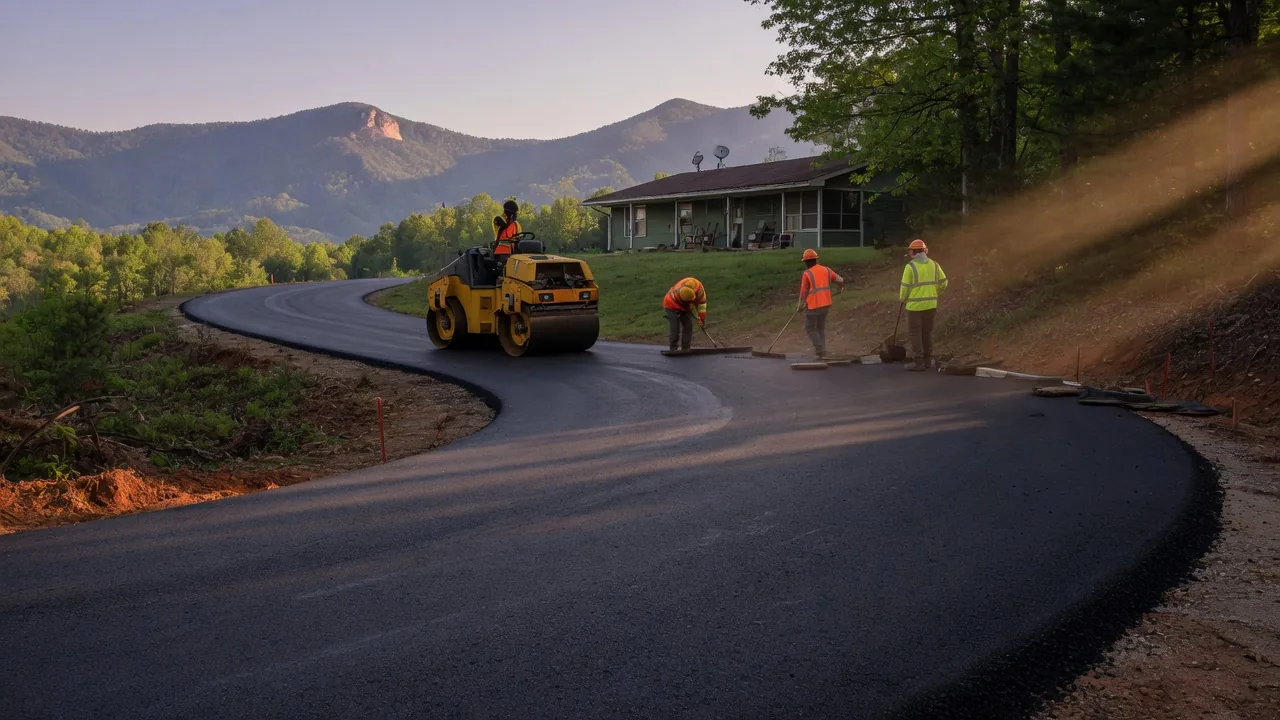
A driveway in Mars Hill is rarely a flat rectangle. Most are cut into a grade, drain toward a culvert, and carry more square footage than the owner estimates because of the pull-off and turnaround. That matters for pricing: the crew has to roll every stone, and steep pitches slow the work and sometimes require a smaller roller to stay safe on the slope. Driveways that climb off a county road may also need an NCDOT driveway permit depending on how the access ties in — the state's permitting portal (connect.ncdot.gov) is the place to check whether your connection triggers one.
The base underneath decides as much as the slope. A tar-and-chip surface is a wearing course, not a structural fix. If the gravel base is rutted, soft, or channeling water, the chip seal sits on a bad foundation and fails within a couple of winters. Honest bids include a base review first; see the full Mars Hill paving contractor guide for how to vet a crew on that point.
Madison County's housing stock makes this trickier than it sounds. Plenty of drives here serve older farmhouses and cabins set back off the road, paved decades ago with whatever base the original owner could afford. When limestone screenings and #57 stone were spread by hand and never compacted properly, that layer looks solid from the top but has no real structure. A crew that skips the probe-rod test or the test pit is guessing. Ask what they found and how they're pricing around it — a specific answer about depth and compaction is the mark of a bidder who's been on this ground before.
Scope and price ranges you can compare
Regional pricing for tar and chip runs by scope, not by a flat rate. Use the table below to compare bids apples to apples; if two quotes differ wildly, one is almost certainly excluding base work, drainage, or mobilization that the other includes.
| Scope | Typical range | What drives it |
|---|---|---|
| Single coat chip seal on sound base | $3.50-$5.00 / sq ft | Drive size, access |
| Double coat (heavier traffic, steeper grade) | $5.00-$7.00 / sq ft | Chip size, slope |
| Base repair or regrade before sealing | $1.50-$4.00 / sq ft | Rut depth, drainage |
| Culvert or drainage correction | $600-$3,000 | Length, terrain |
| Full driveway replacement | $6.00-$12.00 / sq ft | Excavation, new stone |
For a broader Madison County cost picture, the county asphalt cost breakdown lays out the same logic for hot-mix work, which is a useful cross-check when a chip seal bid looks either too cheap or too high.
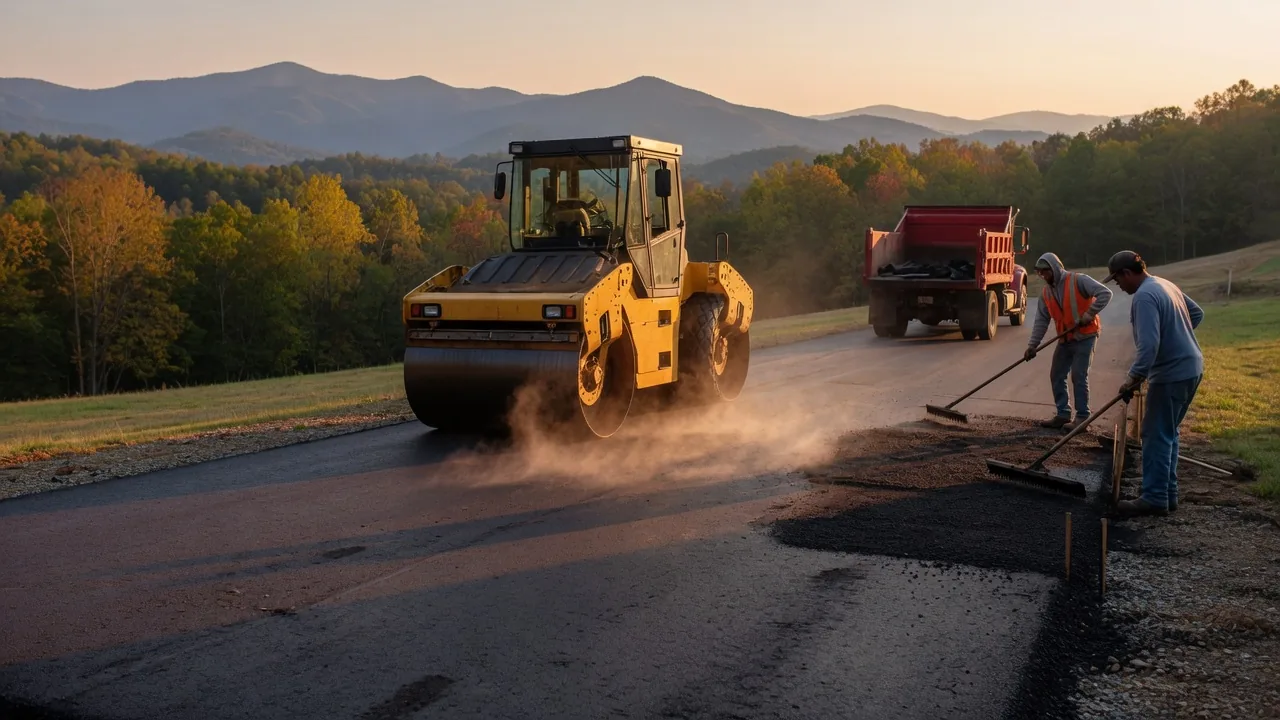
Two line items deserve a closer look. First, mobilization: a drive that climbs two switchbacks and can only be reached by a narrow culvert crossing can add to the base price simply because getting the distributor truck and roller up there safely takes time. Second, drainage: a failed culvert on a mountain drive doesn't just wash out the chip seal, it can undercut the roadbed over several seasons. A bid that includes a new culvert and re-grading the shoulder is not padding — it's fixing the actual cause of the failure you're trying to prevent. When you compare quotes, put them side by side on those two lines specifically, because that's where the real difference between a good bid and a cheap bid usually shows up.
What frost and shade do after the crew leaves
Chip seal keeps working after the roller pulls out. In Mars Hill the freeze-thaw cycle that runs from late fall into spring is what tests a fresh surface. Water that gets under the edge, freezes, and lifts is the number one cause of early failure here, and shaded stretches stay cold longer and drain slower than the sunny side of the same drive. The EPA's guidance on stormwater and runoff (epa.gov) is a reminder that where the water goes matters as much as the surface on top.
Federal disaster history in this county is worth understanding when you're planning drainage improvements. Madison County has seen 21 federal disaster declarations over a record span of 1978-2026 years, and while not all of those were flood events, the pattern is real: the same steep terrain that makes a chip seal driveway attractive also channels heavy rainfall fast, and a drive that doesn't shed that water cleanly is the one that fails first. A footer drain at the base of a cut slope, a rock-lined swale along the uphill shoulder, or a properly sized culvert at the low point are inexpensive additions during a sealing project that pay for themselves over several winters.
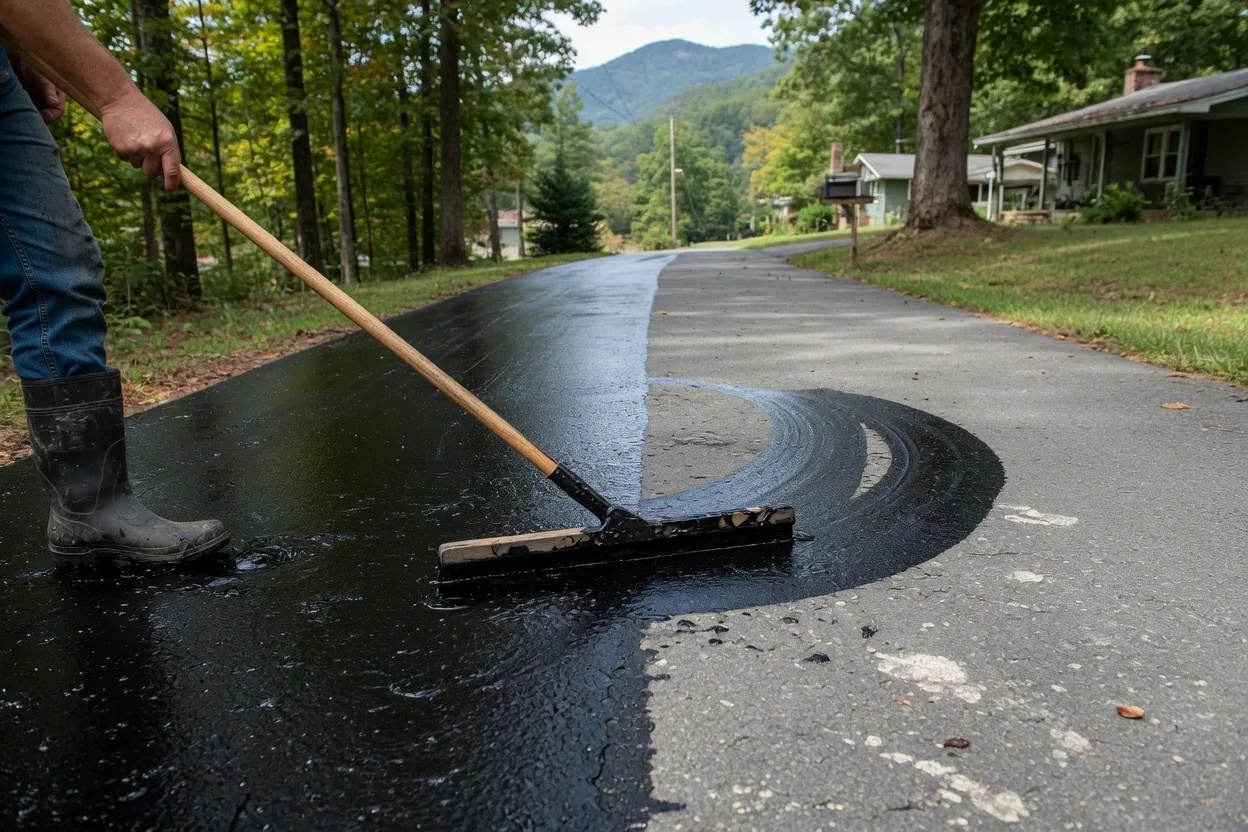
Two habits stretch the life of a mountain drive: keep the edges crowned so water sheds off rather than pooling at the shoulder, and address any soft spot the first spring after sealing instead of waiting for it to spread. A spot that gets a bag of cold patch and a tamper in April is a spot that doesn't become a $1,500 repair the following year.
Book the season, not just the job
Because the working window is narrow, Mars Hill crews fill their warm-weather calendars early. If you want a seal before fall, the time to get an estimate is spring, not late summer. Ask each bidder two questions: when would you actually lay this, and what happens if the weather turns? A crew that answers both plainly is one worth the deposit. Our tar and chip overview covers how the surface performs over time if you want to weigh it against hot-mix options.
For anyone weighing a first-time seal against a second coat, the decision usually comes down to how the surface has aged. A drive that's three to five years old and still holding its chips with only minorraveling is a good candidate for a second coat before the freeze-thaw cycles get under the edge. A drive that's been neglected for ten years and is showing soft spots everywhere may be better served by a base repair and full replacement. A local estimator who walks the drive with you and points out which scenario you're in is giving you more information than any written quote alone.
Finally, plan the job around how you actually use the drive. A chip seal needs a day or two to set before regular traffic, sometimes longer in cool weather. If you have a steep climb that gets morning shade, it may need an extra day before you drive a loaded truck up it. Schedulers who know this county will build that lag into the calendar automatically; schedulers who don't will leave you wondering why the chips are still shifting a week after the crew left.