Depth and passes decide everything on these hills
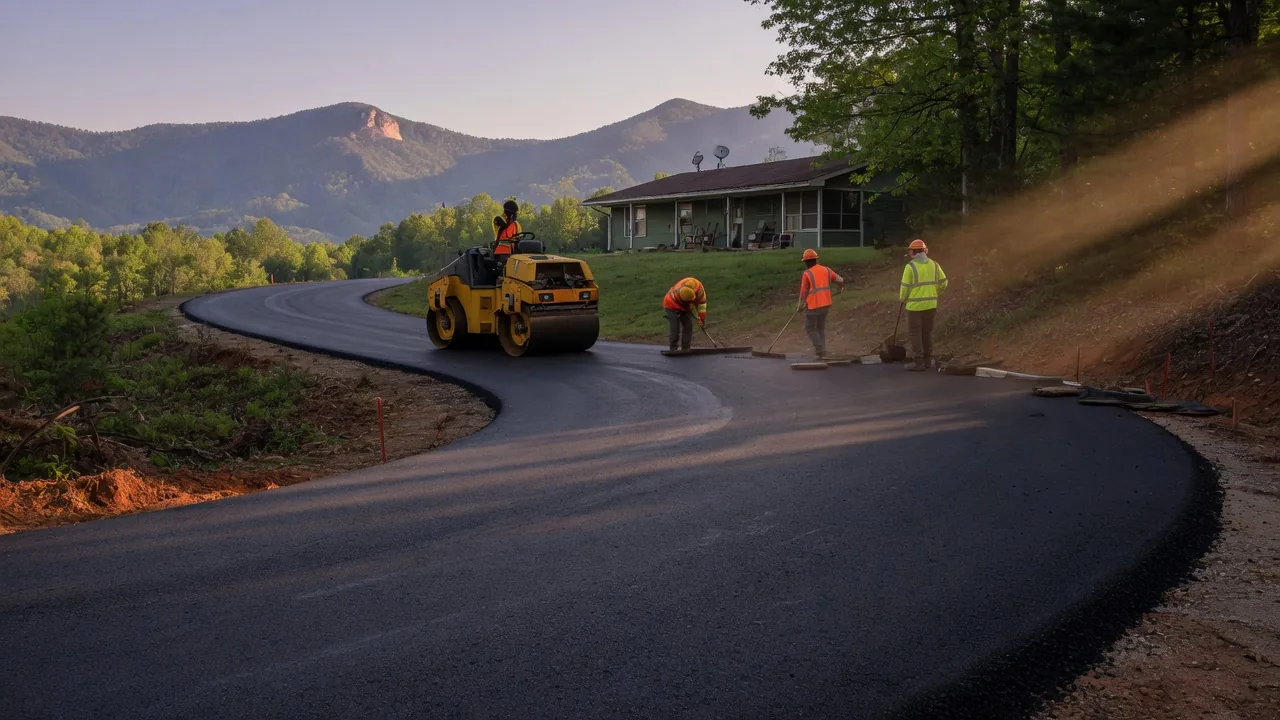
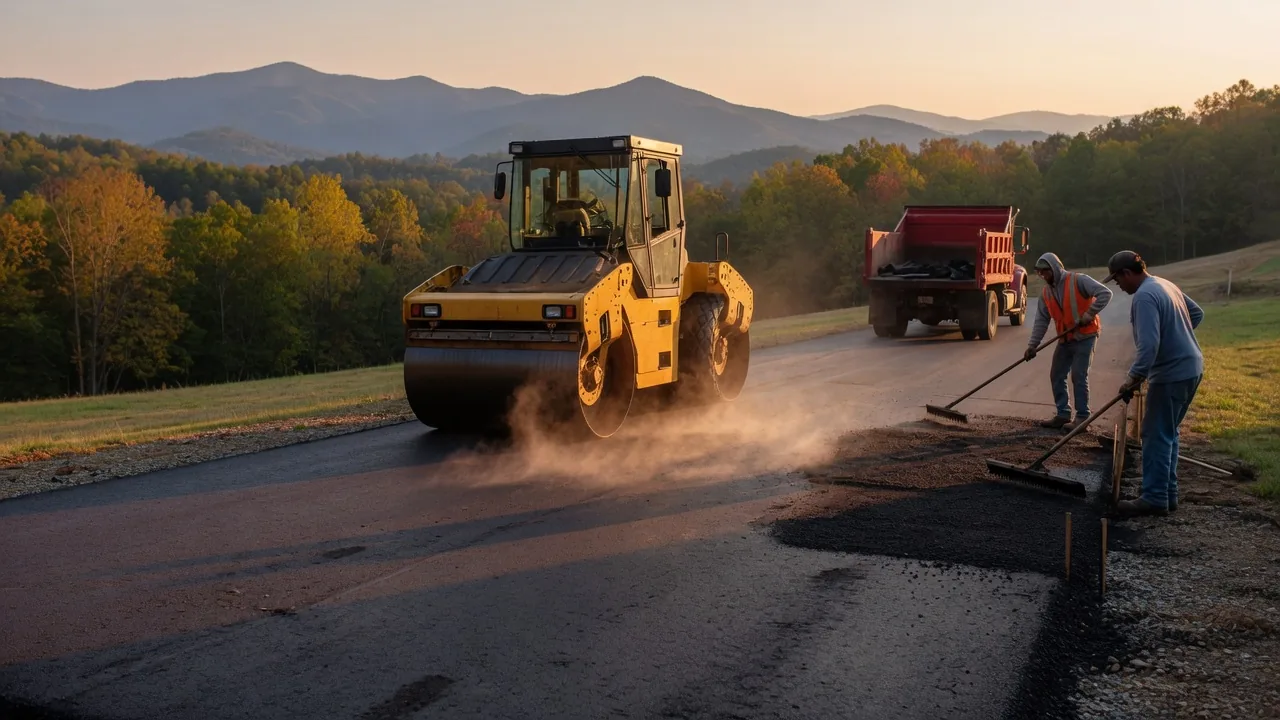
Marshall is squeezed into the French Broad valley, and its driveways reflect that. A flat gravel pad behind a Woodfin-area shop can take a single 2-inch lift of tar and chip and look finished by evening. A drive climbing a 15% grade off Highway 25 or 70 toward a ridge homesite cannot. Those grades shed chip in the first hard rain, and the fix is not more tar, it is stone depth: 3 inches of washed aggregate, laid in two passes, with the second lift following the first by enough time for the binder to set. Two lifts also let you correct crown and cross-slope between passes, which is what keeps water off the driving surface instead of sheeting down it.
The tell that a driveway was built too thin in Madison County is a series of bald strips where tires run, surrounded by loose stone. That is aggregate being displaced because there was not enough mass underneath to lock it. Talk depth before you talk price with any contractor here.
Mix design matters nearly as much as depth on these hills. A tar and chip surface is a thin wearing course over a prepared base, so the binder grade and the aggregate shape have to match the job. On a shaded north-facing grade that stays damp through winter, a softer binder can bleed through the stone in summer heat, while a stiffer one may crack in a hard cold snap. Angular, crushed aggregate interlocks better than rounded river gravel, which is common along the French Broad but rolls under tires. A crew that works these hills will usually specify a washed, angular stone and a binder cut suited to the season it is being placed. Ask what aggregate they intend to use and why; the answer tells you whether they have paved in Madison County or just driven through it.
What Madison County traffic asks of the stone
This is not a county of showpiece drives. It is a county of trucks: farm trucks moving hay and equipment, firewood loads coming off steep woodlots, and work pickups running in and out of Hollers all week. Turning loads matter as much as weight. A dump truck that backs into a driveway near Marshall's river corridor and turns its steer wheels while stopped will peel chip off a thin mat almost immediately. That is why the same aggregate spec that holds fine on a straight run fails on a tight turnaround.
Ask about aggregate size with that in mind. Larger, angular stone interlocks and resists push under turning; finer chips lay smoother but displace faster under heavy use. A crew that has paved in the county will have an opinion about which road you live on and what your loads look like, and that opinion should shape the quote.
Firewood and hay trucks are not the only load case. Marshal's river corridor and the roads feeding it, like Bone Camp and Long Branch, carry a mix of residential traffic and equipment that flatland subdivisions never see. A driveway that doubles as a turnaround for a loaded logging truck needs a deeper base and a wider turning radius than one serving a single car. If you park a trailer or a tractor on the drive, say so before the bid, because the stone spec changes. The goal is a mat that stays put under the heaviest thing that regularly crosses it, not the average car.
The Marshall cost picture
Driveway pricing in Madison County works off square footage, stone depth, and prep, not off a single number. The table below shows honest regional bands, not a flat rate. Because Marshall sits inside Madison County, the county-level breakdown at our Madison County cost page tracks the line items line for line. Keep in mind that slopes here add grading and drainage work that flatland quotes simply do not carry.
| Scope | Typical installed range |
|---|---|
| Single 2" lift, flat pull-off or short drive | $3.00-$4.25 per sq ft |
| Two-lift 3" buildup, graded hill drive | $4.50-$6.00 per sq ft |
| Grading and drainage correction added | $800-$3,000 depending on run and slope |
| Culvert or turnout repair tied in | $500-$2,500 |
| Typical full residential replacement | $3,500-$9,000 |
Any bid that arrives as one number without a per-square-foot line and a stone-depth line is a bid you cannot compare to another. If you want to understand the surface itself before you call anyone, the tar and chip surface guide explains how the binder and stone actually bond.
Square footage drives the total, so a long driveway off a ridge road can land well above the typical range even at a fair per-foot price. Measure your drive before you call anyone: length times width gives you the number every contractor will ask for. Prep is the variable owners underestimate. Grading a rutted, washed-out drive back to a proper crown, adding a culvert, or correcting drainage can add real money before a single ton of stone is spread. None of that is padding; it is the work that makes the stone depth perform.
Storm water is the quiet line item
Madison County has been through 21 federally declared disaster events spanning 1978-2026, and the profile is familiar: high water and slope runoff, not the flatland drainage problems other parts of the state see. Every one of those events put water onto driveways that were built to move it somewhere specific. A tar and chip surface on a hillside only lasts as long as the water gets around it rather than through it.
That means the quote should address where the uphill neighbor's runoff goes, how the ditch handles a hard summer cell, and what the crown does in the middle of the run. The National Weather Service issues flash flood warnings for these valleys for good reason. Structural stone depth and drainage are not separate conversations here; they are the same one. Our Marshall paving contractor guide walks through what a proper site visit should cover before a single ton of stone shows up.
Watch how water leaves the drive at the bottom, too. On a hill drive, the outlet is where failures start: if runoff dumps onto the road or backs up against the culvert, it will find the weakest point in the mat and work it loose. A properly built drive sheds water to a defined ditch or turnout, not across the driving surface. That is a design decision made during prep, and it is worth asking about directly.
Access, permits, and hiring the right crew
If your driveway meets a state-maintained road, the driveway connection itself is regulated, and the NC Department of Transportation handles the permitting through its NCDOT Connect portal. Confirm who pulls that paperwork before work starts. Separately, once a paving job crosses the state's cost threshold, the North Carolina Licensing Board for General Contractors governs who may lawfully contract for it, so ask a straight question about licensure and get a straight answer.
Beyond the paperwork, ask how the crew sequences passes on a two-lift job and what aggregate they intend to use. On steep Marshall ground those answers separate a driveway that lasts a decade from one that needs chips swept off the ditch every spring.
It also helps to know how you will use the drive day to day. If it is the only access to the house, plan the work so you are not blocked overnight, since binder needs time to set before traffic rolls across it. Ask about that timing up front. A crew that has paved in the county will have a plan for keeping you moving while the surface cures, rather than leaving you parked at the mailbox.