When the plant runs and when the roller can roll
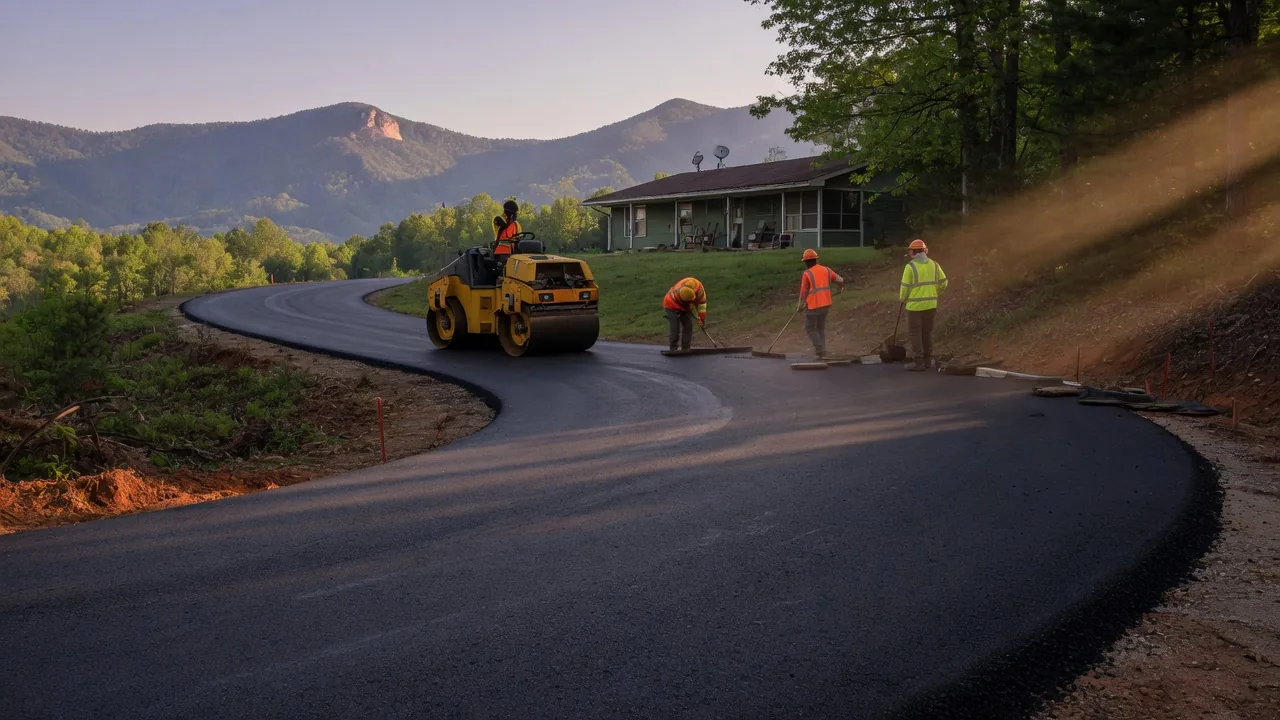
Asphalt is a seasonal product in this corner of Henderson County. Hot-mix plants serving the Flat Rock area generally open in spring and wind down by late fall, and the paving crews who buy from them schedule around that calendar, not around your convenience. If you call in January about a gravel-to-asphalt conversion, the honest answer is a spring start with a written scope now.
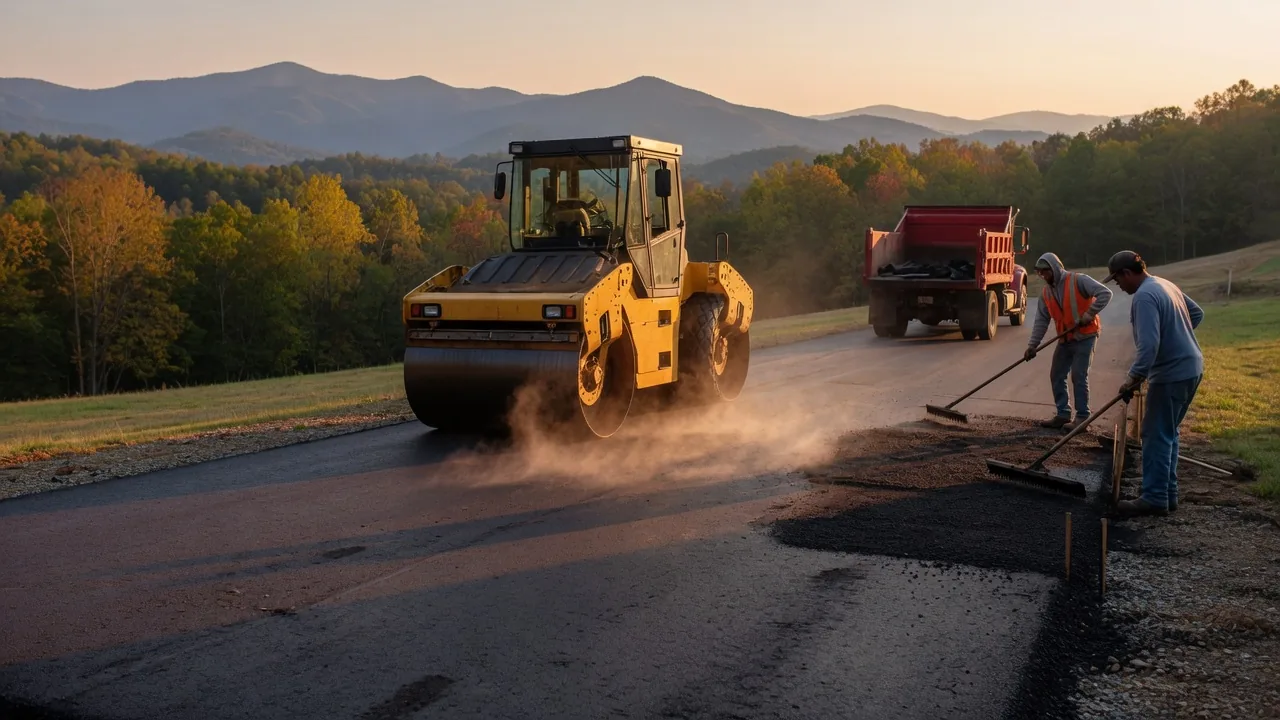
The reason is temperature at the mat, not air temperature at your kitchen window. Hot mix has to arrive and be rolled while it is still workable; once it cools below the working range it cannot be compacted to density, and a driveway that never reached density will ravel at the edges and rut where tires sit. Flat Rock's wooded lots make this sharper than it sounds. A driveway cut through mature hardwoods may hold shade most of the day, and shaded asphalt sets slower and stays tender longer — which is fine if the crew plans for it and a problem if they don't. Add the first frosts that show up in the higher pockets around the county, and the realistic paving window is narrower here than on open ground down toward the valley.
Water is the other half of the timing story. This county has seen 16 federal disaster declarations across 1978-2026, heavily weighted toward storm and flood events, and every one of those pushed runoff at driveways that were graded for a drier assumption. The National Weather Service outlook matters less for the paving day itself than for what the ground is doing underneath: paving over saturated subgrade is how a new surface fails in its first year.
What the conversion actually involves on a Flat Rock lot
Gravel to asphalt is not a resurfacing job. It is a base job with an asphalt cap on top, and the price difference between two quotes on the same driveway almost always lives in the base.
A proper conversion starts with stripping the existing gravel far enough back to see what is under it. Sometimes you find a compacted, well-drained base that only needs grading and a fresh lift. More often on older Henderson County driveways you find a gravel layer that was topped up for years without ever being shaped, soft spots where a vehicle has been parking, and edges that have migrated into the lawn. That material gets reworked or replaced, the subgrade gets proof-rolled, and any wet area gets drainage before a single ton of asphalt shows up.
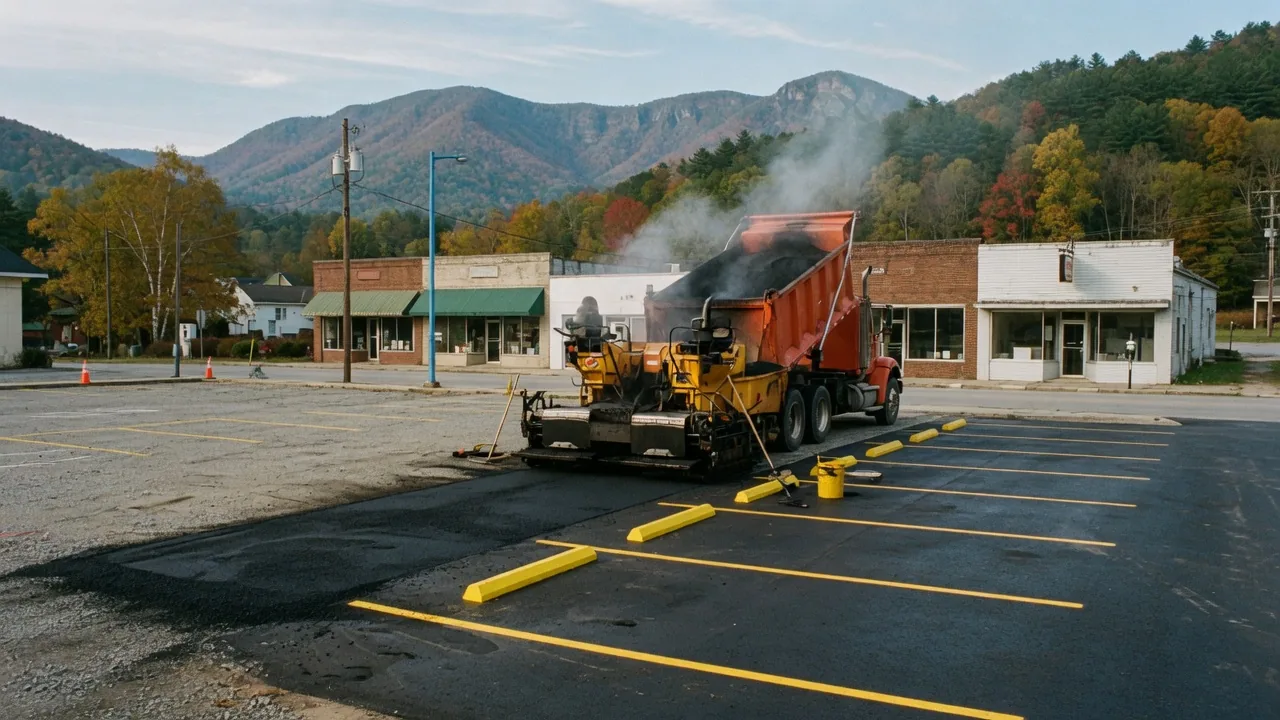
Then comes the asphalt itself, typically in two lifts — a binder course and a surface course — compacted between them. Edge restraint matters more than most homeowners expect; without it, the outside edges of a driveway on any kind of cross-slope will spread under load. If your driveway meets a county road, the connection point is its own conversation, and the NCDOT permit process governs how that apron is built and drained. Permit applications for driveway connections run through NCDOT Connect, and it is worth knowing before a contractor tells you it isn't needed.
Flat Rock pricing, scope by scope
Ranges below reflect typical residential work in this county. Length, slope, base condition, and drainage are the movers — a 60-foot flat driveway and a 200-foot climb off a mountain road are not the same job even when the square footage looks similar.
| Scope | Typical range |
|---|---|
| Short conversion, sound existing base, minimal prep | $6,500–$9,000 |
| Standard conversion with base rework and grading | $9,000–$13,000 |
| Long or sloped drive with drainage corrections | $13,000–$16,000+ |
| Adding drainage (culvert, French drain, swale) | $1,200–$4,500 |
| Edge restraint and apron work at the road | $800–$2,800 |
The full line-item picture lives on the Henderson County asphalt cost breakdown, and if you want the general conversion logic before you talk numbers, start with the gravel-to-asphalt overview.
Shade, frost, and the curing question
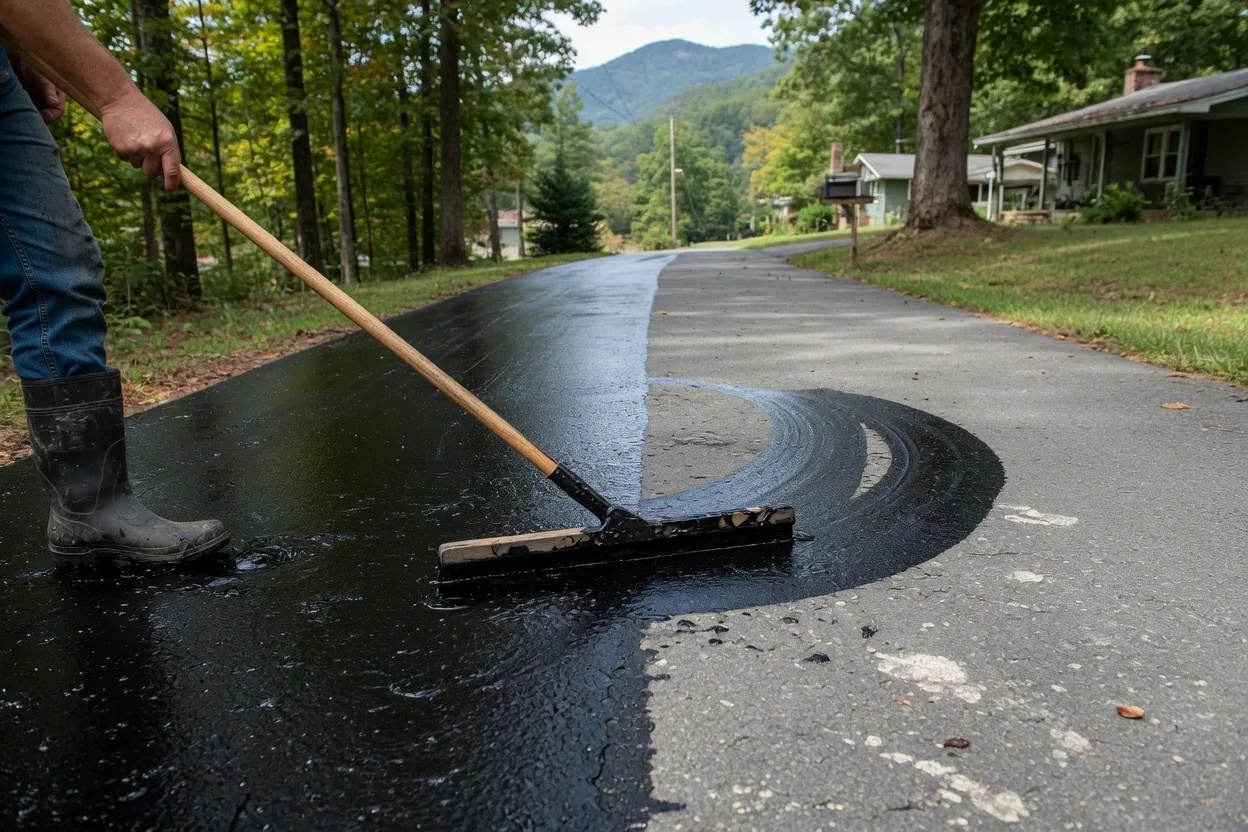
New asphalt does not cure the way concrete does. It cools, it densifies under the roller, and then it continues to stiffen over weeks as the lighter fractions in the binder weather away. Cool, shaded conditions slow that process, which means a wooded Flat Rock driveway stays soft and markable longer than a sunny one in town. Keep heavy trailers and point loads off it longer than the contractor's minimum if your driveway sits under canopy.
Frost is the other variable. Ground that freezes and thaws under a driveway will move it, and the fix is drainage and base depth, not a thicker surface layer. This is where the federal record earns its keep: with 16 declared events touching this county over 1978-2026, the storm-and-flood pattern is the design condition, not the exception. Grading that sends water away from the driveway and off the uphill side is doing more structural work than any additive sold at the plant.
Choosing a crew without getting burned
North Carolina draws a licensing line for general contractors, and paving sits near it — the NC Licensing Board for General Contractors publishes the thresholds, and any job crossing them should involve a licensed contractor. Site work and drainage components can pull a project across that line even when the asphalt line item looks small.
Beyond licensing, ask three things. First, what happens to the existing gravel — hauled off, reworked in place, or buried? Second, how thick are the binder and surface lifts, and will they be compacted separately? Third, who handles the road-connection permit if one is required. Compare answers across the crews listed in our Flat Rock paving contractor directory and the quotes will start sorting themselves.