Why mountain freeze-thaw sets the real clock
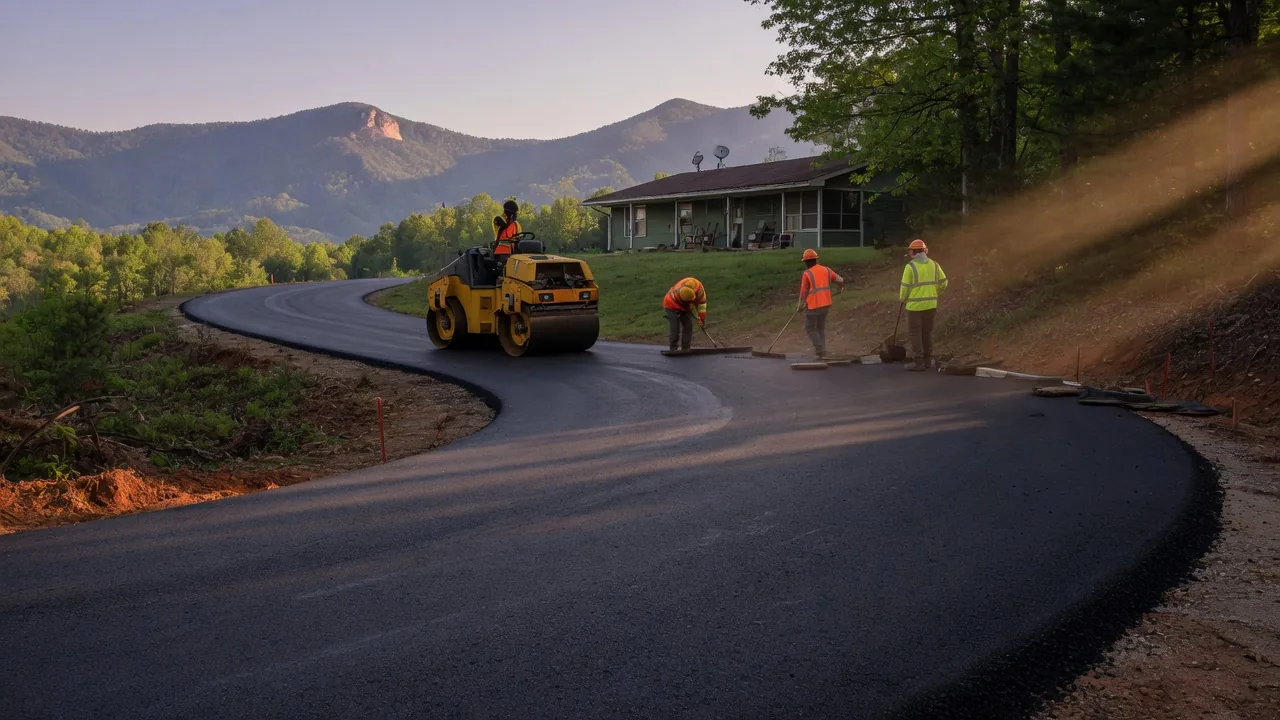
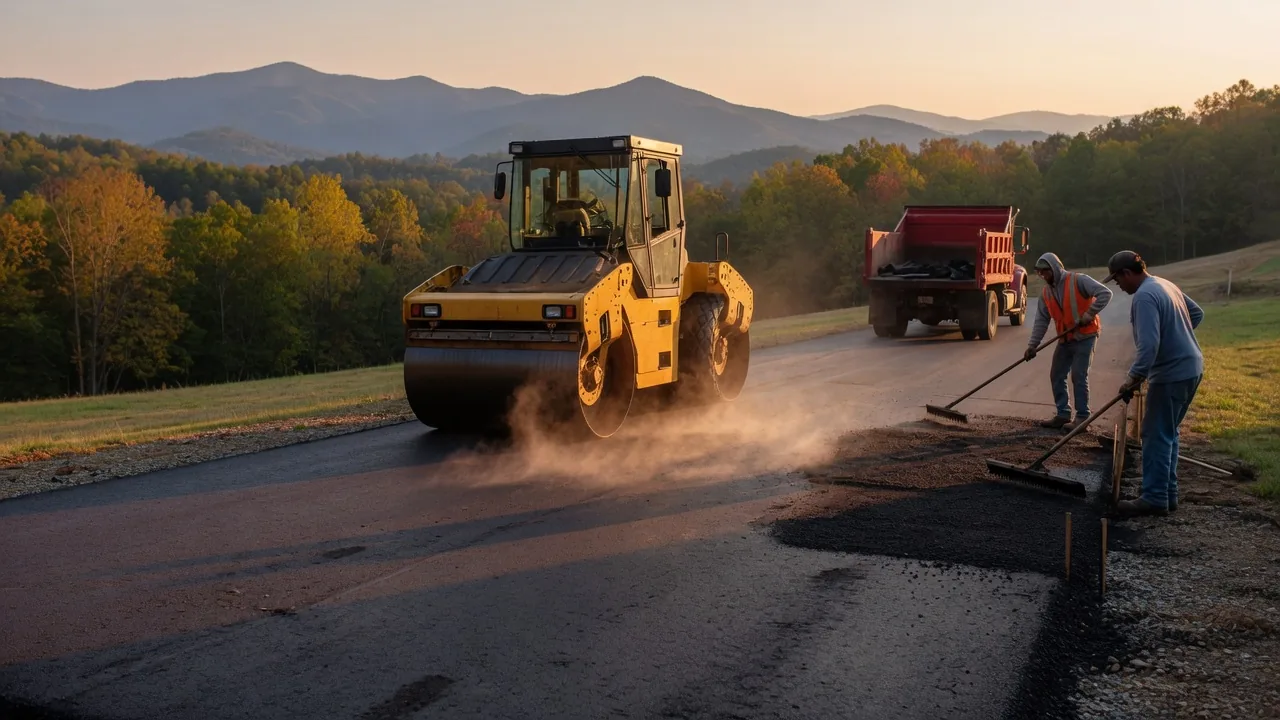
Asphalt in Buncombe County lives a harder life than asphalt in Charlotte or Raleigh. The plants that mix it run seasonally, and the window for laying and rolling it is tight: you need air and ground temperatures holding above roughly 50 degrees, dry aggregate, and enough daylight to compact before the mat cools past workability. Around Asheville that window is often late spring through early fall, and a driveway poured in the cool shoulder months may never cure to full density.
Then winter arrives with dozens of freeze-thaw cycles. Water gets into hairline cracks, freezes overnight, expands, and pries the crack wider by spring. Mountain shade on north-facing driveways off Town Mountain or in the wooded coves of Weaverville keeps pavement damp longer, which drives that cycle deeper into the mat. This is why the same mix that hits 20 years in the flatlands can fail by year 12 on a shaded ridge lot.
The terrain itself is the variable. A driveway cut into a hillside off Beaverdam Road drains differently than one laid flat in a Swannanoa valley lot, and both drain differently than a steep switchback above Black Mountain. Grade forces water to move fast in one spot and pool in another, and pooled water is the enemy. Contractors working here learn to read the slope before they ever quote the job.
What actually shortens lifespan here
The top killers in this market are water, base, and drainage, roughly in that order. A driveway on a cut-and-fill slope with no positive drainage channels runoff under the mat and pumps the subgrade until it fails. A thin base over Buncombe's clay soils flexes under load and cracks from the bottom up. Deferred maintenance is the third: every year you skip sealcoat, UV and oxidation open the surface, and the freeze-thaw cycle finishes the job.
Vehicle weight matters too. A standard residential driveway is built for cars and light trucks, not loaded dump trucks or delivery semis that occasionally pull in. If heavy traffic is routine, tell your contractor before the base is built, because compaction and thickness specs change.
Tree cover is a local factor people underestimate. A driveway running under a canopy of oaks and poplars in the Riceville or Reynolds areas stays damp for days after a rain, and that moisture feeds the freeze-thaw cycle. Roots also lift pavement from below, especially on older lots where the trees predate the driveway. Where root intrusion is already visible, patching alone will not hold; the fix has to address the root zone or the same crack reopens within a season or two.
Repair versus replace: the honest math
Age alone does not decide it. A 15-year-old driveway with a sound base and only surface cracking is a resurfacing candidate. A 9-year-old driveway with alligator cracking and sinking sections is a replacement, because the base is gone and a new surface would fail in two winters. The table below shows typical Buncombe County scope-versus-range figures; these are regional bands, not quotes, and grade, access, and square footage move them.
| Scope | Typical range | When it makes sense |
|---|---|---|
| Crack fill and patching | $250-$900 | Isolated cracks, sound base, 1-2 day fix |
| Sealcoat | $0.18-$0.35 per sq ft | Every 2-3 years on a healthy mat |
| Resurfacing over existing | $2.25-$4.50 per sq ft | Surface wear, base still intact |
| Full tear-out and replacement | $4,500-$11,000 typical job | Failed base, alligator cracking, drainage fixes needed |
Run the numbers against asphalt versus concrete before you commit. Concrete lasts longer in ideal conditions but cracks badly in our freeze-thaw ground without proper joints and base, and its repair costs are higher. For a steep mountain driveway, asphalt also handles the flex of a graded slope better, which is why you see it on most of the long private access roads around Fairview and Leicester.
Sealcoat timing, and why not to overdo it
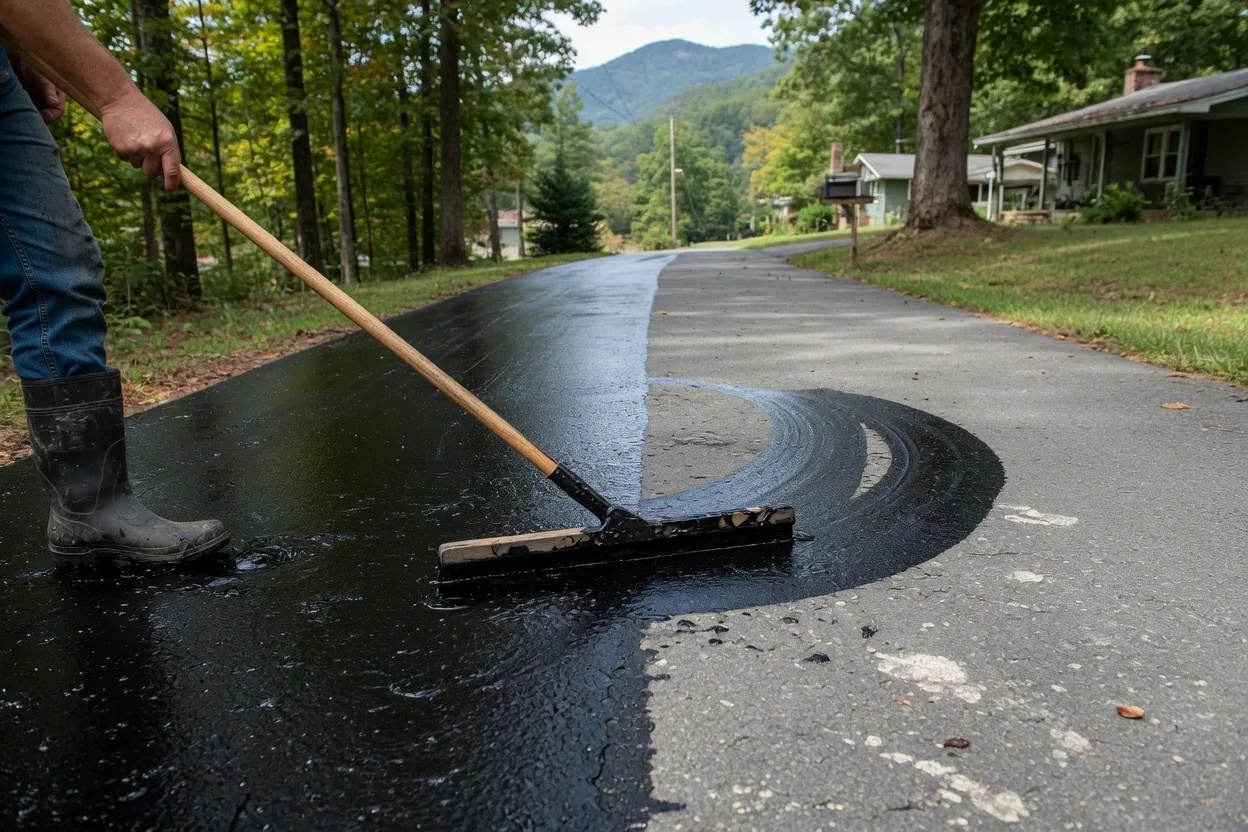
Sealcoating is the single cheapest thing you can do to extend life, but more is not better. New asphalt needs to cure for six months to a year before the first coat, and after that, every 2 to 3 years is the healthy rhythm. Sealing annually traps moisture and can actually soften the mat from within. The best time to sealcoat around Asheville is late spring or early fall, after the surface is clean and dry and before the first hard frost. Skip it in the dead of summer heat if the driveway is soft, and never seal over a damp surface.
If your driveway meets a public road, the apron work may need an NCDOT driveway permit; check NCDOT before anyone touches the right-of-way. That is common on the busy county roads where driveways tie straight into the shoulder, and it is one of the few parts of a residential job that can trip up an otherwise simple project.
Storm and flood history raises the stakes
Buncombe County has seen 19 federal disaster declarations across 1973-2026, overwhelmingly flood and storm events. Each one delivered the two things asphalt hates: saturating water and debris. A driveway that sits through repeated flood cycles loses base strength even if the surface looks fine, and a washed-out culvert or undermined edge shortens life fast. If your property flooded, have the base evaluated before resurfacing.
Drainage work also touches environmental rules in the mountains. Grading that changes how stormwater leaves your property can fall under state review, and the NC Department of Environmental Quality is the place to understand those limits before a contractor starts moving dirt. The National Weather Service freeze and flood outlooks are worth checking when you plan the work.
For any driveway job that includes site grading or drainage changes, confirm your contractor's licensing status through the NC Licensing Board for General Contractors, since thresholds apply once the scope crosses into general contracting. For structural elements attached to a home, the NC Department of Insurance and the state building code set the standards local inspectors enforce.