The plant is in the valley. Your driveway isn't.
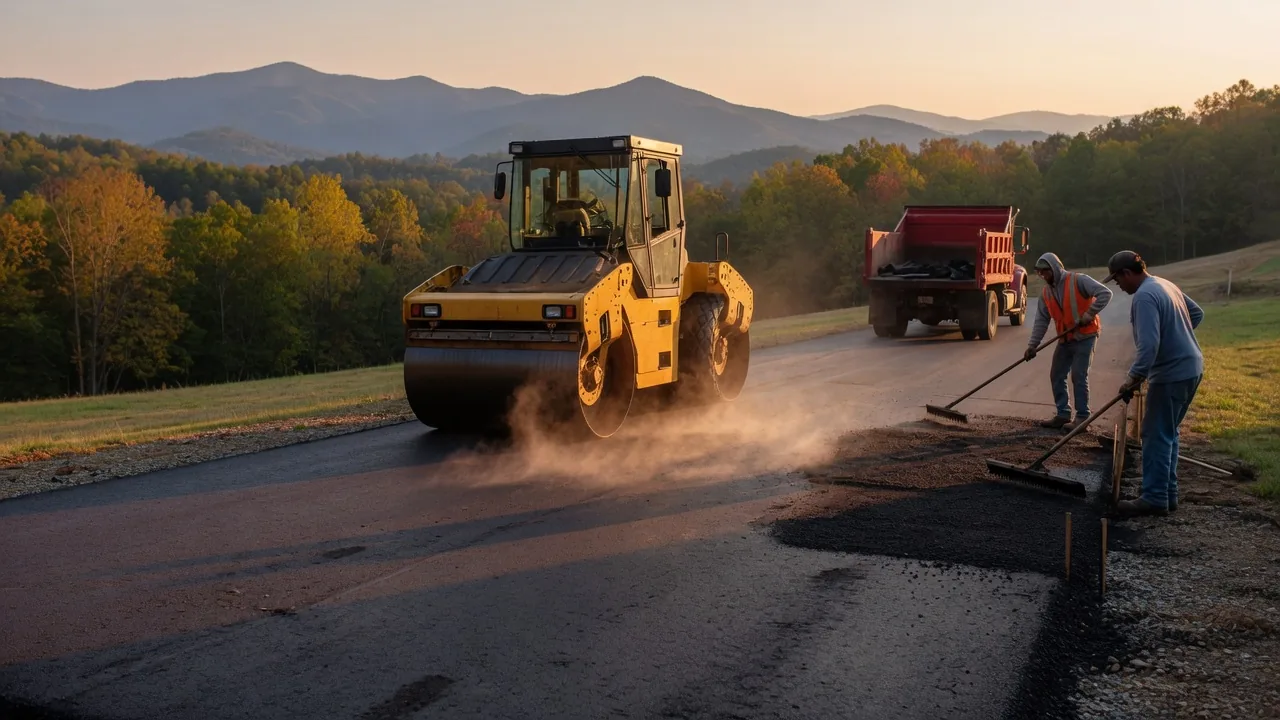
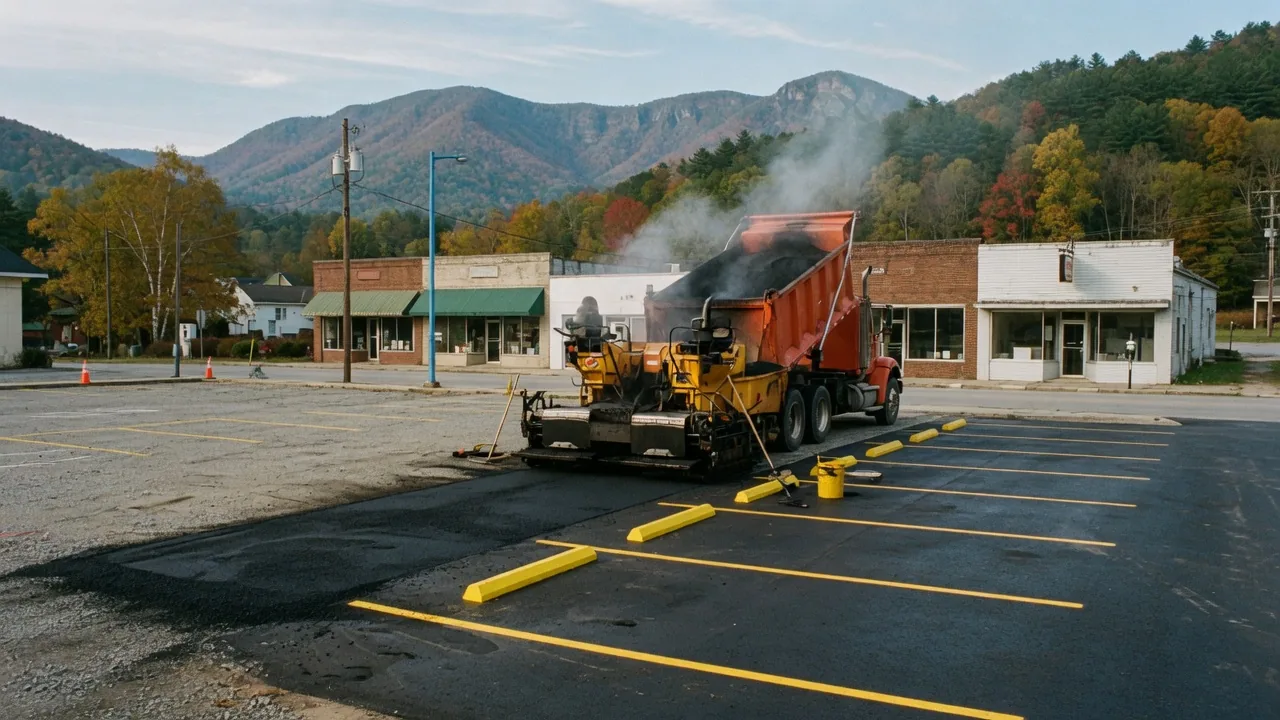
Asphalt is a perishable product. Hot mix leaves the plant at roughly 300°F and has to be placed and compacted before it cools past workability — a window measured in minutes, not hours. Buncombe County's mix plants sit down in the valley floor, close to the rail and the aggregate. A driveway off a flat road in West Asheville might be fifteen minutes from the gate. A gravel-to-pavement lane switchbacking up toward Town Mountain, or a long private drive out in the Leicester or Weaverville bottoms, can be forty-five minutes of loaded truck on two-lane road, and that truck has to make the trip for every load it takes to finish your driveway.
That distance does three expensive things. It limits how many square feet one load can cover before it stiffens. It forces the crew to plan pours in sections rather than one clean pass. And on a narrow drive with no turnaround, it may mean the paver or the roller cannot reach the far end at all, so material gets hand-placed and hand-tamped. None of that shows up in a per-square-foot number a phone bidder quotes you. It shows up the morning the crew walks the drive with a tape and a thermometer.
What actually fails on a mountain driveway
Asphalt failures in this terrain are rarely about the asphalt itself. They are about what is happening underneath it.
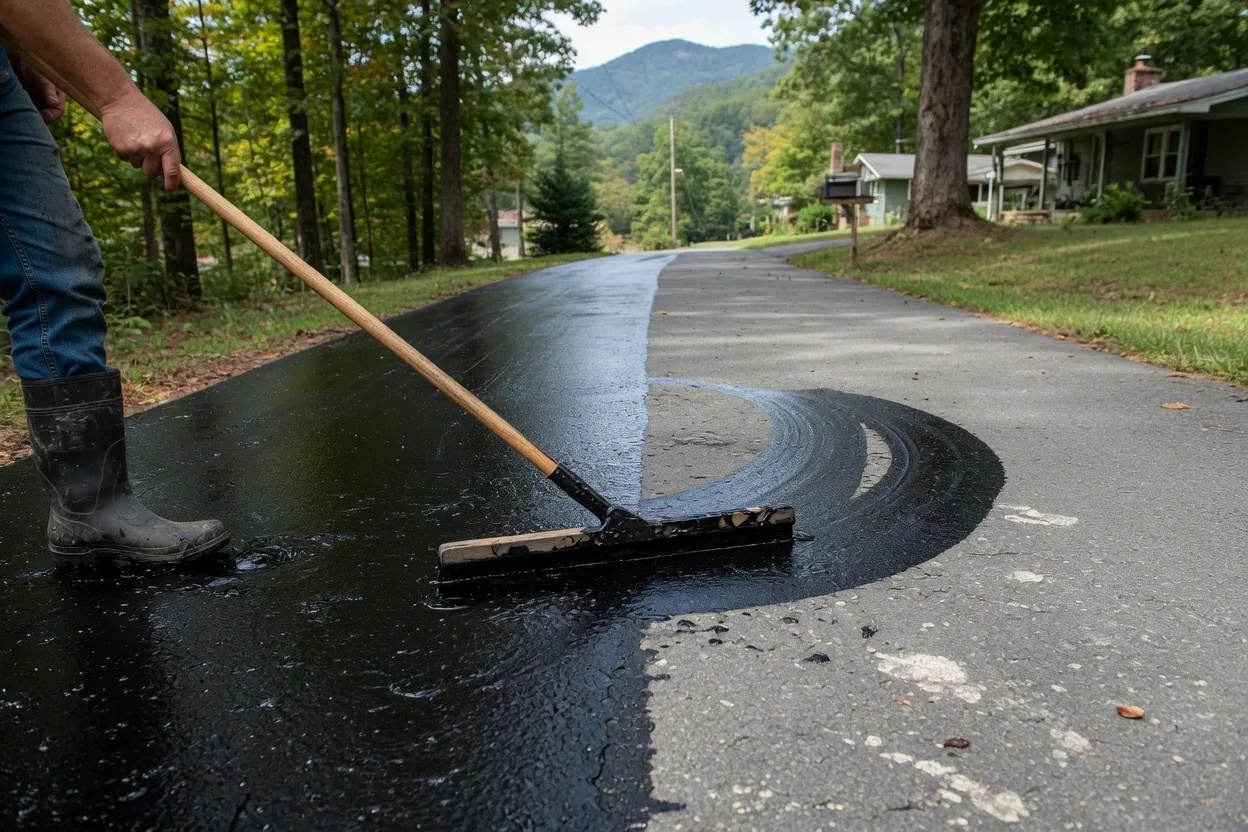
- Water moving under the pavement. Slope drives water downhill and it finds the edge, the joint, or a low spot. Once it gets under the mat, freeze-thaw cycles in a Buncombe County winter open the crack into a pothole in a single season. This is why drainage and edge grading are part of a real repair and not an upsell.
- Soft subgrade on fill or cut lots. A lot cut into a hillside often has fill at the driveway and native clay at the top of the grade. The two settle differently, and the asphalt above them cracks along the seam.
- Thin or aged surface. Driveways paved years ago with an inch of mix and no base prep fail from the bottom up. Patching those is a maintenance decision, not a fix, and the honest conversation is the one on the resurface-or-replace page.
- Tight turning and heavy loads. Garbage trucks, delivery vans and RV trailers turning in a narrow drive push and shove the mat. Edges crumble first.
Whatever the cause, an inspection of the base matters more than the price of the patch. Anyone who quotes you without looking at what is under the asphalt is quoting the wrong problem.
Scope versus price: what each repair really costs here
The table below is the honest shape of local pricing. Ranges assume normal access; a long steep drive or a tight turnaround pushes every row toward the top, and occasionally off the scale, because access is the variable a phone bidder cannot see.
| Scope of work | Typical range | What moves the number |
|---|---|---|
| Crack filling (per linear foot, small job minimum applies) | $2–$6 per linear foot | Total length, whether cracks are cleaned and blown out first, minimum trip charge |
| Pothole and localized patch repair | $250–$900 per patch area | Whether the failed base is removed and re-compacted or just capped with mix |
| Milling and overlay of an existing drive | $2.50–$5.00 per square foot | Square footage, thickness of new lift, haul distance from the plant, edge and drainage work |
| Full-depth rebuild of a steep or long drive | $8,000–$18,000+ | Length and grade, base depth, whether a geotextile or drainage correction is needed, access for the paver |
Two things to notice. First, the range on the same job is wide on purpose — the difference between a capped pothole and one with the base dug out and rebuilt is the difference between a repair that lasts two seasons and one that lasts ten. Second, a per-square-foot overlay number is only honest once someone has walked the grade and measured the drive. Our asphalt repair cost page breaks the line items down further, but the site visit is what makes the number real.
Access, haul and the crew day
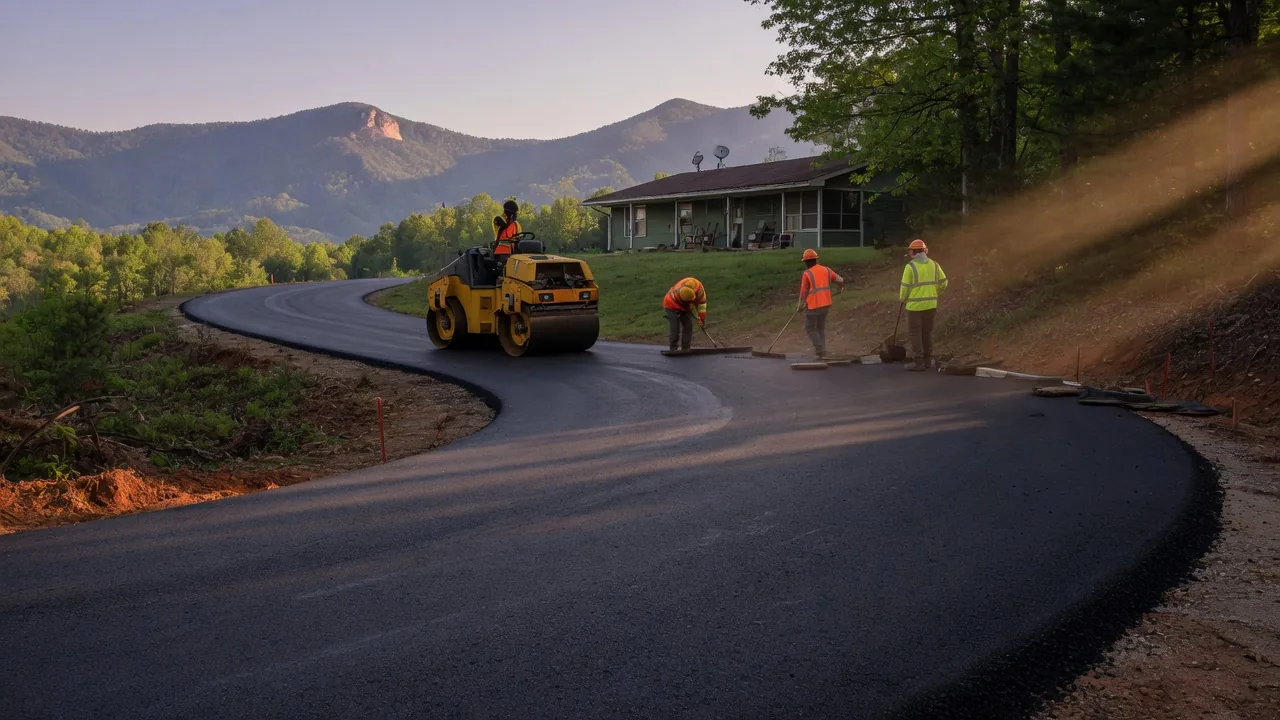
A driveway repair in this county is a logistics job as much as a paving job. The truck has to get the mix up the grade while it is still hot. The roller has to fit between the retaining wall and the drop-off on a drive barely wide enough for one vehicle. There has to be somewhere to turn around, or the crew is backing a loaded dump truck down a wet switchback, which nobody wants.
That is why repair days here get planned around the drive, not the calendar. A short flat driveway off a county road can be crack-filled and patched in a morning. A long steep private drive with a washed-out base can be a two or three day job once you account for grading, base correction, drainage, and waiting on loads that have to crawl up the mountain and still arrive hot enough to compact. If your driveway crosses a state-maintained right-of-way or ties into a road, the access permit question comes first — NCDOT handles driveway and street access permits, and any work in that zone should start with them, not after the fact.
Runoff matters the same way. Water leaving a driveway into a creek or a neighboring property is a real issue in this county, and NC Department of Environmental Quality is where the erosion and sediment rules live. A repair that sends mud downhill every rain is not finished.
Potholes now or overlay later
Most repair calls in Asheville fall into two buckets, and they lead to different answers. The first is the pothole that appeared over the winter and is now catching tires. That is a pothole repair job — cut the failed area square, remove the loose material, rebuild the base if it is gone, and compact a proper patch. Done well it is permanent for that spot; done as a cold-patch smear it will be back by spring.
The second is the driveway that has more cracks than asphalt. Filling them one at a time stops being economical, and the question becomes whether to overlay the whole thing or tear it out. That is a base question, and it is worth reading the resurface or replace breakdown before you let anyone sell you an overlay. Paving over a failing base just buys time and hides the problem.
One more thing worth knowing: as a general rule, North Carolina's general contractor licensing requirements do not touch small residential driveway work, but if your project involves grading, significant excavation, or anything that looks like a structural retaining wall along the drive, the licensing threshold question is worth asking. And any electrical, plumbing or gas line work near the drive falls under the state licensing board for those trades, not the paving crew.
Storm seasons are the forcing function here. When heavy rain saturates the ground and a bottom-of-the-drive culvert blows out, driveways that were marginal fail fast — this county has 19 federal disaster declarations stretching over 1973-2026, and that record is a reasonable proxy for how often saturated soil takes out a driveway base. If your repair keeps recurring after every big rain, the answer is drainage, not more asphalt.