How Clyde's terrain shapes the driveway on your lot
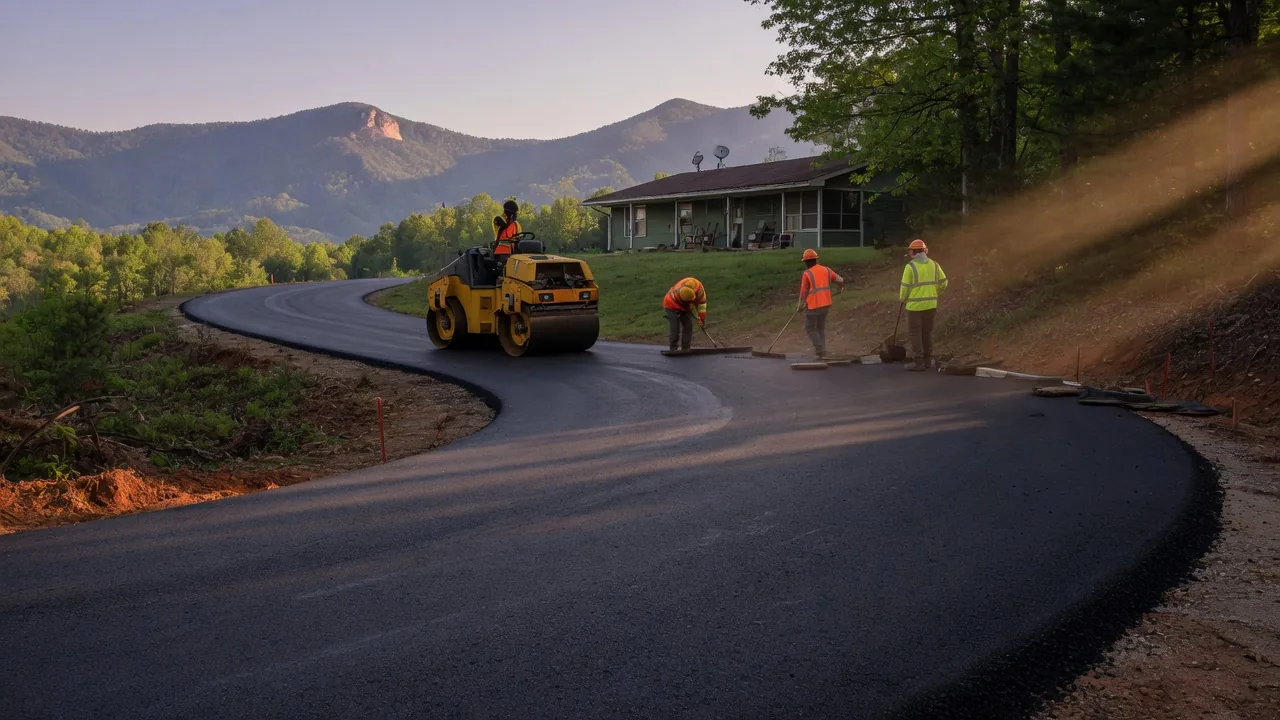
Drive east out of Waynesville on Highway 19 and the valley opens toward Clyde, but the lots don't flatten out with it. The Pigeon River bottoms sit low and wide near the old depot and the mill properties, while the ridges behind town climb fast into the Blue Ridge foothills. That split shows up in every driveway bid: a river-bottom ranch with 60 feet of flat pavement is a different job from a hillside place up off a switchback gravel lane where the driveway runs 300 feet and gains 40 feet of elevation between the county road and the house.
Down in the bottoms, the problem is water that has nowhere to go. The water table sits high after a wet winter, and driveways that were fine in August turn soft at the edges by March. Up on the graded pads, the problem is runoff speed. Rain that hits a steep slope runs downhill with force, and if the driveway crown is flat or the ditch was never cut, that water finds the seam between asphalt and base and starts working it loose.
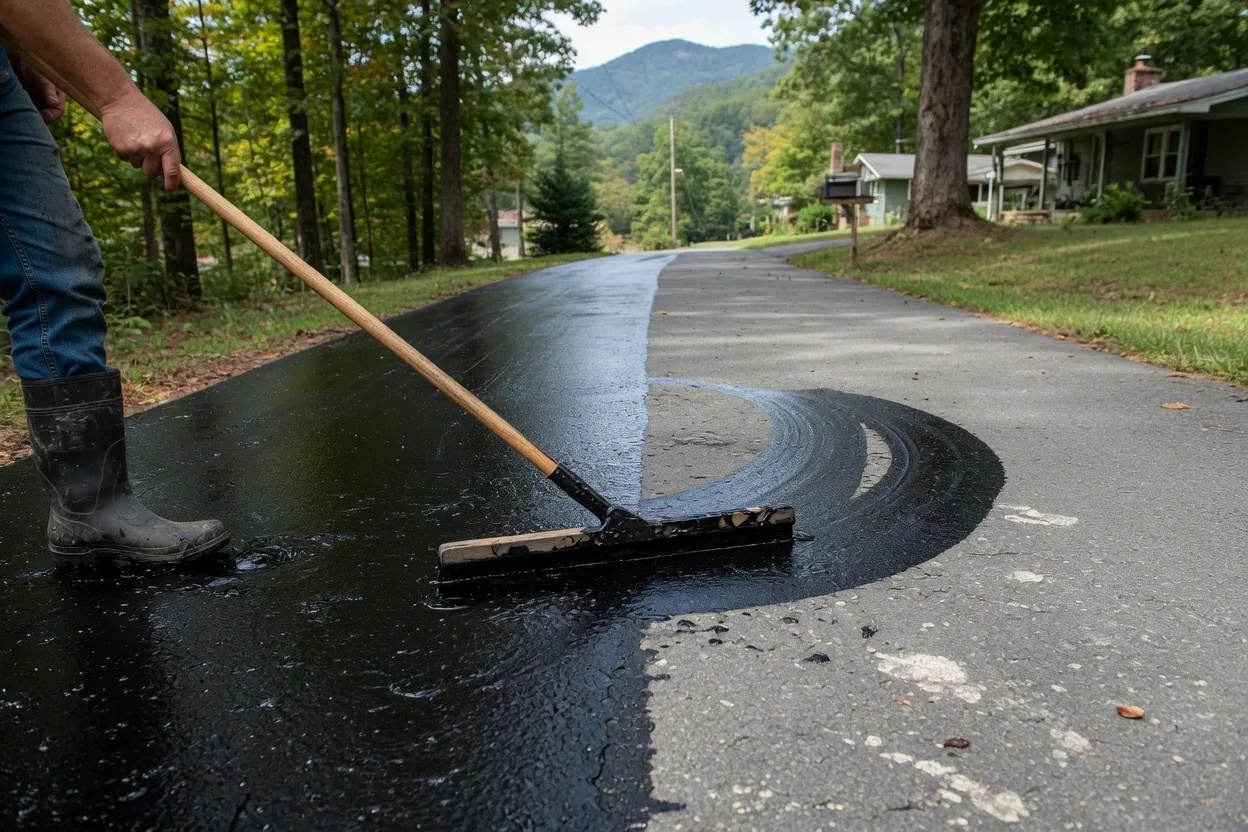
The older housing around Clyde's main streets tends to have pavement that's been sealed, patched, and overlaid across two or three owners. That history matters, because a driveway with four layers of old asphalt on it isn't a candidate for another overlay. The newer subdivisions off the ridge roads tend to have one clean mat and a base that was built right the first time, which means repairs there are usually surface work, not structural. Walk your own driveway after the next hard rain and look for the tells. Standing water that's still there the next morning, a soft spot near the culvert, alligator cracking starting in the wheel paths, or an edge that's crumbled back because nothing was holding the shoulder. Any of those means the base is talking to you before the surface fails. For a look at how these jobs are scoped across the region, our asphalt driveway work follows the same method that fits a steep Haywood County grade.
What Clyde and Haywood County pricing actually looks like
Clyde prices come off the same regional bands as the rest of Haywood County, and Waynesville is where most of the material logistics and crew competition concentrate. The numbers below are typical working ranges for a full scope, not a flat rate, and the Haywood County cost breakdown has the fuller line-item detail.
| Scope | Typical price range | What drives the number |
|---|---|---|
| Patch and sealcoat only | $600-$2,200 | Square footage, crack severity, number of patches |
| Overlay over sound existing asphalt | $3,200-$6,500 | Length, width, thickness, edge repair |
| Full tear-out, new base, new asphalt | $7,500-$14,000 | Slope, base depth, drainage corrections, haul-off |
| New driveway from bare ground | $9,000-$18,000+ | Grading, culvert, base stone, length, access |
| Gravel-to-asphalt conversion | $6,500-$12,000 | Existing stone depth, compaction, grade corrections |
Two line items show up on Clyde hillside bids that flatland quotes never carry. The first is extra base stone, because a driveway on a grade needs deeper compacted aggregate to keep the mat from sliding or rutting. The second is drainage work, whether that's a new culvert at the county road, a cut ditch along the uphill edge, or a set of turnout drains to move water off the pavement before it picks up speed. A bid that shows neither is incomplete, not cheap.
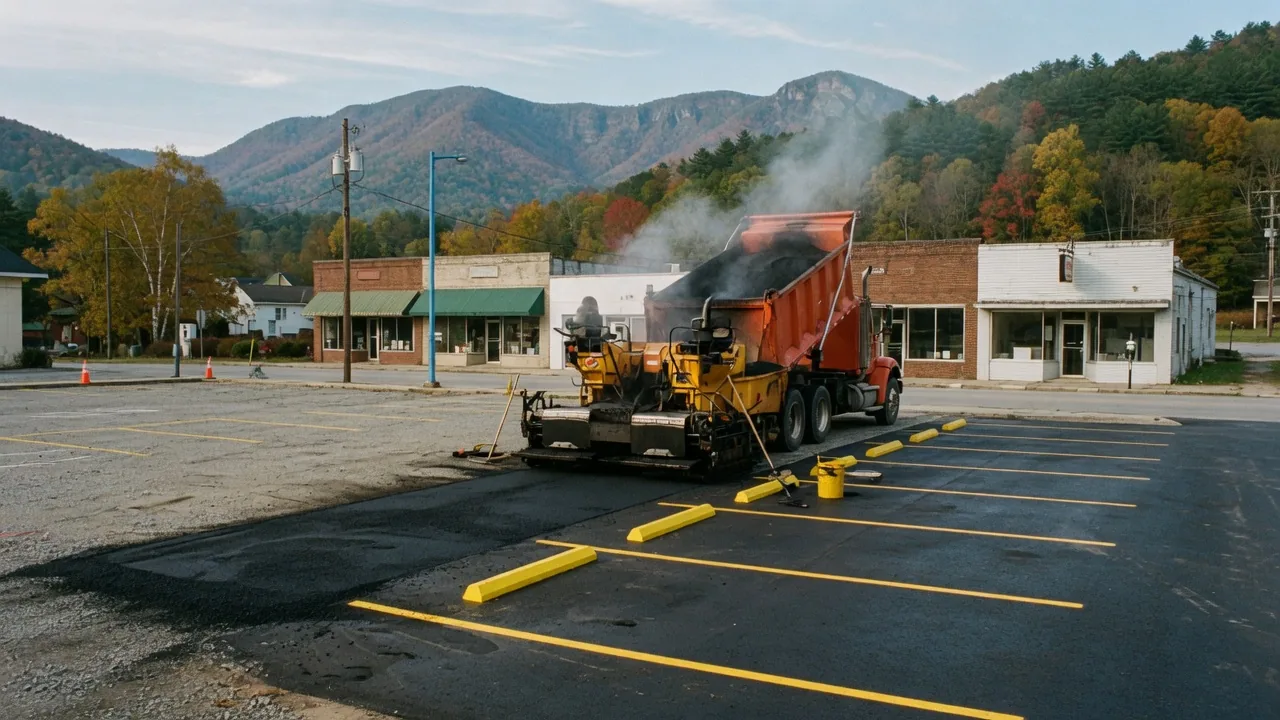
Haul distance matters here too. Clyde is far enough from the Asheville asphalt plants that trucking time shows up in the quote, and a crew already working in Haywood County usually beats one driving in from Buncombe on the same scope. If you want a local crew that knows these grades, the Clyde paving contractors list is a good place to start comparing bids.
Why water history drives the base scope
The federal disaster record explains a lot of the paving calls in this valley: 19 declared events touch Haywood County (1973-2026), overwhelmingly storm and flood family. Every one of those events pushed water at driveways that had been built assuming a drier hillside. That's why the drainage question has to be answered before anyone sells you a new mat. Where does the uphill runoff go? Does the culvert at the county road actually flow, or is it silted shut from the last big rain? Does the driveway crown correctly so water sheets off to the sides instead of running down the middle and pooling at the garage door?
On a slope, base depth is the other half of the same conversation. Asphalt is a wearing surface, not a structural slab. It flexes over whatever is under it, so a thin base on a steep grade means the mat cracks in the wheel paths within a few seasons no matter how thick it was poured. A crew that knows this ground will talk about compacted stone depth and edge restraint before they talk about asphalt thickness.
If you're adding or changing a driveway connection to a state-maintained road, the NCDOT driveway permit rules apply, and applications run through NCDOT Connect. That's a real step, not a formality, and a crew that has done it before will know the sequence. The NC Licensing Board for General Contractors sets the threshold where a paving or grading project crosses into licensed-contractor territory, which matters more on bigger tear-out and regrade jobs than on a simple overlay.
The sequence that holds up on a Clyde slope
On a Clyde slope, the work order matters more than the asphalt thickness. A crew that starts with a wet, uncompacted subgrade is just paving a future crack pattern. The sequence that holds up starts with water: cut the uphill ditch or swale first so uphill runoff never reaches the driveway base, size and set the culvert at the county road, and make sure the shoulder on the downhill side has somewhere to shed. Then grade and compact the subgrade, proof-roll it, and correct any soft spots before stone goes down. Base stone goes in lifts, compacted each time, deep enough for the grade. On a driveway that gains real elevation, edge restraint at the downhill edge is what keeps the mat from creeping.
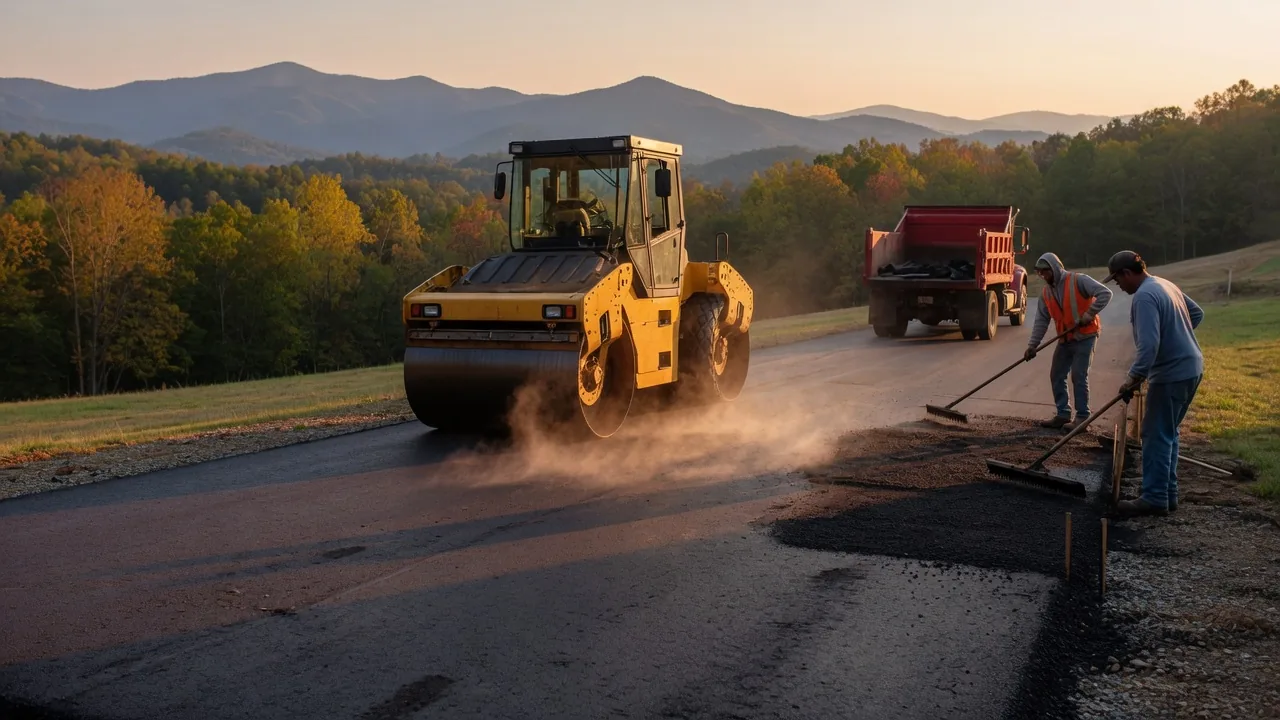
Once the base is right, the asphalt goes down in compacted lifts, crowned so water sheets off, not down the middle. That's the whole difference between a driveway that's still sound in ten years and one that's a patch job in three. A quote that jumps straight to "two inches of asphalt" without talking about water, base depth, and edges is selling you the surface, not the driveway. Ask any contractor you're considering what they do about uphill water before they quote the mat, and you'll learn quickly who has actually built on this ground.