The asphalt is the cheap part — the stone is the job
Drive up any of the ridge lanes off Montreat Road or Yates Avenue and you can spot the failed conversions without stopping: fresh black surface, alligator cracking at the crown within two seasons, ruts where tires track. The mix did not fail. The base under it did. Black Mountain sits in the Swannanoa Valley at the foot of the Black Mountains, and almost every gravel drive here is one of three things — an old farm lane cut straight into red clay, builder gravel dropped over a cut-and-fill pad on a steep lot, or decades of stone that has pumped fines to the surface until it wears a dirt-brown crust. Lay hot mix on any of those three and you have bought a one-season driveway.
So the honest first question is not how many tons of asphalt, it is how many inches of compacted crushed stone your subgrade will swallow before it stops moving. A contractor who probes the drive, checks depth and gradation, and tells you plainly whether you have 4 inches of usable base or 4 inches of mud is worth more than one who quotes from the satellite view. That answer, far more than driveway length, is what moves the price.
Three local tells that read your driveway before anyone quotes it
The spring soft spot is the first tell. If a corner of the drive stays spongy for weeks after a rain, water is perched on clay and no overlay will cure it. In this valley that spot is usually where the drive flattens out near the garage or where a downspout discharges onto the stone. The second tell is the crown. Gravel drives here either shed water or dish and hold it, and held water shows as darker, greener, moss-tinged stone down the middle. Re-establishing that crown with a grader is part of the base work, not an extra. The third tell is grade. A drive climbing 12 percent toward a ridge house needs both a deeper base and a mix that resists shear, because gravity is pulling the whole section downhill every time it rains. Where a culvert or swale crosses the drive, that structure has to actually work before paving starts — a crushed or silted culvert is the most common hidden cause of a washout. Seasonal runoff patterns across these mountains, the same systems that drive NWS advisories through the valley, are a bigger factor in driveway life here than most homeowners expect. Heavy rain on a bare clay cut is not a nuisance; it is the thing that moves your driveway.
The base-first sequence, and what it costs in this valley
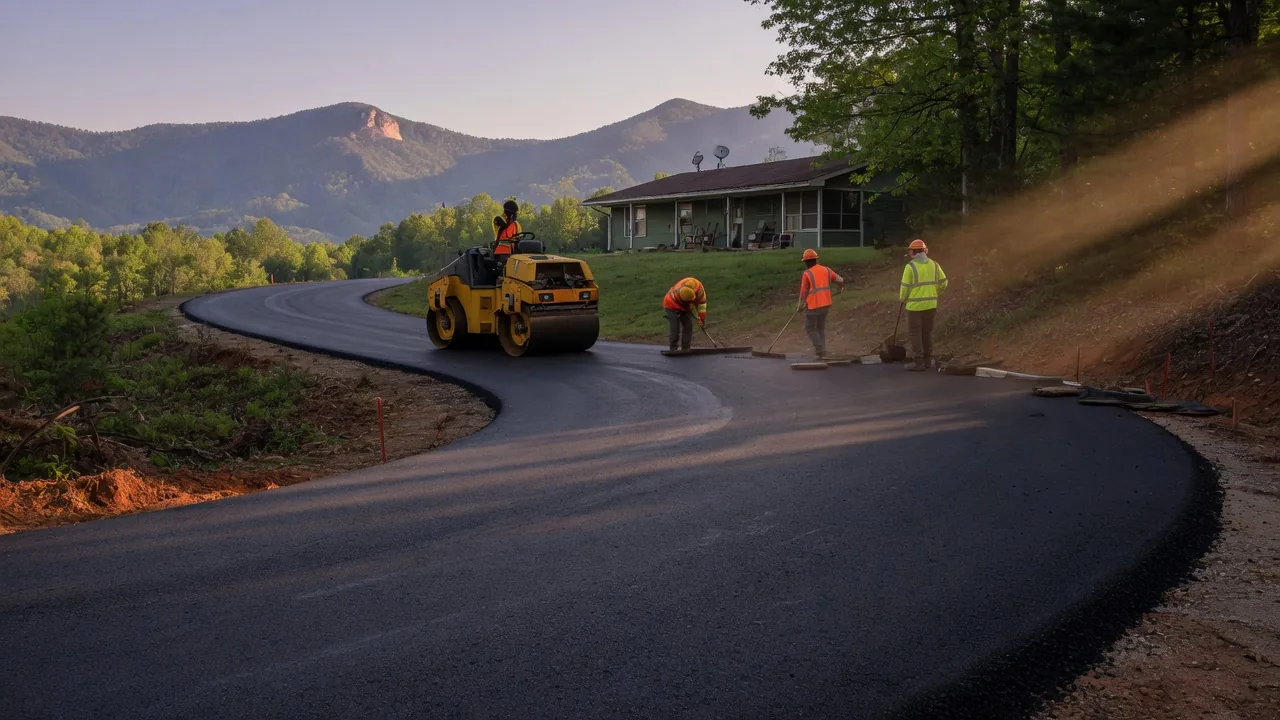
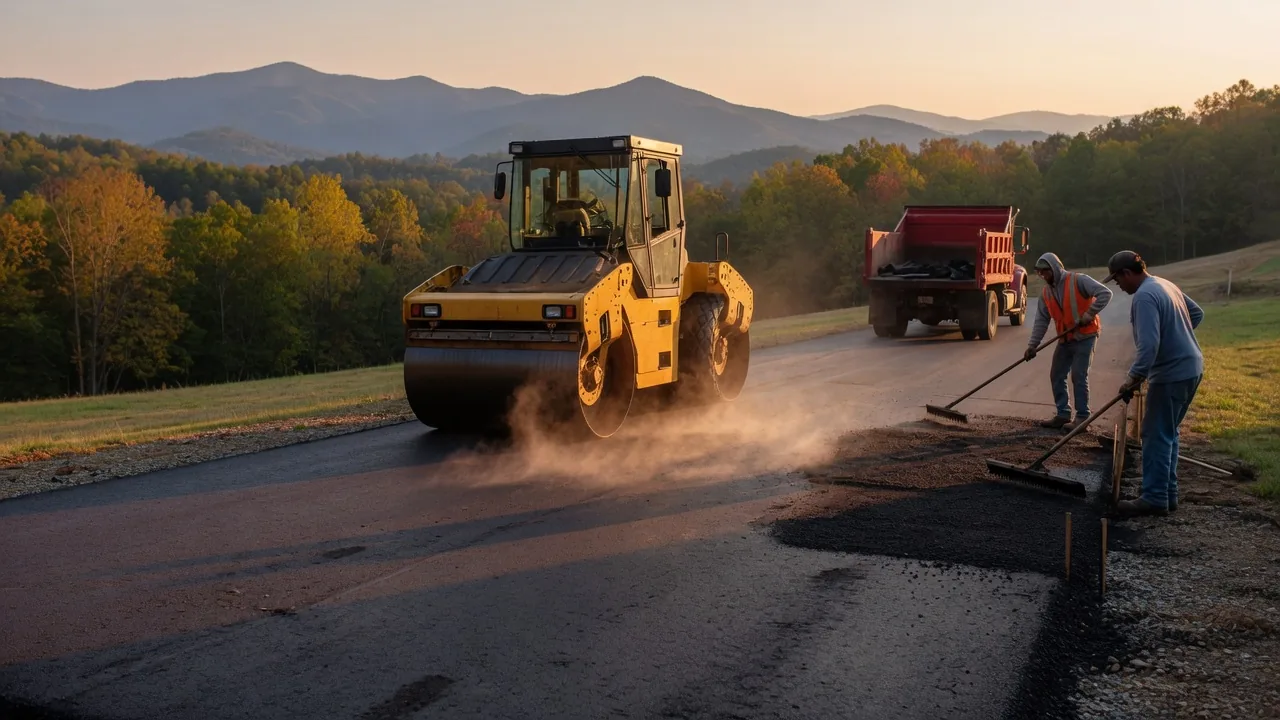
A proper conversion follows a fixed order: probe and shape the existing drive, fix drainage, add and compact crushed stone, then place hot mix in two lifts — binder and surface. The middle step is the one homeowners skip and the one that decides everything. The ranges below reflect Black Mountain conditions, with length, grade, and required stone depth driving every row.
| Scope | What it covers | Typical range |
|---|---|---|
| Base repair only | Regrade, recompact existing gravel, spot stone, fix crown | $1,200-$3,500 |
| New crushed stone base | 4-6 in. of compacted 2-in. stone over clay | $3,000-$7,000 |
| Full conversion, short drive (under 60 ft.) | Base prep, 2-in. binder, 1.5-in. surface | $4,000-$7,500 |
| Full conversion, longer or steep drive | Drainage work, deep base, two-lift mix | $7,500-$12,500 |
| Gravel-only overlay prep (skip conversion) | Fresh gravel, no mix | $800-$2,500 |
For the county-wide picture, including how these bands shift from Swannanoa to Weaverville, see the Buncombe County driveway cost breakdown. For the mechanics of the conversion itself, the gravel to asphalt conversion guide walks the sequence step by step.
Why a mountain conversion is not a flatland conversion
Two things separate a Black Mountain job from the same square footage in the Piedmont. The first is stone quantity. Local red clay subgrade wants 4 to 6 inches of compacted crushed aggregate under a passenger drive, and more where a trailer, a boat, or a delivery truck turns around. On flat Piedmont lots, 4 inches often gets the job done. Here, that extra depth is the difference between a driveway and an annual repair. The second is water. The Swannanoa Valley takes some of the heaviest rainfall in the state, and a drive that dumps its runoff onto a neighbor's slope or into a foundation creates a problem that a thin mix section will never cover.
That is also why the permitting question deserves an early answer. Driveway connections to state-maintained routes require an access permit through NCDOT Connect, and work above certain cost thresholds brings the state's general contractor rules into play through the NC Licensing Board for General Contractors. The NC Department of Insurance / Office of State Fire Marshal oversees the local code officials who enforce driveway and site standards. Ask the contractor which permits apply before a single load of stone arrives, and get it in writing.
Reading a bid: three questions that separate a driveway from a patch
Ask how many tons of stone they plan to place and at what compacted depth. If the answer is vague, the asphalt number is meaningless. Ask what they will do with water — crown, culvert, or swale — and where it will go when it leaves the drive. Ask whether the quote includes both mix lifts or only one; a single-lift job is often sold as a bargain and reads as a repair within two winters. Add a fourth if your drive has ever washed out: ask how the damaged section will be rebuilt, not just covered. Storm damage to gravel drives is a recurring fact of life in this valley, and the county has seen 19 federal disaster declarations over 1973-2026, so a crew that has rebuilt washouts after a flood year knows things a crew from outside the mountains does not.
One more practical note: winter weather closures on the mountain roads can push start dates back weeks, and asphalt plants run seasonal windows. Plan a spring-to-fall conversion when you can. And treat any bid that lacks a stone depth and a drainage line item as incomplete, not cheap. When you are ready to talk to crews who actually work this valley, the Black Mountain paving contractor directory covers who to call and what to ask each one.