On Flat Rock's slopes, the driveway is a drainage plan first
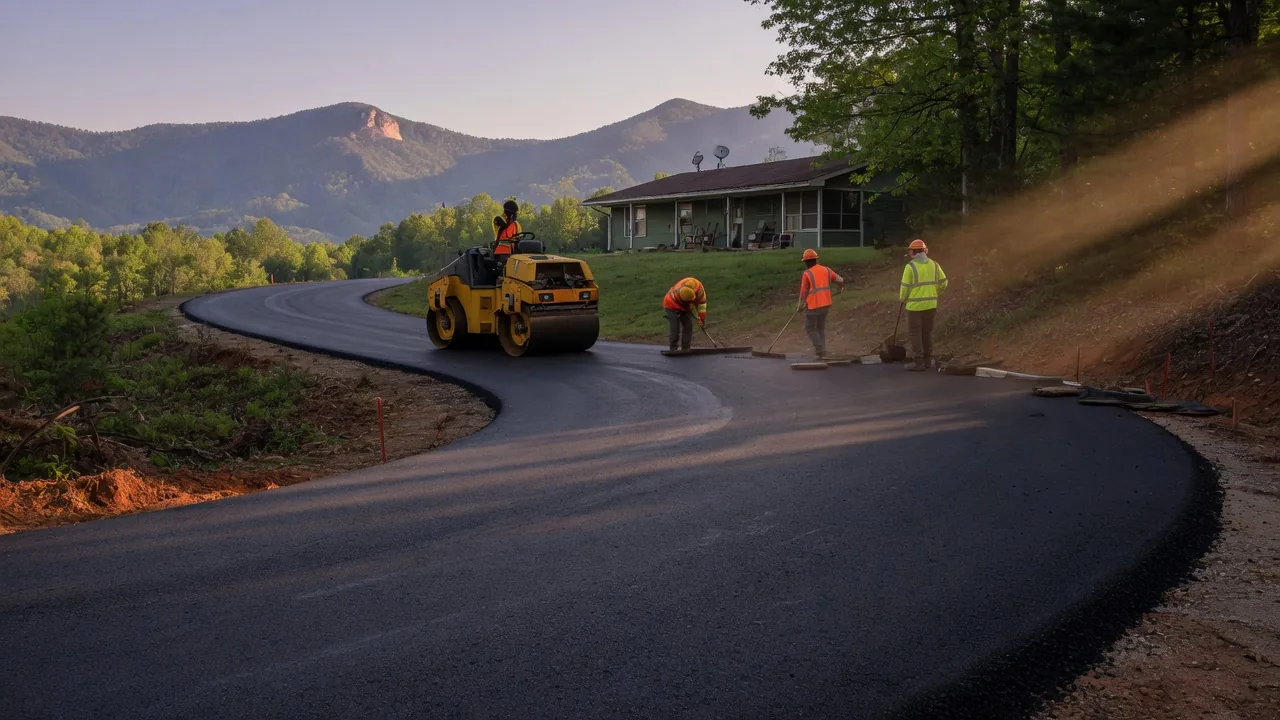
Drive through the older stretches of Flat Rock and you can read the elevation problem in the driveways. A lot that drops from the road to the house has to shed rain the whole way down; a lot that climbs from the road has to intercept it before it reaches the garage. Neither one is a paving problem in the ordinary sense. It is a grading problem with a hard surface poured on top of the answer.
Tar and chip, also called chip seal, is unusually well suited to that here. It stays somewhat forgiving of the small ground movements that come with clay soils and slope lots, it grips better than plain hot-mix on a grade, and it can be built in stages as the budget allows. What it will not do is survive standing water. If the crown is flat, the edges are lower than the center, or the ditch has silted in, the stone flees and the binder follows. Any honest scope for this county starts with which way the runoff goes and where it is supposed to end up.
How a grade-first scope gets built on a Blue Ridge foothill lot
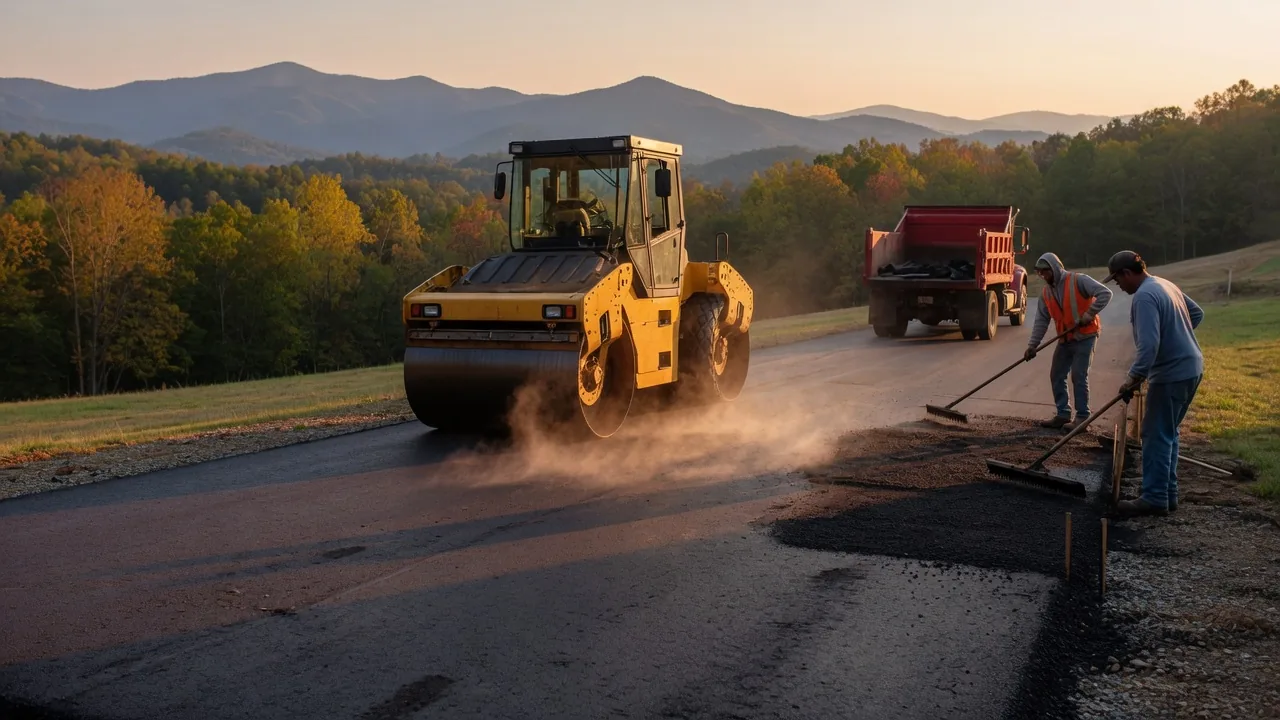
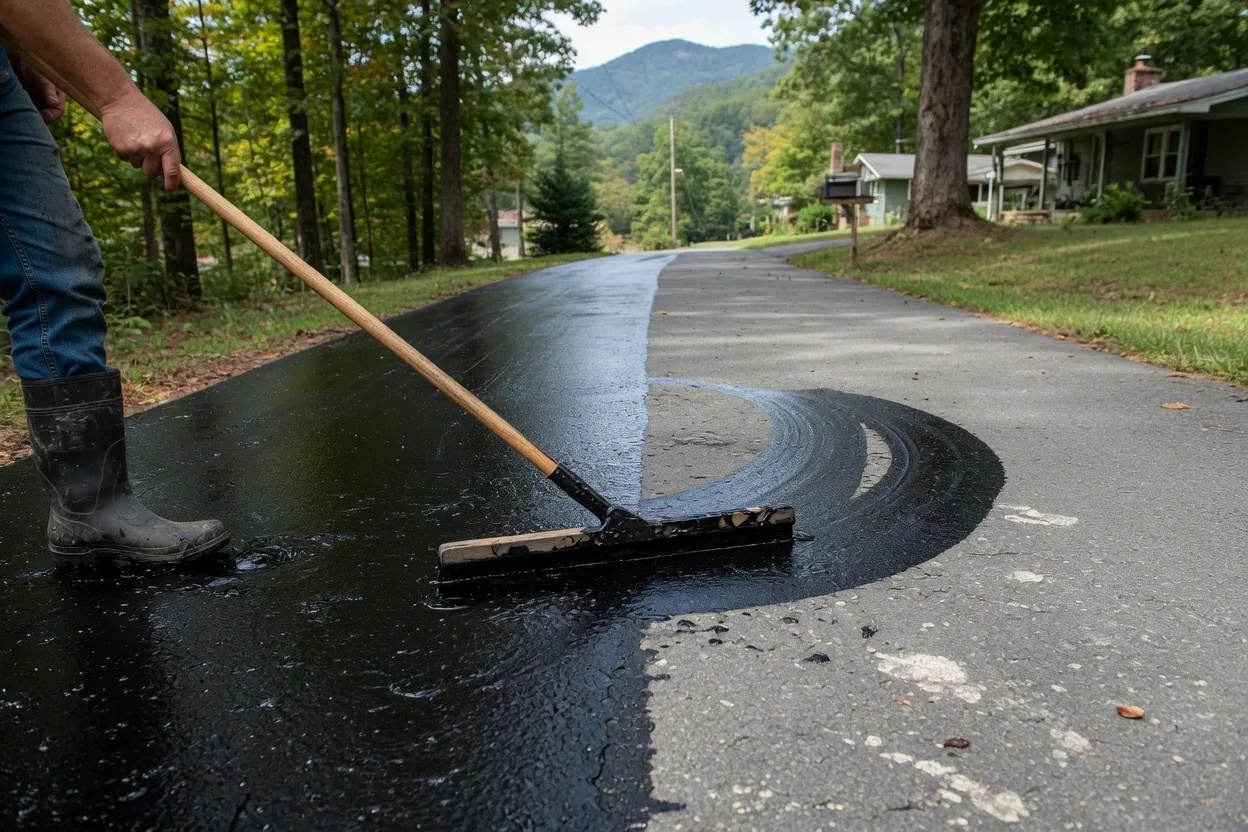
The sequence is not negotiable, and you should hear it in this order from anyone you hire. First, water: clean or cut the ditch, decide where the uphill neighbor's runoff enters and exits your lot, and set the driveway's cross-slope so sheet flow runs off the edge instead of standing in the wheel paths. Second, base: 4 to 6 inches of compacted crushed stone, deeper where the grade is steep enough that trucks will chew at it. Third, the surface: a sprayed binder followed immediately by washed chip stone, rolled in, then a second light pass of binder after the stone settles.
Flat Rock's housing mix reinforces the point. Older estates on tree-heavy lots often need root-zone work before any surface goes down, because a driveway built over active roots will crack along them. Newer builds on graded pads frequently inherit compacted fill that drains poorly and needs subgrade correction. Both cases get priced against the drainage plan, not against square footage, once you leave a simple flat run. If any part of the work crosses the public right-of-way, the driveway tie-in itself falls under state access permitting — the NCDOT Connect permit process is where that gets filed.
What tar-and-chip work costs in Henderson County
Ranges below reflect what this kind of work typically runs in the county, driven mostly by slope and drainage rather than by surface area alone. The full line-item picture is in the Henderson County cost breakdown; the working numbers are here.
| Scope | Typical range | What moves the price |
|---|---|---|
| Chip seal over sound existing surface (refresh) | $1.50–$2.75 per sq ft | Surface prep, crack sealing before binder |
| New tar and chip over prepared base (flat to moderate lot) | $3.50–$6.00 per sq ft | Base depth, runoff length, culverts |
| Steep-grade install with drainage corrections | $6.00–$9.00 per sq ft | Cross-slope, ditch work, edge stabilization |
| Full drive replacement with subgrade repair | $9,000–$22,000+ total | Fill correction, root removal, permitting |
| Ditch cutting, culvert, and edge work only | $900–$3,500 | Length, pipe size, outlet conditions |
Treat any bid that shows a single square-foot rate with no drainage line as incomplete rather than competitive. On a hill lot those corrective items are the job.
Frost, thaw, and the storm record on this side of the county
Henderson County sits high enough that winter freeze-thaw cycles do real work on a driveway surface. Water that sits in a low spot, freezes, and lifts the chip shortens its life faster than any amount of traffic. That is why crown and edge detail matter more here than they would on the coast. The federal record backs up the water-first framing: 16 declared events touch this county across 1978-2026, and the dominant family is storm and flood, not drought. Each one of those events pushed runoff at driveways that were graded for a drier assumption.
Practical takeaway for a homeowner: after a heavy event, walk the drive and look for where the water crossed rather than where it pooled. That crossing point is usually where the next failure will start.
Checking a paving contractor before you sign in Flat Rock
North Carolina regulates general contracting at thresholds set by the state licensing board, and driveway and paving work near that line should be verified directly with the NC Licensing Board for General Contractors rather than taken on a truck sign's word. Beyond the license check, three questions separate the crews that understand hill lots from the ones that do not: ask how they will set the crown and where the ditch outlet is on your property; ask what they do if they hit soft subgrade after stripping; and ask whether the chip size and binder type are specified in writing. A written specification is what lets you compare two bids that sound identical.
For surfaces that cross utility easements or drain toward a regulated waterway, local code and stormwater requirements can add steps, and the NC Office of State Fire Marshal code officials are the right reference point for what the adopted codes require. When you are ready to compare crews, the Flat Rock paving contractor guide covers what a proper first site visit should include.