Before the sprayer arrives, read what the asphalt is telling you
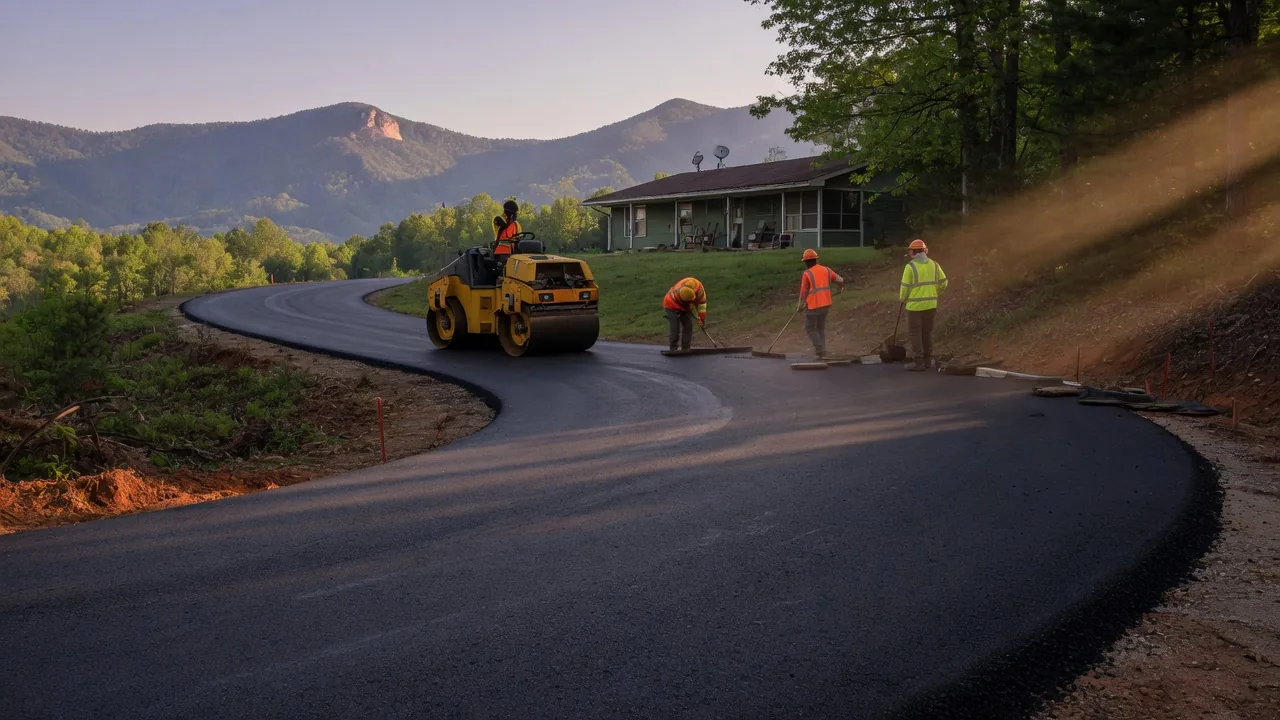
Fairview driveways do not look like city driveways. Most run long and sloped off the county roads, crossing culverts, dipping through shaded hollows, and climbing toward houses cut into grades where the surface sheds water faster than the base beneath it ever dries. That shape makes asphalt fail top-down and bottom-up at the same time, and the two failures call for completely different spending. A homeowner on a switchback off a ridge road can face both on the same driveway: hairline oxidation up top where the sun hits, and a soft, pumping base down where the shade never lifts.
The crack that matters is the one with a story. A sealed-over hairline on a solid slab is cosmetic. A crack with a rind of crushed aggregate beside it, or one that has visibly widened since last spring, is water moving under the driveway and being squeezed back out every freeze. A pothole is not a surface problem either — it means the base below has already lost its load-bearing and the asphalt is being asked to span a void. Alligator cracking running along a wheel path means the structure is spent and a patch will simply punch out next winter. Soft edges, where tires roll off the asphalt into dirt and the mat deflects underfoot, are the same base failure showing at the perimeter, often where runoff has been quietly washing the subgrade for years.
Our angle here is simple: on a Fairview driveway, decide between repair, recoat, overlay, or tear-out before anybody quotes a size and a price. The surface you see is the last thing that failed, not the first. A driveway in a sunbaked clearing off Cane Creek Road ages differently from one tucked under hardwoods near the Fairview forest edge, and the honest read is always the driveway in front of you, not a template.
Matching the scope to the failure, with realistic mountain-lot numbers
The table below reflects realistic regional bands for Buncombe County mountain-lot work, not a single quoted rate. Every one of these moves with access, slope, square footage, and how much prep the failure actually requires. A steep, narrow drive that a truck cannot back down cleanly costs more to work on than a wide, gentle apron, even at the same square footage.
| Scope | Typical per sq ft | Typical job total | When it's the right call |
|---|---|---|---|
| Crack fill + sealcoat | $0.15 - $0.35 | $350 - $1,100 | Sound asphalt, hairline and isolated cracks, full sun or filtered shade |
| Deep patch (potholes, alligatored areas) | $2.50 - $6.00 | $500 - $2,500 | Failure is localized; surrounding slab still carries load |
| Fabric-reinforced overlay | $1.75 - $3.25 | $1,800 - $6,000 | Widespread cracking but base is intact and drainable |
| Partial tear-out + rebuild + coat | $4.50 - $9.00 | $3,500 - $12,000+ | Base failure, spring heave, multiple potholes, standing water |
Run the numbers against the full Buncombe County asphalt cost breakdown before you commit, and use the sealcoating scope guide to sanity-check what a crew is proposing. A bid that quotes a per-square-foot sealcoat without addressing a single drainage point is not a bargain — it is a coat that will fail on schedule and take your money with it. On a Fairview lot, the cheapest line item is usually the one that ignores the reason the driveway failed.
Drainage and the mountain freeze-thaw cycle do the real demolition
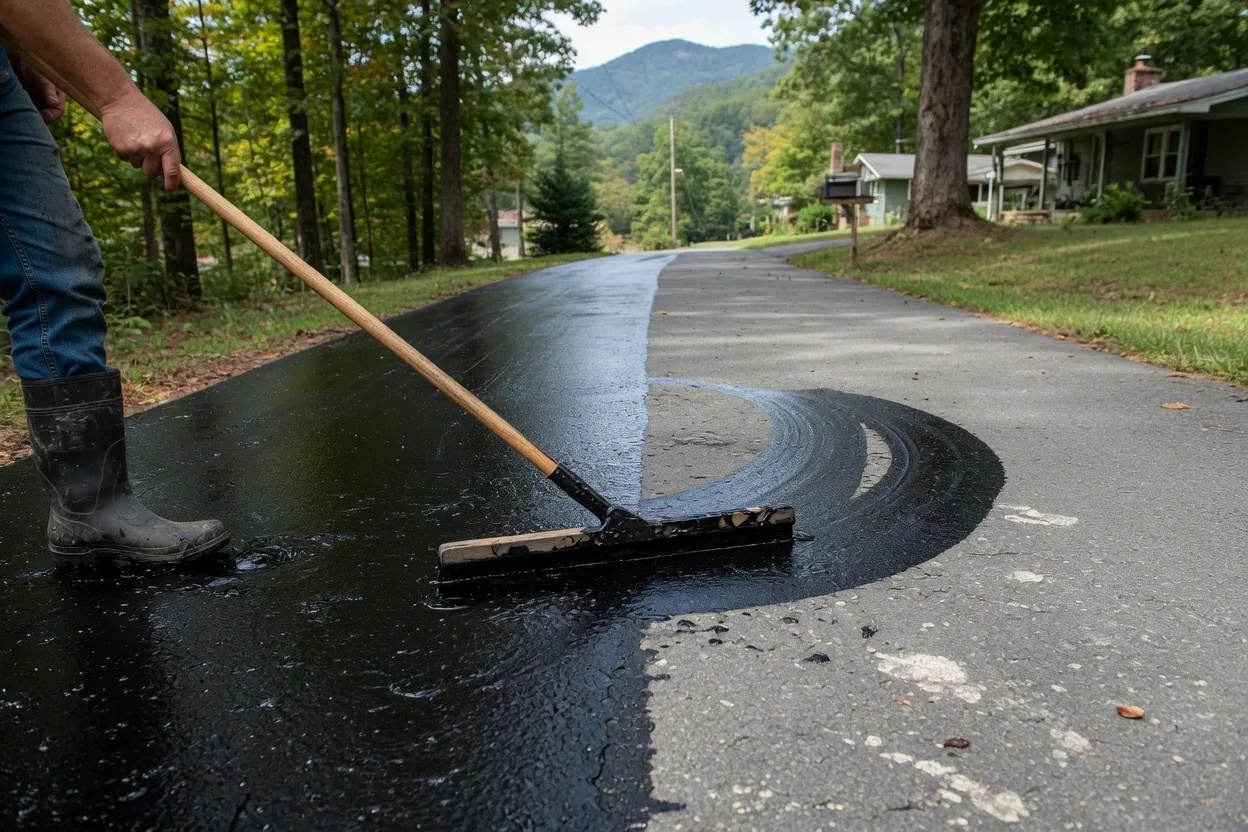
Buncombe County's federal disaster record — 19 declared events spanning 1973-2026 — reads overwhelmingly as storm and flood history. On Fairview's slopes that history translates into the freeze-thaw cycle doing the demolition work, season after season. Water enters a crack or a porous edge, freezes overnight, and pries the asphalt apart a little further each cycle. Sealcoat is not a waterproofing system for a driveway with a drainage problem; it is a wear surface and an oxidation barrier, and it will not survive a base that stays saturated through a wet mountain spring.
So the drainage conversation comes before the coating conversation. Where does the crown actually shed water? Does the culvert at the road apron run clear, or is it silted shut from last fall's leaf drop? Does the uphill neighbor's runoff cross your drive on the way down, and does it sheet across the asphalt instead of running beside it? Those three questions explain more failed Fairview driveways than any brand of sealer ever will. Correcting driveway drainage and street access points sometimes touches permit territory — the NCDOT handles driveway access on state-maintained roads, and NCDOT Connect is where those applications are filed. Confirm the surface drainage before anyone sells a recoat.
The NC Department of Insurance, Engineering & Codes division treats site grading and foundation drainage as first-class requirements for a reason, and the logic applies just as hard to the driveway approaching the house. If water is being directed at your foundation or pooling at the garage apron, that is a grading problem wearing an asphalt costume. Fix the water first, then talk about the surface.
Questions that separate a sealer from a paver
Fairview homeowners get burned by one of two things: a crew that seals over a base problem, or a crew that sells a tear-out where a patch would have held. Three questions cut through both.
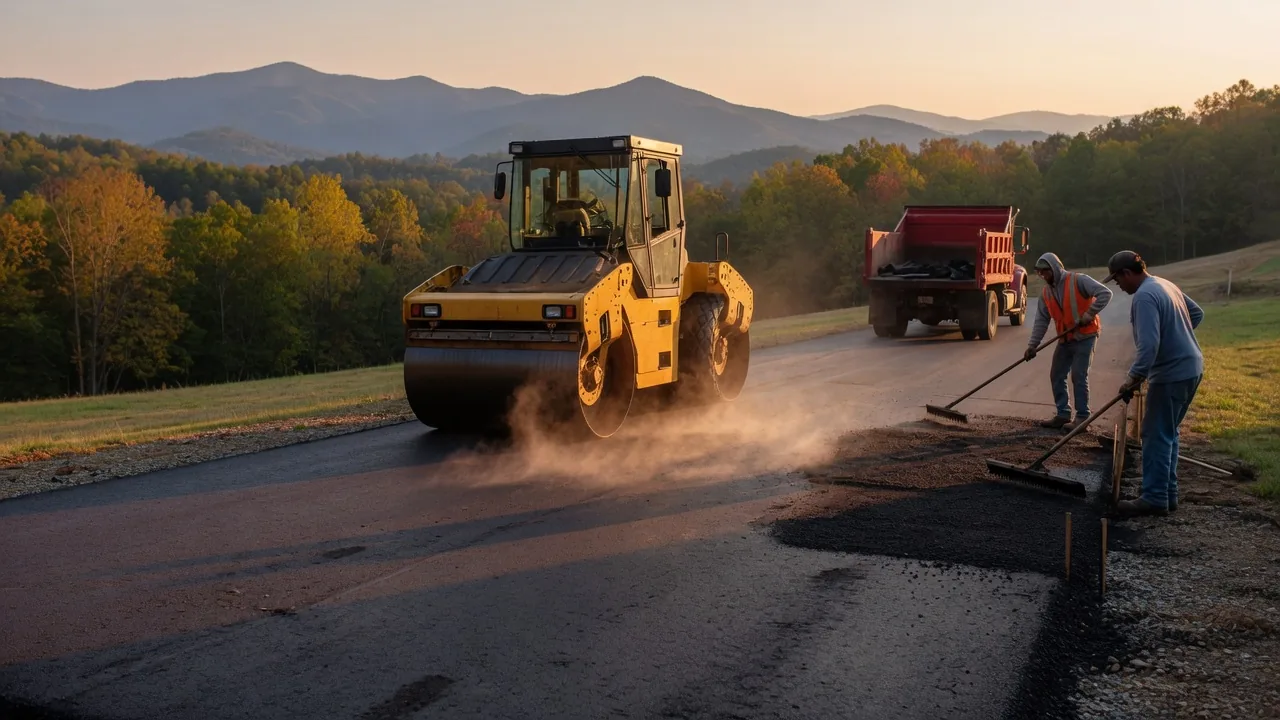
Ask what happens first. A crew that intends to fill cracks, clean, and only then talk surface is showing you its sequence. One that arrives with a sprayer and an estimate before a moisture or base assessment is showing you the opposite. Ask how they handle the failed areas. A pothole gets excavated to sound material, dried, and re-compacted; it does not get a pour-and-tamp. Ask whether the job sits on a road the state maintains. If the work crosses a state right-of-way, you want a contractor comfortable with the jurisdiction and the paperwork.
The typical consumer-protection standard applies: the NC Licensing Board for General Contractors sets the dollar threshold at which a job requires a licensed general contractor, and any contractor working on a home's structures should be verifiable there. Ask for references on slopes similar to yours — a driveway on a gentle grade near a Fairview valley floor fails differently from one cut into the ridge off a switchback, and a crew that has only worked flat ground may underestimate both the prep and the water. When it is time to get bids, the Fairview paving contractor directory is the place to start.