Where the money actually goes on a Candler driveway
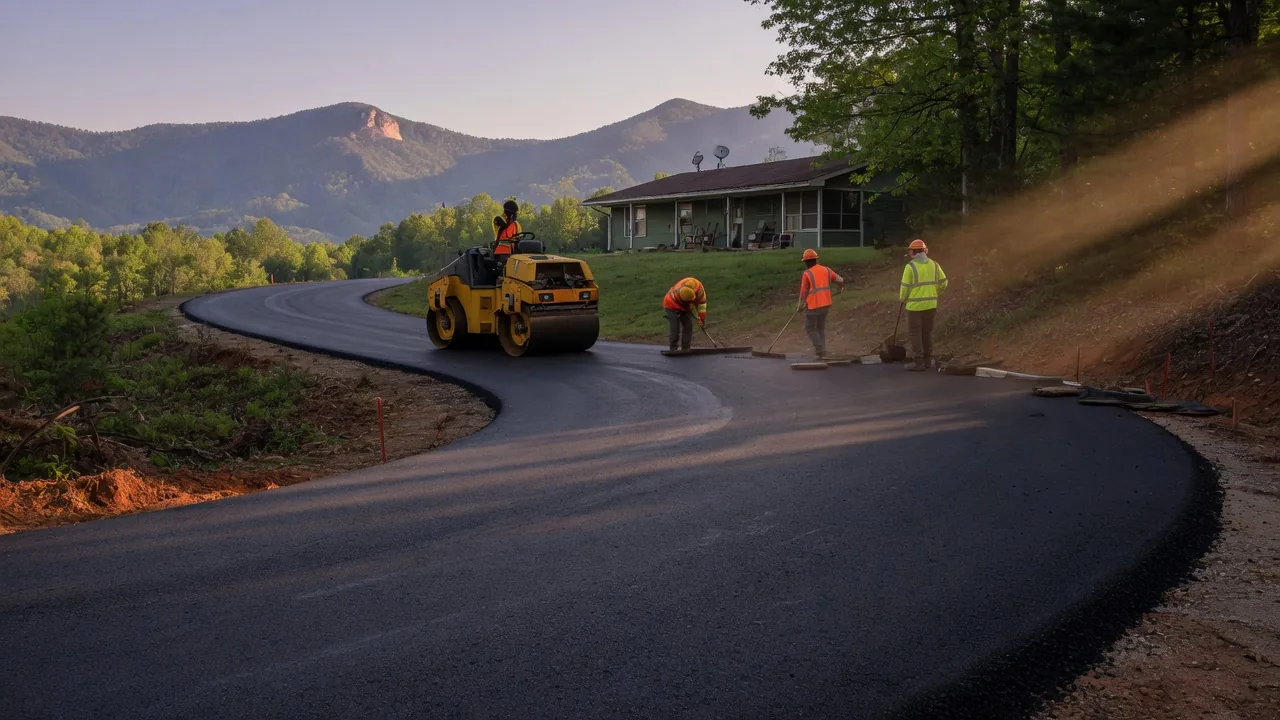
Two driveways on the same length in Candler can price $6,000 apart, and the asphalt tonnage is almost never the reason. On most jobs around here the number breaks into five moving parts: how much unsuitable soil has to come out, how deep the compacted base stone has to be, how the finished grade sheds water toward Hominy Creek or the property line, whether a culvert or ditch gets reworked at the state-road edge, and how much hand work the slope forces on the crew. A straight, dry, 60-foot pull off Sand Hill Road is a different job from a steep, wet run on a shoulder above the valley.
That is why a real quote starts with a walk of the grade, not a tape measure of length. Any bid that arrives without someone standing on the driveway has already skipped the line items that move the number.
The cost anatomy, line by line
The table below shows the scope items that show up on a typical Candler residential job, with honest regional ranges. Every property uses a different mix, so treat the total as a sum of the rows that apply to yours rather than a package price.
| Scope item | What it covers | Typical range |
|---|---|---|
| Site prep & unsuitable soil removal | Stripping topsoil, hauling off soft or clay-heavy material that will not support a base | $600–$2,400 |
| Grading & drainage shaping | Cutting the grade so water runs off the drive instead of pooling against the house or at the apron | $500–$2,000 |
| Base stone, placed and compacted | Crushed stone at the depth the subgrade demands, typically 4–8 inches compacted, sometimes in two lifts | $1,400–$4,200 |
| Culvert or ditch rework at the road | Replacing a crushed pipe or reshaping the roadside ditch so the apron does not flood | $700–$3,000 |
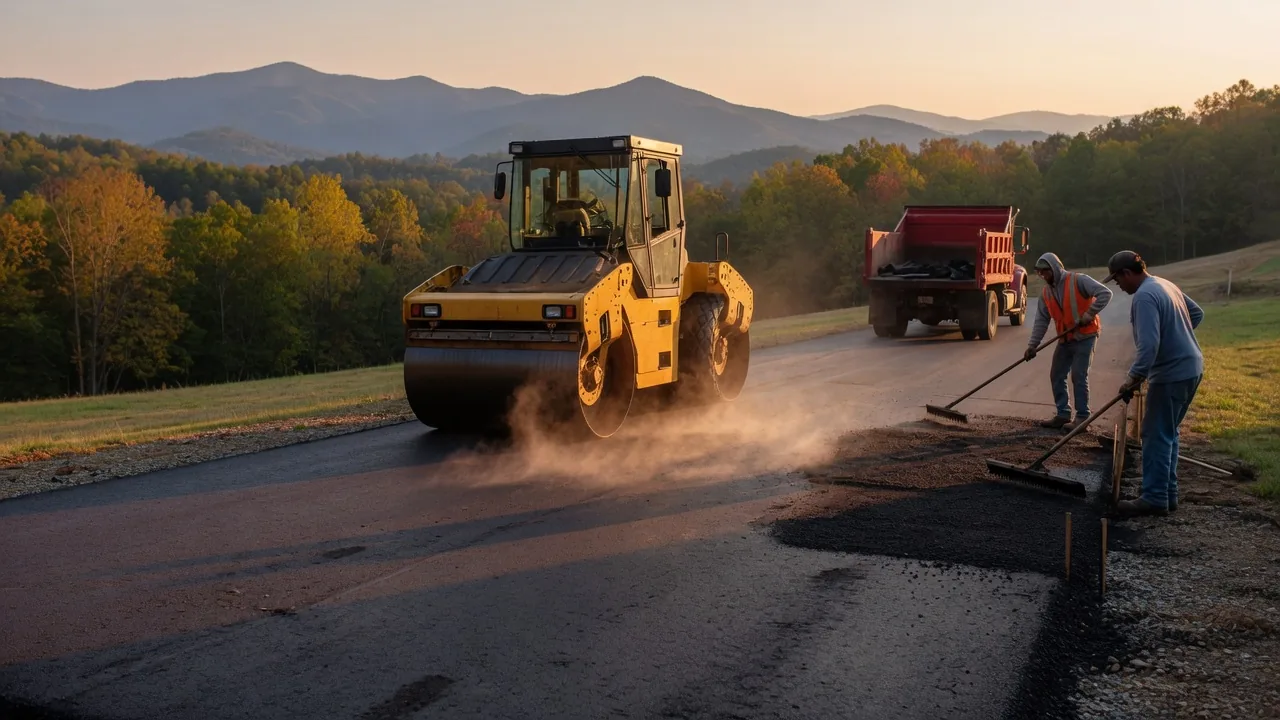
| Asphalt, 2-inch compacted surface course | Hot-mix placed and rolled, standard residential thickness | $2,000–$4,500 |
| Apron tie-in at the state road | Cutting the existing edge and matching the road grade at the entrance | $400–$1,500 |
Most jobs combine four or five of these rows and land between $3,200 and $9,500. The full county picture, including how Candler sits against other Buncombe towns, is in the Buncombe County driveway cost breakdown.
Why the grade off these ridges costs more than the asphalt
Candler sits in the valley and on the shoulders that climb out of it, and water here does what water does on a slope: it runs downhill fast and it runs somewhere. A driveway cut into the shoulder above the valley either sheds that water correctly or it becomes the drainage channel for everything above it. The fix is usually a shaped crown, a swale on the uphill side, and a base that will not pump when the ground is saturated. None of that is asphalt, and all of it is on the invoice.
Federal disaster history backs the point. 19 declared events touch Buncombe County across 1973-2026, and the bulk of them are storm and flood family. Most of those events put water on driveways and aprons that were built expecting less of it. The National Weather Service tracks the rainfall that drives it, and the residential code treats drainage as a requirement, not an upgrade — see the NC Department of Insurance Engineering and Codes division. Repairing a driveway that pumped itself apart costs more than building the base to resist it once.
Permits, aprons, and the state road
Any work that changes how a driveway meets a state-maintained road runs through NCDOT. A new or reconstructed entrance typically needs a driveway permit, and the rules cover sight distance, culvert sizing, and how the apron is built. The overview lives at NCDOT, and applications run through NCDOT Connect. A contractor who does this work regularly will tell you before you sign whether your job needs one, and will know the difference between resurfacing an existing apron and cutting a new one.
Then there is the contractor side. North Carolina requires a general contractor's license for projects above a set threshold, and that threshold moves — the current rules are on the NC Licensing Board for General Contractors site. For most single-family driveways the job sits below the line, but the question is worth asking, especially if the scope grows into a parking lot, a road, or anything commercial. See the asphalt paving overview for how the trade is organized across project types.
Reading a quote before you sign it
Three things separate a Candler-ready bid from a generic one. First, base stone depth is stated in inches compacted, not in vague terms — that single number is where cheap quotes hide. Second, drainage is a line item, not an assumption; if the bid has no grading or swale row and your drive sits on a slope, the water is still going somewhere when they leave. Third, the apron scope is spelled out: cutting the existing edge and reworking the ditch at the entrance, or just paving up to it and hoping.
Homeowner guidance from HUD and the technical standards from the International Code Council both push the same direction: durability comes from what is under the surface, not the surface itself. When you are ready to talk scope, the Candler driveway paving page covers how we sequence the work from first walk-through to final roll.