Two inches or three: what Asheville grades and truck loads actually call for
Drive the neighborhoods off Merrimon Avenue or up the slopes behind West Asheville after a February thaw and the failed patches announce themselves — shallow, already raveling, edges peeled back from the surrounding asphalt. The culprit is almost never the brand of cold patch. It is lift thickness and mix design. Western North Carolina sits in one of the Southeast's more aggressive freeze-thaw bands because the French Broad valley floor warms during the day while the surrounding ridgelines stay cold, and that gradient pumps water into pavement, freezes it overnight, and heaves. A one-inch smear has no structural depth to resist that movement.
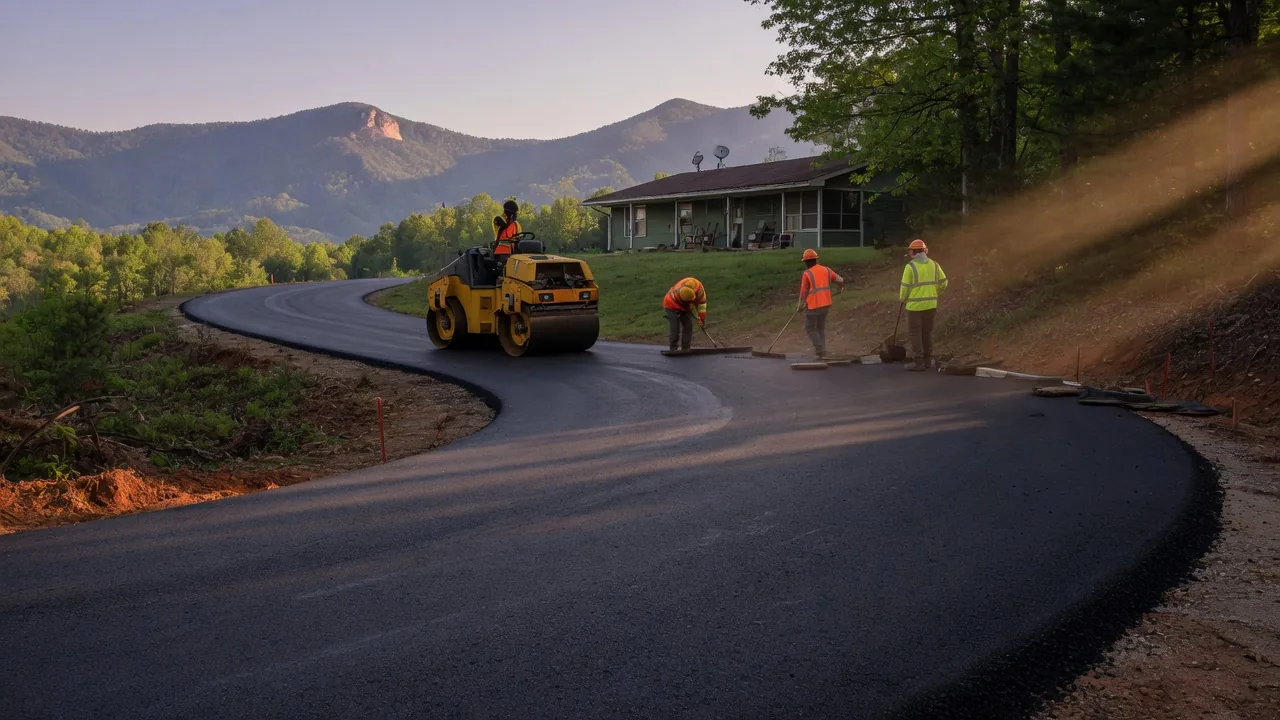
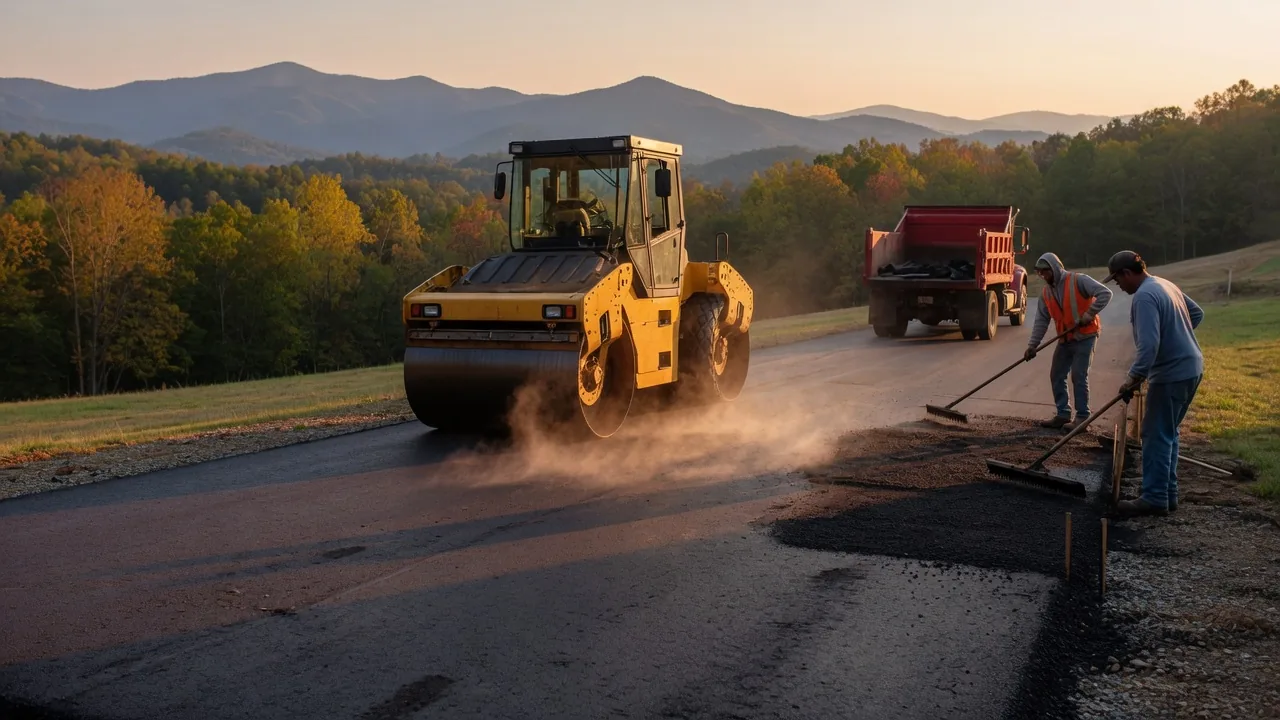
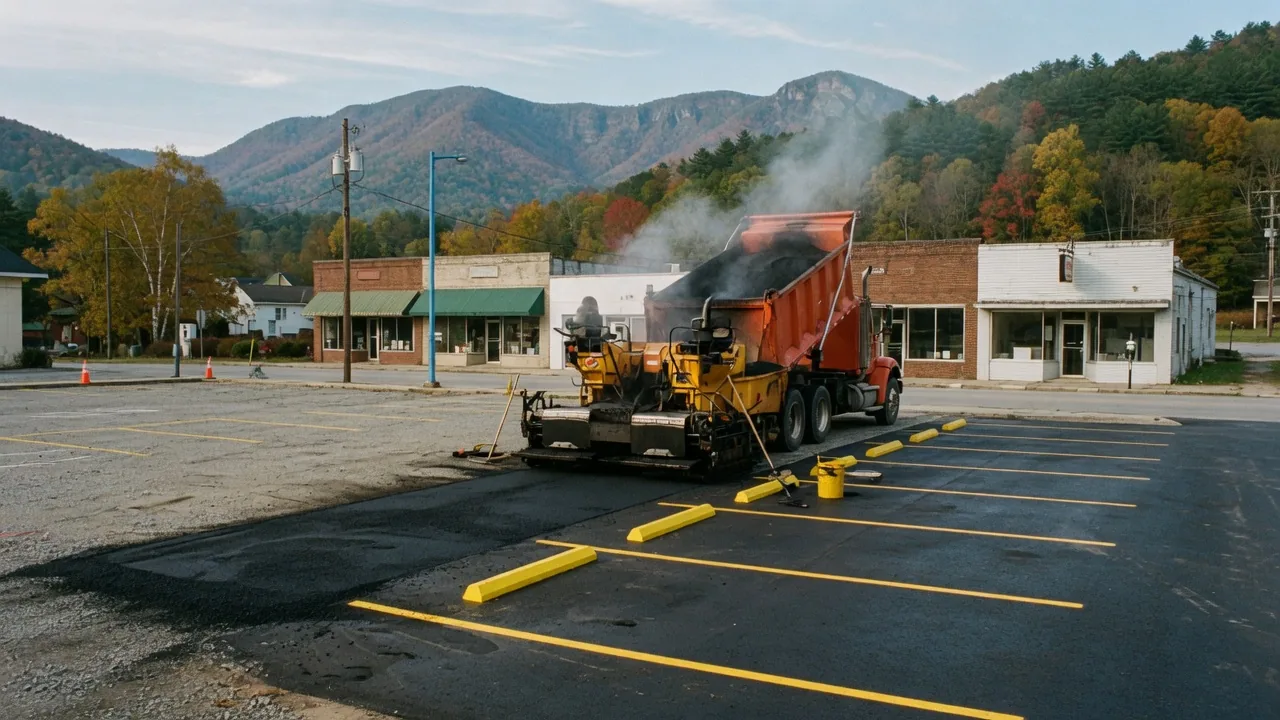
A properly built patch is cut square, edged down to sound asphalt, tacked, and filled in compacted lifts. For residential driveways and light parking on the valley floor, two inches compacted is the honest minimum. For commercial lots, dumpster pads, and anything carrying delivery trucks, three inches or more is the norm — and on steep grades, two smaller lifts compact far better than one thick pour, locking into the surrounding mat instead of sliding. The mix matters just as much: hot-mix asphalt placed at the right temperature bonds to the existing pavement in a way cold patch simply cannot, which is why the same hole patched in July with hot mix commonly outlasts a winter cold-patch job by years. Scope matters too — a true pothole is a structural failure, and the right fix depends on the asphalt driveway repair approach the site actually needs.
How water, grade, and Buncombe County traffic turn cracks into craters
Water is the first mover. It seeps into a crack, expands when it freezes, widens the crack, and repeats until the asphalt around it crumbles. Buncombe County has seen 19 federal disaster declarations across 1973-2026, and saturated soils run through that record — pavement that was marginal in a dry year becomes a pothole field in a wet one. The National Weather Service freeze-thaw cycle for the Asheville valley is sharper than most of the Southeast because of the elevation swing between the valley floor and the ridges ringing it.
Traffic loads finish the job. Asheville's streets carry delivery vans, garbage trucks, and construction traffic that concentrate enormous weight on small areas — especially at turns, cul-de-sac heads, and dumpster pads. That is why a pothole at an apartment-complex entrance is often deeper and faster-growing than one mid-block: every turning axle scrubs the edge. The joint where pavement meets a driveway apron is another chronic failure point, the same problem covered on our driveway potholes page. Older milled streets near downtown, where the pavement is thinner than a modern section, tend to show potholes earlier in the season than newer subdivision asphalt on the ridgelines.
Cold patch, hot mix, or full-depth: matching the method to the failure
Three approaches dominate residential and light-commercial pothole work in this region:
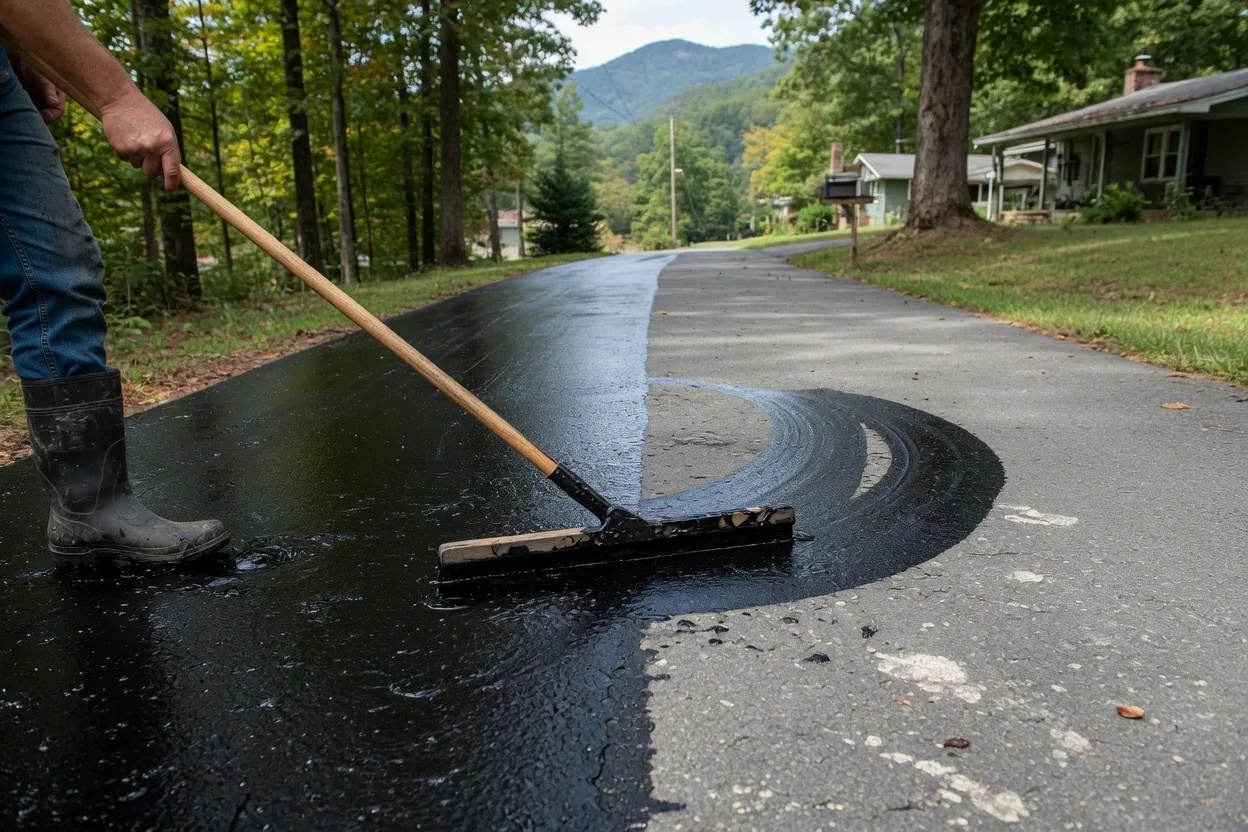
- Cold patch (temporary). Fast, cheap, and the only practical option in winter when hot-mix plants are closed. Expect it to move, rut, or pop out within one or two seasons. Fine for safety until a permanent repair is scheduled.
- Hot-mix patching (semi-permanent). The hole is squared, cleaned, tacked, and filled with hot asphalt in compacted lifts. This is the standard repair for driveways and parking lots and should last several years if water is controlled.
- Full-depth reconstruction (permanent). When the base stone is saturated or the pothole is really a sinkhole, the failed section is removed down to stable subgrade, rebuilt with compacted aggregate, and surfaced with new asphalt. This is the only honest fix for chronic repeat potholes.
Timing decides more repairs than technique does. Hot-mix work needs dry pavement and air temperatures roughly above 50°F for proper compaction, which in Asheville usually means late spring through fall is repair season, with winter cold-patching as a bridge. Chasing a hot-mix repair in January is how contractors end up repatching the same hole in April. If a repair touches drainage that discharges to a stream or storm system, NC Department of Environmental Quality rules may apply, and sediment controls are worth asking about before anyone breaks pavement.
What pothole repair costs in and around Asheville
Pricing varies with access, depth, and whether the failure is isolated or part of a larger deteriorated area. These are realistic regional ranges for planning, not quotes:
| Scope | Typical price range |
|---|---|
| Single small pothole, cold-patch (temporary) | $75–$200 |
| Single pothole, hot-mix, squared and compacted | $150–$500 |
| Multiple potholes, residential driveway | $400–$1,500 |
| Parking lot patching (per square foot) | $3–$7/sq ft |
| Full-depth repair with base rebuild (per square foot) | $8–$15/sq ft |
Minimum job charges are common because mobilizing a crew and a hot-mix truck costs the same whether the repair is one hole or ten. That is why bundling repairs is usually cheaper per pothole, and why a driveway with six holes often prices out at less per hole than a single isolated one. For a broader sense of what asphalt work runs in this market, see the asphalt repair cost page.
Permits, licensing, and verifying who is actually doing the work
Most pothole patching inside private property — driveways, parking lots, apartment entries — does not require a permit. Work in the public right-of-way, or any change to a driveway connection at a state-maintained road, does. The NCDOT issues driveway and street-access permits for state roads in and around Asheville, and Buncombe County or City of Asheville rules govern local streets. Contractors performing structural or paving work above certain thresholds must be licensed by the North Carolina Licensing Board for General Contractors; ask for the license number and verify it before signing.
Building codes administered through the NC Department of Insurance also set standards for parking-lot construction and drainage that affect how a permanent repair should be built. A contractor who cannot answer basic questions about compaction, lift thickness, and where the water goes is a contractor who will be back next year patching the same hole. Because mountain driveways often drain toward a house rather than a street, ask specifically how the repair will move water away from the foundation before work starts.