Reading a Maggie Valley bid: the four line items that actually move the number
A driveway climbing off Soco Road, a switchback haul up toward Plott Creek, and a flat parking pad on the valley floor near Jonathan Creek Road look like the same product on a business card. They are three different jobs before anyone touches a crack. The line items that move price in this town are grade, water control, base condition, and access — and the way a bid is written tells you whether the contractor priced all four or just eyeballed the surface.
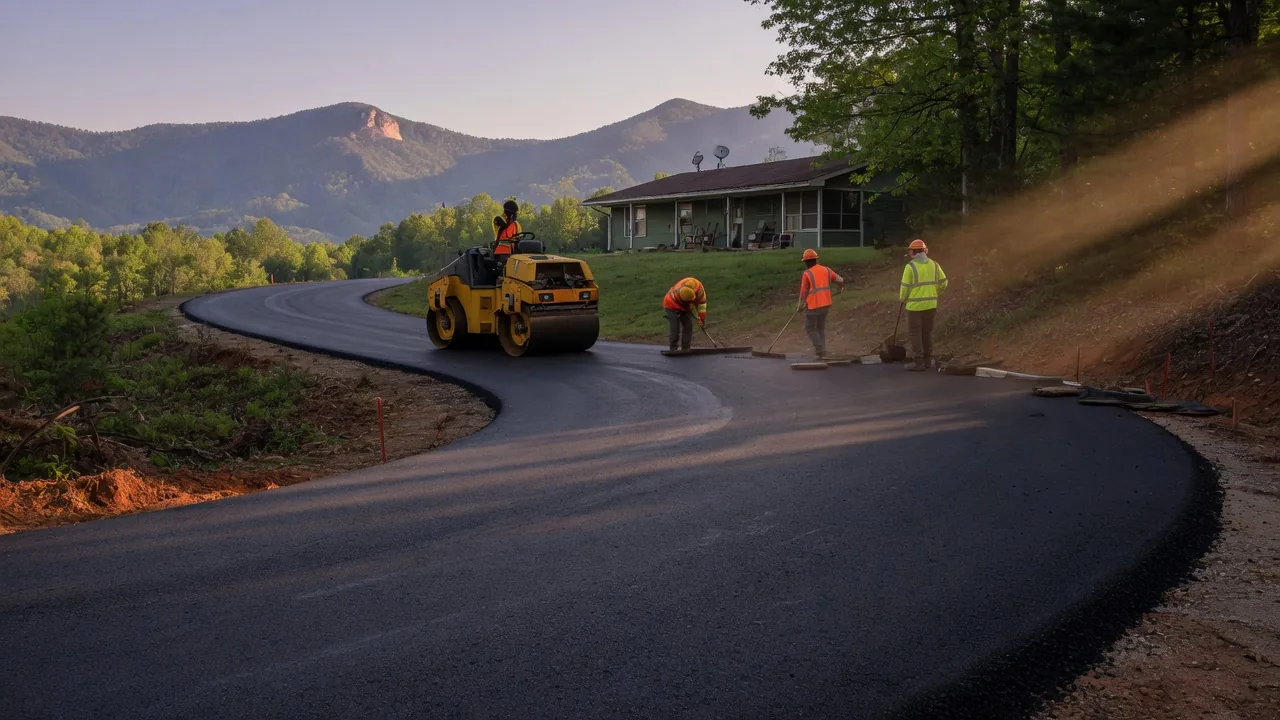
Grade is first because it multiplies everything downstream. On a steep drive, mix has to be hauled and placed on an incline, compaction is harder to verify, and any patch has to be feathered so it doesn't become a speed bump that catches plow blades and runoff. Water control is second because a drive cut into the hillside receives water from above as well as rain falling on it. Where the uphill side has no ditch or swale, that water tracks down the asphalt edge and undermines it, and a repair that ignores the source is a re-run in two or three winters.
Base condition is the quiet line item. A short, flat, intact drive with surface spider cracks prices completely differently from a fifteen-degree climb with alligator cracking and a failed culvert. When a quote lumps base repair, patch depth, drainage, and tonnage into a single number, you've lost the ability to tell which line was inflated. The asphalt driveway repair overview walks through the standard scope items, which is the fastest way to compare bids fairly.
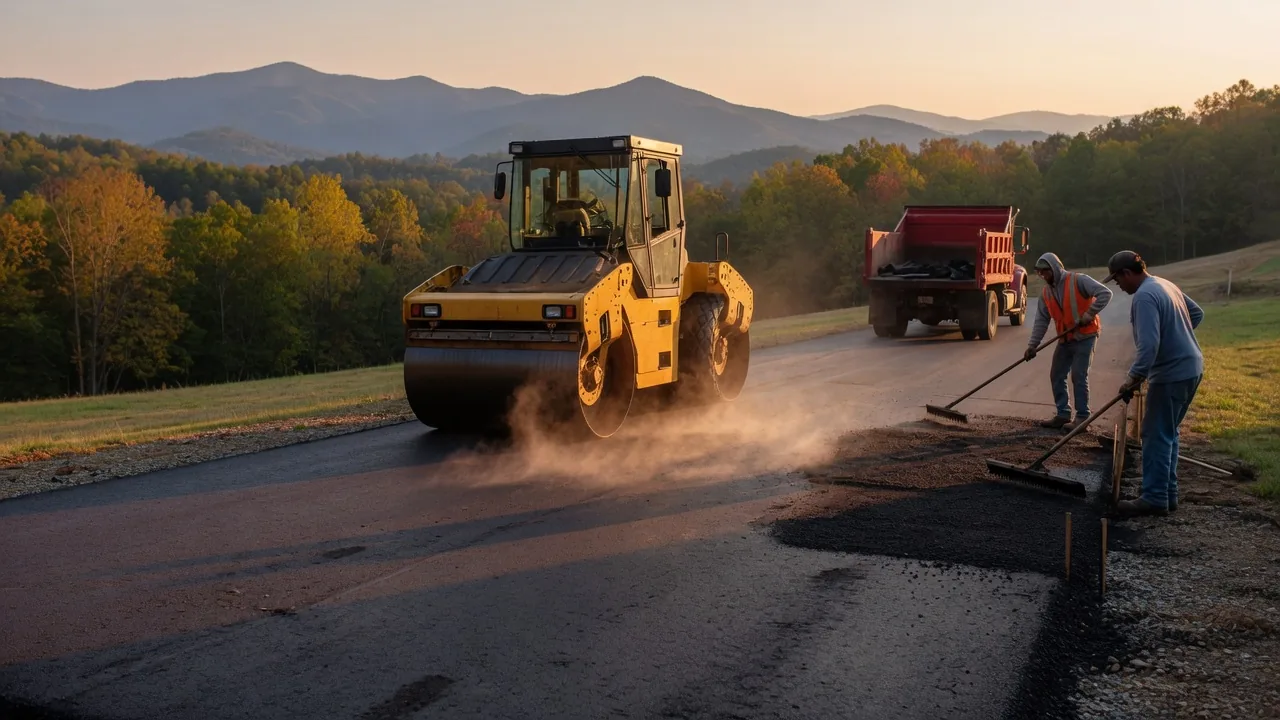
Access is the one homeowners forget. A drive too narrow or too steep for a tandem dump truck or a roller means smaller loads, more trips, and sometimes hand work. That shows up as a mobilization line or a minimum-tonnage charge, and it isn't padding — it's the physical reality of getting hot mix to the work zone before it cools.
Haywood County pricing: scope versus typical range
Regional bands for Maggie Valley and the surrounding Haywood County area are below. Treat these as ranges to compare against bids, not as quotes — every drive is measured before a number is real, and the town of Waynesville, the county seat down the valley, sits in a milder, flatter setting than most ridge roads here, so prices vary by address. The Haywood County cost breakdown carries the same table with more line-item detail.
| Scope | Typical range |
|---|---|
| Crack fill (hot pour) — small drive | $350-$700 |
| Patching — potholes, broken edges | $500-$1,800 |
| Culvert / drainage correction | $900-$3,500 |
| Edge repair and shoulder rebuild | $700-$2,400 |
| Overlay (1.5"-2") — typical residential drive | $2,500-$5,500 |
| Partial reconstruction (base + asphalt section) | $4,500-$9,000+ |
Steep drives under dense tree canopy and drives with failing culverts sit at the top of these bands. If a bid comes in well under, ask what's not included — drainage, prep, and tonnage are the usual omissions. If it comes in well over, ask which of the four line items above drove the number up.
What the valley's freeze-thaw cycle does to a drive
Haywood County's mountain winters produce repeated freeze-thaw cycles, and that is the single biggest driver of asphalt failure here. Water seeps into a hairline crack, freezes overnight, expands, and widens the crack by spring. Tree-shaded drives never fully dry, so the cycle runs longer each season — a shaded ridge drive can hold moisture well into the morning while a sun-exposed drive on the valley floor is already dry. The National Weather Service publishes freeze warnings that effectively map the repair season, and most durable patch and overlay work happens between late spring and early fall.
Elevation matters within the county too. A drive near the top of a ridge or in a hollow that holds cold air sees more freeze cycles than one closer to town at Waynesville's lower elevation, even a few miles apart. That is one reason two neighbors can get very different quotes for what looks like the same crack problem. The season also affects what a crew will promise: late-fall patch work with cold-mix is temporary by nature, and a contractor who says so is being straight with you.
Fill, patch, overlay, rebuild: choosing the right rung
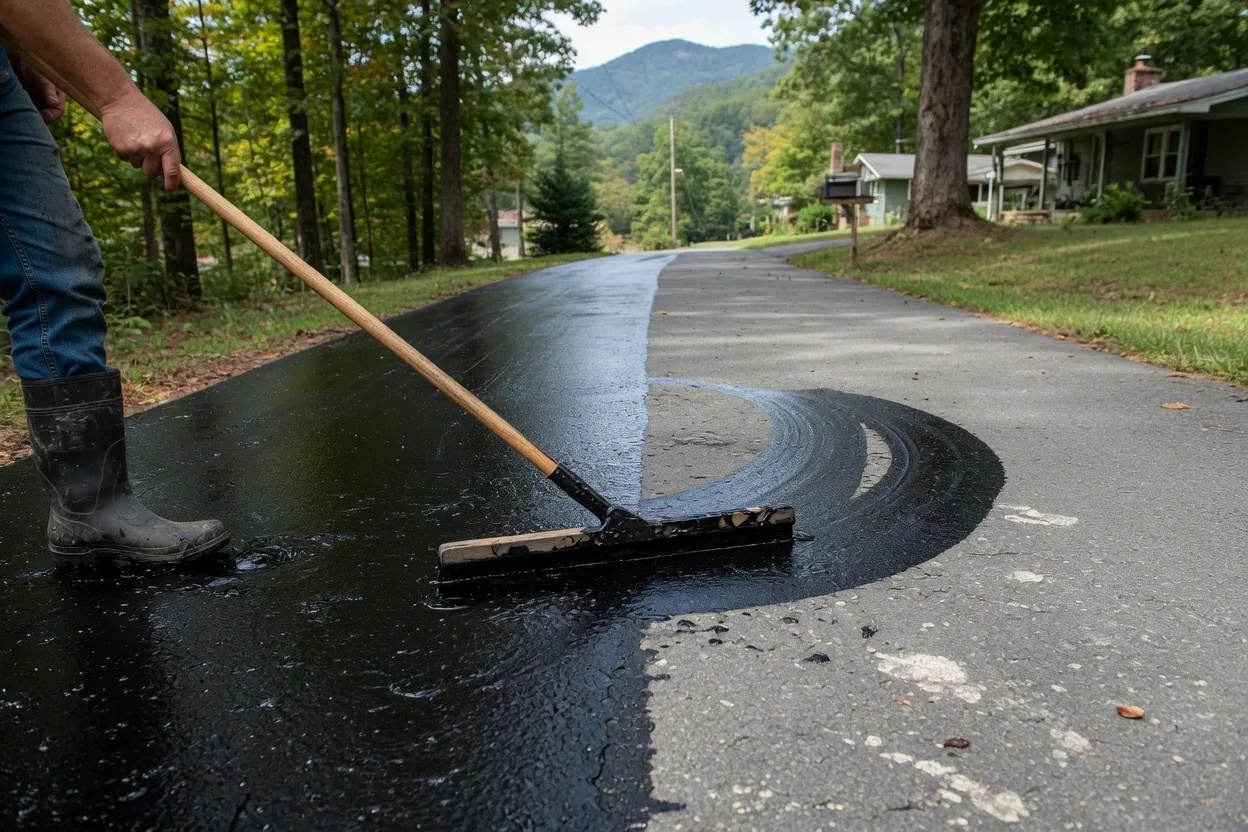
Asphalt repair is not one product. It's a ladder, and the right rung depends on what's actually failed. Hairline cracks get hot-pour filler to stop water intrusion. Potholes and small broken edges get patched. Alligator cracking — the web pattern — means the base beneath has failed, and patch material over a failed base pops back out within a season or two. Widespread alligator cracking across a drive usually points to overlay or partial reconstruction, and a crew should probe the base before quoting either.
That distinction matters because a drive that needs base work, quoted as a simple patch, is cheap now and expensive in eighteen months. The International Code Council publishes material and site standards that many jurisdictions reference for paved surfaces, and the underlying principle is simple: the surface only performs as well as what's under it. On these slopes, the subgrade and base are doing as much work as the asphalt.
One more local habit worth knowing: because so many drives here dead-end into a hillside or a wooded lot, turnaround areas take the worst beating. A truck or a plow turning on a shaded pad chews the edge, and edge repair is its own line item for a reason. Rebuilding the shoulder and re-compacting the edge often buys more service life than a thin overlay over the whole drive.
Who does the work, and when a permit enters the picture
Most routine repair — crack fill, patching, overlay on an existing footprint — does not trigger a permit. Work that changes the driveway's footprint, or connects differently to a state-maintained road, may need NCDOT review: see NCDOT Connect for driveway permit guidance, and NCDOT for the broader driveway and street access rules, before promising a new layout. For larger reconstruction, the NC Licensing Board for General Contractors sets the dollar threshold at which a licensed general contractor must be involved.
That threshold matters in the mountains because steep-drive reconstruction can involve retaining walls, drainage structures, and base engineering that cross from paving into general contracting scope. The NC Department of Insurance, Engineering and Codes carries related construction and code information for the state. Before hiring, ask for the license, ask for insurance certificates, and ask who is actually driving the equipment versus who is selling the job. When you're ready to collect bids, the Maggie Valley paving contractor directory is the place to start.
Sequencing the work around season, slope, and storms
Asphalt needs warm, dry conditions to place and cure properly. On a steep, shaded Maggie Valley drive that narrows the work window, and it also raises the cost of any delay because bypassed water damage keeps compounding while you wait. Federal disaster history in this county — 19 declarations across 1973-2026, overwhelmingly storm and flood related — is a reminder that water, not traffic, kills most driveways here. See the EPA for stormwater-friendly paving considerations if your drive discharges to a drainageway.
Practical order of operations: fix drainage and edges first, then address the surface. Repairing asphalt over a failed culvert or an eroding shoulder is the most common way homeowners here pay twice for the same drive. If a storm has recently washed out a shoulder or buried a culvert inlet, deal with that before scheduling any overlay, because the new asphalt will sit on ground that is still moving.
Finally, think about how the drive will be used in winter. Plowing and sanding a steep shaded surface is hard on edges and seams, so where repairs are placed matters as much as how deep they are. Getting the water off the drive and keeping the edges solid is what lets the repair survive its first February, which is the real test up here.