The line items that actually move a Clyde conversion bid
Two driveways of identical length in Clyde can differ by five thousand dollars, and it is almost never the asphalt itself. The bid movers here are the ones nobody advertises: how deep the existing gravel has compacted, whether the drive drains toward the house or the road, whether a culvert exists or needs to be installed, and whether the driveway apron meets a state-maintained road (which pulls in a permit the homeowner didn't budget for). A gravel base that has been driven on for fifteen years is often a ready-made subbase — but only after it is graded and re-compacted. A base that was dumped and never compacted is a removal job. Those two driveways price like different projects, because they are.
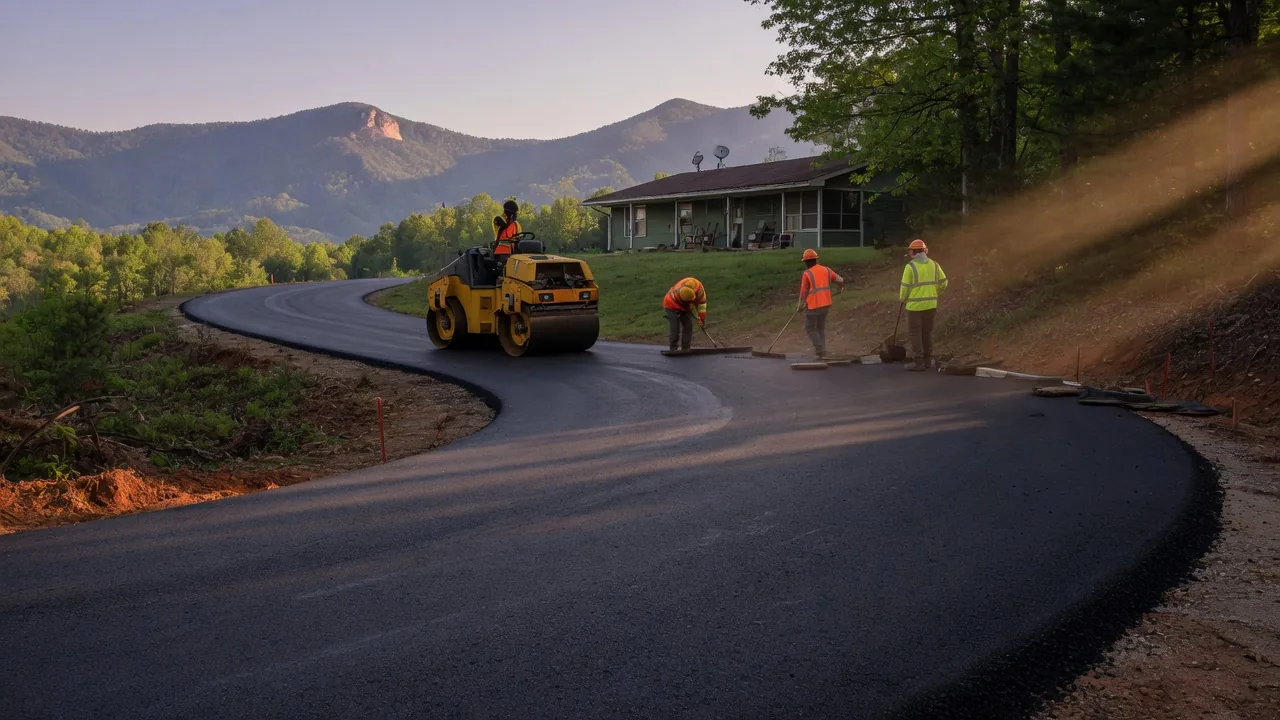
Clyde sits just east of Waynesville in Haywood County, and the town's housing stock splits into two distinct driveway problems. Along the Pigeon River bottom — the flat stretches off old Highway 19/23 and the side roads that drop toward the water — the issue is almost always water and soft ground. Up the hollows and ridges that climb off the valley floor, the issue is grade: a gravel drive on a slope erodes its own base from underneath, and by the time a homeowner calls about paving, five or six inches of stone have migrated into the ditch below. That migration is invisible until you walk the drive and notice the crown is gone.
What each scope line typically costs in Haywood County
Ranges below assume a driveway of roughly 12 feet wide and 80–150 feet long, which is the common shape for single-family lots around Clyde and the eastern edge of Waynesville. The full breakdown lives at the Haywood County asphalt cost table; the range grid here is what you actually see on a conversion:
| Scope item | Typical range | Why it moves |
|---|---|---|
| Grade and re-compact existing gravel | $600–$1,800 | Deeper rutting means more passes |
| Add and compact new base stone | $900–$2,400 | Soft spots under the old drive |
| Culvert replacement (per culvert) | $700–$2,200 | Diameter, length, and riprap on outlets |
| Drainage correction (swales, ditching) | $500–$2,000 | Slope and where the uphill runoff goes |
| Haul-off of excess gravel and spoils | $400–$1,500 | Volume and dump proximity |
| Asphalt binder course (per ton installed) | $95–$145 | Local plant pricing and lift thickness |
| Asphalt surface course (per ton installed) | $100–$160 | Mix design and total tonnage |
| NCDOT driveway permit (when required) | permit fee varies | Only when the apron meets a state road |
Total conversion for most Clyde residential drives lands between $4,200 and $13,000, with the middle of that band being the honest expectation for a straightforward lot.
Where does the low end come from? A flat, well-drained, already-compacted gravel drive that only needs grading, one binder lift and one surface lift. Where does the high end come from? A slope lot with a failed culvert, a wet weather spring surfacing under the base, and a hundred feet of drive that has to be rebuilt rather than just re-graded. Neither of those is unusual in Haywood County — both show up on the same road, sometimes on adjacent properties.
Where Clyde sits, and why that shapes the base work
Clyde is a small Haywood County town on the Pigeon River, just east of the county seat at Waynesville, and the terrain splits two ways that matter for a driveway. The river-bottom lots are flat but water-table-adjacent, so base prep has to account for ground that stays damp. The lots climbing off the valley floor toward the ridges are the opposite problem: a gravel drive on a grade erodes its own base from underneath, and that erosion is what makes the conversion a bigger job than the homeowner expected. The county gets serious water history — 19 federal disaster declarations touch this area across 1973-2026 — and the National Weather Service keeps the flood and heavy-rain record for the Pigeon River corridor. If your gravel has been washing out annually, that is a base problem first and a paving problem second.
The other Clyde-specific factor is the apron. NCDOT maintains several of the state roads running through town, and where a private drive meets one of those roads, the apron is governed by NCDOT standards — not by whatever the paving crew prefers. That means proper culvert sizing, a specific flare, and clean sight lines. A crew that quotes a conversion without asking which road your driveway touches is a crew that has not done many of these in Haywood County.
What changes once the driveway becomes asphalt
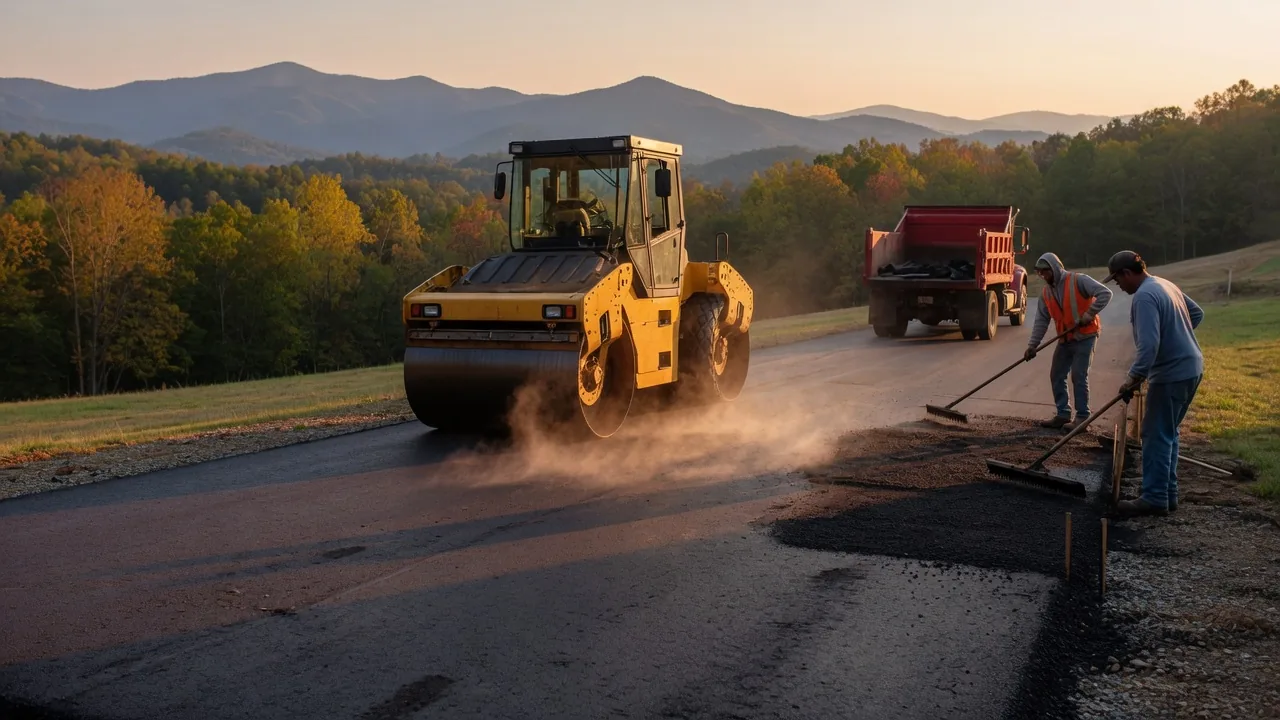
The reason gravel-to-asphalt conversions hold up here is that asphalt locks the base in place. A gravel drive sheds stone into the ditch, gets ruts after a wet winter, and needs regrading every few seasons. Asphalt over a properly prepared base stops that cycle — but only if the base was fixed first. Paving over a soft or draining-wrong base just hides the problem under a surface that cracks within a couple of winters. The gravel-to-asphalt conversion guide walks through the prep sequence in detail, and it is worth reading before you take bids so you can tell which quotes include real base work and which are just a paving price.
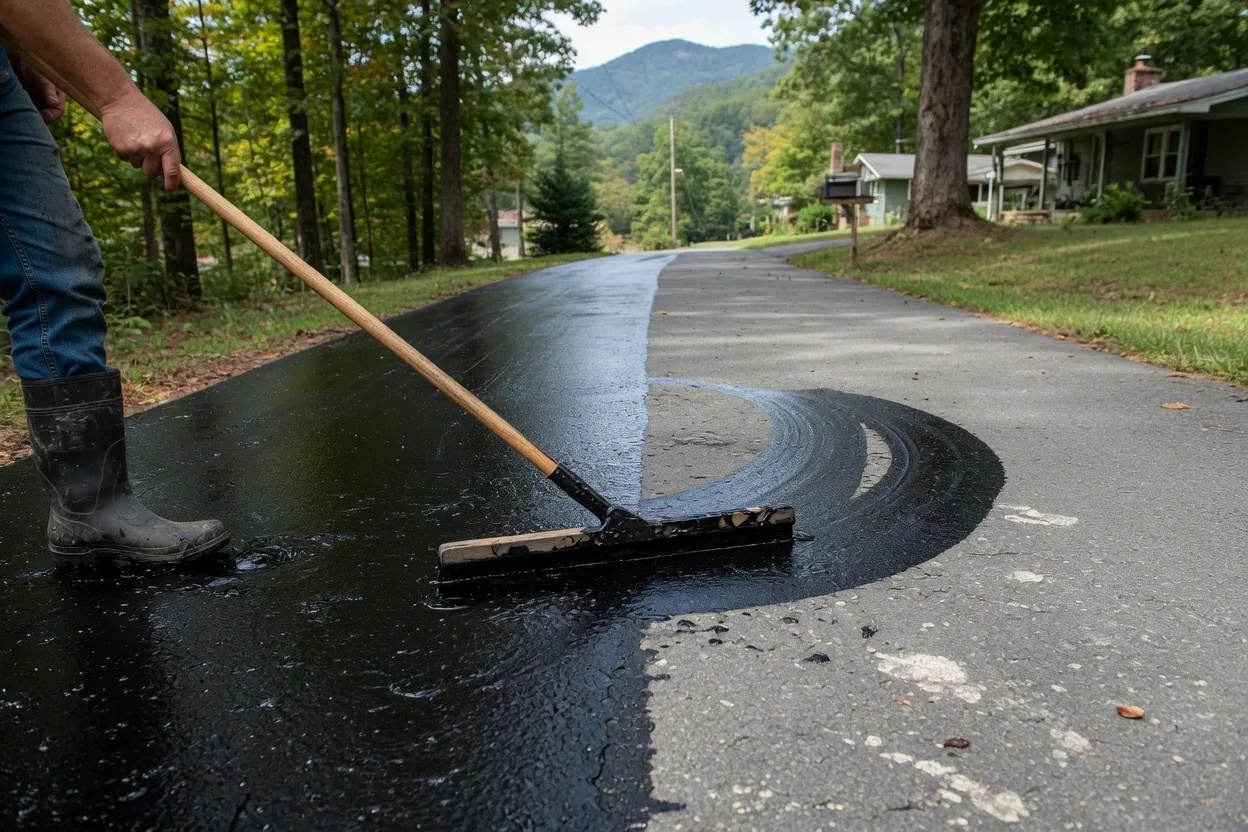
Practical differences Clyde homeowners notice after a conversion: no more stone tracked into the garage, no spring regrading, a snow shovel that doesn't scrape up gravel, and a driveway that can be sealcoated to keep its color. The trade-off is that asphalt is not a permanent solution — it is a fifteen-to-twenty-year solution with maintenance. The prep work is the same either way. The difference between a conversion that lasts twenty years and one that cracks in three is virtually never the asphalt mix; it is how honest the base work was before the first lift went down.
Hiring, licensing, and the permit question
North Carolina sets a general-contracting licensing threshold, and driveway work is not automatically exempt — the NC Licensing Board for General Contractors publishes the current dollar threshold and what falls under it. If your driveway apron meets a state-maintained road, an NCDOT driveway permit is normally required before the apron is poured or paved; applications run through NCDOT Connect. Residential site and drainage requirements are codified through the state code-official system at the NC Office of State Fire Marshal. When you start collecting bids, the Clyde paving contractor list is the place to begin, and ask each crew which of the scope lines above they are including versus excluding. The exclusions are where driveway bids go wrong.
Two questions worth asking every crew before signing anything. First: does the quote include haul-off of the spoils, or is that a change order? Second: is the drainage correction line item included, or is it treated as the homeowner's problem? Those two lines alone can swing a Clyde conversion quote by several thousand dollars, and they are the most common source of mid-job sticker shock in this market. Ask before the truck shows up, not after the first delivery of stone lands in your front yard.