Two inches or three — and why Arden driveways are not all loaded the same
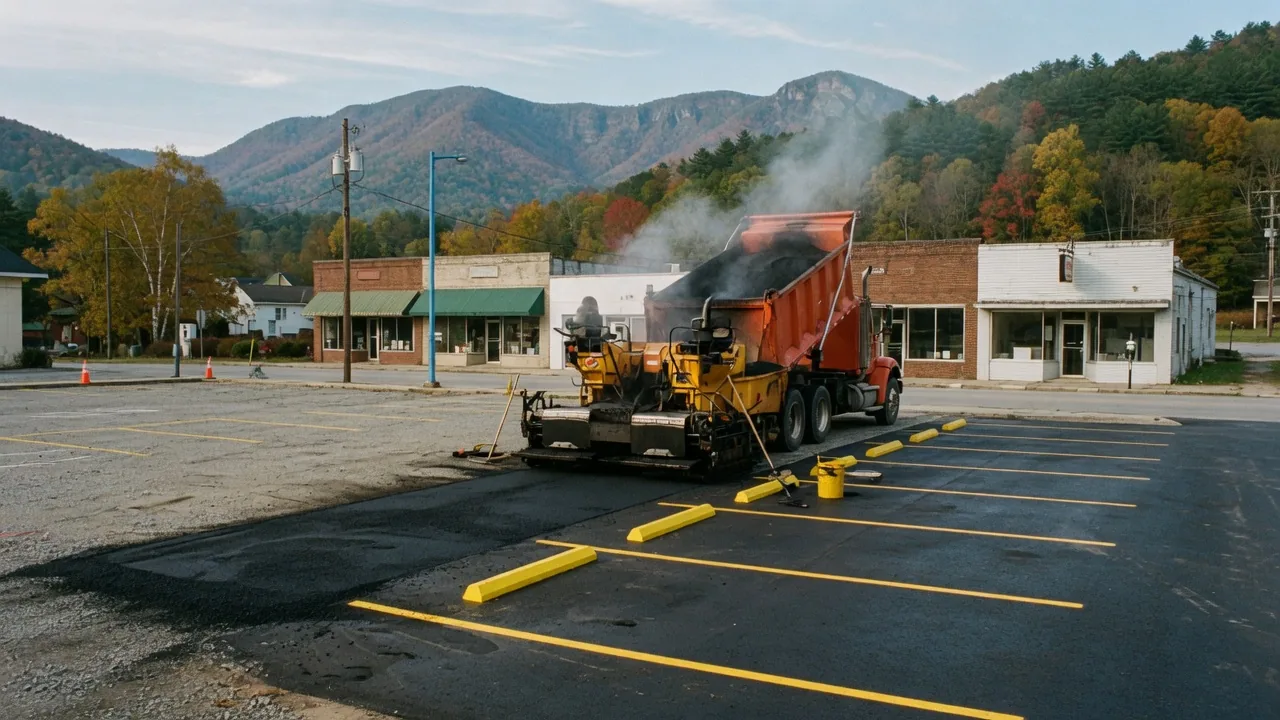
Most asphalt resurfacing quotes in Arden get decided by one question the contractor should ask at the curb: what drives on this surface? A residential driveway off a quiet road in Royal Pines sees passenger cars and the occasional delivery van. A short commercial apron near the Airport Road corridor sees box trucks turning tight, loaded, all day. Both surfaces are black and flat. They should not get the same asphalt.
Two inches is the standard compacted thickness for a residential overlay over sound, stable asphalt. Three inches — or two inches in two separate lifts — is what a driveway carrying regular truck traffic, RV storage, or heavy turning loads actually needs, because turning tires shear the surface and thin overlays tear first at the edges. One lift is one pass of the paver. Two lifts means the first layer has time to compact and cool before the second goes down, which costs more but produces a denser, longer-lived mat.
The other half of the decision is the mix. Warmer months here let crews run standard hot-mix asphalt, which is the default and the cheapest per ton. Cooler shoulder seasons can force a warmer-grade mix or push work to a supplier that can keep temperature in the truck. If a quote prices the job without saying what mix, at what thickness, and in how many lifts, you are not comparing prices. You are comparing guesses.
The resurfacing price picture in Buncombe County
Line-item ranges below reflect what proper work costs in this market, not the low-ball number at the bottom of a door hanger. The full working table lives on the Buncombe County asphalt cost breakdown.
| Scope | Typical Range |
|---|---|
| 2" overlay, single lift, sound base | $2.50–$3.75 / sq ft |
| 3" overlay, single lift, residential trucks | $3.50–$5.00 / sq ft |
| 2" + 1.5" two-lift build-up | $4.50–$6.50 / sq ft |
| Edge milling and tie-in at garage/street | $3–$8 / linear ft |
| Localized base repair before overlay | $4–$12 / sq ft of repair |
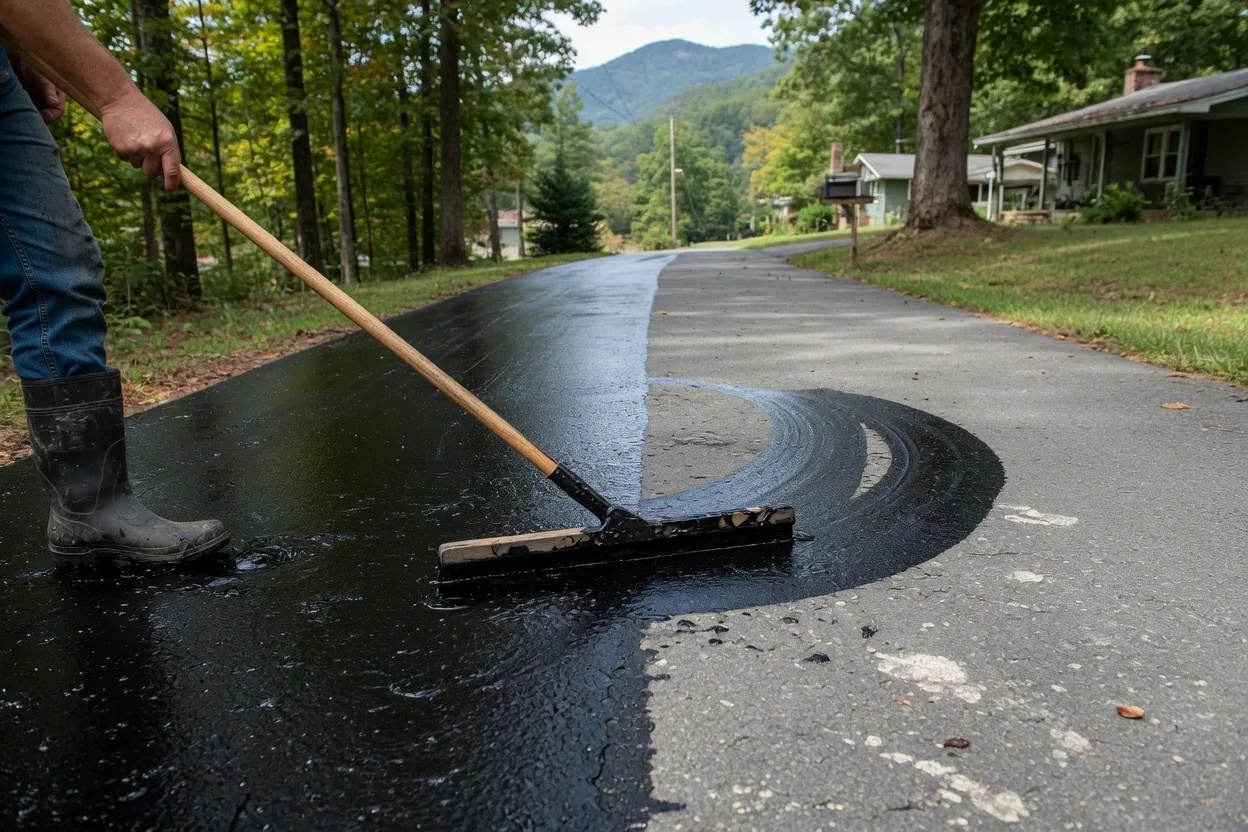
| Crack fill and sealcoat prep | $0.20–$0.60 / sq ft |
The single biggest cost driver is not the asphalt — it is what is under it. A driveway with an active alligator-cracked area or a settled spot near the garage apron cannot be overlaid honestly; that section has to come out and be rebuilt first. Skipping that step is the most common way a resurfacing job turns into a full replacement within three years.
Water is the reason Arden driveways fail early
Buncombe County has logged 19 federal disaster declarations across 1973-2026, and the overwhelming majority of them are storm and flood events. Arden sits in the lower French Broad valley, and the ground here drains differently than the ridge lots up the mountain. That matters for asphalt because a driveway is a roof that sheds water onto whatever is downhill. If the surface has settled and the water now pools instead of running off, resurfacing over it just buries the problem under two inches of new blacktop.
Before anyone quotes thickness, the drainage question needs an answer: where does the water leave your driveway, is the slope still positive after the overlay, and does the uphill neighbor's runoff cross your surface? The National Weather Service tracks the storm totals for this region, and a driveway that already handles a normal storm is the minimum standard for a resurfacing job worth doing. If the surface puddles now, fix grade before you fix appearance.
Permits, licensing, and the driveway-to-street tie-in
If your resurfacing changes the driveway apron where it meets a public road, you are touching the state right-of-way. That is an NCDOT driveway permit question, not a paving question, and applications run through NCDOT Connect — the full permit information lives at ncdot.gov. A pure resurfacing that stops short of the right-of-way usually does not trigger it, but a contractor who never asks where the apron ends is a contractor who has not done many of these.
On the contracting side, North Carolina draws a line for who can legally take on a project as a general contractor. The NC Licensing Board for General Contractors sets those thresholds, and any job that crosses them should be run by a licensed contractor. Below the threshold, a legitimate paving crew still carries liability insurance and workers' comp, and you should ask to see both before work starts.
When you are ready to compare options, the Arden paving contractor guide covers what to look for in a local crew, and the asphalt resurfacing overview explains what a full scope should include from prep through compaction.
What a real resurfacing scope actually contains
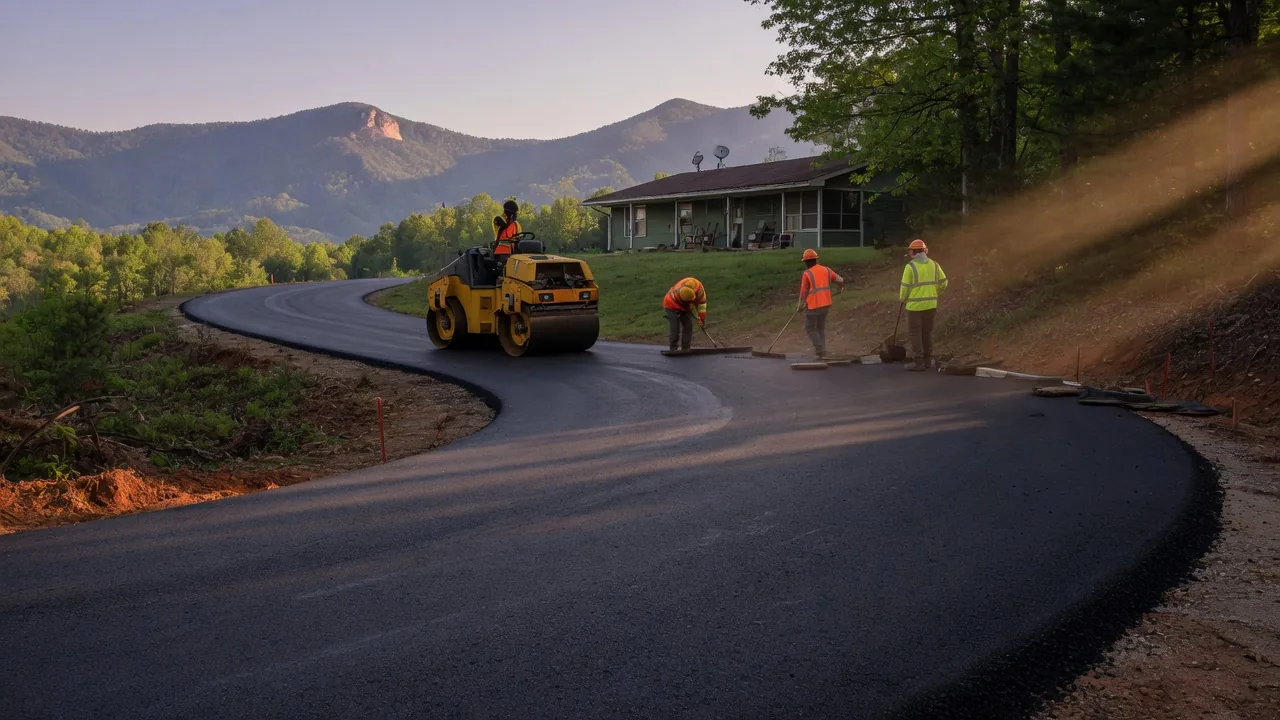
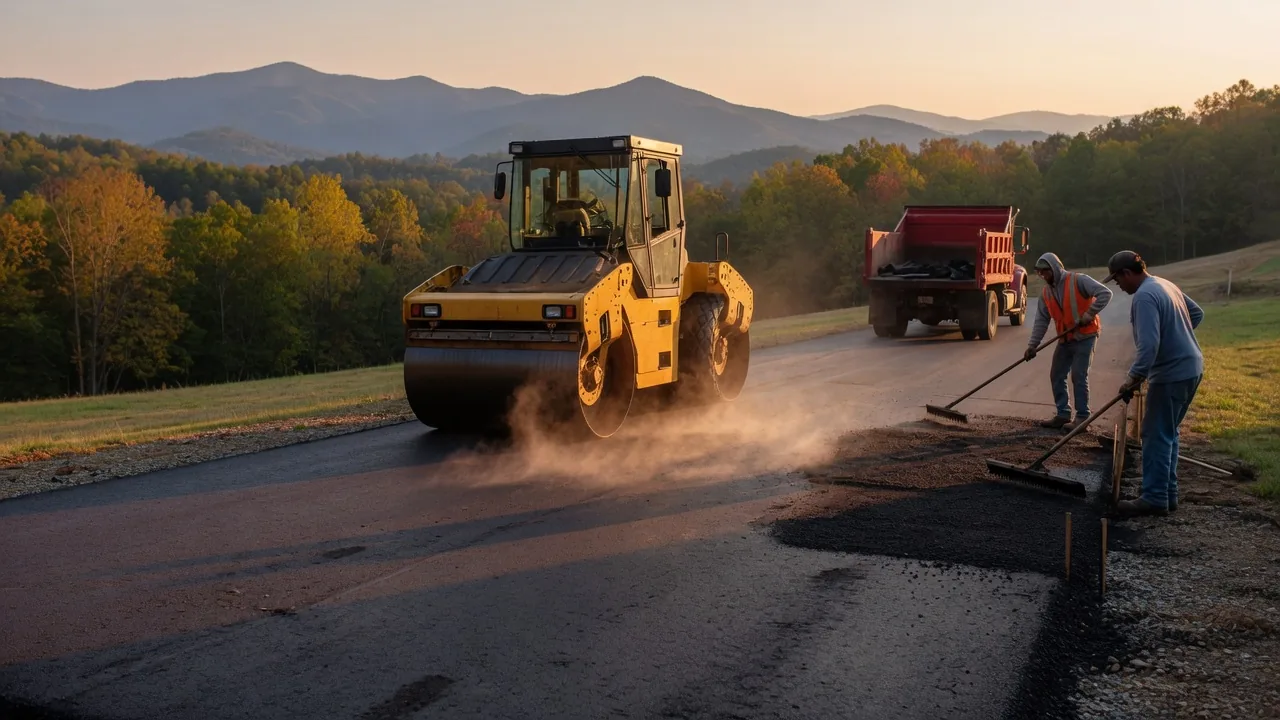
A proper overlay in Arden has five steps that all show up on a competent bid: edge milling where the new surface ties into the garage slab or street apron so the asphalt is not a lip waiting to be hit; cleaning and filling cracks wider than a quarter inch; spot base repair on any soft or settled area; tack coat between old and new surfaces so the layers bond; and compaction of the new mat. The compaction step is where corners get cut on cheap bids — a paver without a rolling pattern produces asphalt that is 15 percent less dense and fails well before its time.
If your existing surface is sound, a two-inch single-lift overlay is often the honest answer and the best value. If there is more than one settled area, or the driveway carries regular heavy loads, plan for three inches or two lifts. The crew that tells you which one you need — and why — is the one worth hiring.