Where the water goes decides the pavement
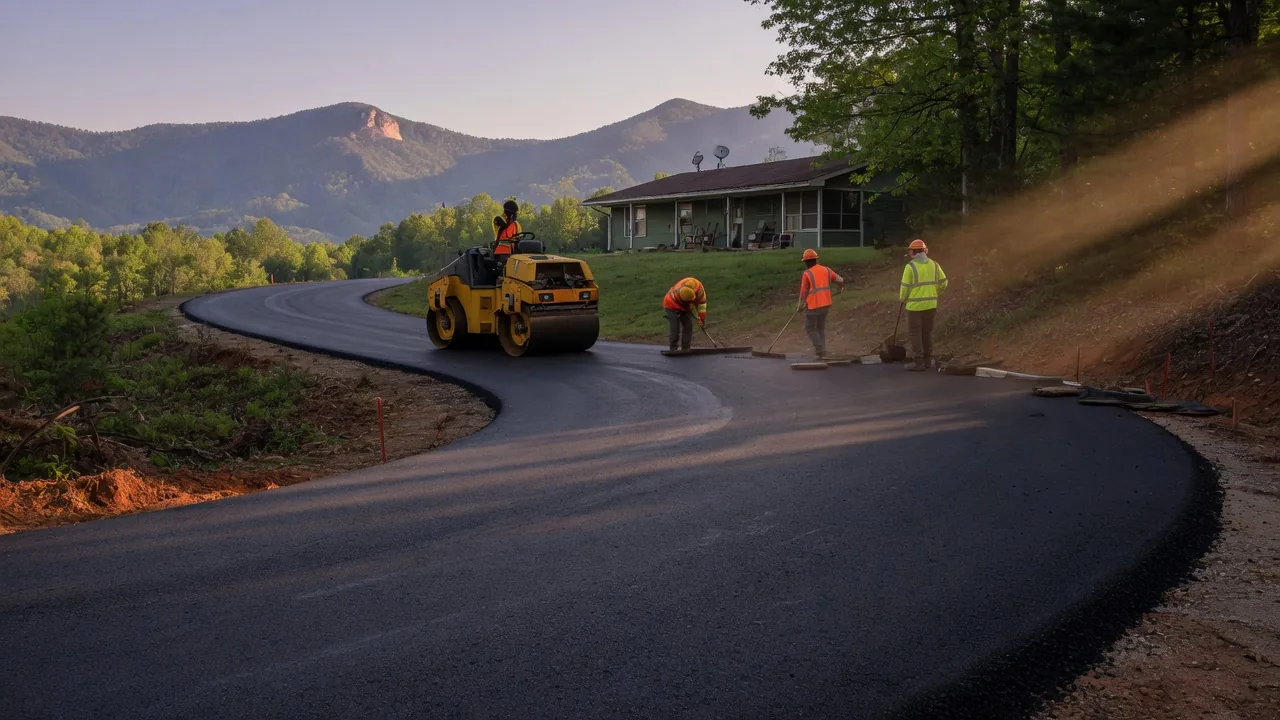
Stand at the top of a Woodfin lot on the slope side of the French Broad and you can watch the whole problem play out: rain sheets off the hill, crosses the pavement, and either leaves through a designed edge or pools against a building wall until the base underneath turns to soup. The lots that fail early in Woodfin are almost never the ones with thin asphalt. They are the ones where nobody decided, on purpose, which way the water was supposed to run.
Three lines matter on every lot here. The crown is the high line down the middle or along the ridge of the lot, and it has to be positioned so water sheds toward both edges rather than sitting in one flat pan. The edges are where the pavement rolls down into a swale, a ditch, or a curb-and-gutter, and they need a consistent fall — usually at least a percent or two on a graded lot, steeper where the runoff volume is high. The ditch or storm inlet is the exit, and if it is undersized for the uphill drainage area, the lot is going to hold water no matter how well it was paved. Repaving a pond is still a pond.
Woodfin's two lot types fail differently
The town has roughly two paved landscapes. Down along the river and the older commercial stretches, lots sit on flat, fill-heavy ground where water has nowhere to go by gravity, and the failure mode is standing water and a slowly pumping subbase. On the hill side of town, lots cut into the slope deal with the opposite: uphill runoff arriving faster than the lot was graded to handle, and a lower edge that has to be armored or the ditch will scour.
Federal records show 19 declared events touching this county across 1973-2026, and the storm and flood family dominates them. For a commercial lot owner, that is not abstract history — it is the reason the paving scope should include a real conversation about where the water from a heavy two-hour rain actually exits the property. The National Weather Service publishes the regional rainfall frequency data engineers use to size that ditch, and it is worth knowing the number before you accept a bid.
What the scope should actually include
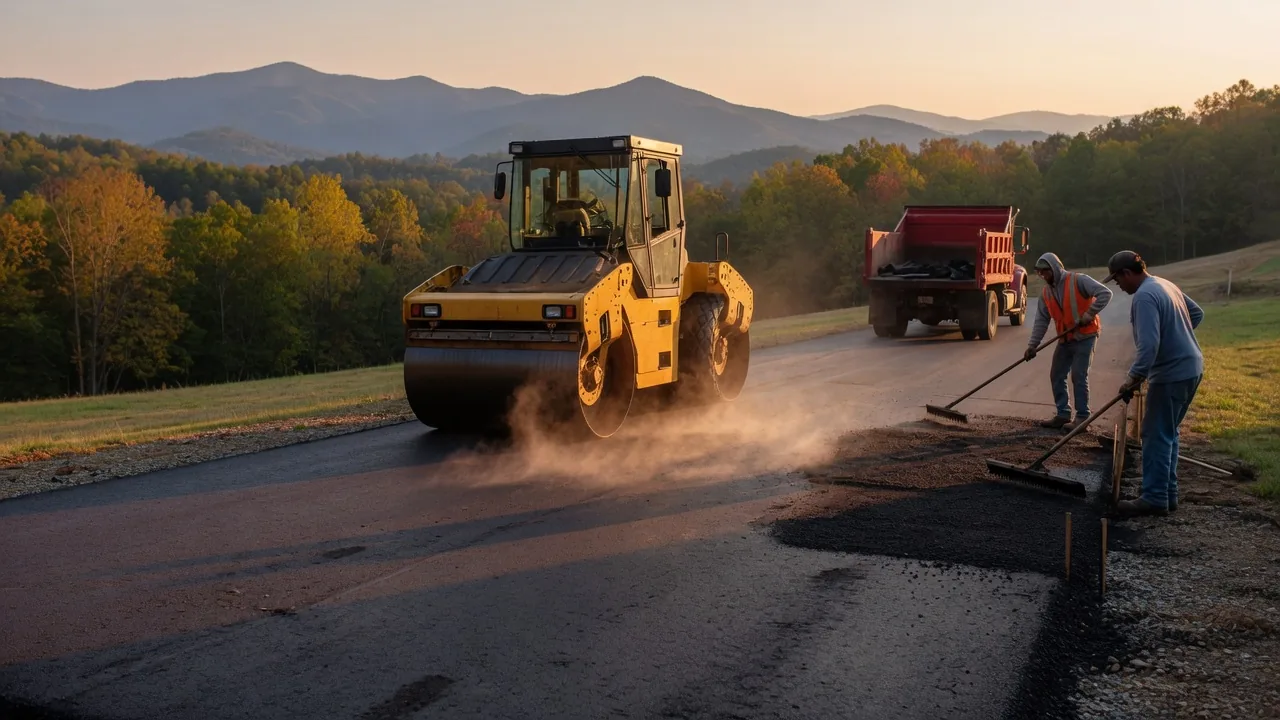
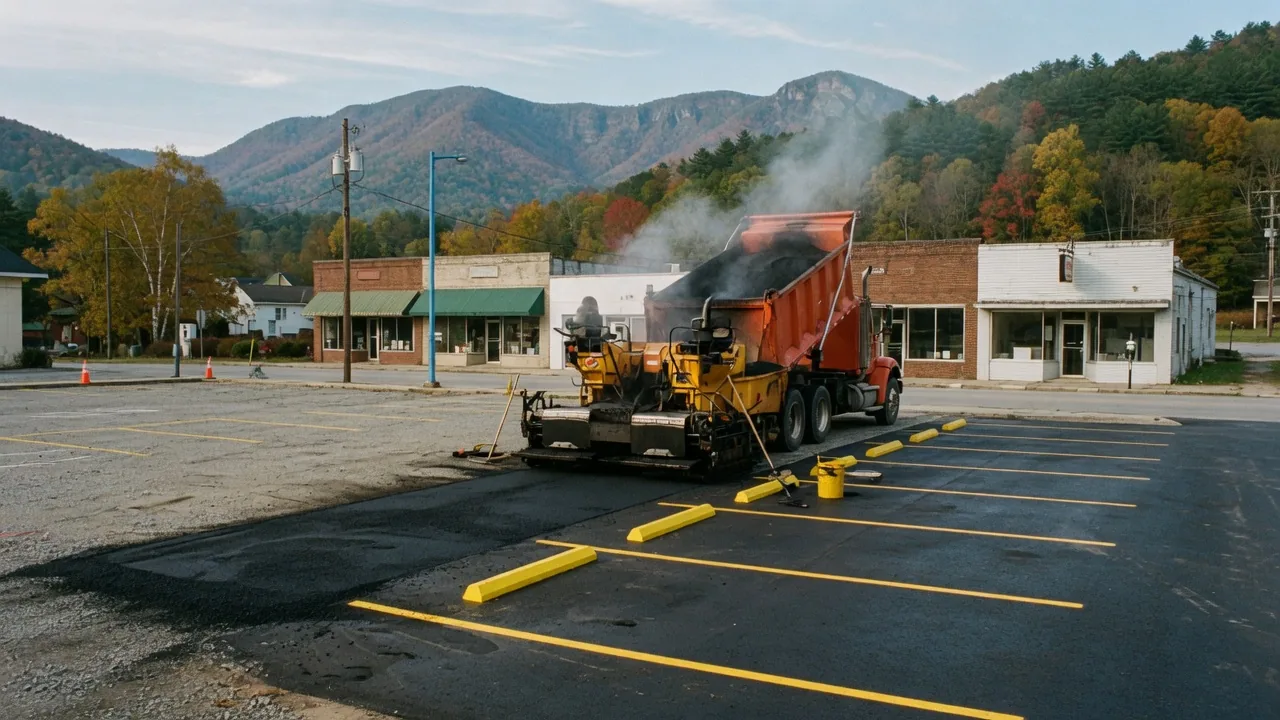
A parking lot is a small civil project wearing an asphalt coat. Any honest scope for a Woodfin commercial lot covers, at minimum: an assessment of the existing base and how much of it is salvageable, the grading plan and where the water goes, the pavement section itself (thickness of asphalt and, if the base is being built, of stone), and a clear statement about striping, bollards, and any ADA stalls the town or county requires. If a bid lists an asphalt depth and a price with no mention of grades or discharge, you are being quoted half a job.
| Scope | Typical range | Notes |
|---|---|---|
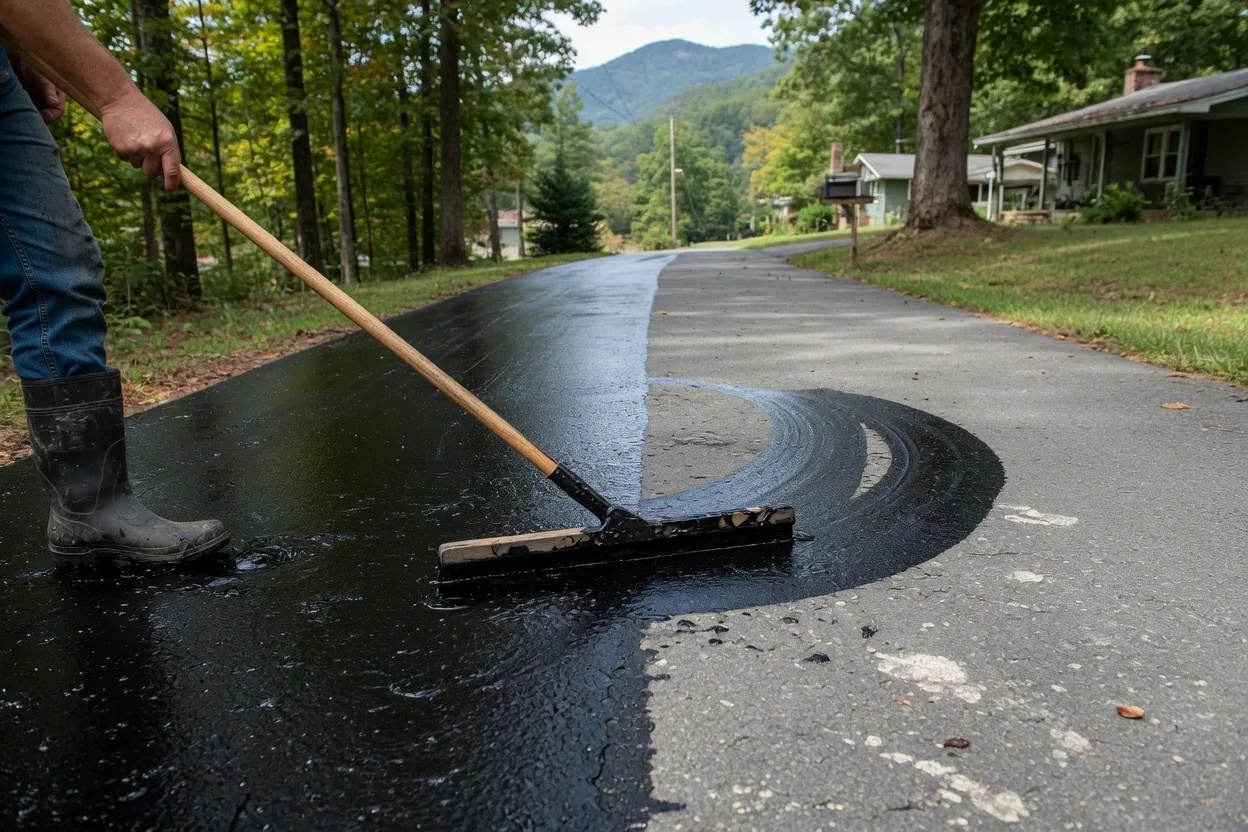
| Sealcoat and crack fill, preventative | $0.25-$0.45 / sq ft | Assumes sound pavement; cheapest line on any budget |
| Mill and overlay (1.5-2 in.) | $3.50-$7.50 / sq ft | Base stays; the failing surface comes off |
| Full-depth base rebuild + new asphalt | $6-$12 / sq ft | Soft or failed subbase replaced; cost tracks stone and haul-off |
| Grading, crown, swale and ditch work | Quoted per lot | Always itemize; this is where cheap bids hide |
| Striping and ADA stalls | Quoted per stall | Required on most commercial re-stripes |
See the full parking lot paving guide for how these scopes are assembled, and the Buncombe County asphalt cost breakdown for the residential-side numbers that share the same stone and asphalt pricing.
Permits, access, and who can legally bid it
Paving a lot is not a paperless job in Buncombe County. If the work changes how vehicles enter or leave the property from a state-maintained road, the driveway and street-access permit side runs through NCDOT, with applications handled through NCDOT Connect. If the scope touches drainage that discharges off-site, or adds or alters parking that the town cares about, expect plan review. Confirm the current local requirements with the town before mobilizing — rules and thresholds change, and a good contractor will know the current version.
Licensing is the other side. North Carolina requires general contractor licensure once a project crosses the statutory threshold, and commercial site work routinely does. You can verify any bidder's status through the NC Licensing Board for General Contractors. A written contract with a license number on it is not bureaucratic noise; it is the difference between a warranty you can enforce and a handshake you cannot.
Getting a number you can compare
The fastest way to get burned in Woodfin is to accept the lowest bid on an apples-to-oranges comparison. Two bids can look identical on a one-page proposal and differ by tens of thousands on the actual work: one includes base repair and a grading plan, the other assumes a perfect subbase and lets the owner discover otherwise after the first rain. When you collect quotes, ask every bidder to state the same five things in writing — pavement section, square footage, base handling, drainage scope, and striping — so you can line them up side by side.
Local crews who work this town regularly are listed in the Woodfin paving contractor directory, and they can typically walk a lot and give you a realistic scope within a few days. If you are not sure whether you need a full rebuild or a mill-and-overlay, ask for both numbers on the same lot. The gap between them tells you a lot about what the contractor thinks is actually under the asphalt.