Why two inches is often one inch of trouble on a Maggie Valley slope
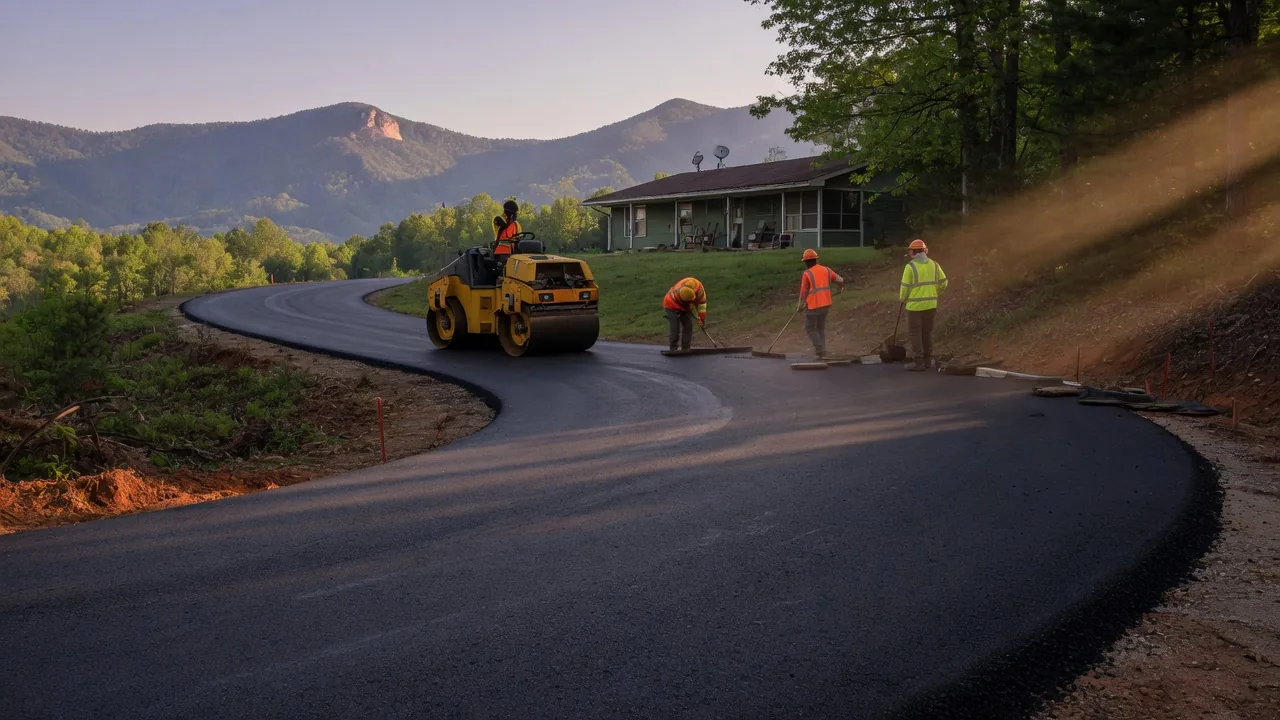
Drive through any of the older hollows off Soco or Fie roads and you can read the asphalt like a ledger: driveways resurfaced at one and a half inches ten years ago show hairline alligator cracking at every curve, while a few that got a true two-inch compacted lift still hold a clean surface. On a mountain grade in Haywood County, the top layer does more work than it does on flat ground. Water runs down the surface faster, trucks and trailers load the turns harder, and the freeze-thaw cycle at these elevations opens any thin spot from underneath.
The practical rule most crews here work from: two inches compacted is the residential minimum, three inches is what a shared or truck-served drive wants. If you see more than a quarter-inch of asphalt leaving the grade, you are buying a skim coat, not a resurfacing.
Walk a driveway in the Plott Creek or Hemphill Road area that was surfaced thin, and you will find the same pattern: the mat has raveled at the edge where the grade drops, and the wheel paths are polished from repeated braking. That is not a mix failure. It is a thickness failure that started showing up two winters after the contractor pulled out of the driveway. On a slope lot, the surface layer has to bridge the base, resist sliding, and shed water all at once. A one-inch lift does none of those jobs for long.
One lift, two lifts, and where the number actually goes
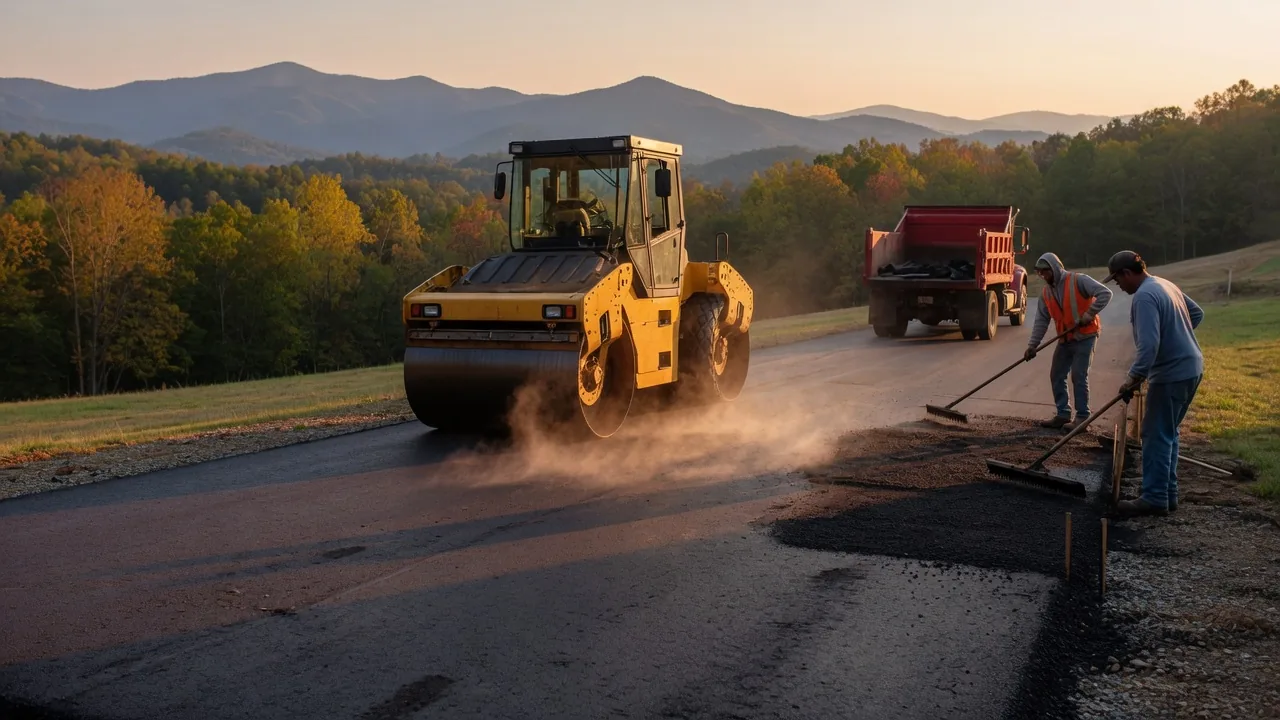
An inch and a half can go down in one pass. Two inches and above normally goes in two lifts, and that is not padding — rolling a single thick layer compacts unevenly from the top down and leaves the bottom loose. Two lifts cost more in labor and tack time, which is where a lot of low bids quietly escape the number. Ask any bidder: how many lifts, and what compacted depth per lift. The asphalt resurfacing overview walks through what a proper scope includes yard by yard.
Where the International Code Council standards apply — grading, drainage away from the structure, and driveway construction on lots that fall under adopted building codes — the surface thickness is less the code issue than the water management underneath it. On a Maggie Valley hillside, that section matters more than the asphalt spec sheet. A driveway that sheds water off the lot and away from the house will outlast one that was merely poured thick.
The lift schedule also changes how a crew prices tack coat. Two lifts mean two applications of tack between layers, a second paver pass, and a second rolling sequence. That is the labor difference you see between a $2,800 quote and a $8,000 quote on the same-sized driveway, and it has nothing to do with the asphalt itself. When a bid comes in unusually low, the first thing to ask is whether the second lift was quietly dropped from the scope.
What the trucks and the turning loads say about mix selection
Maggie Valley is not a quiet residential town. US-19 and the Soco corridor carry tractor-trailers, tour buses, RVs, and the steady summer funnel of visitors headed for the parkway. That traffic shapes the residential work too: any driveway that reaches the road at a grade, any shared access road serving three or four homes, and any property with an RV pad or a trailer turn is being loaded harder than a suburban cul-de-sac ever is.
House this in the mix. A coarser surface mix with a lower binder content holds up under turning loads better than a fine mix that finishes prettier and displaces at every wheel path. If your drive is where an RV backs in every season, tell the paver. It changes both the mix and the lift schedule.
Consider the logging traffic that still moves through the county on secondary roads. A loaded log truck turning off a two-lane road onto a gravel or thin-asphalt drive does more damage in one pass than a hundred passenger vehicles. Driveways that serve as turnarounds for those trucks need the three-inch spec and a base that was built for it, not a residential overlay stretched to cover a commercial load. The same is true for the horse trailers headed up to the trails off Fie and the dump trucks that serve the steep lots where a septic or foundation is going in. Tell the paver the heaviest thing that will ever roll on the drive, not the average car.
Maggie Valley price picture, by scope
The county table behind these numbers is here: Haywood County driveway cost breakdown. Regional working bands:
| Scope | Typical range | Notes |
|---|---|---|
| Crack fill and sealcoat only | $350–$900 | Maintenance, not resurfacing; buys time, not thickness |
| 1.5-inch overlay, one lift | $1.75–$2.25 / sq ft | Only on sound base with minimal cracking |
| 2-inch overlay, two lifts | $2.25–$2.90 / sq ft | Residential baseline on a slope lot |
| 3-inch overlay, two lifts | $2.90–$3.50 / sq ft | Truck service, shared access, RV turns |
| Overlay plus base repair (spot milling, patching, drainage) | Add 20–40% | The line item that separates a real quote from a cheap one |
Any bid that quotes a single per-square-foot number without a base inspection is quoting a hope, not a driveway. On the steep lots above town, the base repair line is not optional — it is the part of the job that determines whether the new surface lasts through a single winter or fifteen.
Water, weather, and why the base question comes first
Haywood County sits in a federal disaster record that reads mostly as storm and flood events: 19 declared events touching this area over 1973-2026. Every one of those events pushed water at driveways and access roads that were built assuming a drier hill. On a graded mountain lot, runoff does not politely follow your culvert — it finds the seam between the old surface and the new one and lifts it from below.
Before thickness is set, the paver should walk the grade, find where water enters and where it leaves, and fix the drainage — not paint over it with asphalt. The National Weather Service freeze-thaw cycle at these elevations is a real load on any thin overlay, and drainage work underneath is what keeps it intact. The freeze line in Maggie Valley can push frost several inches into a saturated base, and when it thaws, that water has to go somewhere. If it is trapped under a fresh mat, the mat will fail from the bottom up before the surface ever shows a crack.
The stone and gravel that drains the base matters as much as the asphalt on top. A driveway that was built with the right crowned grade and a good compacted stone base will take a resurfacing almost like new. One that was cut into the hillside without any thought for where the water goes is a candidate for full reconstruction, not overlay. A reputable paver will tell you which one you have before quoting a dollar figure.
Picking the crew for this town, not this state
Contracted paving above the residential threshold is regulated through the North Carolina Licensing Board for General Contractors, so any qualified paver knows the threshold and will say so when asked. Beyond that, three local checks: ask how they handle steep-lot compaction and hauling equipment onto a grade; ask what mix they spec and why; and ask whether their bid includes the base repair line item that a mountain driveway almost always has. A crew that does not typically work the Haywood County grades will hesitate on the first question every time.
When you are ready to compare, the Maggie Valley paving contractor page covers what a first walkthrough should include and the questions worth asking before you sign. A walkthrough that never leaves the road is not a walkthrough — the good ones put a boot on the drive, find the low spots, and check the edge where the grade falls away.
The right crew for this town will also tell you what they will not do: they will not overlay a driveway that is still moving, and they will not promise a twenty-year surface on a base that was not built for it. That honesty is worth more than a low bid on a job that has to be redone in five years.