The rural lot problem: long driveways, short budgets
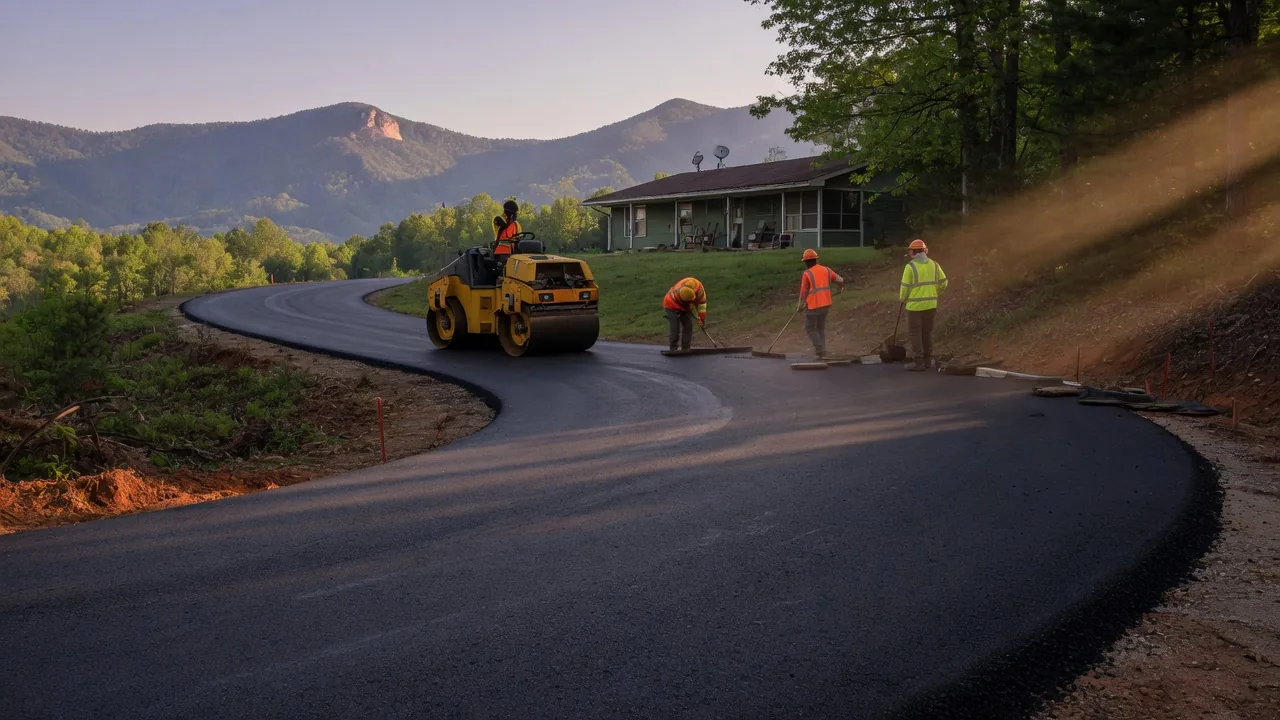
Leicester doesn't have many parking lots in the traditional sense. What it has is driveways that end in a parking area—a gravel pad that got asphalted years ago, a church lot carved into a hillside off New Leicester Highway, a contractor's equipment yard on NC-63 where the base was never engineered for loaded dump trucks. These aren't Asheville lots with curb, gutter, and a city engineer's approval. They're rural sites where the driveway is a quarter-mile long, the grade changes three times before you reach the parking area, and the water has been finding its own path since the first load of asphalt went down.
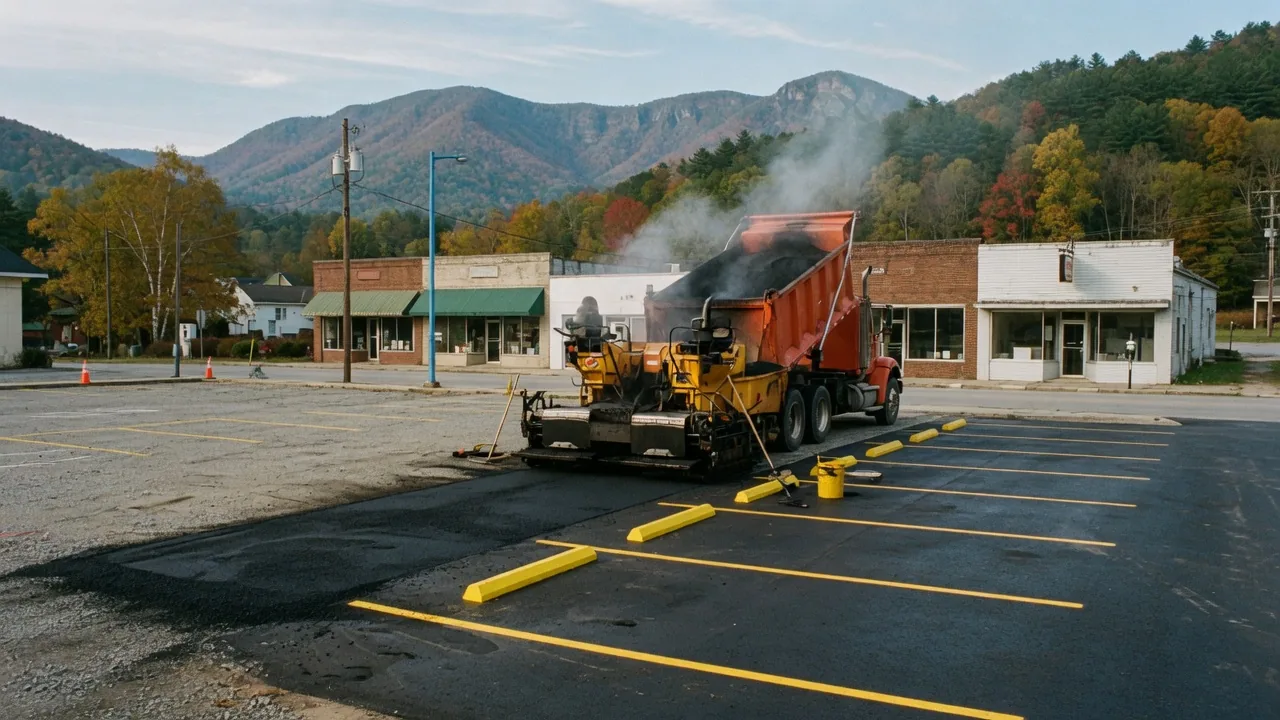
That changes the bid. In Asheville, a lot job prices on traffic control, downtown access windows, and mobilization through narrow streets. Here, it prices on grading, drainage, and base thickness—because the pavement is only as good as what's under it and what water does to it. A lot at the end of a long slope off a county road may need a culvert replaced before a single ton of asphalt is laid. A church on a hillside may need a swale regraded because runoff from the road above has been washing across the parking surface for a decade. Our main parking lot paving page covers the general process; this page is about what makes it harder here.
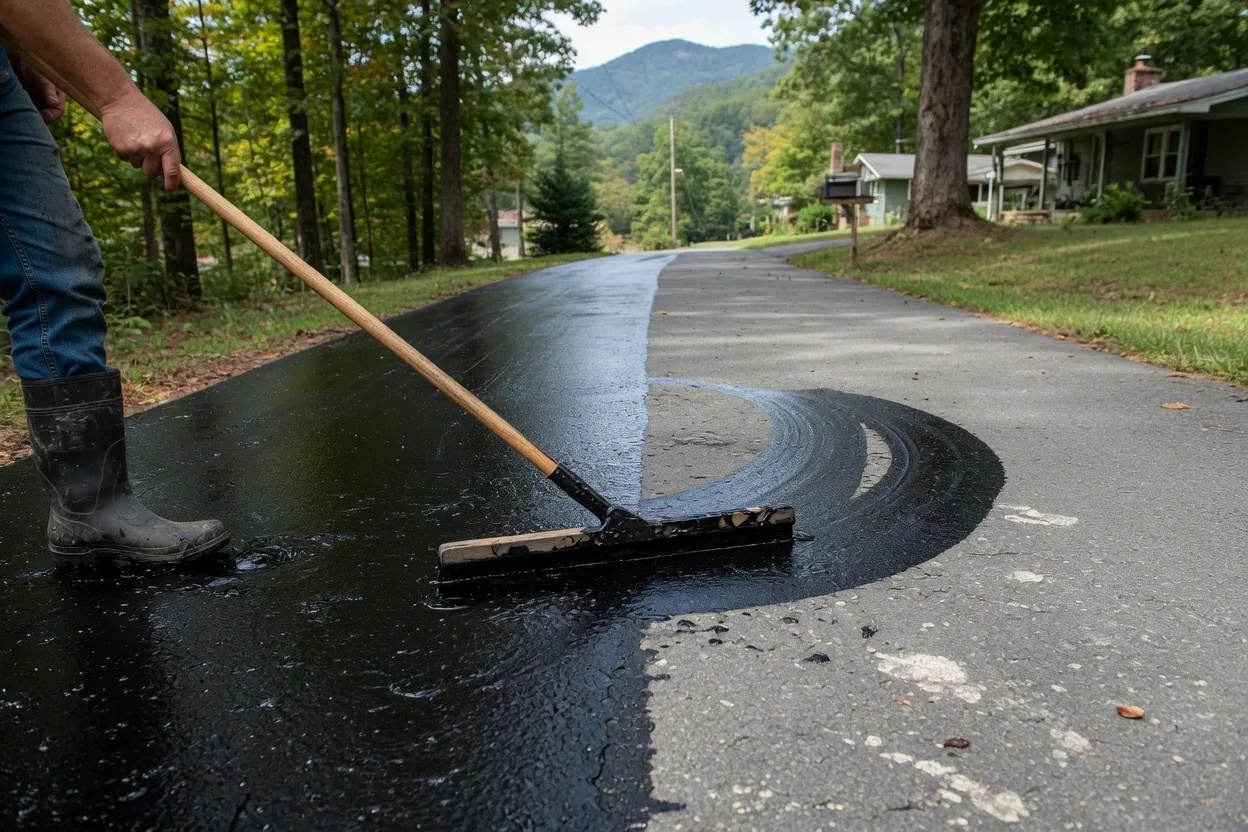
Add the age factor. A lot of the pavement in Leicester was poured in the 1980s and 1990s, when the area was still mostly farmland and the traffic was lighter. Those surfaces have been crack-filled, patched, and sealcoated multiple times. At some point, the repairs cost more than the replacement, and the owner has to decide whether to keep band-aiding or do the full rebuild. That decision is the real conversation on most Leicester jobs.
What actually drives the cost on a Leicester lot
Three variables move a Leicester lot price more than anything else. First, base condition: if the subgrade is soft, saturated, or full of organic material—common on rural sites that were never properly compacted—no overlay lasts. Second, slope and drainage: a lot that pushes water toward a building or a neighbor's fence needs grading and drainage work before asphalt goes down, not after. Third, entry access: a lot fronting NC-63, New Leicester Highway, or a county road may require a driveway permit through NCDOT Connect, and that review is a real line item on commercial and multi-family jobs.
Below is the working table for scope versus price range. Treat it as a band, not a quote. Site visit changes every number.
| Scope | Typical price range |
|---|---|
| Crack fill, sealcoat, and restripe existing lot | $0.35-$0.90 / sq ft |
| 1.5" asphalt overlay over sound base | $2.00-$3.50 / sq ft |
| Mill 2" and replace with new asphalt | $3.50-$5.50 / sq ft |
| Full-depth rebuild (excavate, base, 2" asphalt) | $5.00-$8.50 / sq ft |
| Grading and drainage corrections | $3,000-$18,000 per lot, varies |
| New lot construction on undeveloped ground | $4.50-$9.00 / sq ft |
If you need the numbers behind what asphalt really costs in this county, the Buncombe County asphalt cost breakdown lays out the material and labor side in more detail.
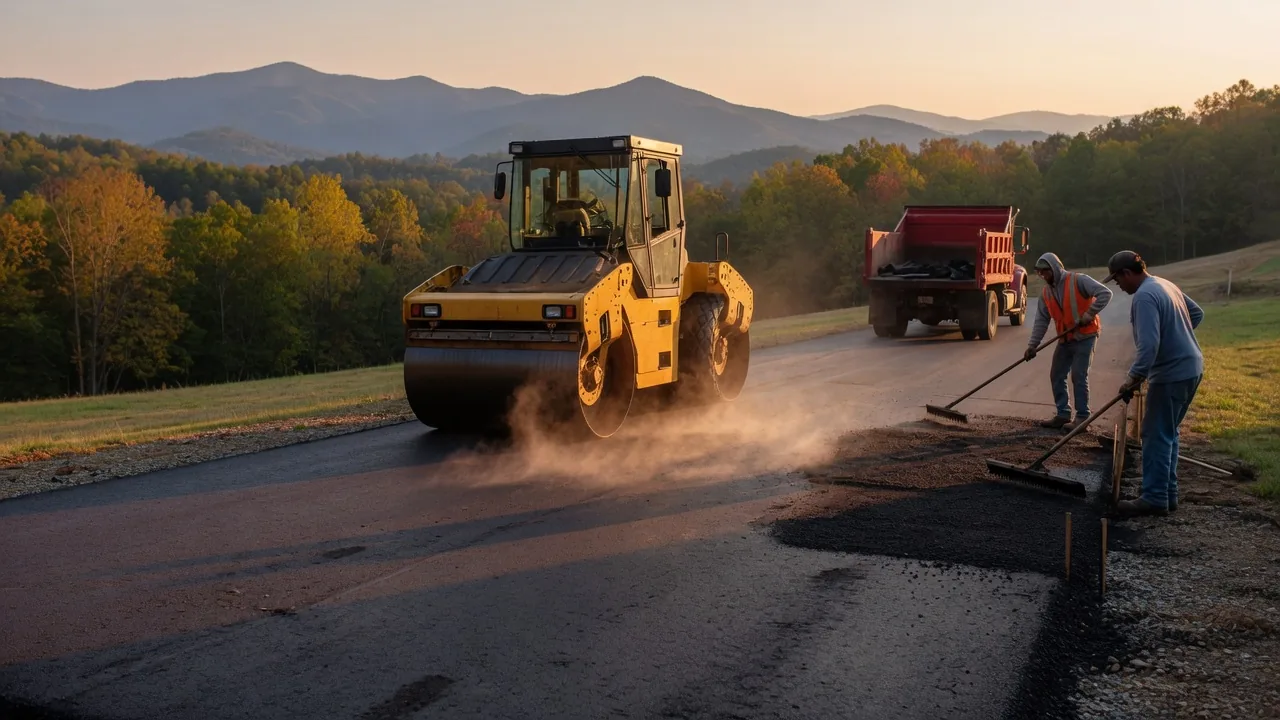
One more local factor: equipment access. A lot at the end of a narrow, steep driveway may not accommodate a full-size paver and dump trucks. That means smaller equipment, more trips, and higher labor hours. A lot that's visible from the road and flat is cheaper to pave than one hidden behind a ridge, even if the square footage is the same. Ask any contractor to walk the access route before quoting.
Water is the repair nobody wants to pay for
Buncombe County's federal disaster record explains a lot of the paving work here. 19 declared events touch this county across 1973-2026, mostly storm and flood family. Every one of those events pushed water across rural lots that were laid out assuming the ground drained the way it did the day the asphalt was poured. It doesn't anymore. The storm that floods a lot once every five years still leaves its mark—a soft spot in the base, a crack that opens wider each winter, a puddle that sits for days and slowly undermines the edge.
The EPA's stormwater guidance is worth reading before you authorize a rebuild, because if the water problem is not addressed, the new pavement gets the same failure the old one had, on a shorter clock. The National Weather Service's local climate data at weather.gov is where to check freeze-thaw history for a given season, which matters here more than people expect: freeze-thaw cycles open the cracks that then take on water and fail. In Leicester, where the ground stays wet longer than in the city because of shade and slope, that cycle is often the difference between a lot that lasts fifteen years and one that lasts eight.
Drainage corrections on a rural lot can be as simple as regrading a swale or as involved as installing a new culvert under a driveway. Either way, it's money that doesn't show in the finished pavement. But skipping it is the most common reason a new lot fails early. If a contractor's bid doesn't mention drainage, ask why.
Who should be doing the work
North Carolina regulates commercial paving above certain thresholds through the NC Licensing Board for General Contractors. For a small residential driveway, that licensing question usually does not come up. For a commercial lot or a multi-family property, it does. Ask before you sign.
The other check that matters here: does the crew work in Leicester, or do they work in Asheville and run out here for the job? The equipment setup and the base prep are different on a rural site, and a crew that only does city lots will underbid the grading line and then look for change orders. A local crew knows which slopes drain where, which roads flood, and where the base is likely to be soft before they dig. Our paving contractor page for Leicester walks through what a good local bid looks like, and what to question.
Also ask about warranty and follow-up. A lot on a rural slope with a drainage problem may need a return visit after the first heavy rain to confirm water is moving where it should. A contractor who disappears after the last roller pass is not the one you want on a Leicester job. The good ones come back, check the edges, and fix what the weather reveals.
Timing, weather, and the Leicester paving calendar
Late spring through early fall is the safe window for paving in Leicester. Asphalt needs warm ground temperatures to compact properly, and a lot on a rural slope with a freeze-thaw problem will not tolerate a rushed cold-weather job. The mountains here cool down faster than the city, and a lot shaded by trees may stay damp and cool into mid-morning even in summer. That affects when the crew can start and how long the job takes.
If you're planning a fall project, get on the schedule by late summer. Local crews book up, and the ones who know rural sites are in demand. If you're planning a spring project, be aware that the ground may still be saturated from winter, which can delay base work. A good contractor will tell you honestly whether the site is ready or whether waiting a few weeks will save you money on base repairs.
For commercial lots, also factor in the NCDOT permit timeline if you're changing the entrance off a state road. That review can take weeks, and it's not something to start in October if you want pavement before winter. The NCDOT website has the current forms and contacts, and NCDOT Connect is where applications go.