Why the mix truck is the first question in Etowah
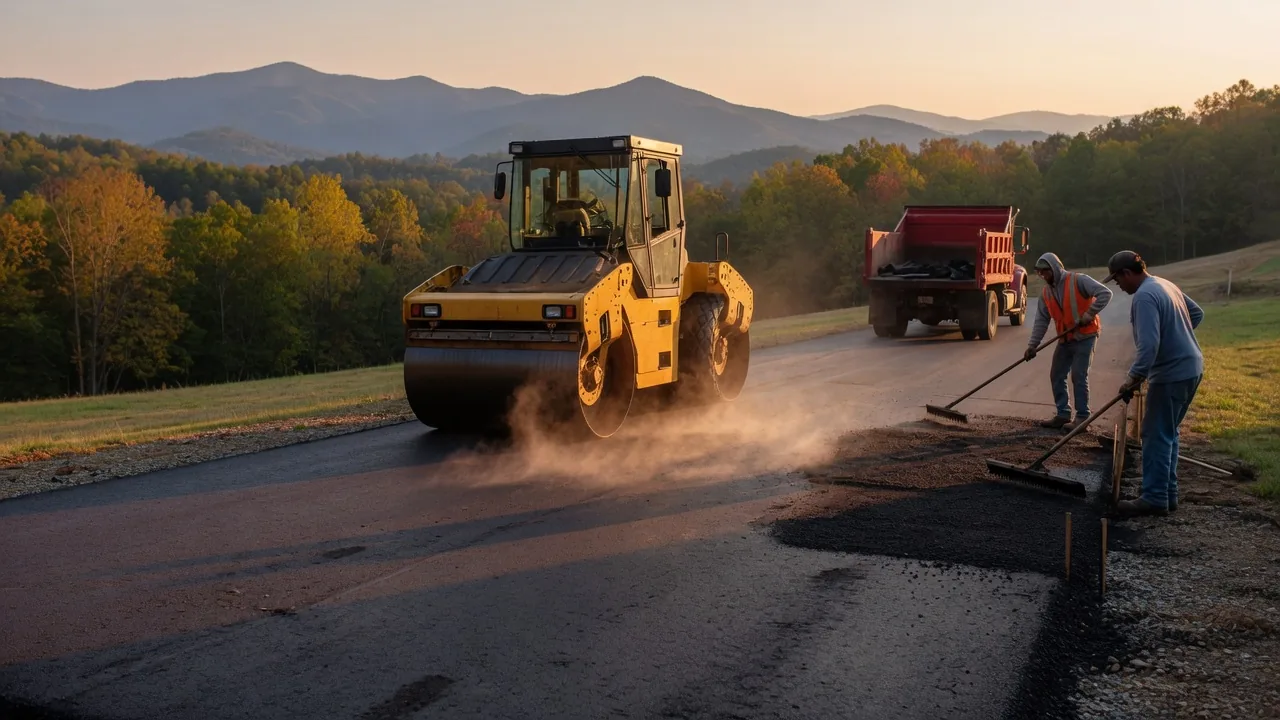
Tar and chip is a race against temperature. The binder and aggregate have to meet, spread, and roll while the asphalt is still workable, and every mile between the plant and your driveway burns working time off the load. Etowah sits north of Hendersonville in the French Broad valley, where the drive from most regional mix plants already eats part of that window before anyone turns into your road. Add a long gravel run off a state road, a switchback up to a ridgetop homesite, or a turn-in too tight for a tandem dump, and the crew has to stage differently: smaller loads, more of them, sometimes a spotter walking the truck back.
That is why two Etowah driveways the same size can quote hundreds apart. The stone doesn't change. The day does.
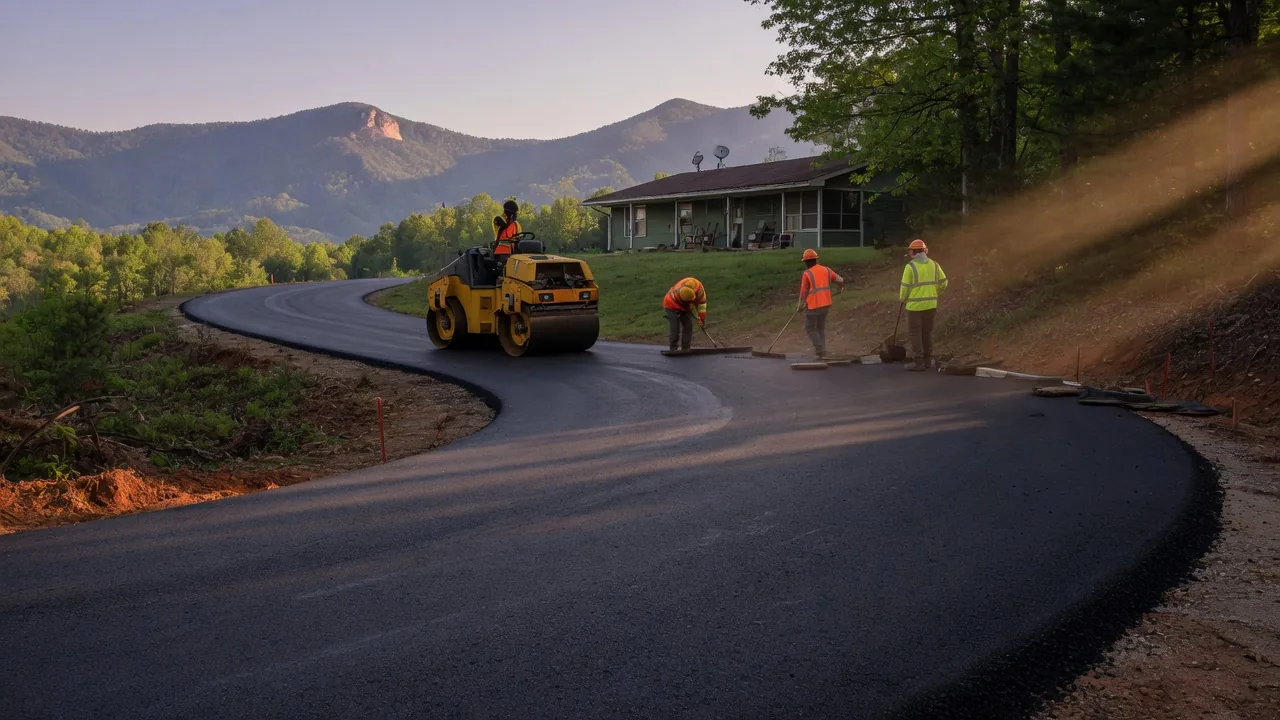
Consider the geography. Etowah is not a flat grid of suburban streets; it is a scatter of homesites along the river bottoms and up the ridges between Horse Shoe, Mills River, and the Brevard Road corridor. A driveway off a valley floor may be a straight 200-foot run with a wide apron. A driveway off a ridge may climb 80 feet over the same distance, with a switchback halfway and a garage cut into the slope. The binder truck and the chip spreader have to negotiate both. On the ridge job, the crew may need to stage the dump at the bottom of the hill and shuttle material up with a smaller truck, doubling handling time and labor hours that never show up on a materials invoice.
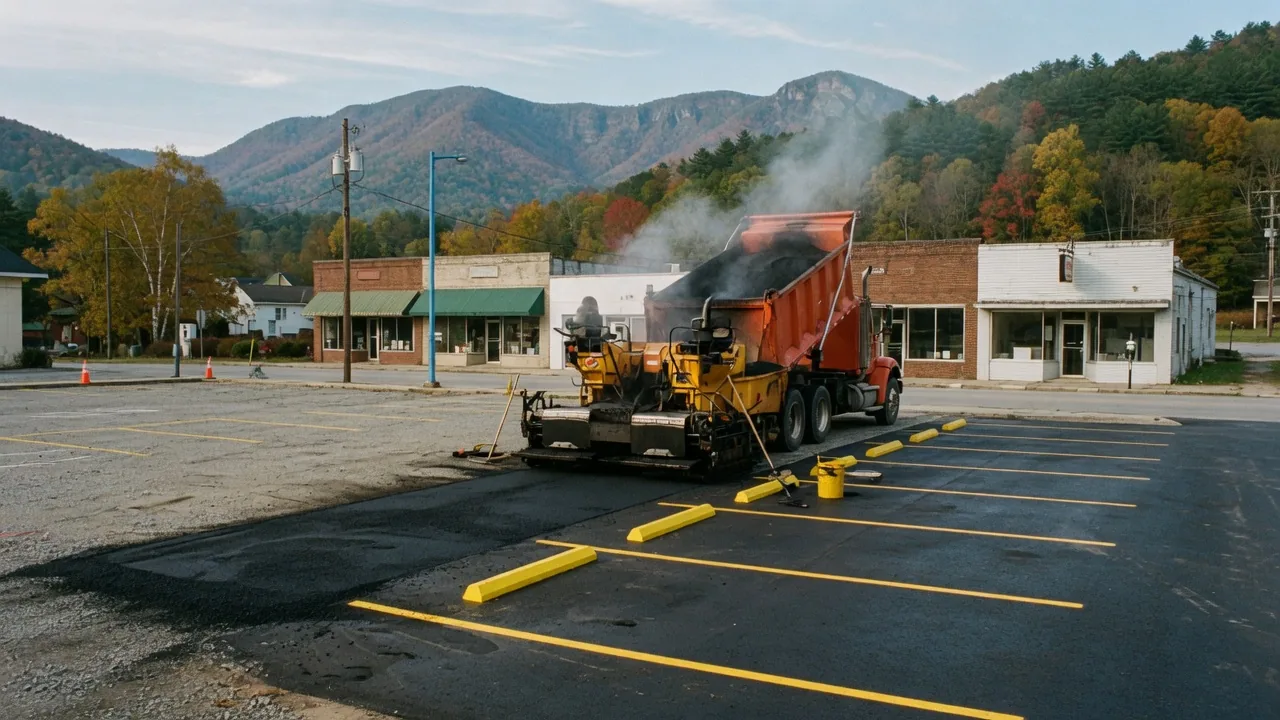
Then there is the plant side. Henderson County has a limited number of asphalt plants that can supply chip seal binder and washed stone in the same load window. The nearest plant to a given Etowah address might be 20 minutes away or 50, depending on which side of the county you sit and what the dispatch schedule looks like that morning. A 50-minute haul in July heat is not the same as a 50-minute haul in October. Crews who work this valley regularly know which plants can actually serve Etowah efficiently and which ones will leave the load cold before the first pass.
What actually drives the number
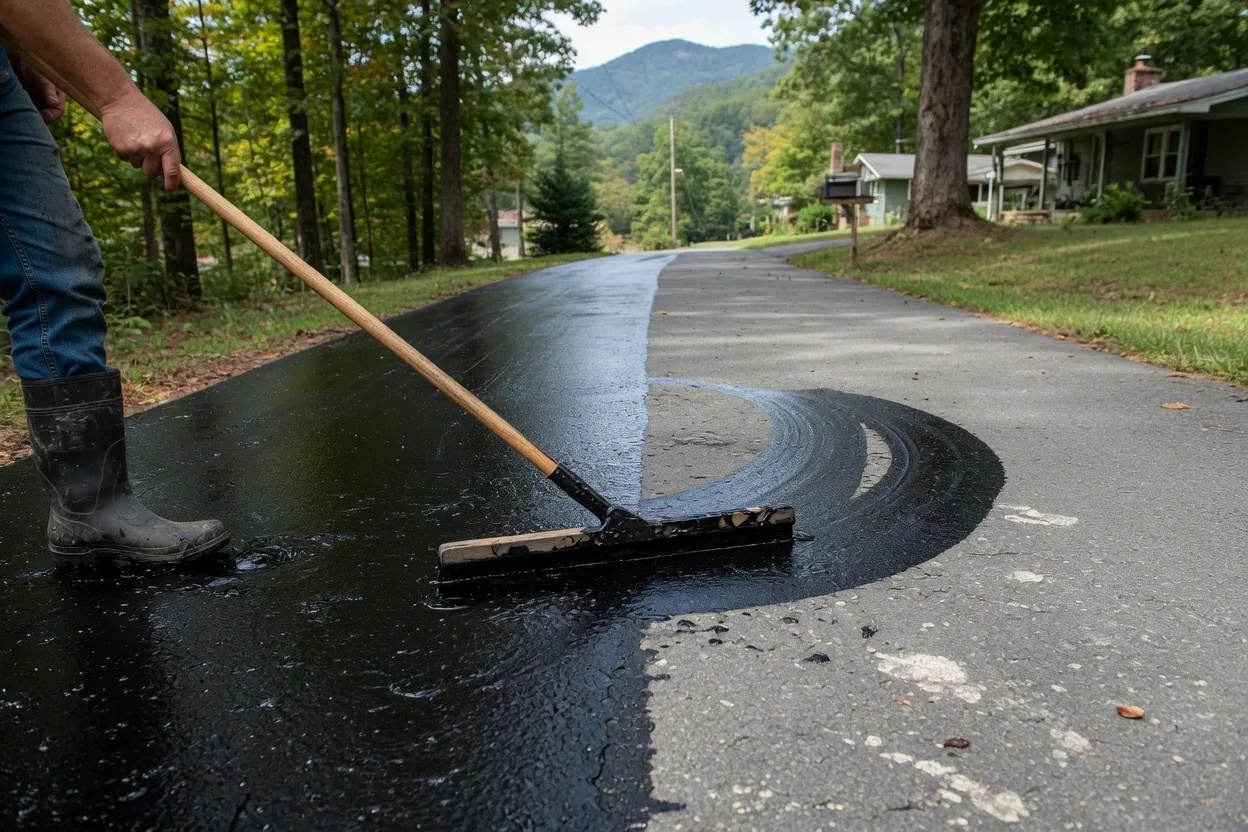
Tar and chip pricing in Henderson County breaks into four honest pieces: raw materials (binder and washed stone), mobilization, surface prep, and access difficulty. Prep matters more than homeowners expect — a chip seal over a failing base fails with it, so soft spots get dug, crowned areas get re-graded, and drainage gets a look before any binder sprays. On sloped Etowah lots, water bars and shoulder grading are not upsells; skip them and the first hard rain tells you why they existed.
For a broader comparison of options before you commit, see the Henderson County asphalt driveway cost breakdown, and for how chip seal fits among the surface choices, the tar and chip overview covers prep, cure time, and longevity in plain terms.
Mobilization is the line item homeowners understand least. It is not just fuel; it is the cost of getting a binder distributor, a chip spreader, a roller, and a crew to your address and back. For a job in downtown Hendersonville or a straight subdivision drive in Fletcher, mobilization is routine. For an Etowah ridge lot with a narrow gravel approach, the equipment may need to be staged at the bottom of the hill and fed in piece by piece. That alone can add several hundred dollars to a quote that looks identical to a neighbor's on paper.
Access difficulty is the wild card. A steep grade forces slower rolling and more careful binder application. A tight turn-in forces the driver to back the truck in, which takes time and sometimes a second person to guide. A long driveway forces more loads, and every extra load is another round trip from the plant. None of this shows up in a per-square-foot rate that assumes a flat, short, easy-access drive. When a quote comes in noticeably lower than the others, ask what access assumptions it makes. The answer usually explains the gap.
Scope vs. price, in plain rows
| Scope | What it involves | Typical range |
|---|---|---|
| Single coat, short drive | Prep, one binder pass, one stone pass, roll, under ~1,500 sq ft, easy access | $2.60-$3.50/sq ft |
| Double coat, standard drive | Two binder and stone passes, 1,800-2,500 sq ft, moderate slope | $3.25-$4.75/sq ft |
| Long or steep access | Same scope, but staging, smaller loads, extra labor hours | $4.00-$5.50/sq ft |
| Base repair add-on | Spot digs, re-grade, drainage fixes before sealing | $1,200-$4,000 lump, varies |
| Seal refresh later | Re-spray and re-chip an existing sound surface | $1.00-$2.00/sq ft |
Treat any flat quoted rate without an access note as incomplete, not cheap. A legitimate bid will say where the plant is, how many loads it expects, and how it plans to turn the trucks around on your property.
One more line worth asking about: disposal. If prep uncovers old asphalt, broken concrete, or soggy base material that has to come out, that debris has to go somewhere, and hauling it off is not free. Some crews fold disposal into the prep number; others bill it separately. Either way is fine as long as you know which one you are getting. On older Etowah properties where the drive may have been layered over the years with gravel, old millings, or whatever was handy, disposal can be a real cost that a quick walkthrough might miss.
Weather windows and the family of storms
Tar and chip needs dry surface and dry stone — moisture under the binder is the classic cause of early chip loss, and the mountain forecast turns fast. This county has seen 16 federal disaster declarations spanning 1978-2026, driven overwhelmingly by storm and flood events, and that history is exactly why driveway drainage gets attention here. Before scheduling, the crew should be watching the National Weather Service forecast the same way you watch it, and be willing to bump the day. A one-week delay beats a failed seal.
The French Broad valley has its own weather personality. Summer afternoon thunderstorms build over the Pisgah ridge and dump hard, localized rain that may never reach Hendersonville proper. A crew working an Etowah ridge job in July knows to start early and watch the western sky by two o'clock. If the surface is already tacked and the rain hits before the chip is rolled, the binder can flash and the stone can wash. That is not a materials failure; it is a scheduling failure. The best crews here plan around the afternoon pattern rather than fighting it.
Freeze-thaw is the other half of the story. Western North Carolina swings above and below freezing repeatedly through winter, and that cycle works on every crack and edge. A chip seal that was laid over a base with poor drainage will heave and break apart faster here than in a milder climate. This is why prep conversations in Etowah tend to run longer than homeowners expect. The crew is not padding the job; they are pricing the risk that this particular climate imposes on a thin surface over a marginal base.
Permits, right-of-way, and picking a crew
Most resurfacing on an existing driveway needs no special permit, but any work where the drive meets a state-maintained road touches the right-of-way, and NCDOT controls that. A widened or new driveway opening typically requires a driveway permit through NCDOT Connect before anyone cuts the shoulder. For structure work like retaining walls or regrading that changes drainage, confirm who carries the license: the NC Licensing Board for General Contractors sets the threshold where a project must be handled by a licensed general contractor, and it is worth asking directly.
Basic surfacing itself is not a licensed trade, which is why crew quality varies so much. Ask three things: where the mix plant is and how many loads the job needs, what prep happens before the first spray, and for addresses of Etowah-area drives they sealed two or more winters ago. Crews built for this access will answer all three without flinching. When gathering bids, our list of paving contractors serving Etowah is the starting point — compare scope line by line, not just totals.
One more question worth asking: who is on the crew the day of the job? Some companies bid the work and then subcontract the actual installation to whoever is available. That is not automatically bad, but it changes who you call if something goes wrong. The person who walks your driveway and writes the number should be able to tell you who will be running the spreader and rolling the stone. If the answer is vague, that is information.
Living with a fresh chip drive
Expect loose chips for a few weeks; rolling and traffic settle them, and a light re-sweep of the shoulders is normal. Avoid sharp turns in place and heavy point loads right after installation, and don't pressure-wash the surface. Done right, with honest prep and a weather-smart schedule, a tar and chip drive on Etowah's rolling ground is the lowest cost-per-year hard surface most homeowners here can buy — which is exactly why the access question deserves as much attention as the price per square foot.
Long-term, the maintenance rhythm is simple. Keep the shoulders graded so water runs off rather than pooling at the edges. Fill cracks before they widen. If the surface starts to look thirsty, with exposed binder and scattered loose stone, that is the signal for a seal refresh rather than a full replacement. Homeowners who stay ahead of that cycle routinely get a decade or more out of a properly built chip drive in this climate. Those who wait until potholes form end up paying for base repair instead of a refresh, and the difference in cost is not small.