Why haul distance and grade set your Mars Hill price before the asphalt does
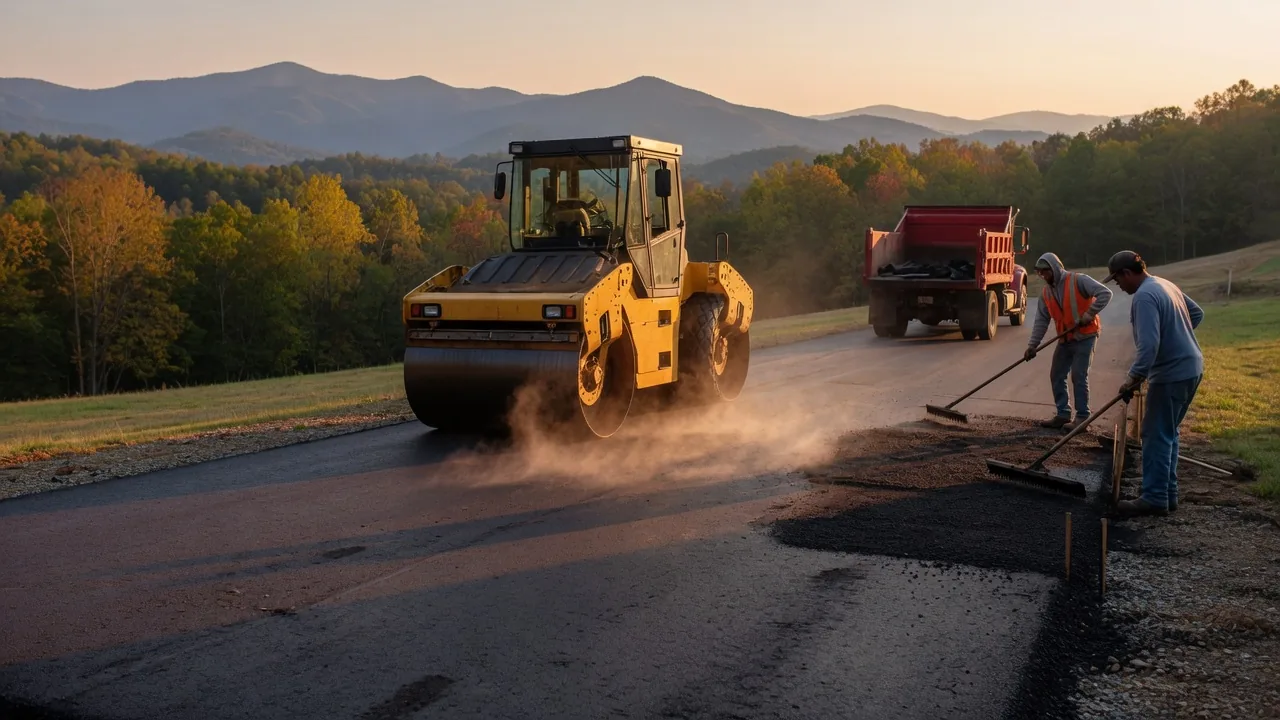
A hot-mix asphalt plant is not a hardware store. Once the mix leaves the drum it has a working window measured in hours, and every mile of mountain two-lane between the plant and your driveway eats into it. Mars Hill sits up in Madison County, and the drive out to a Wolf Laurel or California Creek address can be slow, winding, and unforgiving to a loaded tandem dump. A crew that has to run a short load to protect temperature, then come back for the second, has already spent more of your money than a flatland job would.
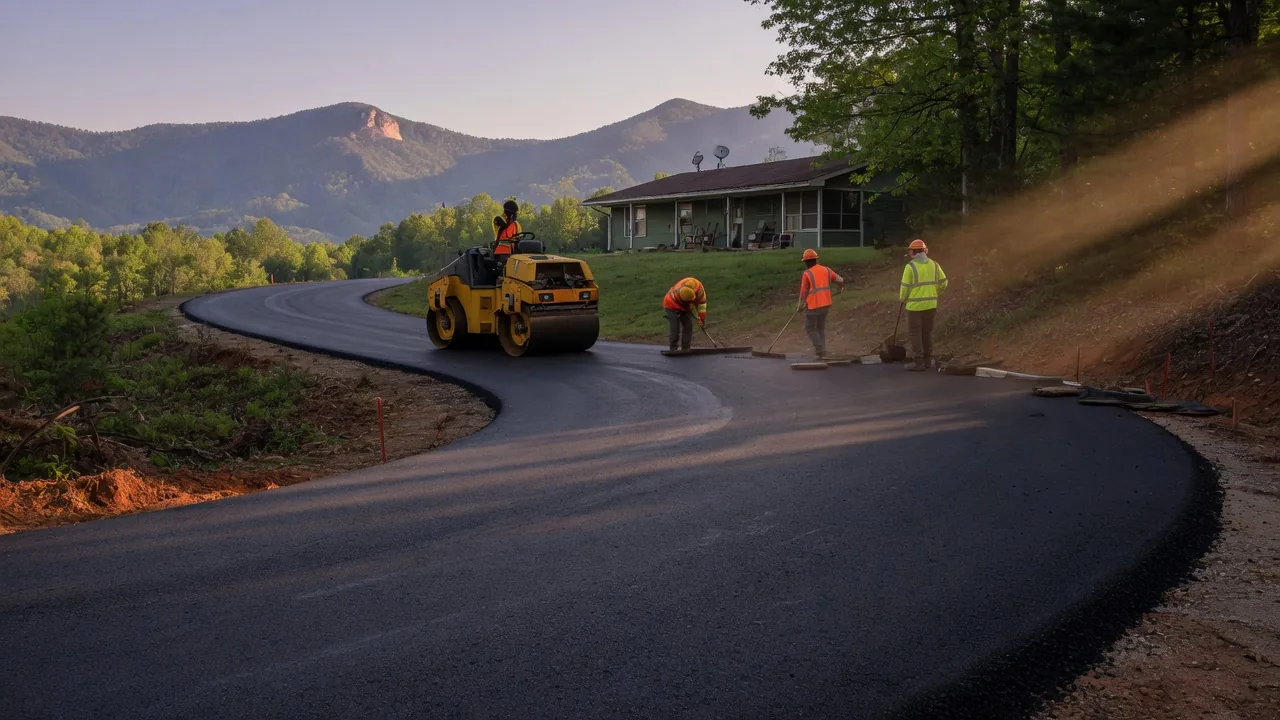
The second cost driver is your grade. Marl Hill's residential roads climb, and a driveway that drops 15 or 20 feet from the county road to the house is a pavement-laying problem, not just a paving problem. Rollers struggle to stay perpendicular to the slope, tack coats want to run, and edges ravel if the crew rushes the shoulder. The result is fewer tons placed per hour, and labor is the largest single line on a paving invoice.
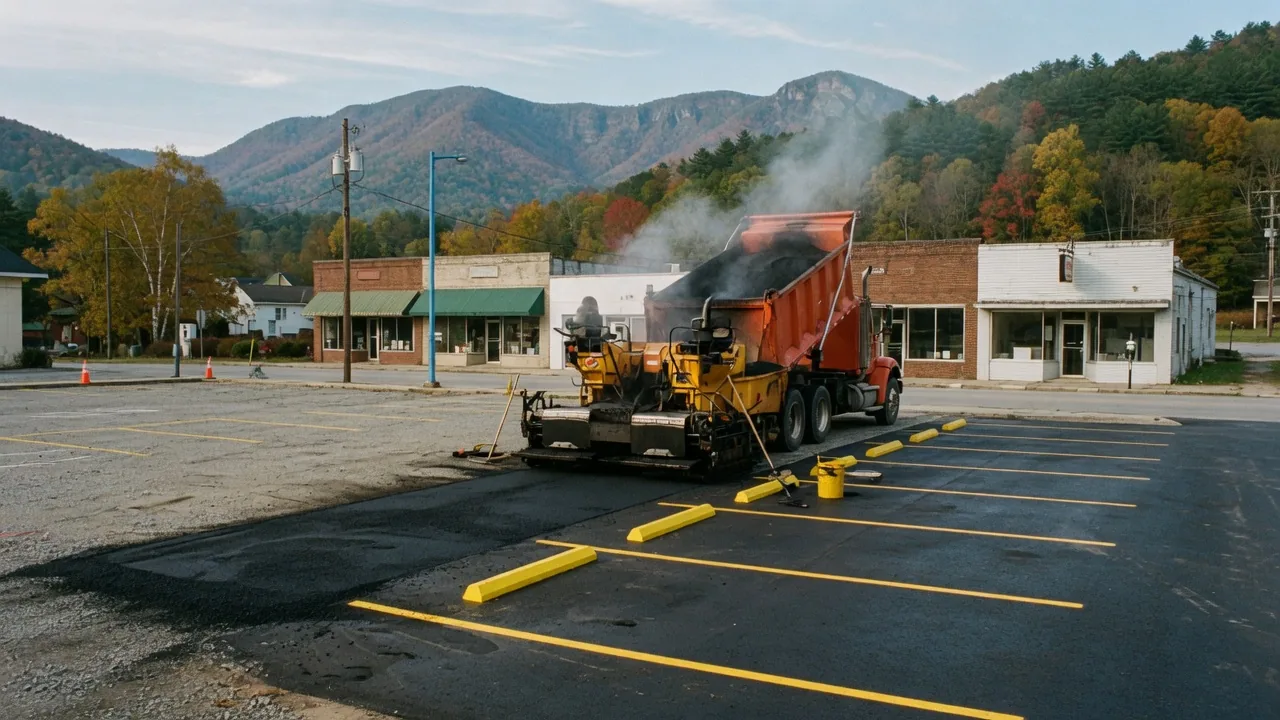
Third: turnaround room. A paver, a dump truck, and a roller need somewhere to pull off and stage. On a tight mountain gravel drive with no apron, the crew may hand-place the first 30 feet to get equipment in, then pave backward out the gate. That's skilled work, and it prices accordingly.
What a Mars Hill asphalt driveway actually costs
Use the table below as a working range, not a quote. Prices move with tonnage, distance, and how much site prep your drive needs before a single load arrives. For a fuller county-level breakdown, see the Madison County asphalt driveway cost page.
| Scope | Typical Range | What drives the number |
|---|---|---|
| Overlay on sound existing asphalt (1.5–2 in.) | $2.75–$4.25 / sq ft | Existing surface condition, edge repairs, tack |
| New asphalt on prepared gravel base, standard grade | $3.75–$6.00 / sq ft | Base depth, compaction, haul distance |
| New asphalt on steep or long mountain drive | $5.00–$8.50 / sq ft | Grade, staging, extra roller passes, drainage |
| Full build: clearing, grading, base, drainage, asphalt | $7.00–$12.00+ / sq ft | Cut/fill volume, culvert and ditch work, access |
| Driveway widening or a new turn-around apron | $4.50–$9.00 / sq ft | Base addition, transition, edge restraint |
A typical 500–700 sq ft single-car drive lands in the low thousands; a 900–1,200 sq ft two-car drive on flat ground sits in the mid-thousands; a 2,000 sq ft formal circle on a serious grade reaches five figures. Any contractor who gives you a firm number over the phone without walking the grade is quoting a different driveway.
The prep work that decides whether the asphalt lasts in this climate
Madison County sees freeze-thaw cycles that will destroy a thin asphalt mat laid over an inadequate base. The pavement is the roof; the base is the house. A driveway that fails in year three almost always failed because water got into the subgrade, not because the asphalt was bad.
That means the honest scope includes: removing or pulverizing failing material, grading for positive drainage away from the house, compacting the subgrade in lifts, placing and compacting crushed stone base to the depth your soil profile requires, and only then paving. If your drive sits in a drainage path, expect a culvert, a swale, or an underdrain line item. None of that is optional on a mountain lot, and any bid that skips it is a bid that will be paid for twice.
Note that cutting into a slope to add driveway footage can trigger stormwater and grading review. If your plan involves significant earthwork, rule changes to the residential code are worth tracking through the International Code Council, and ditch or culvert discharge that reaches a stream may fall under EPA stormwater rules administered in North Carolina.
Access, permits, and where a driveway meets the road
Where your driveway meets the public road, you may need a driveway permit from NCDOT — even on a private drive — because the apron and sight-distance at the connection are the state's concern, not just yours. The application process lives at NCDOT Connect, and the general permit information is at NCDOT. On a blind curve or a steep approach where a car crests the hill just as you pull out, expect the permit office to ask about grades and sight lines. That's easier to solve before the paver is on site than after.
For anything beyond driveway resurfacing — a new commercial lot, a shared access road, or a project where the value crosses the state's threshold for general contracting — check whether your contractor is properly licensed through the NC Licensing Board for General Contractors. Reputable paving crews will answer that question without flinching.
Choosing a crew that knows what a Mars Hill driveway is
Three questions to ask before you sign:
One, where does your mix come from, and how long is it on the truck? The answer tells you whether the crew has actually paved up here or is estimating from a valley job. Two, how do you handle the turnaround if the drive is tight? The best answer mentions hand work, a spotter, or a smaller paver, not silence. Three, what's the drainage plan? If the answer is "it'll run off the side," walk away.
For a deeper look at what a good bid includes, see our asphalt driveway guide, and for local crews serving the area, the Mars Hill paving contractor list is a starting point. Every company on it should be able to answer all three questions above.