The mountain haul changes the math
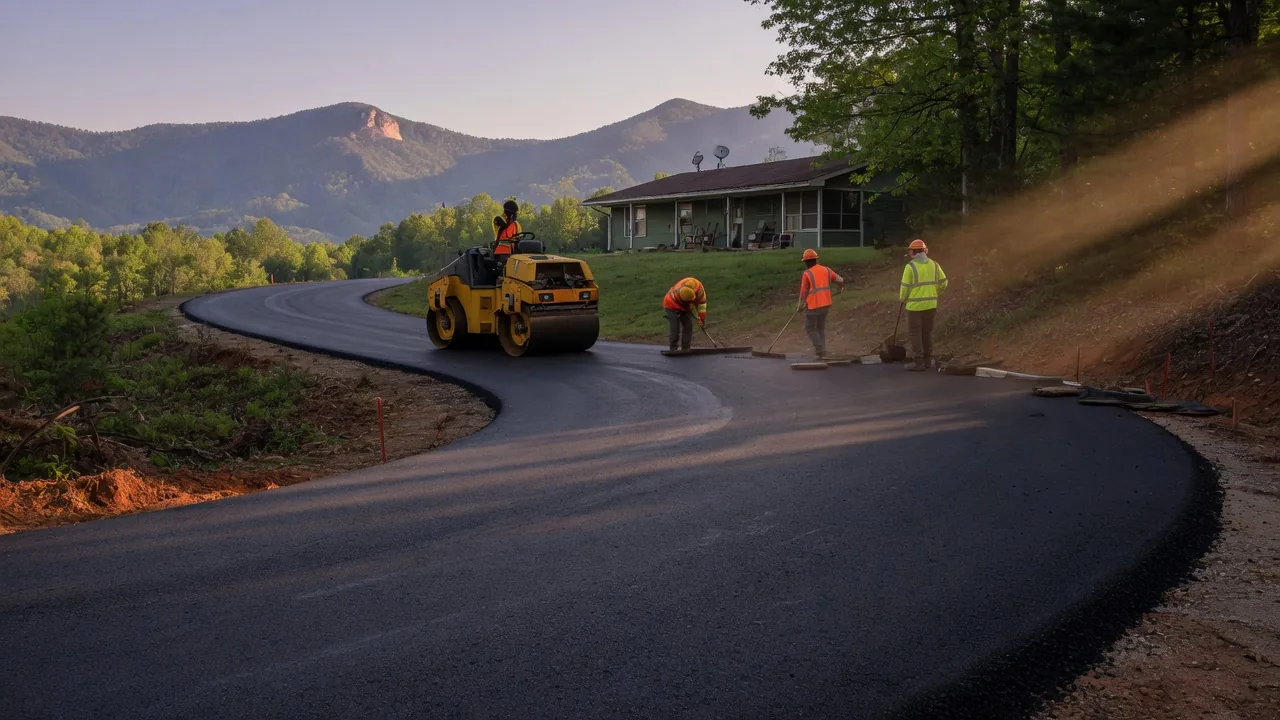
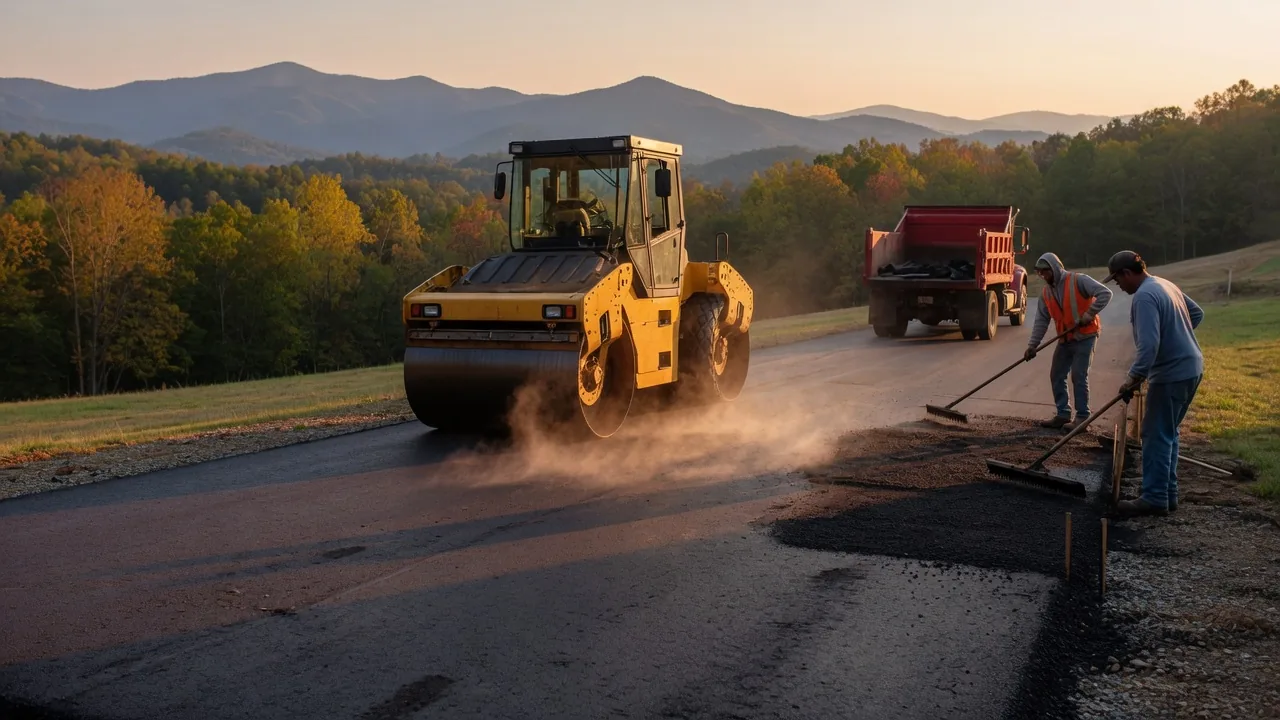
Sealcoating on a Buncombe County hillside is not the same job it is in the flatlands. The sealer itself may come from a plant down in the valley, but the crew has to get it up a winding gravel or asphalt drive that may climb several hundred feet in elevation with nowhere to turn around. A job that would take two hours on a flat lot in Fletcher can take four on a ridge above Haw Creek or a private drive off Town Mountain Road. That lost time is baked into every quote, whether the contractor itemizes it or not.
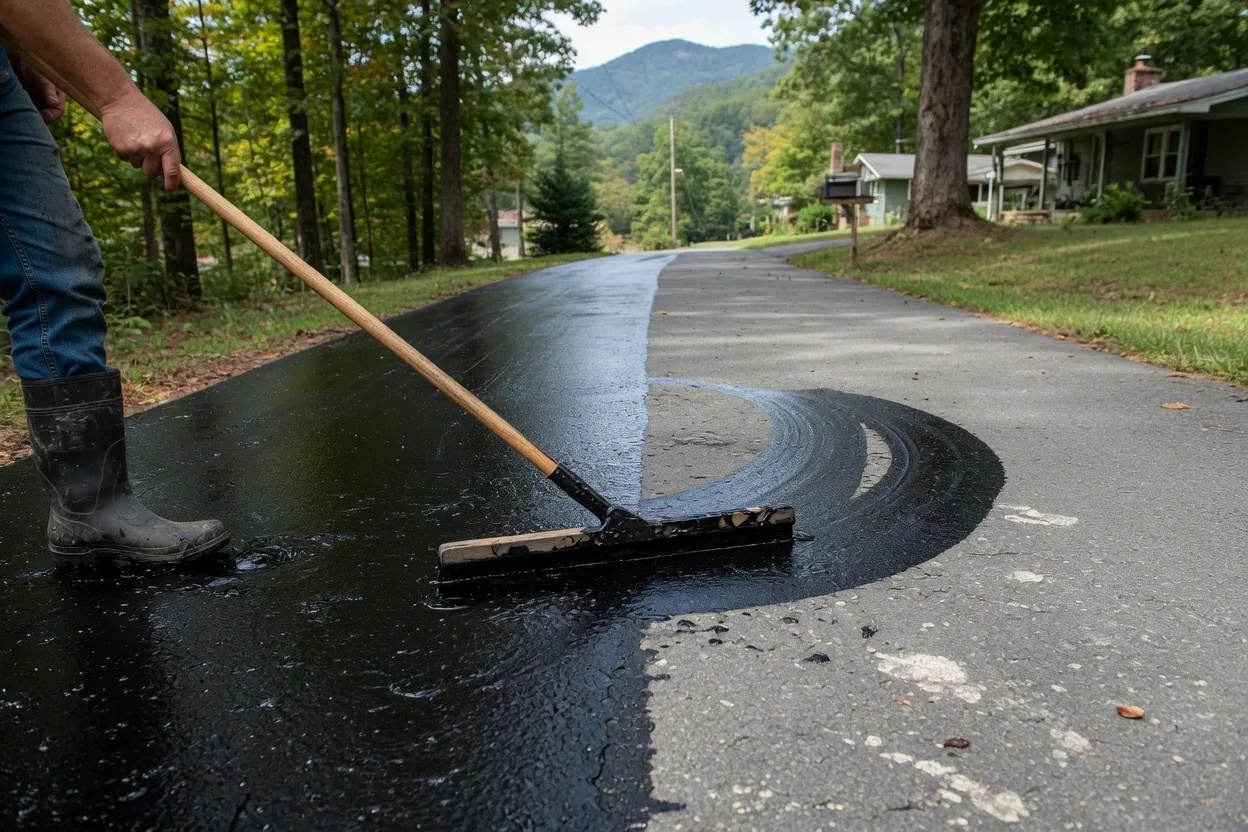
Driveways here come in three rough shapes: short and steep, long and curling, or tight and wooded. Each one costs differently. A tight wooded drive means the spray rig cannot reach some sections, so the crew switches to squeegee or brush work, which is slower and usually billed at a higher rate per square foot. A long drive means more product and more passes, and on a steep slope the sealer has to be applied thinner to keep it from running before it cures.
When you call for a quote, describe the driveway in those terms. Slope, length, width, and turnarounds matter more than the square footage alone. A contractor who quotes over the phone without asking about access is either padding the number or planning to surprise you later. Our sealcoating overview covers the product and process side; this page is about what it costs and why.
What homeowners in and around Asheville pay
The table below reflects working ranges for asphalt sealcoating in the Asheville area, not national averages. Prices depend on square footage, number of coats, and how much prep the driveway needs before any sealer goes down. A driveway with active cracks and vegetation in the joints costs more than a clean one because the prep alone can add a half-day.
| Scope of work | Typical Buncombe range | What drives the number |
|---|---|---|
| Standard two-car drive, single coat | $350 – $650 | square footage, ease of access, product type |
| Standard two-car drive, two coats | $550 – $950 | coats, cure time between passes, sealer brand |
| Long or steep drive, 1,500+ sq ft | $800 – $1,800 | linear feet, slope, turnaround space, number of passes |
| Crack sealing before sealcoat | $150 – $500 | crack count, width, whether routing is needed |
| Full prep plus two coats on a difficult lot | $1,200 – $2,500+ | vegetation removal, oil spot treatment, hand work |
Those ranges assume the driveway is asphalt, not gravel or concrete. Sealcoating does not work on gravel and is not needed on concrete. If a contractor offers to seal a gravel drive, that is a sign to keep looking. For a full breakdown of the process, see how long after paving to sealcoat.
When the job is worth doing, and when it is not
Sealcoating is a maintenance coat, not a repair. It protects asphalt from sun oxidation, slows water penetration, and gives the surface a uniform black finish. It does not fix a failing substrate. If your driveway has alligator cracking, sinkholes, or areas where the base has failed, sealing over those problems traps moisture and makes the next repair more expensive. In those cases, the honest answer is to address the structural issue first, which may mean patching or partial replacement.
In western North Carolina, freeze-thaw cycles do more damage to asphalt than sun does. Water gets into hairline cracks, freezes overnight, expands, and widens the crack. By spring, a driveway that looked fine in October has a network of new breaks. Sealcoating helps because it keeps surface water out, but only if the cracks are filled first. That is why crack sealing and sealcoating usually go together in this climate. Our crack sealing page explains the prep side in detail.
The federal record shows why water management matters here: 19 federally declared disaster events have touched Buncombe County (1973-2026), most of them storm and flood related. That history means driveways on slopes face real runoff pressure, and a sealcoat that fails because water is running under it is money wasted. If your driveway drains poorly, fix the drainage before you seal.
Permits, licensing, and what to check
Sealcoating itself generally does not require a building permit in North Carolina because it is a maintenance coating, not a structural change. But if the work involves regrading the driveway, changing drainage, or connecting to a public right-of-way, different rules apply. The NCDOT controls driveway access permits on state-maintained roads, and Buncombe County or the city of Asheville may have its own requirements depending on where the driveway meets the street.
Contractor licensing is the bigger issue. In North Carolina, general contracting falls under the NC Licensing Board for General Contractors once a project crosses the state's cost threshold, which is currently $40,000. Sealcoating rarely hits that number, but the same board publishes guidance on who can legally contract for work. If a company is doing large-scale paving and sealing, ask whether they hold the right license for the full scope. A sealcoating-only crew may not need a general contractor license, but a company that also does paving, grading, or structural repair probably does.
For weather-sensitive work like sealcoating, timing matters as much as licensing. The National Weather Service forecasts for the Asheville area are worth checking before you schedule. Sealer needs warm, dry conditions to cure properly, and a surprise afternoon storm can wash a fresh coat into the street. Reputable contractors watch the forecast and will reschedule rather than risk a failed job.
How to compare quotes without getting burned
Three things separate a fair quote from a bad one in this market:
- Square footage and coats. Ask for the square footage they measured and how many coats they plan. A low bid that assumes one thin coat is not the same job as a two-coat application.
- Prep included. Cleaning, vegetation removal, crack filling, and oil spot priming should be itemized. If prep is vague, the crew may skip it and the sealer will fail early.
- Access notes. A quote that does not mention your driveway's slope, length, or turnaround situation is a quote that will change once the crew arrives.
If a bid lands well below the ranges in the table above, ask what is missing. Sometimes a new company is building a portfolio and pricing low on purpose. Sometimes they are planning to dilute the sealer or skip prep. The difference shows up two winters later when the driveway starts cracking again.
For homeowners comparing maintenance schedules, the general rule is to seal a new asphalt driveway after it has cured, typically six to twelve months, and then every two to three years depending on traffic and sun exposure. Mountain driveways with heavy shade or poor drainage may need it more often. The timing guide walks through that schedule in detail.