What is actually under a Pisgah Forest driveway
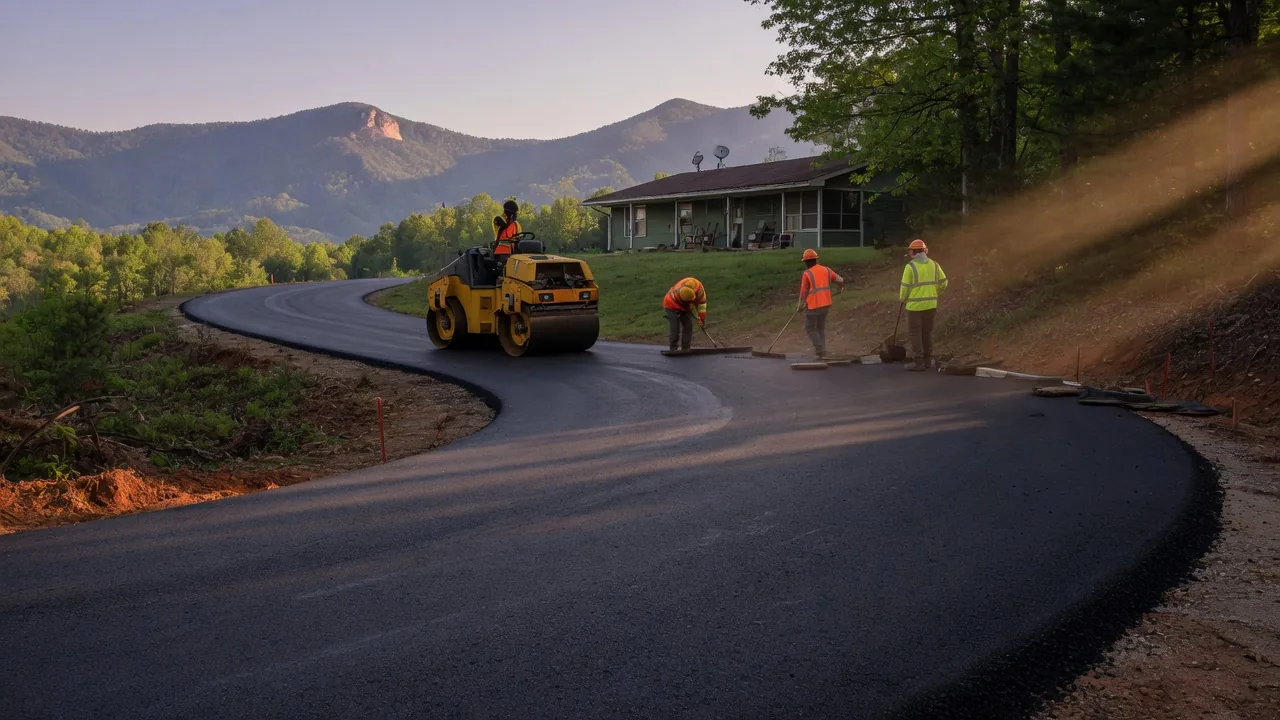
Most driveways around Pisgah Forest were not built the way paving manuals describe. They started as gravel tracks cut into the same red clay that runs through Transylvania County, got topped with a thin asphalt lift when the owner had money, and have been patched ever since. Others sit on leftover crushed stone from an old logging or farm access road, and a few new builds off the ridge roads rest on engineered fill that was graded, not compacted to paving spec.
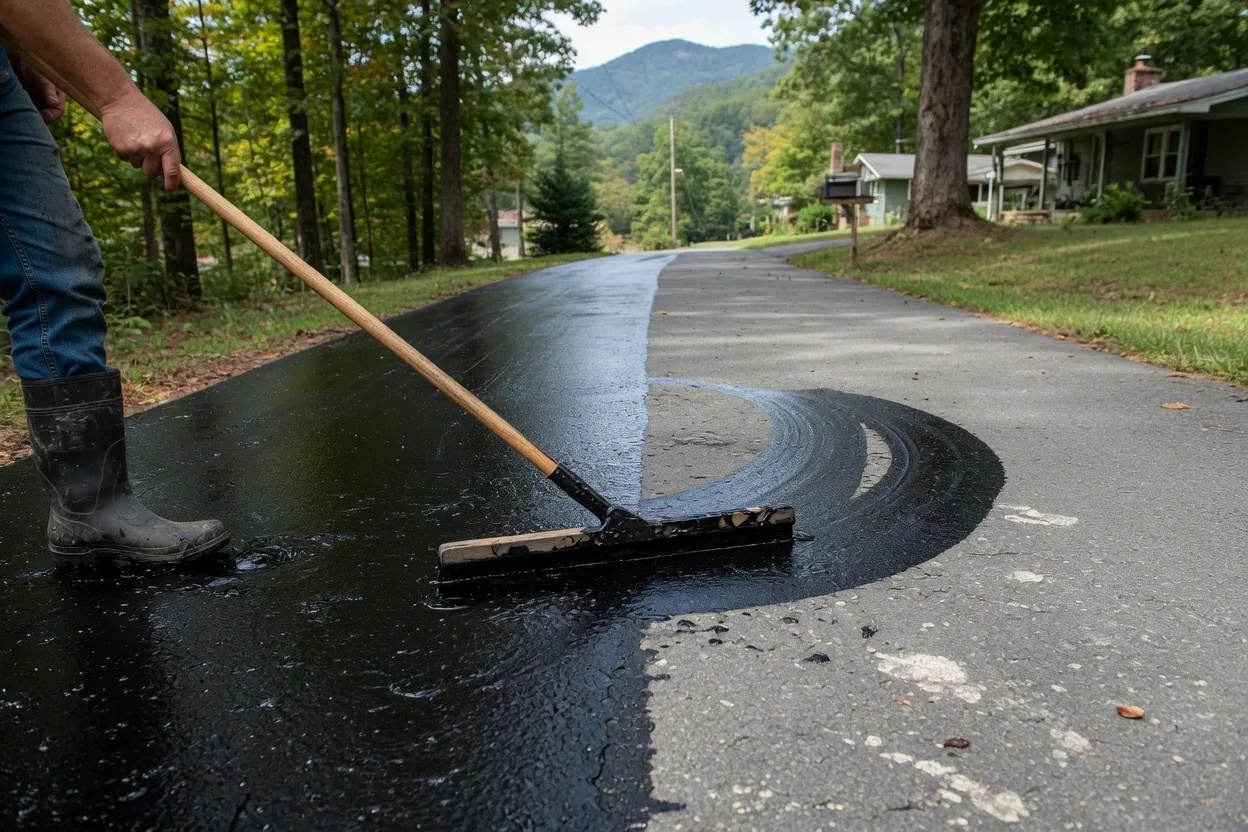
That subgrade is the whole story for sealcoating. Sealer is a surface treatment. It protects asphalt from sun, oxygen, and the fuel and oil drips a driveway collects. It does not add structure. If the base under your asphalt is soft, moving, or draining poorly, sealing it just makes a prettier lid on a problem. The first honest question a crew should ask on your property is not what sealer they use, it is how much crushed stone this drive needs and whether it ever got it.
Why the stone question comes before the sealer quote
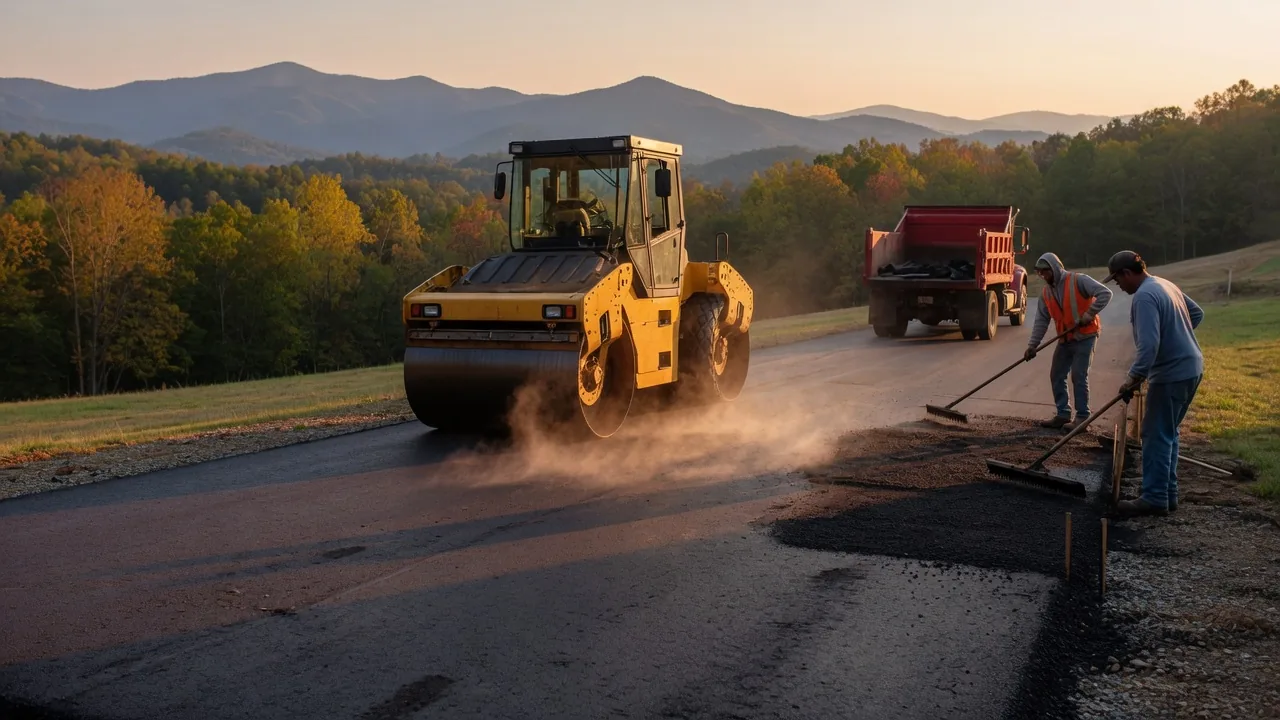
A driveway that was properly built has a compacted aggregate base, often four to six inches of crushed stone, sitting on graded subsoil with water moving away from the slab. When that base is missing or thin, asphalt flexes under vehicle weight, cracks open along the flex lines, and water finds the clay underneath. In our climate that water does not drain. Clay holds it, the subgrade softens, and the next freeze lifts and breaks the asphalt further.
The National Weather Service keeps the climate record for this corner of the mountains at weather.gov, and the pattern is the one locals already know: wet winters, freeze-thaw cycles that work cracks open, and summer sun that oxidizes the binder in asphalt. Sealer slows the sun damage. Only stone and drainage address the water and the flex.
So a real scope for a Pisgah Forest driveway usually has two lines before any sealer appears: bring the base up to spec where it has failed, then seal what is left. Skipping the first line is how a driveway gets resealed every other year and still keeps cracking.
What sealcoating costs here, by scope
Prices below are regional bands for residential work in Transylvania County, not a quote. The spread is wide because the base condition varies so much from property to property. The Transylvania County driveway cost breakdown covers the full paving picture if you are deciding between sealing and replacing.
| Scope of work | Typical price range |
|---|---|
| Clean, crack-fill, and seal a sound driveway | $1,100-$1,900 |
| Seal with extensive crack and edge repair | $1,900-$2,900 |
| Spot base correction plus seal | $2,400-$3,800 |
| Full base rebuild, then seal | Quoted after excavation |
Two things move the number more than the sealer brand: driveway length and access. A long, steep drive off a ridge road takes more material and more time than a short flat pad, and crews price the haul and the slope. If a bid lands far under these bands, ask what it excludes, because it usually excludes the base.
Permits, drainage, and where the water leaves your property
Sealing an existing driveway in place normally needs no permit. Changing the driveway, widening it, or altering where it meets a state-maintained road is a different matter, and NCDOT handles driveway and street access permits for work at the road connection through NCDOT Connect. If your drive ties into a state road and the work touches that apron, check before you dig.
Drainage is the other half. Pisgah Forest sits where steep terrain meets level ground, and a driveway that sheds water onto a neighbor's lot or back into its own base is a problem sealer cannot fix. Regrading so runoff leaves the slab is often the cheapest structural improvement available. General contractors and larger paving scopes in North Carolina cross a licensing threshold set by the North Carolina Licensing Board for General Contractors, so ask how a crew is licensed if the job grows past sealing into rebuilding.
The federal disaster record for this county, 16 declared events across 1993-2026, is mostly storm and flood family. That history is why so many drives here fail from below. Water arrives, the clay under the asphalt holds it, and the surface pays for it. If your driveway has been under water or washed across in a past event, treat the base as suspect before you buy sealer.
Choosing a crew in Transylvania County
Ask three things and the right crew separates itself. First, what is under the asphalt and how did they check. A serious estimator probes or digs a test spot rather than eyeballing the surface. Second, what sealer and how many coats, with cracks filled before the coat goes on rather than painted over. Third, what they will not do, because the honest answer includes base repair when the drive needs it.
If you are still comparing companies, the Pisgah Forest paving contractor guide walks through what to verify. And if the driveway is past sealing, the sealcoating service overview explains when a reseal is the right call and when replacement is the better spend.