Why asphalt work here is a seasonal trade
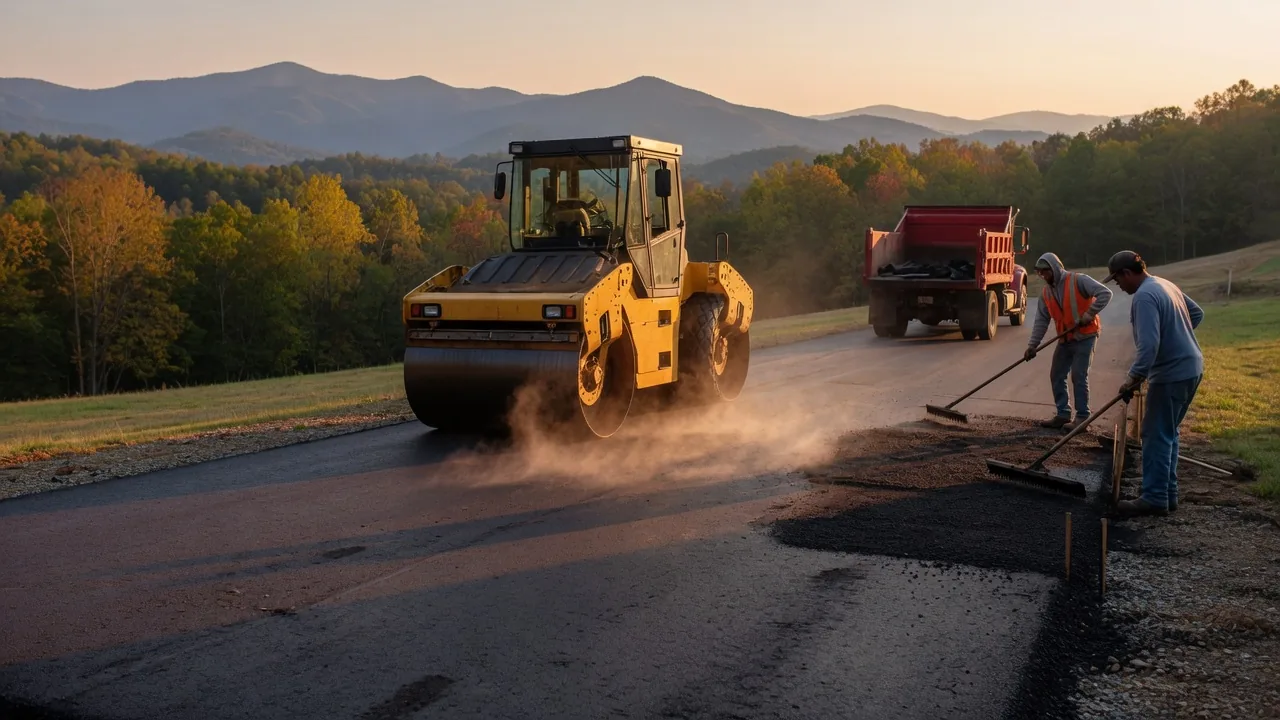
Swannanoa sits in a valley floor that collects cold air and drains it slowly, with the Blue Ridge crowding in from the south and east. That geography matters more than most homeowners expect: hot-mix asphalt has to arrive from the plant, get placed, and be compacted while it is still workable — once the mat cools below a workable threshold the roller stops doing anything useful. Plants in the Asheville area normally run from spring into late fall, and the practical laying window collapses further on shaded valley lots where the driveway never fully dries from last week's rain. Ask any crew what their season looks like before you sign; the honest answer is a window, not a date.
Frost is the other half of the story. Ground that heaves under a driveway in January will find every soft spot in the base, so the prep work done in July is what you're really buying. A driveway laid on wet, un-compacted fill is a driveway that shows its first alligator cracks by the second spring.
There's a real difference between the valley floor and the slopes. Down along the river bottoms, morning fog and overnight dew linger on the surface well past sunrise, and a driveway that faces north under a canopy of hardwoods may not shed that moisture until mid-day. Crews who know the valley schedule those shaded lots for the warmest, driest stretch of the season, not the shoulder weeks when a warm afternoon can fool everyone. If your driveway runs through a tree tunnel toward Black Mountain or sits low near the Swannanoa River, expect to be asked about sun exposure when you get your quote. That question is a good sign — it means the estimator is thinking about how the mat will cure, not just how it will look on day one.
What Swannanoa ground does to a driveway
The valley has a mix of older mill-era homes near the river, ranches on flat-to-rolling lots off the main corridors, and newer builds climbing the slopes toward Black Mountain and Ridgecrest. Each one asks a different question of a paving crew. Flat lots near the river have drainage and soil-moisture problems. Slope lots have runoff and need the grade honest before any asphalt goes down. Neither one is difficult for a contractor who has worked this valley; both are traps for a crew used to building on piedmont clay.
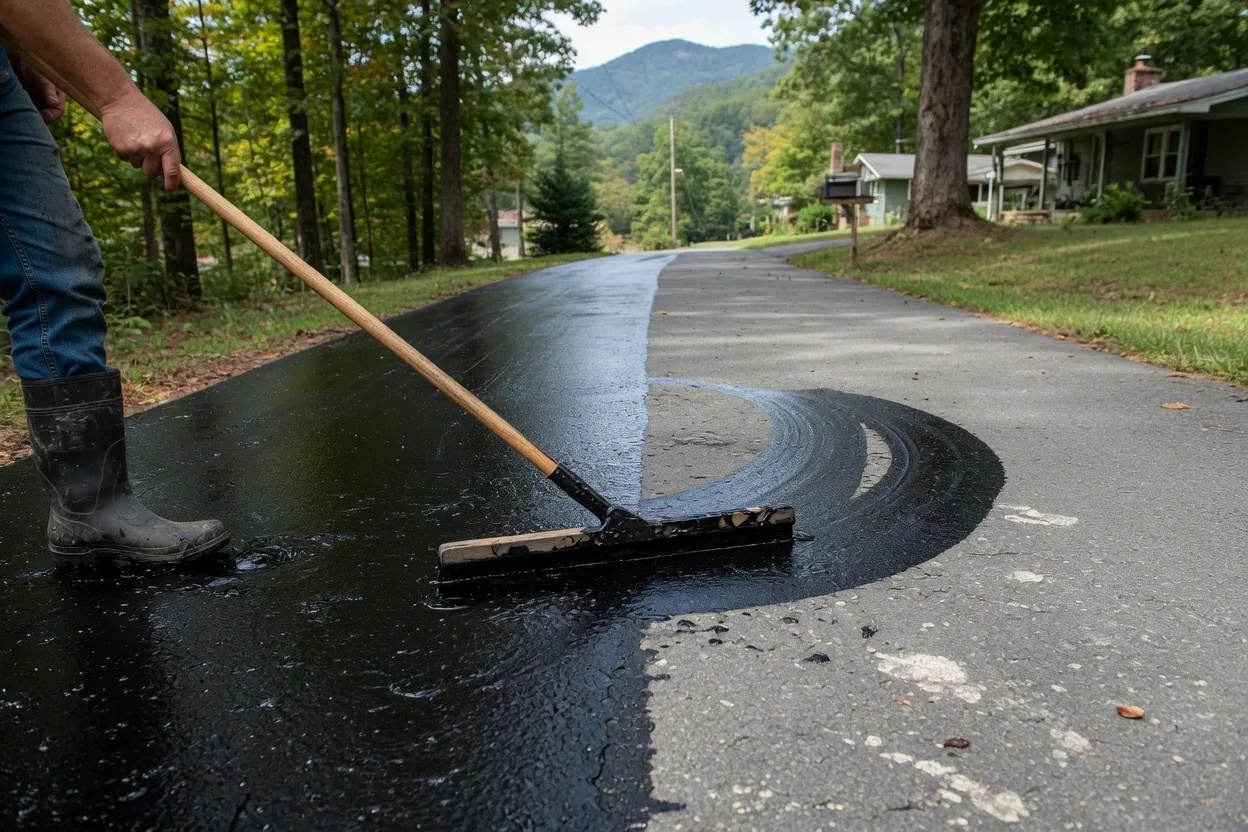
The tells that you're due: edge cracking that keeps widening, a dip that holds a puddle after every rain, and the surface going from dark black to gray to chalky in a season. A driveway past that point usually doesn't need another sealcoat — it needs the section rebuilt.
Watch the transition zones where a driveway meets the shoulder of a state road. That apron takes the most punishment because it's where turning tires and road salt meet your mat, and it's often the first place a Swannanoa driveway starts to break up. A good contractor will pay attention to that piece — sometimes with a thicker lift or a slightly different mix — because fixing a crumbled apron later means cutting out perfectly good asphalt behind it. The same goes for any culvert or drainage swale that crosses under your drive: if the pipe has crushed or the ditch has silted in, water is already finding a path under the base, and no surface treatment will outrun it.
The cost picture for Swannanoa asphalt
Local jobs price by square foot, but the base and the access are what move the number. See the full Buncombe County cost breakdown for line items. The short version, as a working table:
| Scope | Typical range |
|---|---|
| Sealcoat over sound asphalt | $0.20–$0.35/sq ft |
| Crack fill and patch, existing driveway | a few hundred dollars |
| New asphalt over existing gravel, adequate base | $3.50–$6.00/sq ft |
| New driveway with grading, base, and asphalt | $6.00–$10.00+/sq ft |
| Typical full driveway (short to long residential) | $3,500–$11,000 |
Only a site visit produces a real number. Anything quoted sight-unseen over the phone is a guess with a smile.
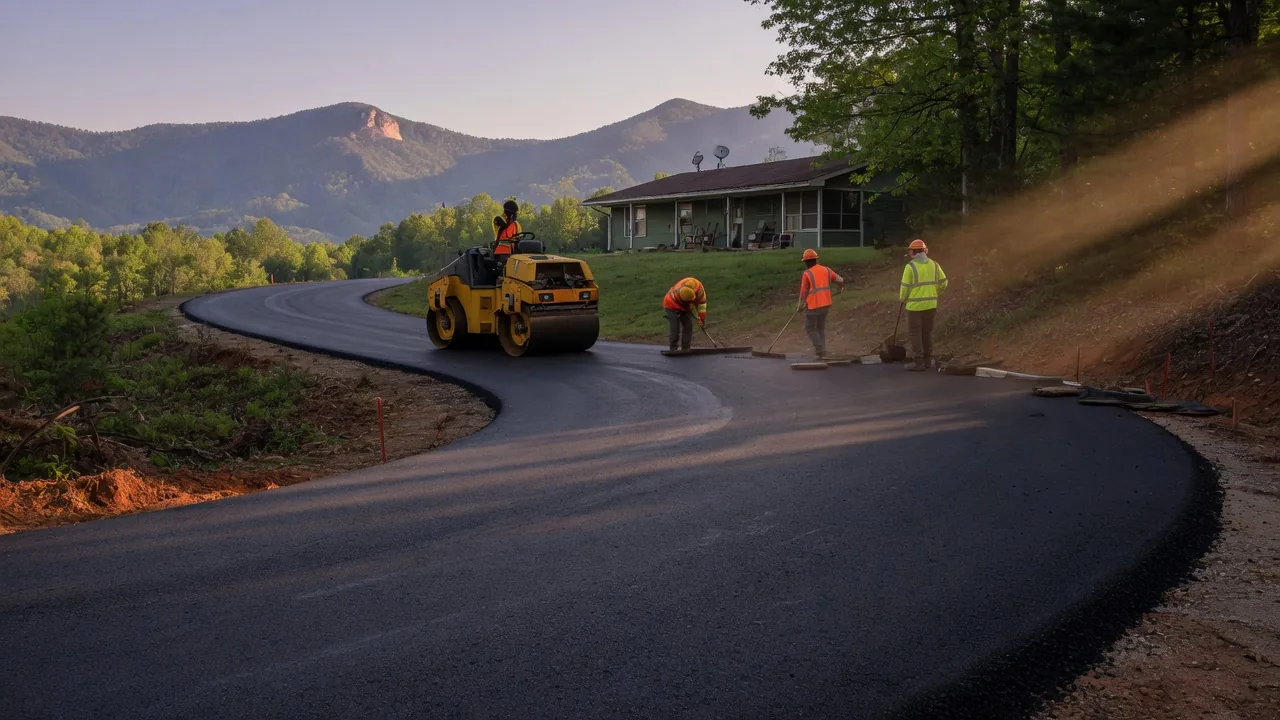
Access is where mountain quotes diverge from flatland quotes. A long, narrow drive that a dump truck can back down easily prices very differently from a steep grade where the paver has to work uphill and every load has to be staged from the road. If your lot sits above the valley with a switchback in the drive, or if a low tree canopy forces a smaller truck, that's real cost. Honest crews will tell you so up front rather than discovering it on delivery day. Ask specifically how many tons they expect and how they'll get the equipment in — those two answers tell you whether the bid was built for your property or just phoned in.
Licensing, permits, and where the driveway meets the road
North Carolina draws a real line between maintenance and construction. Sealcoat and patch work is treated as routine maintenance; building or rebuilding a driveway typically crosses into general contracting territory, and the NC Licensing Board for General Contractors publishes the dollar thresholds where licensure becomes mandatory. Any crew working above those thresholds without a license is a risk you carry, not them.
If your driveway touches a state-maintained road, the connection itself is regulated — NCDOT handles driveway and street access permits, with applications filed through NCDOT Connect, and the broader program rules are published on NCDOT's site. That matters most for Swannanoa properties fronting the main highways and any driveway that changes its intersection with a public road. For everything inside town on a city-maintained street, check with the City of Asheville before you schedule the excavator — Buncombe County addresses fall under different review depending on jurisdiction. Confirm drainage and stormwater rules separately if your lot slopes toward a creek or the river; the federal flood record here is not short, with 19 declared events touching this county across 1973-2026, mostly storm and flood family. That history is why mature drainage detail belongs in every Swannanoa driveway plan, not just the ones near the water.
One more layer worth knowing: a lot of Swannanoa properties sit on private roads or shared easements rather than state or city streets. On a private road, nobody is coming out to permit your apron — the maintenance obligation is between you and your neighbors, and it's worth reading whatever agreement governs the road before you pour money into a surface that a shared culvert will undermine. Where a driveway crosses a stream or wetland edge, federal rules on fill can reach further than people assume, and the EPA publishes the basics on those waters. Ask before you dig, not after.
How to hire well for this trade here
Three checks that separate a real Swannanoa paving crew from a traveling outfit. First, ask what they do with the base — a contractor who talks only about the asphalt surface and never about compaction and drainage is selling you a paint job. Second, ask for references on your driveway type: a steep shaded slope and a flat river-bottom lot are different jobs, and both are common here. Third, ask how they handle the temperature window in your specific season — a crew that shrugs at that question is hoping the mix stays warm long enough on its own.
When the quotes start coming in, compare like-for-like scope before you compare price. The full asphalt paving service overview covers what a proper scope should include, and if your driveway is in the Swannanoa area specifically, the Swannanoa driveway page narrows down local job patterns.
A local tell you can use while you're comparing: ask whether they saw your actual driveway or just looked at it on a map. A crew that shows up, walks the grade, checks where water runs off, and points out the low spot you already knew about is doing the job right. A crew that quotes from a satellite image is guessing. In a valley where one side of the road can be shaded and the other sunlit, and where the ground can hold water differently from one lot to the next, the walk-through is not a formality — it's the estimate.