Why Laurel Park driveways wear harder than they look
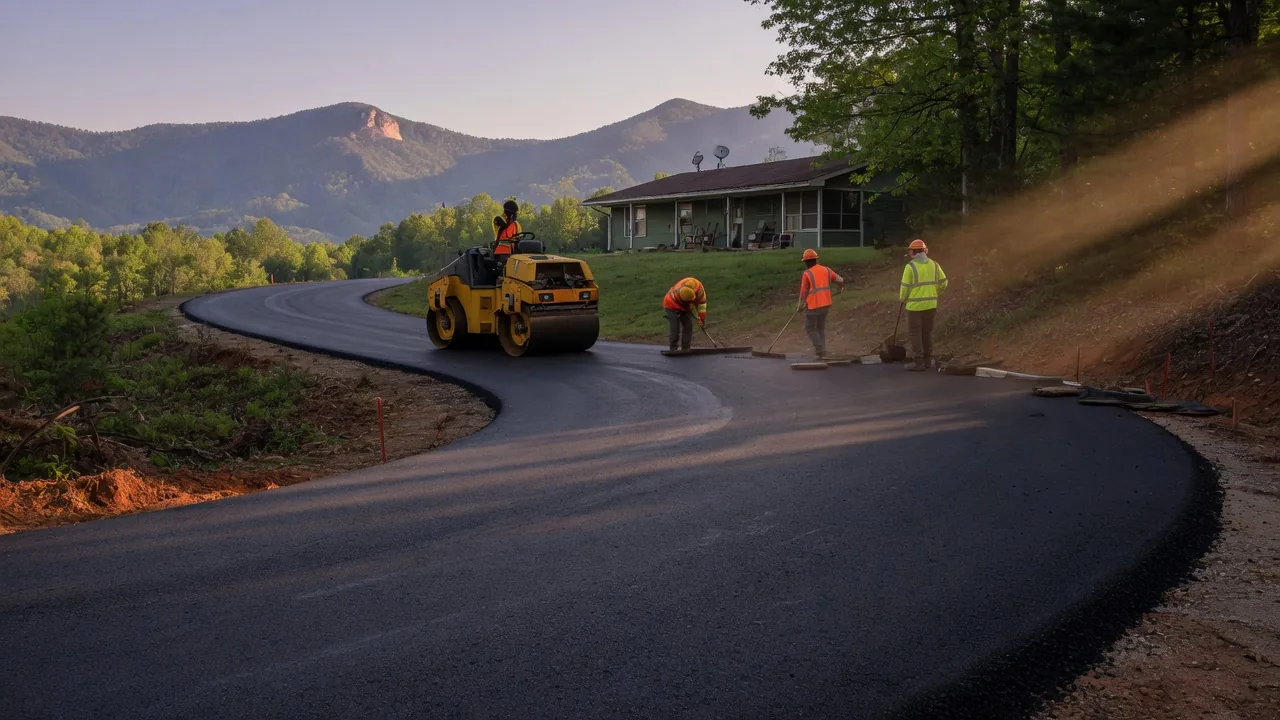
Laurel Park's terrain does most of the damage before any car touches the asphalt. The town sits on wooded slopes above Hendersonville, and the streets climb and bend, which means most private drives are steep, tree-shaded, and short enough that every turn happens at slow speed with the wheels cranked. That low-speed torsion is what opens hairline cracks at the apron and along the edges. Add decades of oak and poplar leaf fall holding moisture on the surface, and you have a drive that stays damp well into morning.
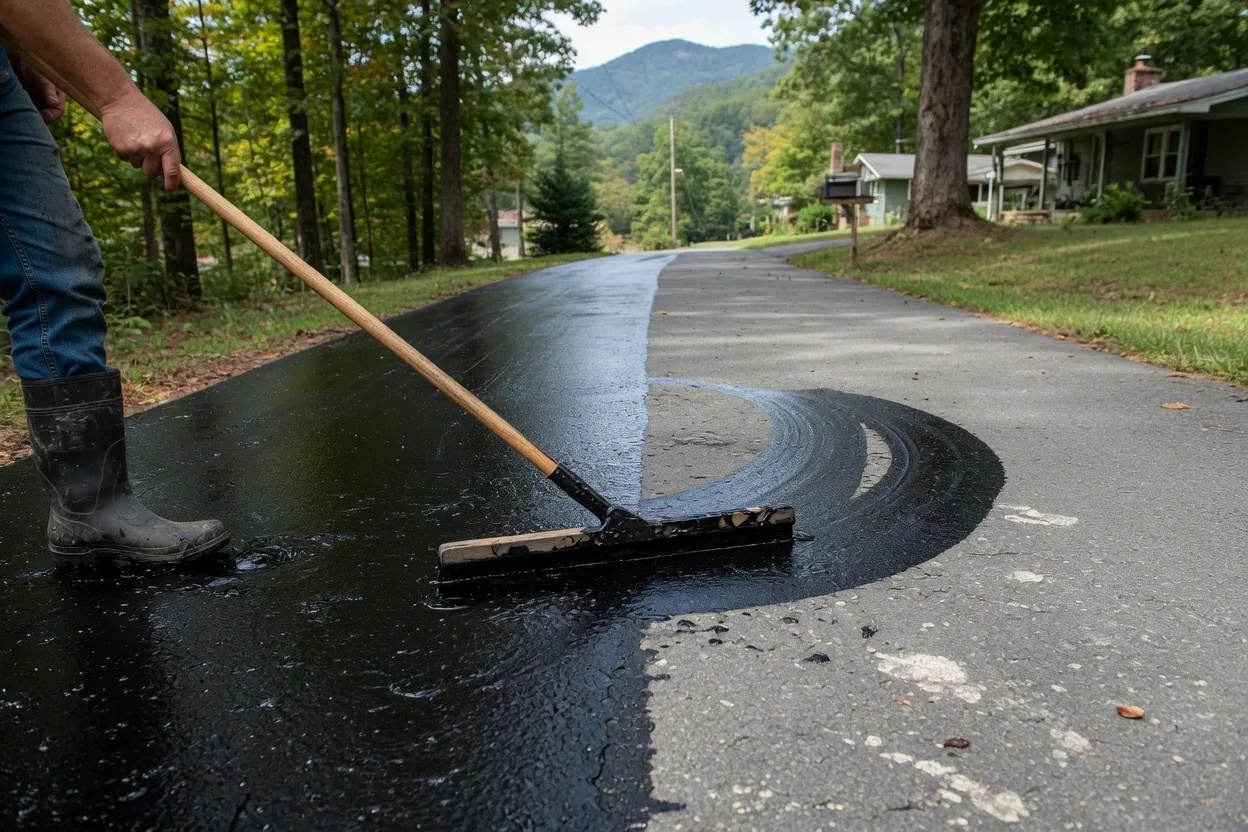
Sealer is not a cosmetic coat in this environment. It is what keeps sun, water, and oxygen out of the binder. On a flat, full-sun drive in the county seat, a good seal might buy three years. On a shaded hill lot off Laurel Park Highway, the same sealer is working harder and the honest cycle is closer to two years.
Laurel Park's own street mix matters too. Residential traffic is one thing; the service and delivery trucks that reach homes on these narrow grades are another. Those are the loads that argue for a heavier mix rather than a thinner, cheaper one that looks fine at first sweep and starts checking the next spring.
Two inches or three, one lift or two
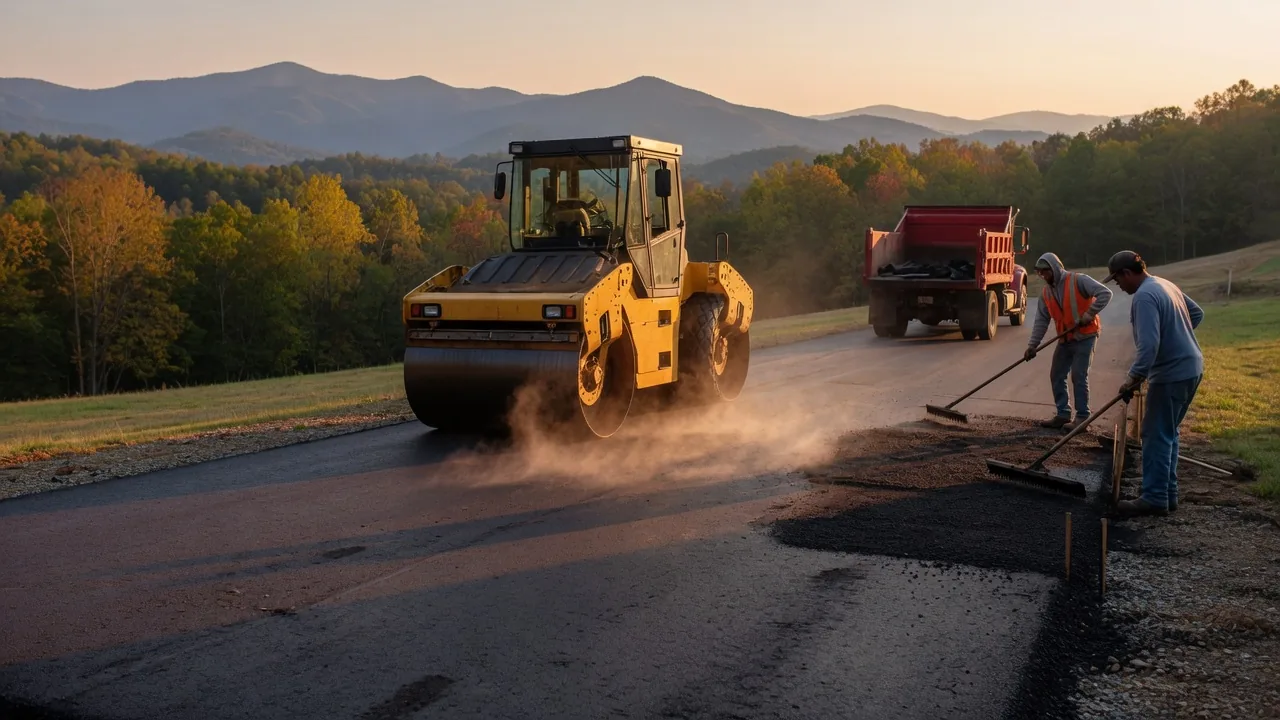
Thickness is where bids in Henderson County diverge most, and it is worth understanding what you are buying. Two inches of asphalt installed in a single lift is the residential minimum and is fine on a compacted, well-drained base with light passenger traffic. Three inches placed in two lifts is the sturdier option on steep Laurel Park grades, on drives that carry trucks, or where the old surface is being milled and overlaid rather than fully replaced.
The reason the distinction matters for sealcoating is timing. A thin single-lift drive oxidizes through faster, so it wants sealing sooner and more often. A two-lift drive holds its binder longer, and sealcoating stretches into a longer cycle. Paying for the extra lift up front is often cheaper than sealing twice as often. The Henderson County paving cost guide breaks out where the per-ton and per-square-foot numbers actually land for each approach.
What sealcoating costs on a Laurel Park drive
Ranges below reflect typical regional pricing for the work, not a quote. Shape, access, and how much prep the surface needs move the number as much as size does.
| Scope | Typical price range |
|---|---|
| Sealcoat only, single coat, standard two-car drive | $450-$750 |
| Two-coat sealcoat, standard two-car drive | $700-$1,100 |
| Per square foot, standard residential mix | $0.18-$0.35 |
| Crack fill (hot pour), per linear foot | $1-$2 per foot |
| Crack fill plus two coats, average drive | $850-$1,650 |
| Spot primer or patching before sealing | $150-$450 |
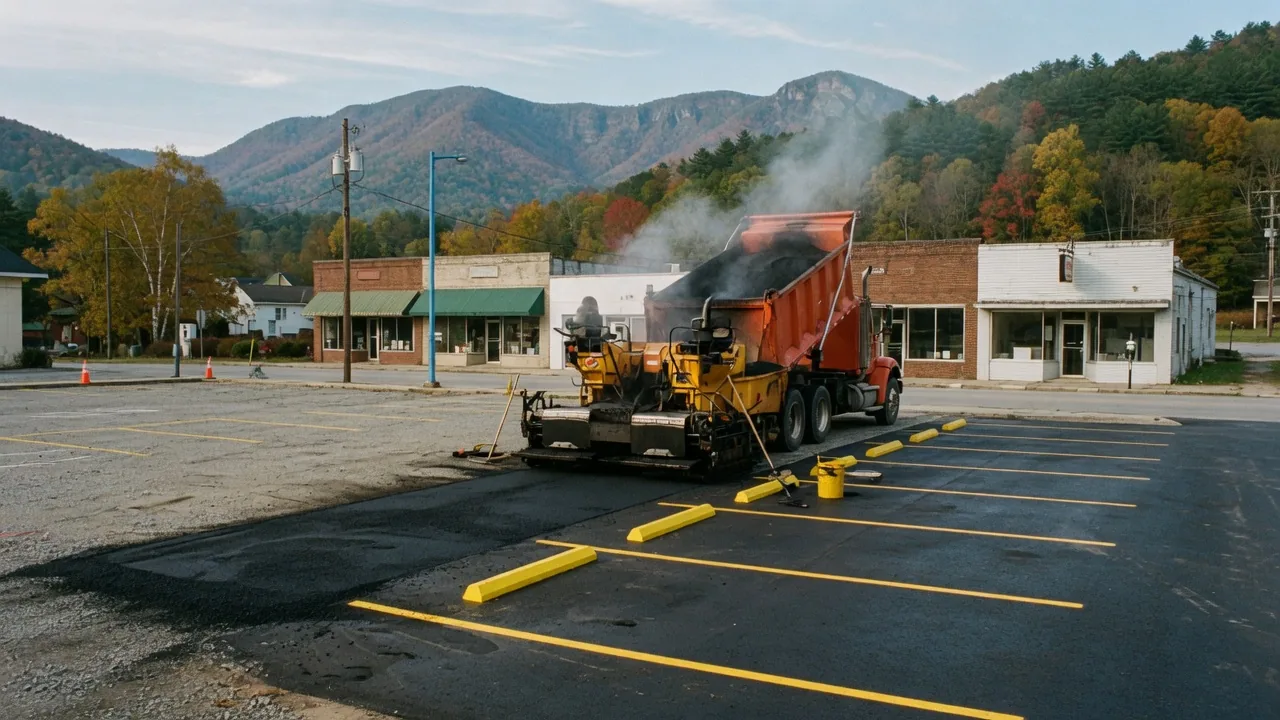
| Asphalt replacement, residential, two-inch lift | $4-$7 per square foot |
| Asphalt replacement, residential, three-inch two-lift | $6-$10 per square foot |
Sealing a sound drive is a fraction of replacing one, which is why the timing question matters more than the brand of sealer. A drive that is cracking apart at the base is not a sealing candidate at all, and a reputable crew will say so. The sealcoating service overview covers what the work includes and how to judge whether your drive is ready for it.
The prep work most bids leave out
Sealer over a dirty or wet surface peels, and on the shaded, leafy lots common around Laurel Park it peels sooner. Real prep means blowing and sweeping the surface, scraping out existing cracks, filling them with hot-pour rubberized material, and letting the surface dry fully. On drives with moss or algae in the shaded zones, a treatment pass comes first. Cutting that step short is the single most common cause of a sealcoat failing within a year.
Weather matters too, and the window here is narrower than people expect. Sealer needs warm, dry conditions and time to cure before rain arrives. The National Weather Service forecasts for the Henderson County area are worth checking against your scheduled date, because a coat that gets rained on before it sets is money you spend twice. Late spring and early fall are the reliable stretches; midsummer heat shortens working time on steep drives.
Hiring and the rules that apply
Sealcoating itself sits below the threshold that triggers state general contractor licensing, but any project that grows into resurfacing, grading, or structural driveway work may cross it. The NC Licensing Board for General Contractors sets those thresholds and maintains the license lookup, which is worth a check before signing anything substantial. If work touches the right-of-way or the street connection, a driveway permit from the North Carolina Department of Transportation may be required, since Laurel Park's streets connect to state-maintained roads.
Practical questions for any crew: will they do the crack filling and cleaning as a separate line item or fold it invisibly into the total, and what does the drive need to look like before sealer goes down. A crew that answers those two questions plainly is usually a crew that returns calls after the job. Local references still carry weight on these hills. Our Laurel Park paving contractor directory is a place to start, and any reputable outfit will happily show you a drive they sealed two or three winters ago.