Two inches or three, one lift or two
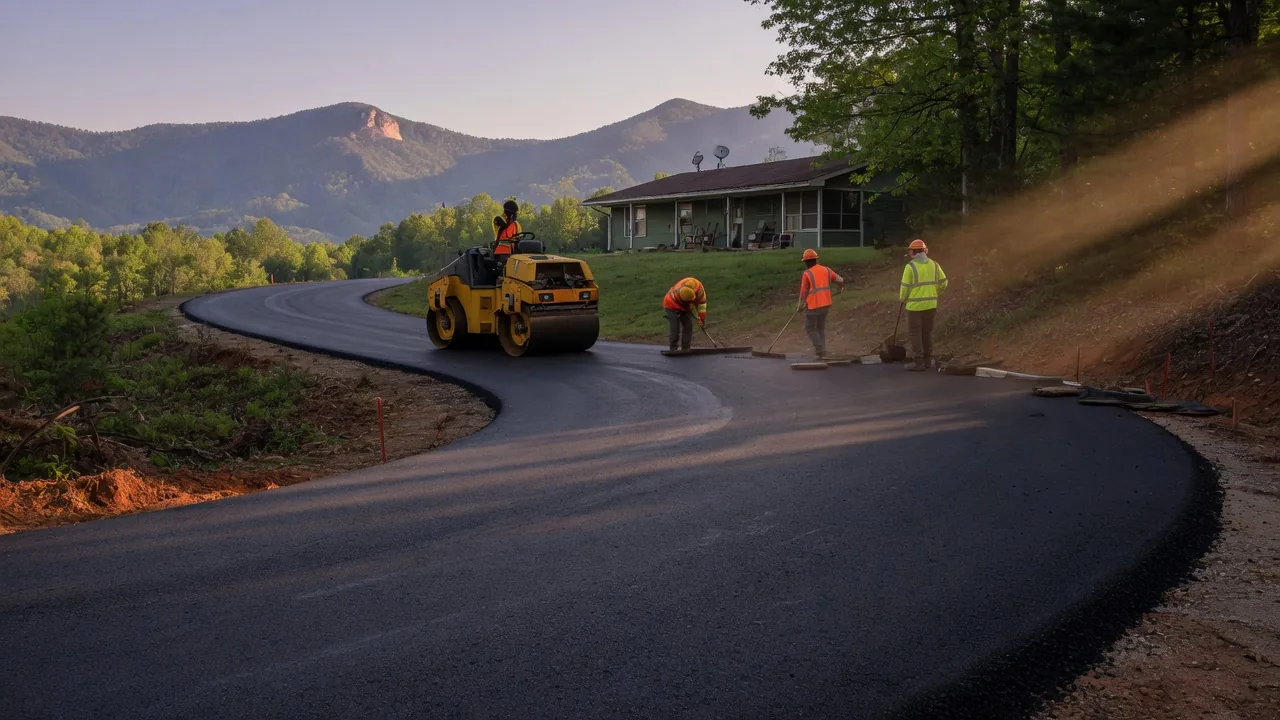
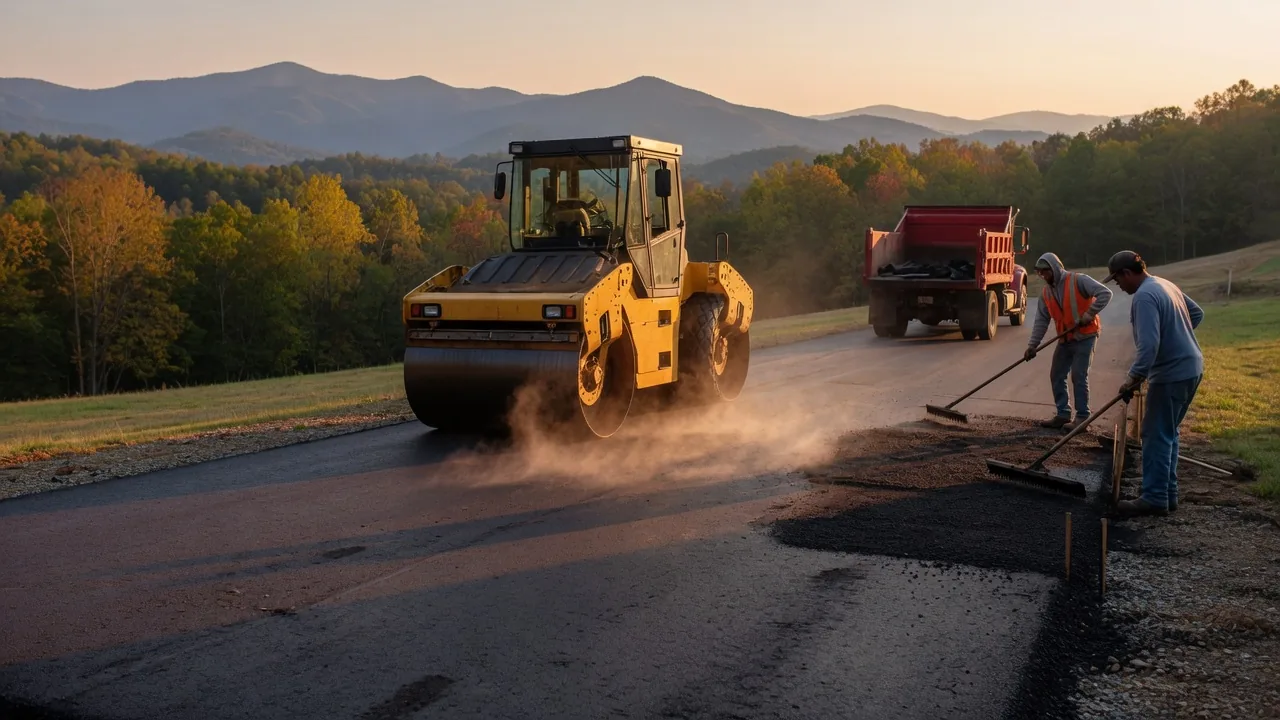
Drive most Buncombe County roads and you'll see the same pattern: contractor-grade asphalt laid fast and thin. Two inches of compacted asphalt is the common residential spec, and for a single car driveway on flat ground it works. But west-of-town lots climb and curve, delivery trucks back to the top of the drive, and a 4,000-pound truck turning on 2 inches of asphalt over a weak base is where cracks start. Three inches in two lifts — 1.5-inch base course, 1.5-inch surface course — is what a steep drive with any turning traffic actually needs. The tell is in the crack itself: hairline cracks that follow the driveway length are usually surface fatigue; cracks that spread from the edges inward, or one long crack down the center, are often a base or thickness problem.
Buncombe County's freeze-thaw cycle is the main crack factory
Asheville-area winters are a freeze-thaw seesaw. The ground freezes overnight, thaws by midday, and repeats all season. Water that seeps into even a small surface crack expands when it freezes and pries the crack wider — then the thaw lets more water in. After two or three winters, a hairline crack becomes a spot for weeds and a starting point for a pothole. That cycle is why the National Weather Service winter outlook is worth checking before scheduling any crack work: sealing in wet, cold weather traps moisture. Federal disaster history here bears it out — 19 declared events have touched this county across 1973-2026, mostly storm and flood family, and each one pushed water at driveways that were already stressed. If your cracks appear every spring like clockwork, the pattern is freeze-thaw, not a bad batch of asphalt.
Why cheap crack filling only lasts a season
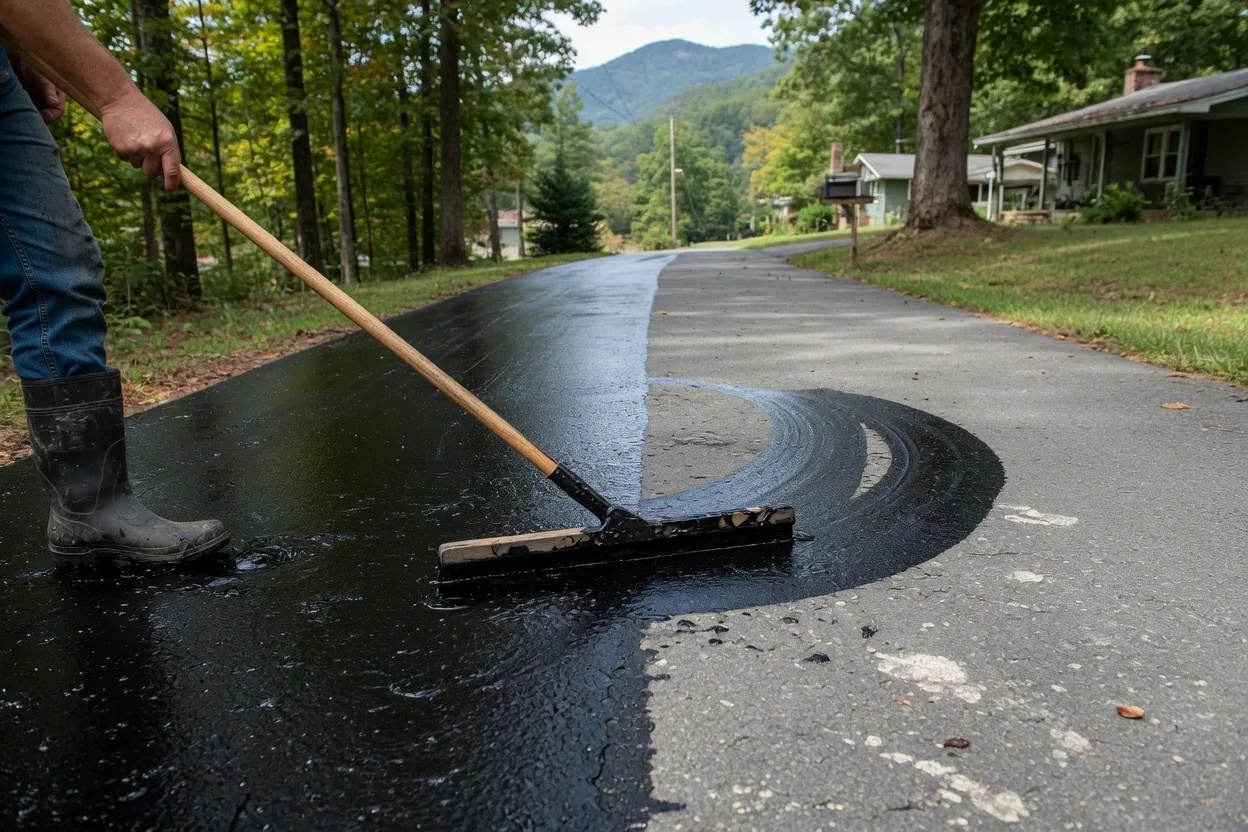
Driveway crack filler from a home improvement store is a reasonable stopgap for one hairline crack on a flat surface. It is not a fix for cracks wider than a pencil or cracks in a driveway with base movement. Proper crack sealing means cleaning the crack out, routing it to a uniform width if needed, and filling with a hot-pour rubberized sealant that flexes with the freeze-thaw cycle rather than cracking out of it. Sealing a clean, dry crack in warm weather typically lasts 2-4 years on a Buncombe County driveway. Sealing a dirty, wet crack in November can fail before January.
Alligator cracking is a different animal
When cracks connect into a web of small rectangles that look like reptile skin, that pattern has a name — alligator cracking — and it is not a surface problem. Alligator cracking means the base under that section has failed. Water got in through an earlier crack, saturated the gravel base, froze, and the asphalt above lost its support. Filling alligator cracks is like painting over a broken window. The section has to be cut out, the base re-compacted or replaced, and fresh asphalt laid back in. If you see alligator cracking in more than one area of the driveway, the honest question is not "how do I fix these cracks" but "how much of this driveway has a base problem."
What it costs to fix, honestly
Buncombe County asphalt repair prices vary with access, slope, and how much base work is needed. Here's a working table. The full asphalt repair cost breakdown covers line items if you want the detail.
| Scope | Typical range |
|---|---|
| Hairline crack sealing (residential drive) | $250-$550 |
| Wider routed crack sealing, per linear foot | $3-$8 |
| Pothole or small area patching (under 25 sq ft) | $350-$900 |
| Full-depth section repair with base work (25-100 sq ft) | $900-$2,800 |
| Mill-and-overlay of an entire residential drive | $2,500-$7,500 |
If a quote comes in well under those bands, ask what's excluded — base prep is usually the answer.
Who you're allowed to hire, and what to ask
North Carolina has a licensing threshold for general contractors, published by the NC Licensing Board for General Contractors. Small crack-sealing and patching jobs usually fall under it, but full driveway replacement or structural base work on a commercial property may not. Ask any contractor what license they hold and whether the job needs a permit. For driveway aprons or anything touching the state right-of-way, the NC Department of Transportation controls access permits. Locally, the NC Department of Insurance publishes the state building code, which applies to any driveway serving a structure. Also ask how they handle water before they touch asphalt: if the driveway slopes toward the house or a low spot collects water, no crack repair will last until drainage is corrected.