Read the driveway before you price the fix
A driveway off Leicester Highway or a gravel-to-paved lane up a south-facing slope in Sandy Mush tells you what it needs long before a bid does. Hairline cracks that wander and re-close with the seasons are usually surface aging — a candidate for cleaning and sealing. Cracks that stay open, spread, or run in a line parallel to the edge mean the base has moved. Potholes that keep coming back after a patch mean water is getting under the asphalt and staying there. Soft spots you can feel underfoot after a rain mean the subgrade is saturated and no overlay will survive on top of it.
Walking the driveway is the whole estimate. Note where water leaves the pavement after a storm — if it sheets toward the house, the fix is drainage and grade correction, not another layer of asphalt. That ordering habit is what separates a repair that lasts from one you repeat in three years.
Here, the walk also means watching edges. Leicester driveways cut into hillsides often have a cut bank on the uphill side and a fill slope downhill, and those two sides fail differently. The bank side sheds soil and leaves onto the pavement after heavy rain, pushing water across the surface instead of off it. The fill side is where edges ravel first, because there's less compacted material under the asphalt. A contractor who points at the edge, crouches to look at the cut bank, and asks where the water comes from in a downpour is reading the same signals you are. One who only measures length and width with a wheel and hands you a single number per square foot is pricing a commodity, not your driveway.
Timing matters too. If you call during a wet stretch, soft spots and edge failures look worse than they will in August; if you call at the end of a dry summer, cracks may have closed up and seasonal movement looks minor. The honest read is whichever condition you're actually living with, but it helps to tell a contractor what the driveway does after a storm, not just what it looks like the day they visit.
Repair, overlay or tear out: matching the scope to the damage
The three honest paths look like this. A patch repairs isolated failures when the surrounding pavement is sound. An overlay adds a new wearing course over existing asphalt that is structurally intact but worn. A tear-out and rebuild replaces the base and the surface when the failure is below the asphalt — which on Leicester's clay-heavy and sloped ground is common.
| Scope | What it fixes | Typical range |
|---|---|---|
| Crack cleaning and sealing | Hairline and seasonal cracks on sound pavement | $250-$650 |
| Pothole and square patch | Isolated failures with sound neighbors | $400-$1,200 per area |
| Overlay (1.5"-2") | Worn surface, intact base, minor cracking | $3,200-$6,500 |
| Tear-out and rebuild | Failed base, widespread alligator cracking, soft spots | $6,500-$12,000+ |
| New driveway (gravel to paved) | No existing asphalt to work from | $5,500-$11,000 |
These bands assume a typical rural residential approach. Length, slope, drainage corrections and haul distance move the number more than anything else. A long, winding drive up a Leicester ridge costs more per foot than a short straight run near the highway, because every load of asphalt and every piece of equipment has to travel farther and work on ground that's harder to grade. For a fuller breakdown by scope, see the Buncombe County cost page.
One more distinction that comes up constantly in this township: a patch that's sold as a fix versus a patch that's sold as a stopgap. If the base under a failing area is saturated, a square patch cut and replaced with fresh asphalt will hold for a season or two and then sink again. That's not dishonesty if the homeowner knows it — sometimes a stopgap is exactly the right call when a full rebuild is a year or two away. What isn't honest is promising a permanent repair without addressing what's underneath. Ask directly whether the repair is meant to last, or to buy time.
Why Leicester ground punishes shortcuts
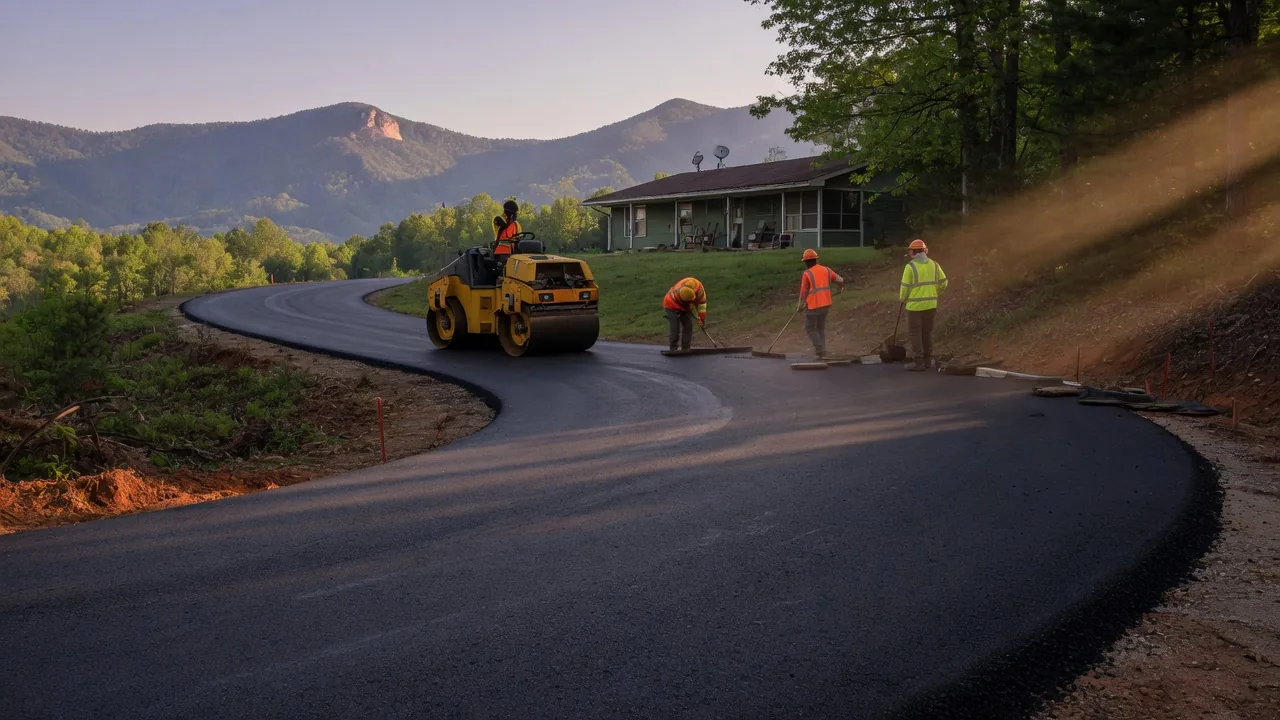
Leicester sits in the western part of Buncombe County, where the terrain rolls and the soil holds water. Driveways here climb, curve, and shed runoff onto whatever is downhill. That combination is hard on asphalt: water sits at the edge, the base softens, and freeze-thaw cycles open what started as a hairline crack. Spring rains that follow a wet winter here are the reason so many calls come in asking about a driveway that "suddenly" developed potholes.
The federal disaster record for this county tells the same story — 19 declared events touch Buncombe County across 1973-2026, weighted toward storm and flood categories. Every one of those events stressed pavement that was already shedding water poorly. Before anyone quotes an overlay, the drainage question has to be answered: where does the water go, and does the driveway's grade send it away from the base or into it?
The local soil character matters as much as the weather. Much of this side of the county drains slowly, and a driveway cut into a slope collects whatever moves downhill from above it. On a Leicester hillside, the acre above the driveway is often the real source of a problem that shows up as potholes at the bottom. Water that runs off the hill, across the drive, and down the far side will keep finding the same path no matter how many times the asphalt is replaced. A cut-off, a shallow swale, or a grade adjustment on the uphill side is sometimes the cheapest fix on the whole job — and the one most often skipped because it isn't asphalt work.
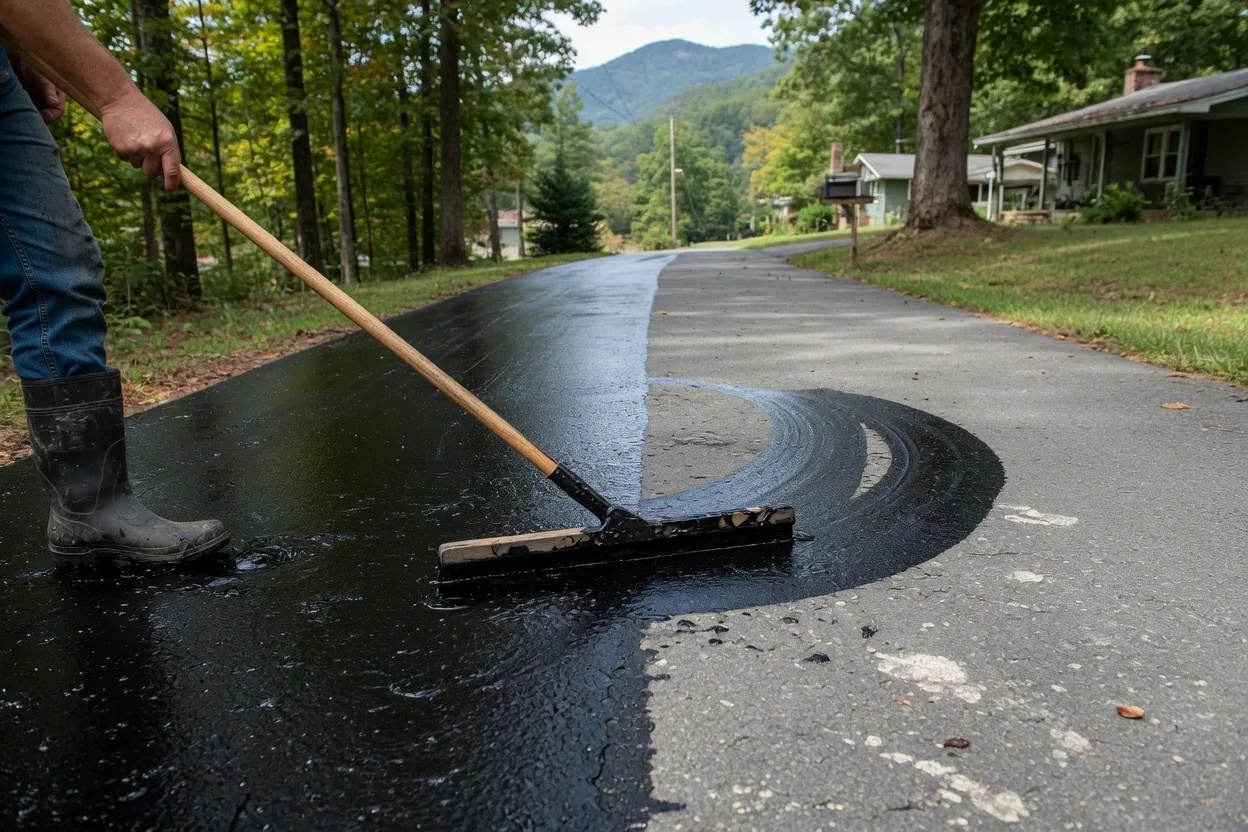
Freeze-thaw cycles work on those same edges all winter. Water seeps into a crack during a mild afternoon, refreezes overnight, expands, and widens the opening a little more. Repeat that across a Leicester winter and a crack that was cosmetic in October is a channel by March. That's why fall sealing is genuinely worth the money here, and why putting it off until spring usually means paying for more than sealing.
Paving a driveway here means working with the grade and the rules
A driveway that meets a state-maintained road — and plenty of Leicester properties do — needs a driveway permit through NCDOT before any apron work begins. Start with the NCDOT Connect portal for applications and the NCDOT driveway and access rules to understand what the approach has to look like. Skip that step and you can end up repaving an entrance the state won't approve.
On the contractor side, North Carolina draws a line at project size and scope. Larger or structural paving jobs can trigger general contractor licensing thresholds under the NC Licensing Board for General Contractors. Ask any crew how they handle permits and licensing for your specific job; the answer tells you whether they work in this county or just pass through it.
The permit piece surprises people most often when a driveway is being widened, re-routed, or rebuilt at the entrance rather than repaired in place. If the apron at the road stays the same width and location, the work is usually simpler; if you're changing how the driveway meets the road, expect the state to have an opinion about sight distance, culvert sizing, and how runoff leaves the shoulder. That's also where a driveway culvert comes into the conversation. On Leicester roads with roadside ditches, the culvert under your apron carries the ditch flow past your entrance, and a crushed or undersized one backs water up onto the road and into your driveway base. Replacing it during a rebuild costs far less than digging it out afterward.
Anyone doing structural or code-regulated work on the property should be able to explain which rules apply and which don't. The International Code Council publishes the model codes that North Carolina adapts, and a contractor who can talk plainly about why a given job does or doesn't cross a threshold is usually one who's been through the process before.
The right order of operations on a Leicester driveway
Fix water first, base second, surface third. That order sounds obvious and gets skipped constantly because it's the expensive part. A driveway that drains correctly will outlast one that was simply resurfaced. If the existing asphalt is sound and the grade is right, an overlay is a genuine value. If the base has failed or the water is still arriving, an overlay just buries the problem under a nicer-looking surface — for a season or two.
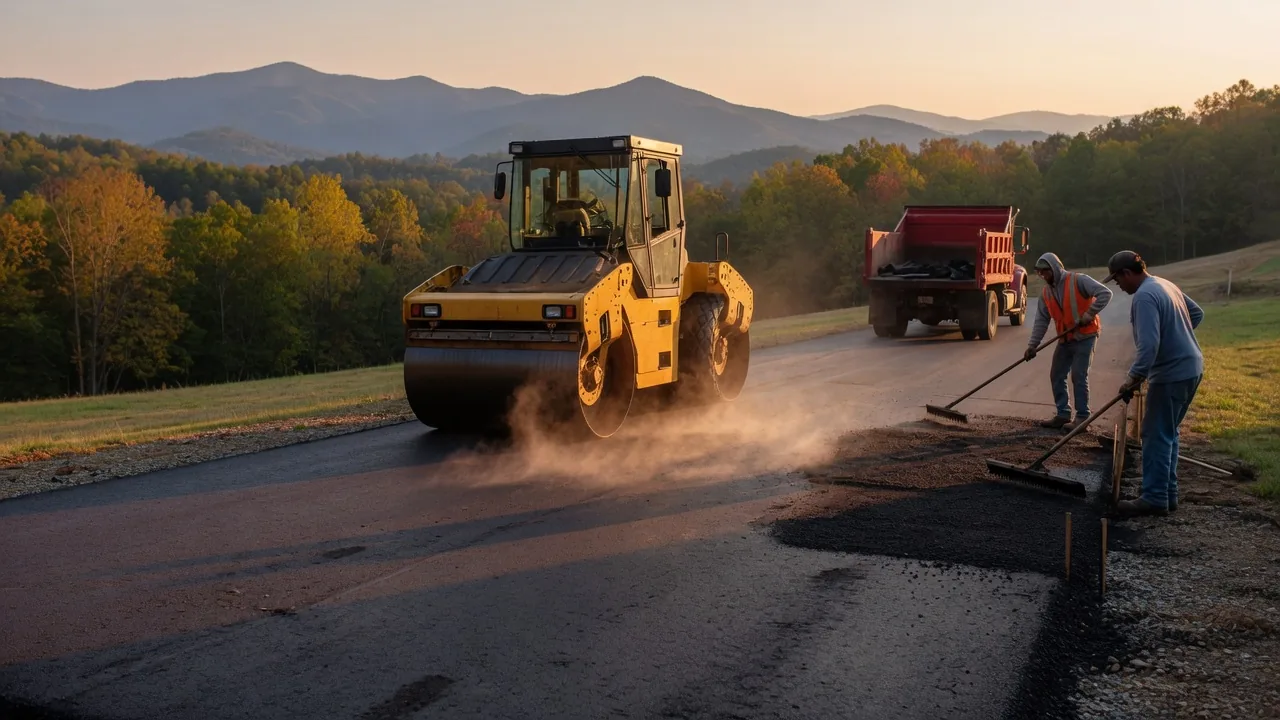
On a rebuild, the sequence that holds up here is: correct the grade and drainage, place and compact the base in lifts, then pave. Base compacted in one thick layer instead of several thinner lifts is a common shortcut, and it shows up as ruts and depressions within a few seasons. On a sloped Leicester drive, proper compaction in lifts matters even more, because water moves through the base faster on a grade.
If you're starting fresh rather than repairing, the asphalt paving overview covers the layers and prep that make a new driveway hold up. And if you're specifically weighing options for this township, the Leicester driveway paving page is the companion to this one.
Whatever scope you land on, get the plan in writing: what's being repaired or replaced, how the base is being prepared, how water is being handled, and what the price covers. A written scope is what lets you compare two bids honestly instead of comparing two numbers that describe different jobs.