Why Clyde driveways are built thicker than the manuals suggest
A drive off a flat subdivision loop in Wake County can survive on two inches of asphalt. A drive in Clyde often cannot. Between logging trucks on the rural roads, boat trailers backing through an 80-degree turn off US-19, and the freeze-thaw cycles that roll down out of the Plott Balsams and Cataloochee, the subgrade under a Haywood County driveway takes a beating that flatland specs don't anticipate. That's why the thickness conversation matters here before anyone quotes a seal coat.
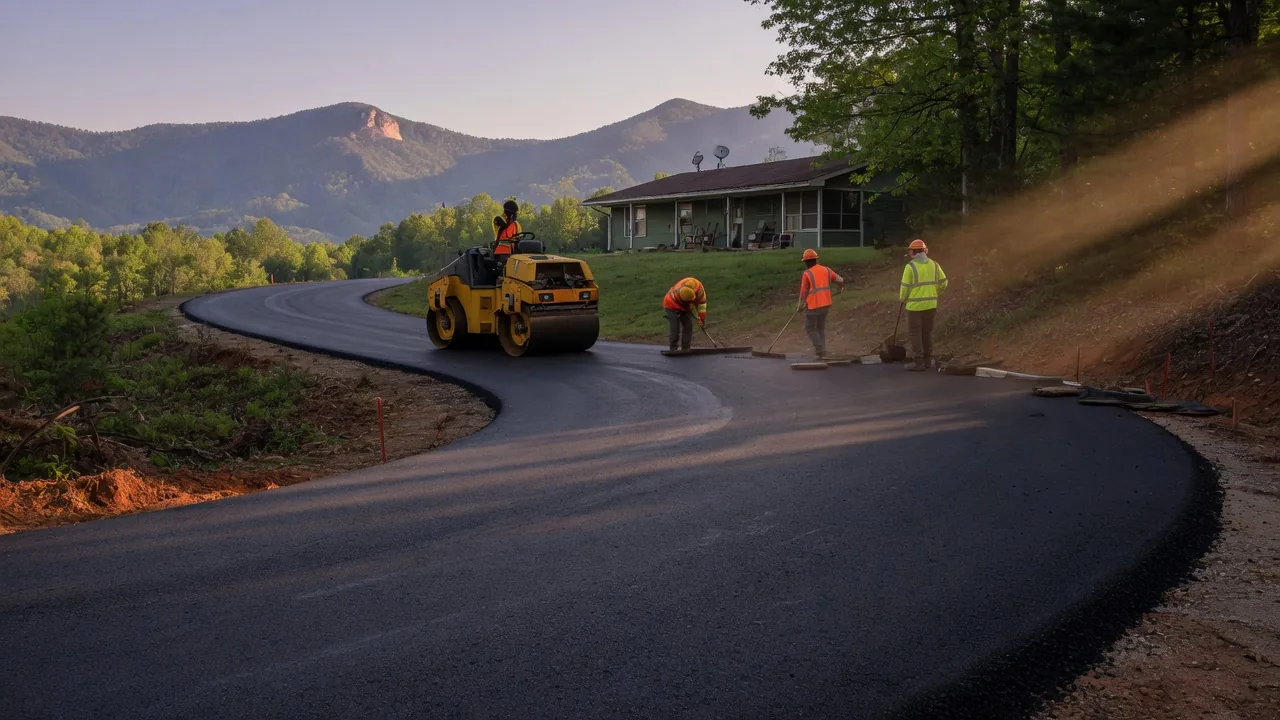
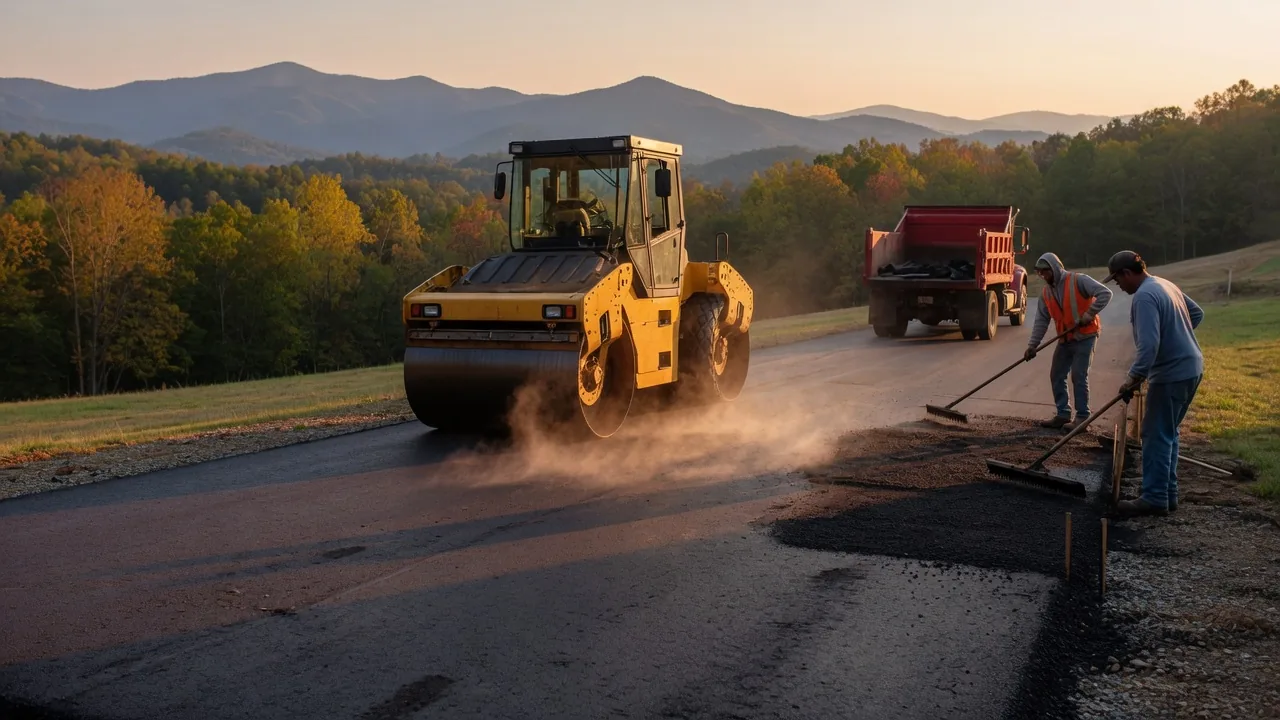
The working rule: two inches of compacted asphalt is the floor for a passenger-car drive. Three inches is what the drive needs if a work truck, RV, dump trailer, or delivery vehicle turns on it regularly. If the asphalt is going over an existing gravel base that hasn't been re-graded in a decade, three inches in two lifts is almost always the honest spec, because one thick lift compacts unevenly and ravels at the edges within a few winters. A seal coat over a driveway that's too thin just hides the failure for one season.
What the mix and lift count actually change for a Clyde driveway
North Carolina contractors running in the mountains normally place either a surface course (the finished wearing layer) or a base course (the larger aggregate, load-bearing layer underneath). On a low-traffic residential drive, a single surface-course lift of two inches is typical. On a drive that sees the loads described above, the smart build is a base lift plus a surface lift, each compacted separately. Skipping the base lift is the most common shortcut in cheap quotes, and you can see it fail at the edges first.
Mix design matters too. Mountain-region surface mixes run slightly oilier to handle temperature swings, and a mix placed at 300 degrees Fahrenheit in July compacts very differently than the same nominal mix placed in a shoulder-season cool snap. If a crew is willing to place asphalt in Clyde in December without heated storage, ask what happens at the joint where the new mat meets the old. That's the seam that opens next spring.
The Clyde sealcoating and paving price picture
Because sealcoating is often the entry call and paving is the follow-on, homeowners should see both numbers before deciding scope. Use the Haywood County asphalt cost breakdown for the line-item version. Bands below reflect realistic residential work in and around Clyde; truck-load and steep-access jobs land at the top of every range.
| Scope | Typical cost range | Notes |
|---|---|---|
| Sealcoat, single coat | $0.12-$0.18 / sq ft | Best for newer asphalt in good shape; thin protection |
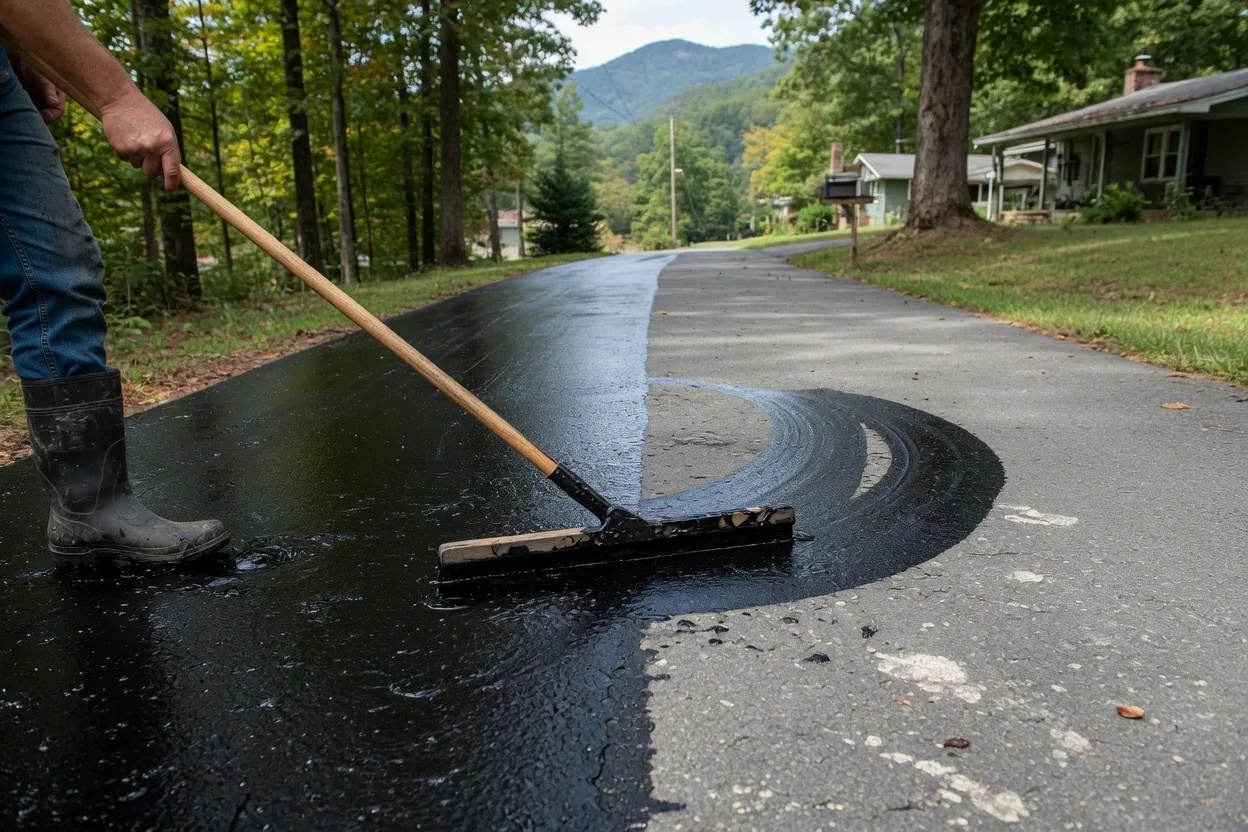
| Sealcoat, two coats + crack fill | $0.18-$0.30 / sq ft | The standard recommendation for most Clyde drives |
| Crack fill only (routed) | $1.50-$3.50 / linear ft | Routed and blown clean before hot-pour rubber |
| New asphalt overlay, 1.5" | $2.25-$3.75 / sq ft | Only valid if base is still sound |
| New build, 2" single lift | $3.00-$4.50 / sq ft | Passenger vehicles, light use |
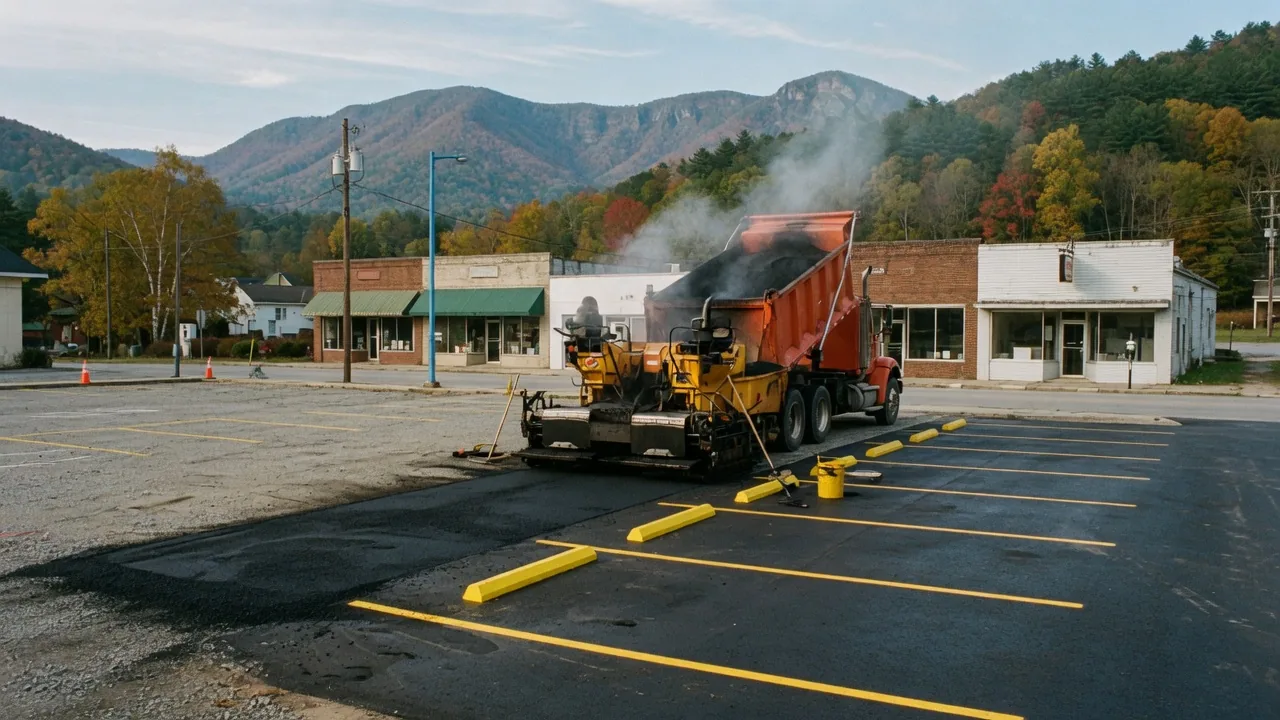
| New build, 3" in two lifts | $4.25-$6.50 / sq ft | What truck and trailer traffic actually needs |
Anything quoted under those floors for a full build deserves an explanation of what was left out: base repair, edge compaction, or the second lift.
Water, freeze-thaw, and why Clyde asphalt ages fast
The federal record explains most premature asphalt failures in Haywood County: 19 declared disaster events touch this area across 1973-2026, overwhelmingly flood and storm family. Every one of those events moved water across driveways that weren't graded for it. Add the seasonal freeze-thaw the mountains deliver and you have the two forces that destroy asphalt here before traffic ever gets a chance. Sealcoating slows the process; it does not stop it. If the drive is holding standing water two days after rain, or the edges are crumbling back into the yard, the seal coat is buying time, not fixing the problem.
Drainage correction is often cheaper than it sounds. Re-crowning a failing driveway, cleaning a ditch the winter pushed gravel into, and getting water off the mat before it seeps into the base solves more than a heavier seal coat can. The National Weather Service mountain forecast is a useful guide to when the placement window opens and closes each year, since cold-weather placement shortens asphalt life noticeably.
Permits, right-of-way, and where the driveway meets the road
If the work changes the driveway apron where it intersects a state-maintained road — widening the mouth, altering the culvert, changing the slope at the shoulder — a driveway permit from NCDOT applies. Applications run through NCDOT Connect, and the town or county may have its own review on top depending on the road. Straight sealcoating on the private portion of the drive doesn't trigger a permit, but any change to how the drive meets the public road does. The NC Licensing Board for General Contractors sets the dollar threshold where a paving contractor needs a license, which matters more on new builds and full replacements than on routine seal work.
One practical Clyde-specific note: the state-maintained roads in this area carry a lot of chip-seal history, and homeowners sometimes confuse the state's chip-seal maintenance with a private driveway seal coat. They are different products doing different jobs. If the crew offering to sealcoat your drive is also asking about your road frontage, ask why.
Choosing a crew without getting the driveway re-done twice
Three checks separate the crews worth hiring in this market from the ones chasing a seasonal route. First, ask what mix they're placing and where it's coming from. Local plant access matters — asphalt has a placement window measured in hours, not days, and a crew hauling from outside the county in cold weather is fighting the clock. Second, ask whether the quote includes the base repair or assumes the base is fine. If they haven't probed the existing surface with a pick or a core, they don't know. Third, ask about the joint where new asphalt meets old. That's where the failure shows first, and a crew without an answer is a crew without a plan.
When the seal coat is the right scope rather than a re-pave, the sealcoating service overview covers what a proper two-coat application should include. For full replacements or first-time builds, the Clyde paving contractors guide walks through how to compare bids on a job this size.